
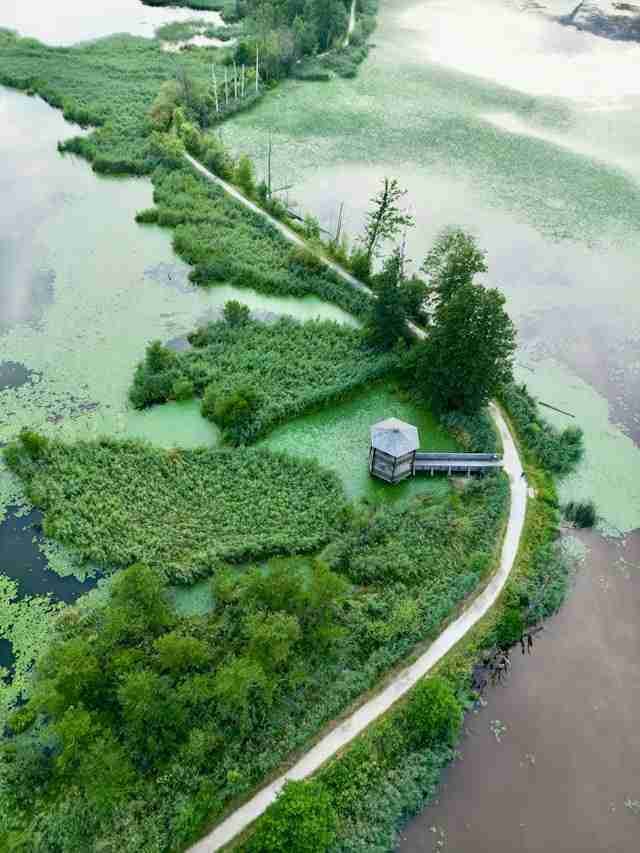
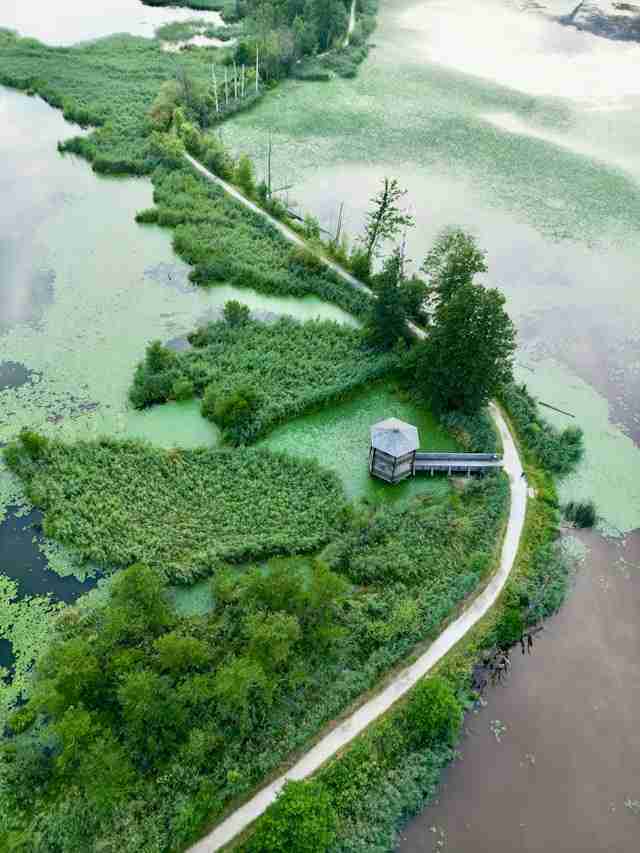
The Ossiacher Moorturm, nestled on the eastern edge of Lake Ossiach in Carinthia, Austria, offers an extraordinary photographic platform overlooking the Bleistätter Moor. This understated wooden observation tower is a quiet treasure for landscape, wildlife, and nature photographers seeking a serene, immersive experience. Built to blend into the surrounding ecosystem, the Moorturm rises just above the reeds and waterways, providing an unparalleled view of the wetlands and the lake beyond. It's a place where light moves slowly across open water, where bird calls echo through the grass, and where photography becomes an act of patience and observation.
Best Photography Opportunities
• Wetland Vistas from the Tower's Platform
– From the top of the Moorturm, the view opens in all directions over the Bleistätter Moor's patchwork of reeds, winding channels, and open water. Photographers will find this elevation perfect for capturing wide-angle panoramas that sweep across the wetland's textured surface. The light here changes rapidly—morning sunlight warms the reeds in gold, while cloudy skies diffuse shadows and mute the palette to soft greens and browns. Use a wide-angle lens to frame the expanse, or a longer lens to compress the layers of reeds, sky, and water into painterly compositions. This is one of the few locations where you can work both horizontally and vertically with equal visual impact.
• Bird and Wildlife Detail
– Bleistätter Moor is a haven for birdlife, attracting species such as herons, grebes, and reed warblers. The observation deck gives a stable, elevated position for shooting birds in flight or perched along the marsh's edges. With a telephoto lens in the 300–600mm range, you can isolate details like feathers and reflections. The surrounding silence amplifies the experience—there are no roads nearby, just the hum of insects and the flurry of wings. Early morning and late afternoon are the best times to catch activity, and a bit of patience rewards you with intimate, behavior-rich images that feel truly wild.
• Reflections and Weather Drama
– The shallow pools and calm channels that weave through the moor create natural mirrors. On still days, these reflections offer symmetry-rich compositions that work well with minimalistic framing. Photographers drawn to mood and atmosphere will appreciate how fog and mist rise off the water in the early morning, softening lines and lending an ethereal quality to the landscape. In overcast conditions, colors desaturate and textures stand out, ideal for black and white conversions. Stormy skies add tension to wide shots, while backlight through morning mist creates moments of subdued brilliance.
• The Tower as a Subject
– After capturing views from the Moorturm, shift your perspective and use the structure itself as a compositional anchor. Its clean, geometric form contrasts beautifully with the organic chaos of the wetlands. From the boardwalk below or nearby trails, shoot the tower silhouetted against the sky or framed by reeds. During golden hour, its wooden planks catch warm light, while at night, its minimal lighting allows for subtle moonlit compositions or starfield backdrops. Long lenses can isolate it against the distant lake, while wide lenses emphasize its integration into the landscape.
• Seasonal Change in the Moor
– Each season brings a transformation to the Bleistätter Moor, offering photographers the chance to build a diverse portfolio. Spring introduces nesting birds and vivid greens. Summer saturates the landscape in lush vegetation and dramatic cloudscapes. Autumn mutes the palette into amber and copper tones, with fog appearing more frequently. Winter is perhaps the most stark and poetic—ice traces the edges of water channels, and hoarfrost clings to reeds. Return visits in different months can yield an entirely different set of images from the same spot.
Best Time to Visit
The photographic potential of Ossiacher Moorturm is tightly tied to natural rhythms—light, season, and weather all play significant roles. Dawn is the most rewarding time to arrive, especially in spring or autumn. Morning mist rises from the wetland's surface, softening the horizon and adding depth to wide shots. The first light of day reveals subtle color shifts across the reeds and emphasizes the dewdrops on tall grasses. This is also the best time for wildlife: birds are active, and the air is still.
As the sun climbs, the wetlands remain photogenic but shift in tone. Harsh midday light can flatten the landscape, though it works well for detail shots of textures, insects, or the tower's wooden grain. Late afternoon reintroduces drama, casting long shadows across the moor and bathing the scene in gold and ochre. Blue hour brings rich tones to the water and sky, particularly after rainfall when reflections are crisp.
Winter visits are less popular but highly rewarding. The low sun rarely climbs high, making for excellent light all day. Frosted reeds, ice-patched channels, and even snow-dusted boardwalks offer a quiet, minimalistic beauty. Seasonal variation is substantial, so photographers seeking a complete narrative would benefit from visiting multiple times per year. Be mindful that fog, while beautiful, can limit visibility—pack weather-resistant gear and prepare to shoot quickly as conditions shift.
How to Get There
The Ossiacher Moorturm is located near the village of Ossiach, in the Austrian state of Carinthia. From the village, it is a short walk along the well-marked Bleistätter Moor trail system, specifically along the Slow Trail route, which is designed to promote slow, reflective movement through nature. The path to the Moorturm is flat, well-maintained, and suitable for both pedestrians and cyclists. It takes roughly 20 to 30 minutes to reach the tower on foot from nearby parking areas or local accommodations.
Drivers will find limited parking at designated trailheads near Alt-Ossiach or Steindorf; these are clearly signed and typically free of charge. The tower itself is freely accessible year-round with no admission fee, and there are no barriers or gates preventing access outside daylight hours. However, winter conditions may affect access—snow or frost can make the wooden stairs slippery, so appropriate footwear and caution are advised. There are no restroom facilities at the tower, and the area is part of a protected wetland, so be respectful of trails, wildlife, and quietude. Photography is welcomed, but drones should be avoided unless proper permits are obtained, as this is an ecologically sensitive zone.
Essential Gear for Capturing Bleistätter Moor
For a successful shoot at the Ossiacher Moorturm and the surrounding wetlands, a mix of landscape and wildlife gear is essential. Begin with a wide-angle lens (16–35mm) for sweeping shots from the top of the tower and to capture expansive skies reflected in the water. A telephoto zoom lens (100–400mm or greater) is invaluable for photographing birds, distant reeds, and compressing layers of light and land. If your telephoto is particularly large, a monopod or lightweight tripod will stabilize shots without adding excessive bulk during the hike in.
Neutral density filters (6–10 stop) are highly useful here—ideal for smoothing water textures and creating motion blur in skies during long exposures. Polarizers can also help cut glare on the water and enhance color saturation, especially on bright days. A compact travel tripod allows for long exposures or low-light shooting in early morning or late evening. Since this is a moist environment, bring weather-sealed gear if possible, or pack a rain cover and microfiber cloths to keep lenses clear. Extra batteries are a must in colder months, and a lens hood will reduce flare when shooting toward the sun across the lake or marsh.
Sound-triggered remote shutters can be handy for wildlife work when setting up in advance, and a small field stool or mat helps if you want to spend extended time waiting for bird activity. Because of the open design of the tower, a camera strap or harness is helpful to keep your equipment secure when working from a height.
Nearby Photography Locations
• Steindorfer Moorturm
– Located slightly north of the Ossiacher Moorturm, this second observation tower offers a more intimate perspective of the moor, with narrower views and often fewer visitors. It's an excellent alternative when the primary tower is crowded or during different lighting conditions, providing a subtle variation in angle and foreground elements.
– This Benedictine abbey sits directly on the lake's edge and provides a rich contrast between baroque architecture and natural surroundings. It is especially photogenic at sunrise when the soft light reflects off the lake surface, illuminating the abbey's tower and facade with a quiet, historical gravitas.
– Accessible via cable car, Gerlitzen offers sweeping panoramic views of Lake Ossiach, the surrounding valleys, and the Bleistätter Moor from above. The altitude opens up drone-like perspectives without needing flight equipment, ideal for creating geographic context in a photo series.
• Tiebel Creek Inlet
– This lesser-known section of the Slow Trail passes where the Tiebel River feeds into Lake Ossiach. The interplay between flowing water and wetland stillness creates strong foreground interest and is ideal for long exposure photography, particularly in soft morning or post-rain light.
• Unterburg Lakeshore Sequence
– Just south of Zug village, Unterburg's lakeshore presents photographers with peaceful compositions of the water's edge. Here, a narrow strip of beach and scattered trees form simple foreground elements against the lake and distant mountains. Light during golden hour adds depth and texture to reeds and shoreline pebbles, perfect for contemplative, minimalist scenes.
The Ossiacher Moorturm is a rare combination of accessibility, ecological richness, and aesthetic harmony. It invites a slower, more observant style of photography that rewards repeat visits and seasonal exploration. Whether you're chasing misty dawns, tracking the flight of a heron, or composing serene reflections, this quiet tower above the moor is a place where visual stories unfold at nature's own pace.
Comments
Loading comments…