
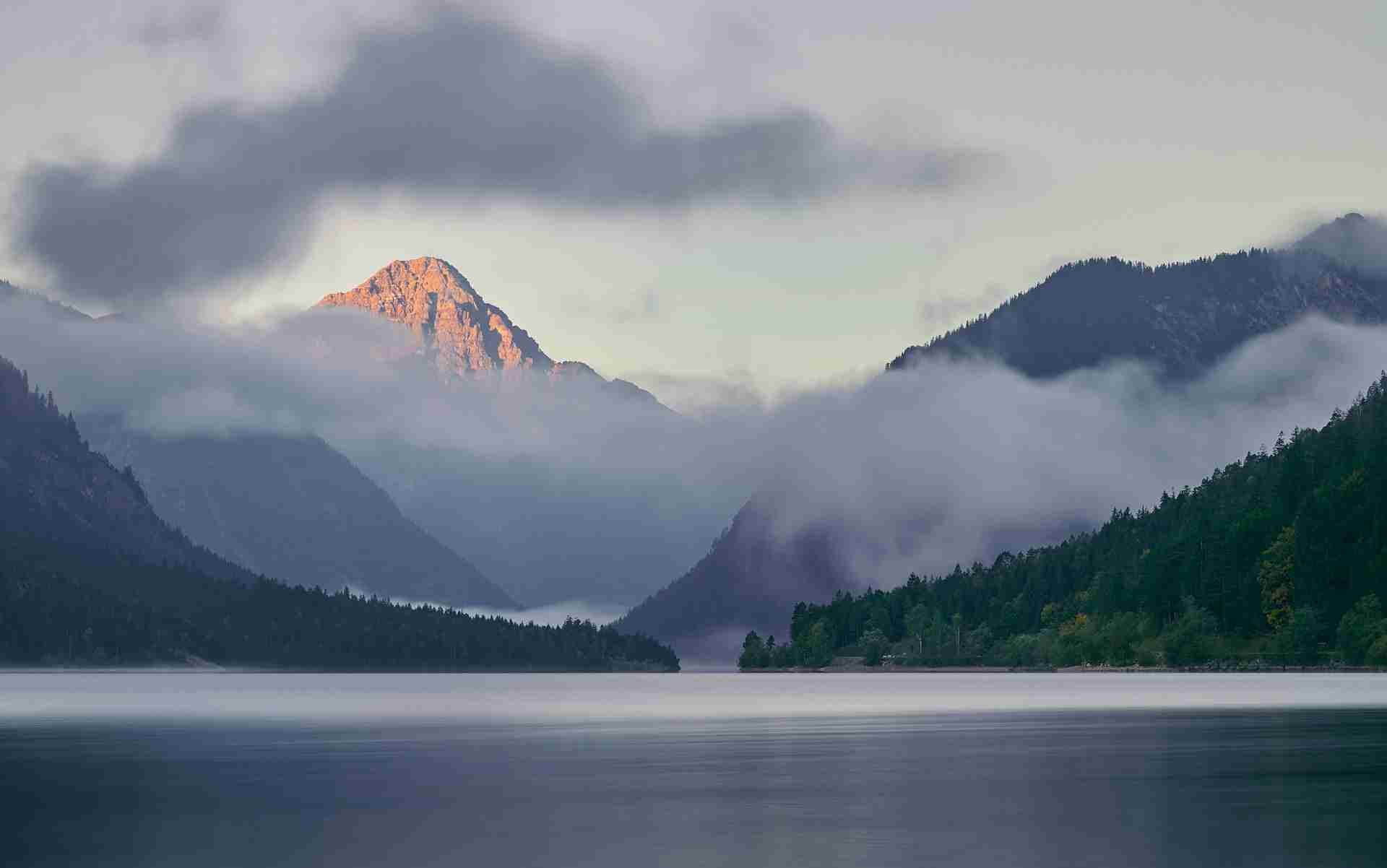
Tucked into a high alpine valley near the border of Germany's Ammergau Alps, Plansee is a long, fjord-like lake surrounded by jagged limestone peaks and dense forest. With its glacially-fed, turquoise water and often still surface, it serves as a near-perfect mirror for the mountain ridges that frame it. For photographers, Plansee delivers dramatic light, expansive compositions, and a tranquil rhythm that rewards both wide-angle landscapes and intimate studies of reflection, texture, and changing skies. Less crowded than many Austrian alpine lakes, it offers quiet access, visual minimalism, and rich seasonal variation—ideal for photographers who want to work with nature's subtle drama at every scale.
Best Photography Opportunities
• Sunrise reflections from the western shore
The western shoreline near the road from Reutte offers a sweeping view eastward down the length of the lake, with the morning sun rising over the peaks and catching the first ripple-free light on the water. The mountains are reflected with stunning clarity in calm conditions. A wide-angle lens captures the full drama of the lake's symmetry, while a standard lens can isolate the light creeping across specific summits. Arrive well before sunrise to scout a low foreground—such as boulders, driftwood, or shoreline grass—that adds depth without breaking the reflection. On crisp mornings, mist sometimes lifts from the water, adding a veil of atmosphere that enhances layered compositions.
• Fog and forest detail along the eastern trails
The forest trails near the eastern end of the lake pass through dense evergreens and deciduous woods that transform with the seasons. On cool autumn or spring mornings, fog often clings to the water and forest canopy, softening the outlines of trees and blurring the boundary between reflection and landscape. This area is ideal for capturing more intimate frames: the play of light on a single branch, a line of reeds disappearing into mist, or contrast between evergreen needles and orange larch. Use a mid-range zoom or fast prime lens to maintain sharpness and shallow depth for detail-focused compositions.
• Twilight symmetry from the southern boat dock
At blue hour, the public dock near the lake's southern camping area provides a superb platform for shooting long exposures across the still water. Looking north, the ridgeline darkens into silhouette while the sky fades into rich cobalt and soft lavender tones. A long exposure smooths the water surface, enhancing mirror-like reflections of the surrounding ridges and trees. Use a tripod and remote release for 10–30 second exposures, and shoot at f/8 to f/11 for maximum sharpness and depth. This is one of the few locations at Plansee with a human-made structure that adds to rather than distracts from the composition.
• Alpine layering from the Seespitze hike
For elevated views, the trail to Seespitze climbs above the eastern shore and provides sweeping panoramas over Plansee and its connecting lake, Heiterwanger See. From the upper trail, you can photograph the lake as a ribbon of turquoise winding through the mountains. Use a telephoto lens to compress ridges and emphasize tonal shifts in overlapping peaks—especially effective in early morning or late afternoon light. Haze from distant valleys can add atmospheric depth, while changing weather creates dramatic cloud formations along the higher ridgelines. This hike is moderately demanding and best suited for sunrise or golden hour sessions with adequate planning.
• Winter minimalism and snow-draped contrast
In winter, Plansee becomes a study in white and grey. Snow-covered trees, frozen shoreline grasses, and ice patterns on the lake create minimalist scenes full of quiet tension. Use overcast light to reduce contrast and bring out subtle texture in snow-laden branches or frozen reeds. Black-and-white processing works especially well in this environment, and a standard zoom or prime lens provides both reach and clarity. Look for clean foregrounds like snowbanks or ice-locked rocks to anchor compositions. Afternoon light in winter is often soft and low, making even short outings rewarding.
Best Time to Visit
Plansee offers year-round photographic interest, but each season brings its own mood and specific opportunities. Spring, from late April to early June, is defined by melting snow, fresh green foliage, and lingering alpine ice. Water levels rise with snowmelt, and misty mornings are common, especially after rain. Wildflowers appear in alpine meadows around the lake, and the contrast between green forest and snowy peaks is visually powerful.
Summer brings long daylight hours and increased access to surrounding trails and higher elevations. The lake becomes clearer, and the chances for still, reflective conditions are highest in early morning and late evening. Sunrise sessions during summer are particularly rewarding, with warm light grazing the ridgelines and perfectly still reflections across the lake. However, midday can be overly bright, so it's best to focus on golden hour light or shaded compositions within the forest.
Autumn is one of the most compelling times to visit Plansee. From late September through mid-October, larch and beech trees blaze with gold, orange, and red against the steely blue of the lake. The surrounding mountains take on a rugged, textured quality in angled light, and the water remains calm during early morning hours. Fog, frost, and crisp air add atmosphere and clarity. Photographers should aim for early light for warmth and color saturation, and use longer focal lengths to isolate colorful treelines against the cliffs and water.
Winter transforms Plansee into a serene, almost monochromatic environment. Snowfall softens the terrain and mutes the palette, turning the lake into a minimalist study of form and shadow. While access to high trails is limited, the lakeside remains accessible, and overcast skies provide beautifully even light for detail and texture. Morning frost, ice buildup along the shore, and falling snow offer visual simplicity and narrative stillness, ideal for mood-driven work.
How to Get There
Plansee is located in Tyrol, Austria, approximately 10 km west of Reutte and near the German border with Bavaria. The most direct access is by car. From Reutte, follow the signs toward Breitenwang and then continue west on the L255 until you reach the lake. Parking is available in multiple locations along the shore, with larger car parks near the southern end by the campground and guesthouse.
For those traveling by public transport, trains run regularly to Reutte in Tirol from Innsbruck or Garmisch-Partenkirchen. From there, taxis or local buses (limited in frequency) can reach the lake area. If planning a sunrise session, renting a vehicle is recommended due to early hours and limited transit options.
A well-maintained road follows the southern and eastern edge of the lake, allowing photographers to scout multiple locations quickly. Trails loop along the lake and into the surrounding woods, many of which are accessible year-round. The area is open to the public and does not require an entrance fee. Facilities include restrooms, a guesthouse, and seasonal boat rentals. Camping is allowed in designated areas, and the southern end is particularly well equipped for longer stays.
Recommended Photography Gear
Plansee's wide landscapes and calm water surfaces call for versatile, high-resolution gear capable of rendering fine detail and tonal transitions. A wide-angle zoom (16–35mm) is essential for lake-over-mountain compositions, reflection work, and low-angled shots along the shoreline. For tighter frames of ridges, trees, and layered peaks, a mid-range zoom (24–70mm) provides compositional flexibility and strong edge-to-edge sharpness.
A telephoto lens (70–200mm or longer) is invaluable for compressing mountain ranges, isolating distant boats or reflections, and framing wildlife or lone trees across the lake. For misty mornings or winter scenes, a fast prime lens (35mm or 50mm) delivers low-light performance and creative control when working handheld.
A sturdy tripod is a must for sunrise, blue hour, and long exposure reflection work. Include a remote shutter or 2-second timer to minimize vibration. A polarizing filter is useful for managing reflections and increasing contrast in the forest or sky. A neutral density filter (3- to 6-stop) enables extended shutter times for smoothing water surfaces or capturing movement in clouds.
Cold weather gear—gloves, lens cloths, and weather sealing—is important from late autumn through spring. In warmer months, pack insect repellent, and wear stable footwear for rocky or muddy shoreline exploration. A rain cover for your backpack and a lens hood for directional light will help manage weather changes common in alpine terrain.
Nearby Photography Locations
Connected to Plansee by a narrow canal, this slightly smaller lake shares similar alpine scenery with a quieter atmosphere. Great for low-angled morning reflections and longer-exposure compositions from the bridge that spans the channel between the two lakes.
Just across the German border, the cable car from Ehrwald ascends Germany's highest peak. From the summit, you can frame wide alpine panoramas with Plansee visible in the distance. Best for expansive aerial compositions and changing mountain light.
• Lech River Valley
Near Reutte, the Lech River offers braided channels, mossy forest trails, and dynamic compositions with clear alpine water. Excellent for mid-day photography with filtered forest light and macro opportunities.
• Burgruine Ehrenberg and Highline179
This historic castle ruin and suspension footbridge near Reutte provide a strong contrast to natural alpine scenes. Dramatic angles, backlit silhouettes, and high viewpoints make this a great companion subject for architectural and landscape shooters alike.
• Ammerwald Valley
Just west of Plansee, this less-trafficked alpine corridor features dense forest, occasional meadows, and limestone walls. Ideal for moody light and layered compositions on overcast or transitional weather days.
Plansee is a place of alpine stillness and shifting drama—where weather, reflection, and elevation meet in elegant tension. For the photographer, it offers more than just scenic beauty; it offers clarity, isolation, and the freedom to slow down and shape a frame that reflects not only a view, but a moment in light.
Comments
Loading comments…