
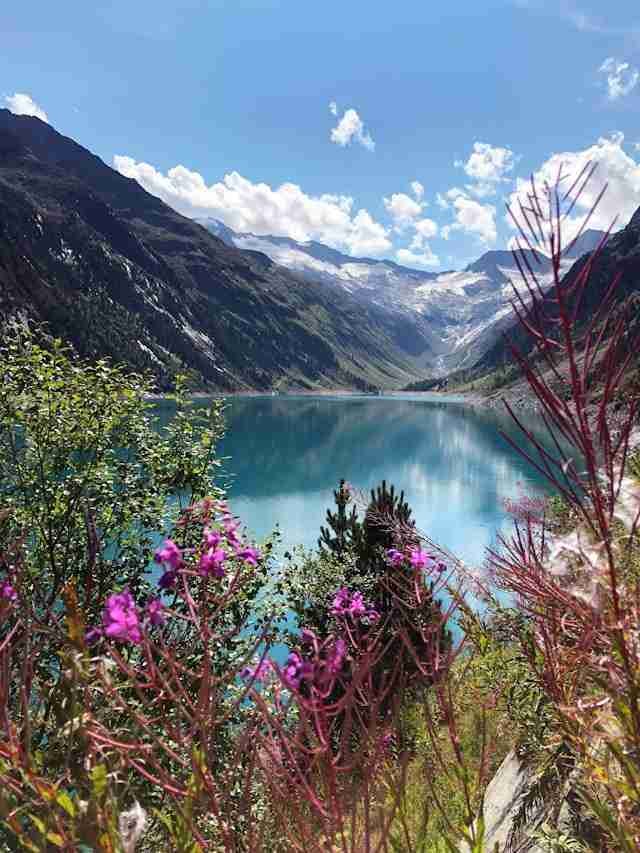
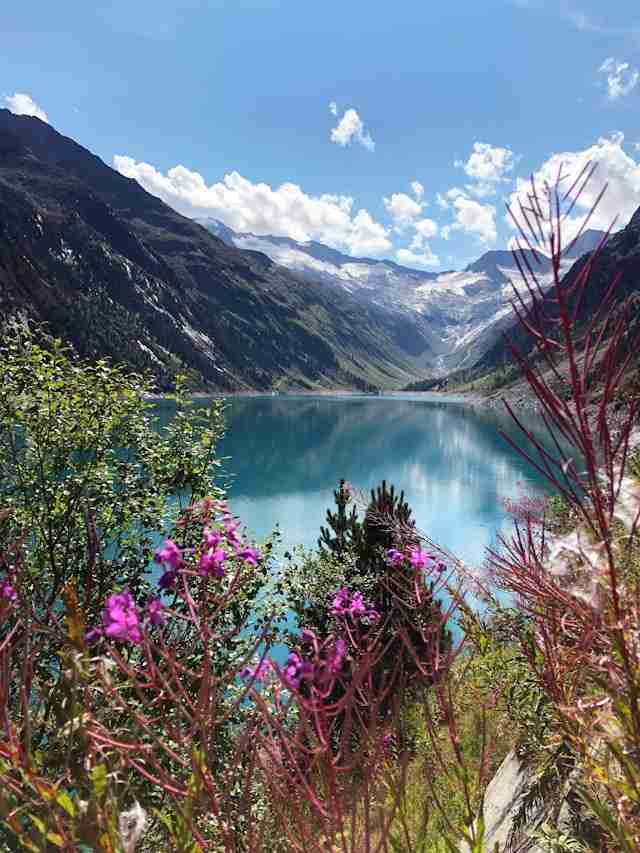
Schlegeisspeicher is one of the Zillertal Alps' most breathtaking photographic destinations, a reservoir tucked into a high alpine basin at over 1,800 meters above sea level. Surrounded on all sides by sheer granite cliffs, snowy ridgelines, and tumbling glacial streams, it offers photographers a fusion of elemental beauty and bold engineering. The vivid turquoise water of the lake, fed by glacier melt, provides a powerful visual anchor—one that mirrors the sky, reflects the stone faces above, and contrasts dramatically with the sweeping arcs of the dam wall.
Photographing Schlegeisspeicher is an experience defined by vertical scale and alpine atmosphere. From the curved dam itself, which stands 131 meters high, to the winding trails that ascend toward huts and border passes, the location constantly invites photographers to reframe the balance between nature and human intervention. Long exposures, reflections, moody skies, and mountain textures combine here in compositions that shift with light, altitude, and season. Whether viewed as an engineered marvel or a glacial sanctuary, Schlegeisspeicher remains one of the most rewarding sites in the Austrian Alps for those seeking immersive mountain imagery.
Best Photography Opportunities
• Panoramic Lakeshore Compositions with Glacial Peaks
The reservoir is most accessible at its northern end, near the dam, where photographers can frame the length of the lake stretching southward toward the glaciers and peaks of the Zillertal Alps. A wide-angle lens works best to capture the curve of the shoreline, deep turquoise water, and the dramatic transition between forest, rock, and snow. These compositions are strongest at dawn and dusk when soft sidelight reveals detail in the ridgelines and the wind is minimal, allowing for crisp reflections across the lake. Adding hikers, kayakers, or wildflowers in the foreground introduces scale and seasonal context.
• Long Exposures and Symmetry from the Dam Wall
Standing atop the massive Schlegeis dam gives photographers an architectural perspective that few alpine reservoirs can match. The curved geometry of the dam juxtaposes beautifully with the organic shapes of the valley and lake. Shooting long exposures at twilight or under fast-moving cloud creates a layered effect, smoothing the water's surface and blurring cloud trails while holding sharp detail in the wall itself. The repetition of railings, walkways, and turbine structures add compositional rhythm, especially in black and white or monochromatic treatments.
• Elevated Views from the Olpererhütte Trail
The hike to Olpererhütte is a steep but essential journey for photographers. Roughly 1.5 to 2 hours from the southern shore of the lake, the trail winds through switchbacks before opening to alpine meadows with wide views back across the reservoir. These elevated vantage points are perfect for compressed shots using a mid-range zoom, layering the glacial basin behind the long arc of the lake. Sunrise here is sublime, as the first light catches the upper ridges and gradually works its way down to the water. The famous suspension bridge near the hut adds a dynamic human element, especially when silhouetted against the Schlegeis basin.
• Abstract Rock and Water Interactions at Shoreline and Inlets
Close-up studies along the rocky shoreline and glacial inlets offer an entirely different approach. Shifting textures in stone, sediment deposits, driftwood, and crystal-clear shallows all lend themselves to minimal or abstract compositions. These are best captured with a fast prime or macro lens in overcast or post-storm conditions, when colors are rich and shadows are subdued. The western shore is less trafficked and offers small coves and boulder clusters that can anchor reflective studies or tightly framed alpine detail.
• Weather Drama and Atmospheric Skyscapes
Schlegeisspeicher's high altitude makes it prone to rapidly shifting weather conditions. Low-hanging clouds, thunderheads gathering over the peaks, or breaks in storm layers create moody, cinematic effects. Use a telephoto to compress these weather patterns against the vertical ridges or to isolate sun shafts pouring down into the valley. Shooting during or after alpine storms can be especially rewarding, as the atmosphere changes minute by minute, offering a wide range of tonal and dynamic possibilities within a short time frame.
Best Time to Visit
The photographic season at Schlegeisspeicher runs from late May to mid-October, when the Schlegeis Alpine Road is open and the trails are clear of snow. Within this window, June through September provides the best balance of stable access, full water levels, and consistent light conditions. July and August are the most popular months, with alpine flowers blooming and hut networks fully staffed. While crowds are higher in midsummer, arriving early in the day or staying into evening ensures quieter moments and better light.
Morning light strikes the east-facing slopes first, creating a gradient of illumination that works especially well for layered landscape compositions. Fog is common in the first few hours of daylight, especially after warm, humid nights, making sunrise an excellent time for ethereal long shots or minimalist studies. Late afternoon and golden hour provide directional light across the water and stronger contrasts on the dam and surrounding rock faces.
For those seeking dramatic skies, early September often brings increased cloud activity and sharper air clarity. Storm fronts tend to roll through in the afternoons, with fast-moving clouds creating high-drama lighting conditions. While October can offer the first dustings of snow on surrounding peaks, the dam road typically closes for the season before consistent snow arrives.
How to Get There
Schlegeisspeicher is accessed via the Schlegeis Alpenstraße, a toll road that begins at Ginzling, near Mayrhofen in the Zillertal Valley. The road is only open seasonally, usually from the third week of May through mid-October, depending on snow conditions. It includes narrow tunnels and steep switchbacks, so caution is necessary when driving, particularly in fog or rain. The toll booth is staffed, and payment is made before the final ascent.
Once at the reservoir, multiple parking lots provide access to the dam, lakeshore, and trailheads. From the parking area, the dam is a short walk, and the Olpererhütte trail begins near the southern end of the lake. The area is well marked, with trail signs and route information posted near the huts and visitor center.
There is no cost to walk the trails or photograph the area, though there are optional charges for using the Schlegeis shuttle service or for hut accommodation. Tripods are welcome, and many areas near the dam have flat, stable surfaces for long exposures. If planning sunrise or night shots, overnighting at Olpererhütte or Dominikushütte is recommended to avoid the drive back in darkness.
Recommended Photography Gear
A wide-angle lens (16–35mm) is essential for lakeside vistas, shoreline compositions, and elevated views from the Olpererhütte trail. The expansive sky and strong foreground elements like rocks, water, and the dam wall all benefit from wide framing and close-to-the-ground perspectives. A mid-range zoom (24–70mm) provides flexibility when transitioning between trail, hut, and lakeshore scenes, especially when photographing groups or isolating built structures.
A telephoto lens (70–200mm or 100–400mm) is invaluable for compressing distant peaks, isolating weather layers, or capturing human figures in large alpine spaces. When shooting from across the lake or on high trails, these lenses allow you to compose selectively and emphasize atmospheric changes.
Tripods are a must for long exposure work at dawn, dusk, or during fast-moving weather transitions. ND filters are helpful for smoothing water surfaces or clouds, while polarizers reduce glare and deepen the saturated blue of the reservoir. A rain cover, lens cloth, and backup batteries are essential due to moisture, altitude, and the electrical demand of long exposures and cold starts.
Nearby Photography Locations
This now-iconic spot features a narrow alpine footbridge suspended over a ravine with Schlegeisspeicher perfectly framed in the background. Best photographed at sunrise or late afternoon, the bridge offers a high-alpine perspective with a strong graphic line. Include hikers on the bridge for dynamic human scale.
A longer hike south from the lake brings you to the Italian border and the Pfitscherjoch. This high pass offers broad views across two countries, with wide open skies, glacial cirques, and occasional alpine wildlife. Perfect for big sky compositions and layered terrain studies.
• Dominikushütte and Eastern Lakeshore
Located near the dam, Dominikushütte is an easy access point for lakeside compositions with benches, wood structures, and immediate water access. Ideal for early morning mirror shots and accessible golden hour imagery with human elements.
Above the Olpererhütte, this trail leads to one of the less-visited ridges, offering an expansive aerial perspective of the entire basin. Ideal for shooting changing weather and time-lapse sequences of clouds moving across the ridgelines.
A parallel high-alpine lake just a short drive away, Zillergrund offers narrower vistas, deeper greens, and steeper valley walls. It's a good counterpart for photographers seeking a quieter environment and more intimate scenes with similar alpine textures.
Comments
Loading comments…