
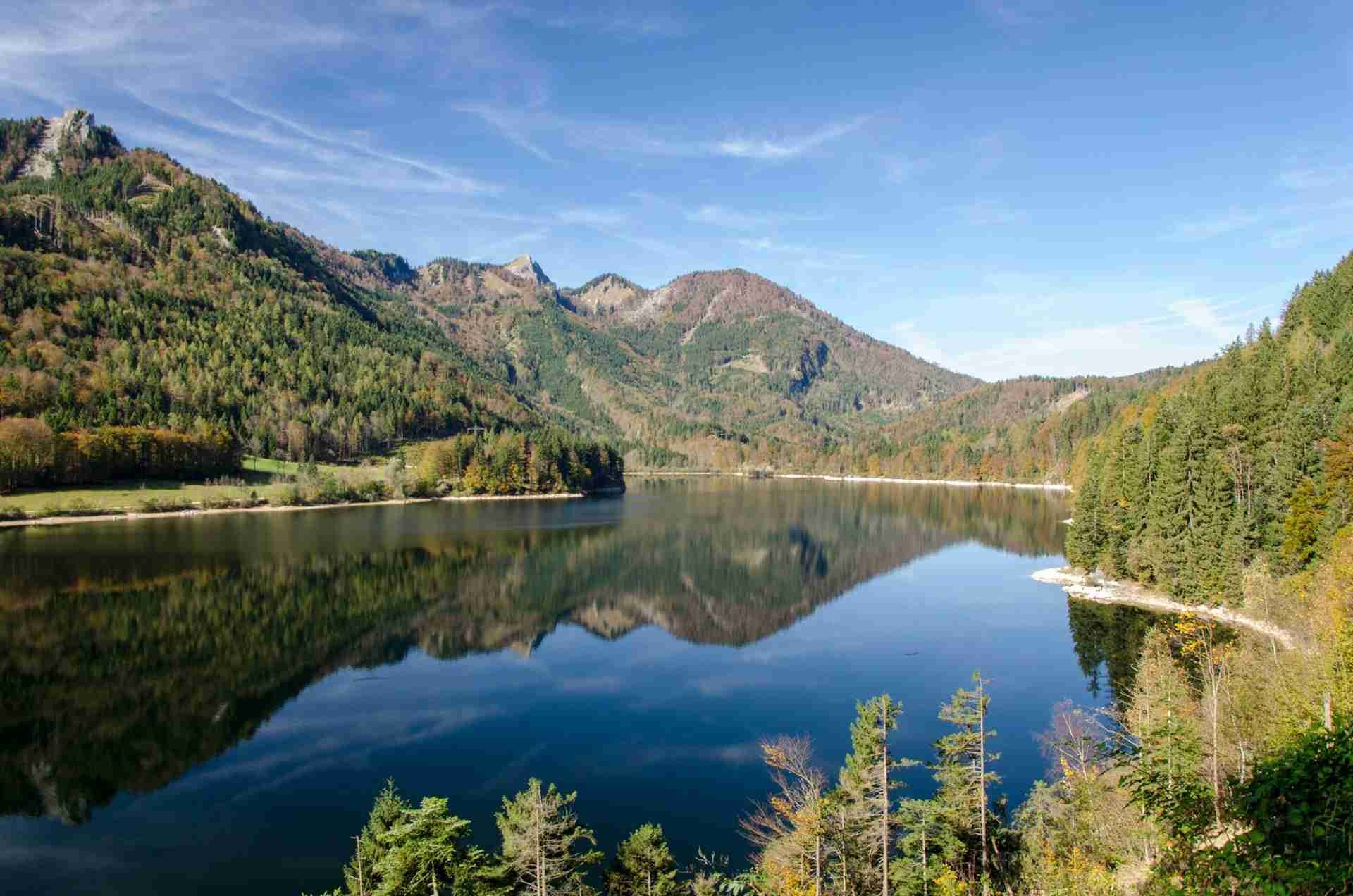
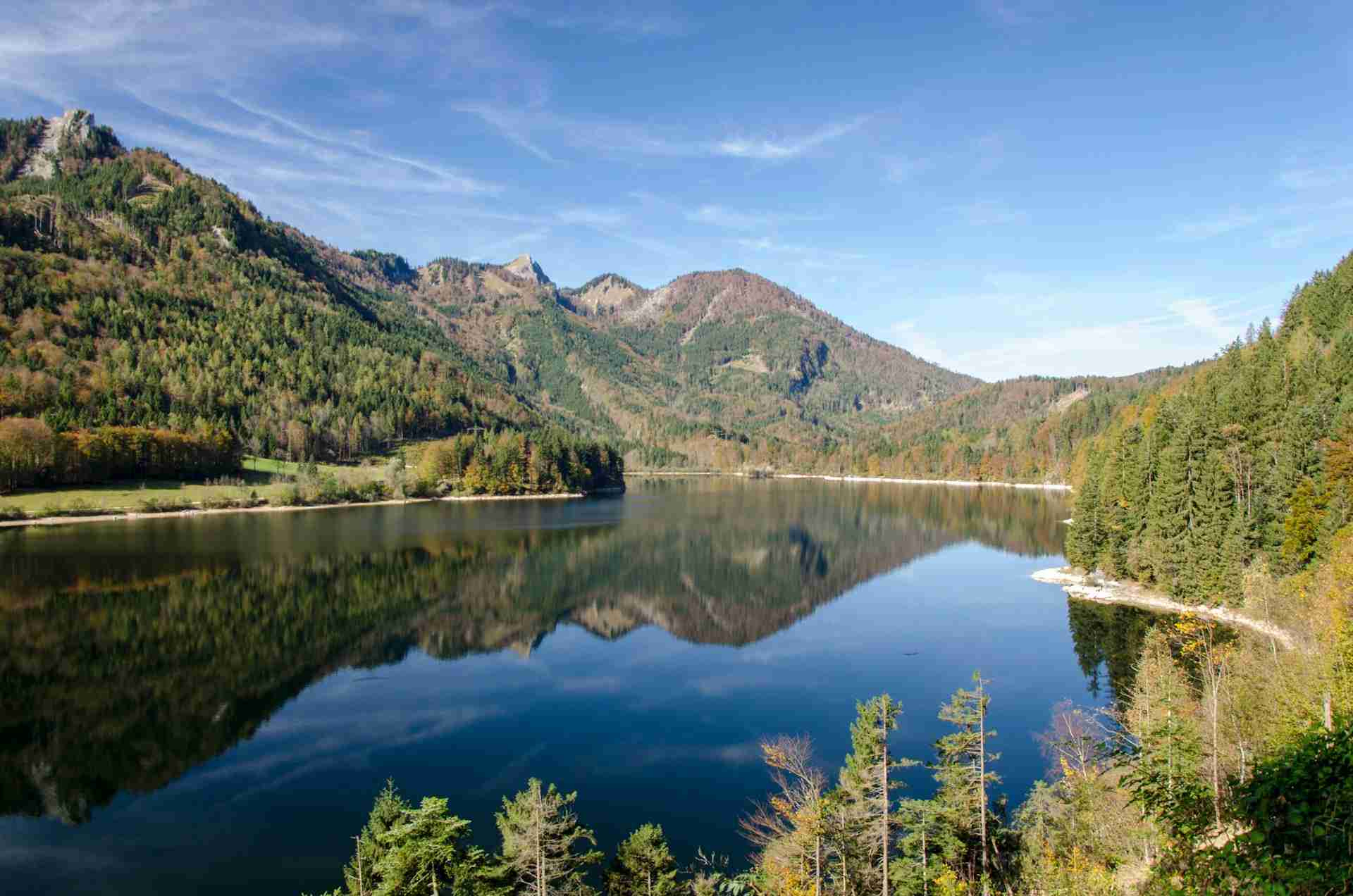
High above the town of St. Wolfgang in Austria's Salzkammergut region lies Schwarzensee, a secluded alpine lake that feels worlds away from the bustling shores of Wolfgangsee below. At an elevation of 716 meters, this lake is surrounded by dense forest and rugged peaks, offering photographers a more intimate and serene setting compared to the larger, tourist-heavy lakes of the region. The still surface of Schwarzensee often acts as a perfect mirror for the surrounding spruce and limestone cliffs, while its remote location ensures fewer visitors and quieter shooting conditions. The approach hike itself reveals several vantage points, but the reward is the calm, reflective waters of the lake paired with alpine cabins and untouched meadows. This is a destination where patience and an eye for subtle details are just as important as wide scenic compositions.
Best Photography Opportunities
• Reflections Across the Lake Surface
Schwarzensee is best known for its still, mirror-like surface that reflects the forested ridges and rocky outcrops around it. Early morning, before winds disturb the water, provides the cleanest reflections and the softest light. Wide-angle lenses allow you to capture both sky and water in symmetrical compositions, while mid-range focal lengths help isolate sections of the shoreline where reflection and reality meet. During autumn, the trees around the lake shift to warm yellows and oranges, adding vibrant color layers to these mirrored scenes. Long exposures can smooth any ripples and produce an almost glass-like finish across the lake.
• Alpine Cabins and Pastoral Details
Small wooden cabins dot the meadows and shoreline near Schwarzensee, giving photographers rustic subjects to pair with the lake. These cabins work particularly well as foreground anchors in wide compositions, helping to add scale and storytelling to otherwise expansive frames. In summer, cattle often graze in the nearby pastures, adding activity and texture to shots. Side lighting from the morning or evening emphasizes the grain of the wood and gives the cabins warmth against the cooler tones of the lake and forest. These structures balance the natural beauty with human presence, creating a quiet pastoral mood.
• Forest Edges and Shoreline Textures
The dense spruce forest around Schwarzensee creates layered compositions of vertical lines and deep shadows. Photographing from the shoreline, you can capture the contrast between the dark forest edges and the bright, reflective water. Mossy rocks and fallen trees provide detail-rich foregrounds, especially effective in low, diffused light. Close-up compositions of tree trunks or shoreline grasses reflected in the water offer abstract opportunities, particularly when wind distorts the mirror effect. Overcast conditions are perfect for these shots, as they prevent harsh highlights and maintain a consistent tone.
• Seasonal Changes and Snow Scenes
Schwarzensee transforms with each season, offering a wide range of visual moods. In spring, the meadows burst with wildflowers that can be framed against the lake, while summer delivers lush greenery and grazing animals. Autumn is perhaps the most photogenic season, with colorful foliage reflecting in the water. Winter often brings snow that covers the shoreline and cabins, turning the area into a monochrome landscape of white and dark forest. Snow-laden branches reflected in the water create strong contrasts and reward those willing to make the hike in colder conditions.
• Elevated Vantage Points Around the Trail
The hiking trail that leads to and encircles parts of Schwarzensee offers occasional elevated views where the lake is framed by trees. These higher points provide context, showing the basin-like shape of the lake and the way the forest surrounds it. Mid-range zoom lenses are effective here, allowing you to compress the scene while still capturing the balance of water, trees, and distant peaks. Shooting during golden hour adds depth, as warm light grazes the treetops and creates color contrast with the cool tones of the water below. These trail perspectives are quieter but add valuable variation to a portfolio of the lake.
Best Time to Visit
Schwarzensee can be photographed in every season, with each offering its own strengths. Spring is ideal for capturing fresh growth and wildflowers in the surrounding meadows, often with mist lingering on the water in early mornings. Summer brings the richest greenery and clearer skies, with long daylight hours providing ample time for exploration. The lake is popular with locals during this season, so early morning or late evening is best for avoiding visitors and maintaining tranquil compositions.
Autumn is arguably the most rewarding time, when the surrounding forest turns into a palette of gold and red. Reflections are especially vivid during this season, and morning fog often adds soft layering above the water. Winter access depends on snowfall but rewards photographers with snow-covered cabins and quiet, frozen landscapes. For lighting, sunrise offers the calmest reflections and side illumination across the lake, while evenings can produce warm colors in the sky mirrored on the water's surface.
How to Get There
Schwarzensee is accessed from the town of St. Wolfgang in the Salzkammergut region of Upper Austria. The most common route begins near St. Wolfgang, where a signposted trail climbs gradually toward the lake. The hike takes about one hour and is considered moderate, passing through forest and open meadows before reaching the shoreline. Parking is available in St. Wolfgang, with paid options close to the trailhead.
There is no fee to access the lake itself, and the trail is well maintained for most of the year. In winter, snow may obscure parts of the path, so appropriate footwear is required. The area around the lake is car-free, ensuring a peaceful environment for photographers. Facilities are minimal, though a small guesthouse operates seasonally near the lake, offering refreshments. Drones are permitted but should be flown with caution to avoid disturbing wildlife and visitors enjoying the quiet atmosphere.
Recommended Photography Gear
A versatile kit is best for Schwarzensee, as the location combines wide landscapes, rustic details, and reflective surfaces. A wide-angle lens, such as a 16 to 35 millimeter, is essential for capturing the lake and its surroundings in one frame. A 24 to 70 millimeter zoom is useful for balanced compositions that include cabins, meadows, and shoreline elements. A 70 to 200 millimeter telephoto lens allows for tighter shots of reflections, wildlife, or compressed views from higher vantage points.
A tripod is recommended for long exposures, especially when capturing mirror reflections or smoothing ripples on the water. A circular polarizer is valuable for reducing glare on the lake and enhancing the richness of forest greens. Neutral density filters allow for extended exposures, useful when incorporating movement from clouds or subtle water motion. In autumn and winter, waterproof boots and protective camera covers are advised, as shoreline conditions can be muddy or snowy. For wildlife or detail shots, a macro lens adds flexibility for capturing flowers, grasses, and textures along the shore.
Nearby Photography Locations
Just below Schwarzensee, Wolfgangsee is one of Austria's most celebrated lakes, offering expansive views, charming villages, and dramatic mountain backdrops. The towns of St. Wolfgang and Strobl provide excellent shoreline shooting opportunities, while boat rides give new angles of the surrounding peaks. Sunrise over the lake is especially rewarding, with mist often rising from the water.
Accessible by a cog railway from St. Wolfgang, the Schafberg summit provides one of the most commanding views in the Salzkammergut. From the top, you can photograph multiple lakes, including Wolfgangsee, Mondsee, and Attersee, all framed by the northern limestone Alps. Sunset from this vantage point produces spectacular light across the entire region.
• Postalm Plateau
Located a short drive from St. Wolfgang, Postalm is Austria's largest alpine pasture. In summer, the rolling meadows fill with wildflowers, and traditional huts dot the landscape. Winter turns the plateau into a snowy expanse, ideal for clean, minimal compositions. The open terrain offers wide-angle opportunities in every season.
• Gosausee
A little farther afield, Gosausee provides pristine reflections of the Dachstein massif. Its dramatic setting makes it one of the most photogenic lakes in Austria, particularly during early morning when the peaks glow in first light. The combination of towering rock walls and still water mirrors pairs well with Schwarzensee for a two-lake photography excursion.
This historic spa town is known for its imperial villas, river views, and cultural heritage. Its streets and riverside promenades offer strong urban compositions that contrast with the alpine lakes nearby. In winter, festive lights and snow add a charming seasonal layer to images of the town.
Schwarzensee is the kind of alpine location that rewards a slower pace and careful observation. Its quiet surface, rustic details, and seasonal variety give photographers endless ways to interpret the scene, whether through bold wide landscapes or subtle textures along the shore. Tucked away above Wolfgangsee, it provides a calm and intimate alternative to Austria's more crowded lake destinations, making it a valuable stop for anyone seeking both beauty and solitude in their images.
Comments
Loading comments…