
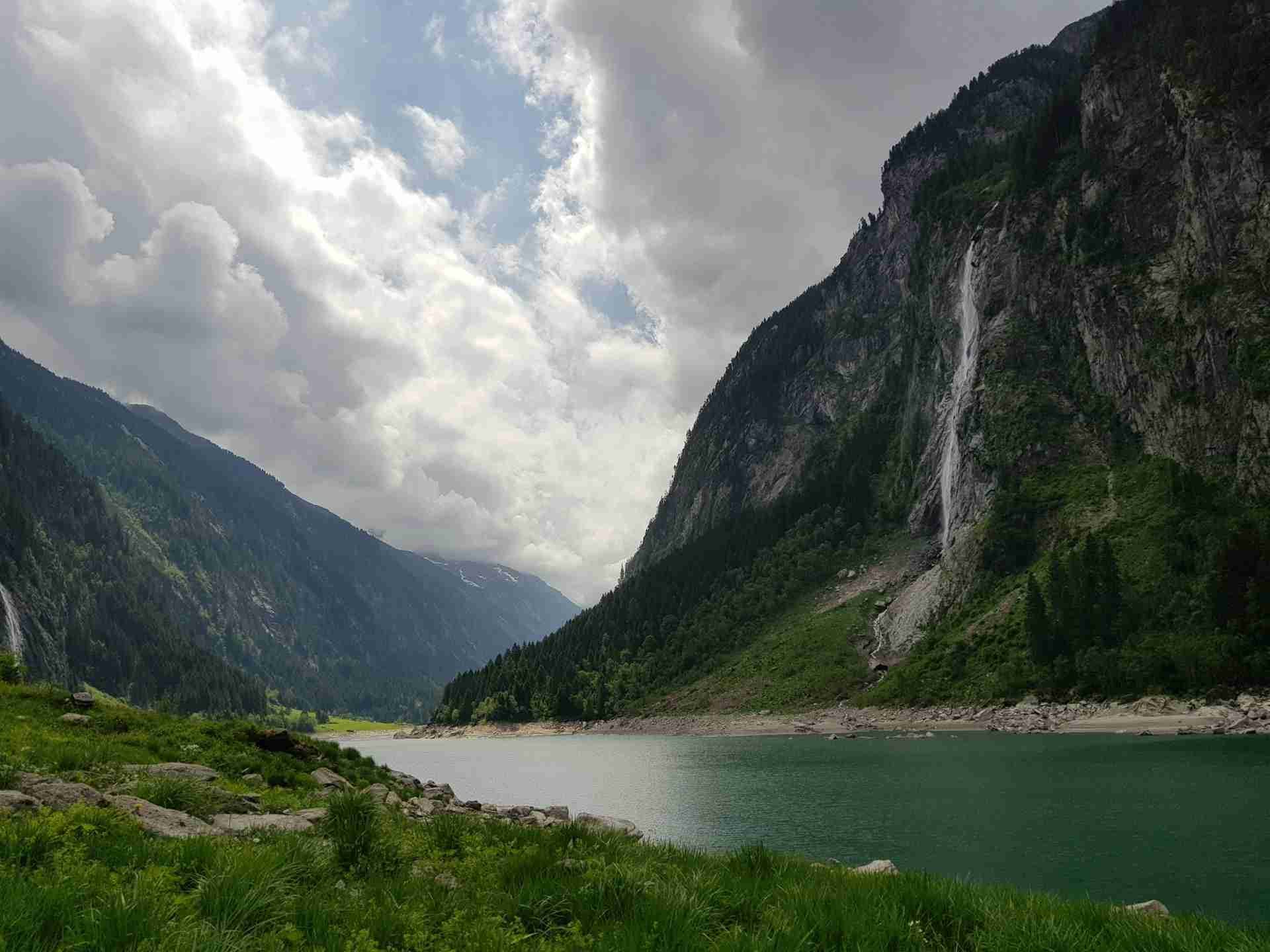
Tucked into a secluded valley just south of Mayrhofen, Speicher Stillup
is a peaceful alpine reservoir surrounded by steep cliffs, pine-covered slopes, and cascading waterfalls. While less famous than its larger cousin Schlegeisspeicher, this turquoise-hued lake offers an intimate and immersive setting for photographers seeking dramatic alpine reflections, soft morning light, and tranquil compositions far from the crowds. The Stilluptal valley is shaped by glacial erosion and heavy precipitation, making it lush and verdant in the summer months, with steep walls that channel light and weather into constantly shifting atmospheric moods.
The lake's quiet charm lies in its blend of symmetry and wildness: glassy water reflecting snowcapped ridges, wooden boathouses nestled among reeds, and fast-moving clouds casting shifting shadows across the mountain walls. It is a location that rewards both the contemplative landscape photographer and those who enjoy hiking into varied terrain for fresh perspectives.
Best Photography Opportunities
• Lakeshore Reflections with Mountain Backdrop
The most iconic images of Speicher Stillup are made from its northern end near the dam, where the reservoir opens into a perfect mirror of the cliffs, pines, and clouds that line its banks. Standing at the dam or descending to the lakeshore path allows photographers to frame strong vertical compositions using the reflection of the mountain walls in the calm surface of the water. In the early morning, before the first breezes ripple the lake, the symmetry is nearly flawless. A wide-angle lens helps capture the full breadth of the scene, while a mid-range zoom allows you to adjust your frame to include boulders, reeds, or dock structures in the foreground. These elements add depth and give the viewer a way into the image.
• Waterfalls Along the Western Wall
The western edge of the lake features numerous small waterfalls that spill down from hidden ravines and snowmelt streams high above. As you walk along the gently rising trail on the west side, you'll discover dozens of small falls that can be isolated with a longer lens. These cascades work well as standalone compositions or layered into broader shots of the forested cliffs. Overcast light is ideal here, helping to eliminate harsh contrast and preserving detail in the water and rock. In spring and early summer, the meltwater flows are at their most powerful, while autumn brings out mossy textures and cooler tonal palettes.
• Atmospheric Long Exposures and Valley Mist
Speicher Stillup's geography creates frequent low cloud and morning mist, especially following rainfall. These conditions add a layer of softness and movement to long exposure work. Positioning yourself just uphill from the lake, or along one of the small inlets near the southern end, allows you to shoot across water and frame the opposing ridgeline in layers of fog and pine. ND filters make it possible to capture the gentle flow of clouds along the valley or smooth the water's surface into a glassy expanse. These moody scenes are ideal for black-and-white processing, emphasizing texture and form rather than color.
• Dockside Minimalism and Natural Symmetry
On the northeastern edge of the lake near Stilluphaus, a few wooden docks, boats, and mooring structures sit quietly against the water. These elements introduce human scale into the alpine environment, providing excellent subjects for minimalist compositions. A standard zoom or fast 50mm lens is well suited for capturing quiet, contemplative scenes, where the geometry of the dock contrasts with the fluidity of the lake and the randomness of the surrounding vegetation. These images work best in soft morning or evening light, or under flat skies that allow textures to come forward without distraction.
• Close-up Studies of Alpine Flora and Stream Inlets
The inflow points at the southern tip of the reservoir feature shallow pools, boulder gardens, and dense wildflowers during the growing season. A macro lens or a fast prime allows for close-up studies of these elements—ferns catching dew, ripples forming around submerged rocks, or color variations in the sediment at water's edge. These subjects are most photogenic in diffused light, which reduces glare and brings out the vibrancy of alpine greens and yellows. Slow down your pace here to explore compositions that reward patience and an eye for subtle interplay between plant life and the movement of water.
Best Time to Visit
Speicher Stillup is best photographed between late May and early October, when the toll road into Stilluptal is open and the trails surrounding the lake are snow-free. The most ideal photographic window runs from mid-June through mid-September, when the water level is high, the waterfalls are flowing, and the surrounding valley is at its most vibrant. During this time, mornings bring still water and often misty conditions, especially after rain, creating beautiful atmospherics that are ideal for reflection shots and long exposures.
Sunrise is particularly rewarding, as the eastern slopes above the lake are the first to catch the sun's light. This glow gradually spills across the water and moves up the western cliffs, offering an evolving palette of warm tones that can be worked into both wide and intimate compositions. Golden hour in the evening is more subdued due to the valley's steepness, but the diffuse side lighting it provides is excellent for detail and texture photography.
Autumn visits in late September can produce early fall color in the larch and understory, while the waterfalls begin to thin and the light grows cooler and more directional. Weather can shift quickly in this enclosed valley, so dramatic skies and moody conditions are common, particularly in late afternoon. These changes in light and cloud offer unexpected and cinematic moments for photographers willing to wait and watch the transformation unfold.
How to Get There
Speicher Stillup is accessed via the narrow, winding Stilluptal toll road, which begins just south of Mayrhofen in Austria's Zillertal Valley. This scenic road is open seasonally from mid-May to early October and winds through a heavily wooded gorge before emerging into the Stillup reservoir basin. The drive takes approximately 20 to 30 minutes and includes sections of single-lane traffic with periodic pullouts for passing. While paved, the road can be tight and requires cautious driving, especially during peak visitor times.
At the end of the road, parking is available near Stilluphaus, a traditional alpine inn located at the reservoir's northern shore. From there, you can walk directly to the dam and lakeshore or take one of the surrounding trails that branch along the water's edge. The western trail offers elevated views and quieter photo opportunities, while the eastern bank gives more immediate access to docks and reflections. During high season, taxis and small shuttle services also operate between Mayrhofen and Stillup, making the location accessible even without a private vehicle.
There is no charge for hiking or photography at the lake itself, and tripods are welcome. The only cost is the toll to access the valley road. Overnight accommodation is available at Stilluphaus for those looking to shoot sunrise, sunset, or night skies without leaving the area. The inn also offers food, drinks, and trail information for longer photographic explorations of the valley.
Recommended Photography Gear
A well-balanced kit for Speicher Stillup should prioritize flexibility, portability, and readiness for changing weather conditions. A wide-angle lens is essential for capturing the reservoir's full reflections, especially during morning calm when the water mirrors the cliffs and sky above. A focal range of 16–35mm works well for these compositions and allows you to include foreground interest like flowers, rocks, or dock edges.
A mid-range zoom (24–70mm) is useful for general-purpose shooting, especially when working from trail level or incorporating manmade structures like boats and fences into broader landscape scenes. A telephoto lens (70–200mm) enables more abstract framing of waterfalls, distant trees, and atmospheric layers—especially when weather is rolling through the valley or mist clings to the cliffs.
For long exposure work, bring a sturdy tripod and a selection of ND filters to smooth moving water and clouds. A circular polarizer is helpful for removing surface glare and deepening color in both the lake and the foliage. A macro lens or extension tube allows you to document alpine plant life and shallow stream beds in detail.
Pack a lens cloth and rain cover, as sudden mountain showers are common, and humidity in the valley can fog glass quickly. Batteries drain faster in cooler conditions, so extras are recommended, especially for extended blue hour or long exposure sessions. Lightweight, weatherproof storage and a compact daypack will help you navigate trails efficiently while keeping your gear safe and accessible.
Nearby Photography Locations
• Stilluphaus and Surrounding Meadow
Just steps from the lake, Stilluphaus provides more than food and lodging—it sits at the edge of a wide, open meadow that bursts with wildflowers in summer. Early morning light spills across the field and the adjacent slopes, creating beautiful opportunities for backlit grass, silhouetted barns, and atmospheric haze drifting through the trees.
• Grüne-Wand-Hütte and High Alpine Trails
Located deeper in the Stilluptal valley, this alpine hut can be reached via a trail that follows the reservoir's upper reaches and then climbs steadily through forest and pasture. The views back toward the lake are increasingly expansive, and the hut itself offers a picturesque subject nestled in high alpine terrain. From here, you can continue on ridge routes with sweeping valley panoramas.
Back in the valley, the Penkenbahn cable car provides access to a network of trails and viewing decks high above Mayrhofen. From the summit station, you can frame Speicher Stillup from a distance or use the ridgelines to photograph broader alpine compositions that contrast with the intimacy of the reservoir.
Located in a neighboring valley, Zillergrund offers a more expansive alpine reservoir experience with similar photographic rewards—reflections, dam architecture, and high valley views. Its scale and infrastructure make for striking contrasts with the natural setting of Speicher Stillup, offering variety for those exploring the region in depth.
A short drive beyond Ginzling leads to one of the most iconic photographic sites in the Zillertal Alps. While more demanding to reach, the suspension bridge near Olpererhütte provides sweeping views over Schlegeis and the high alpine basin beyond. Combining a visit to Speicher Stillup with a sunrise or overnight shoot at Olpererhütte creates a diverse and immersive alpine photography itinerary.
Speicher Stillup is a place where light moves slowly and quietly across the landscape, revealing its shapes and colors with each passing hour. It is a location for deliberate photography—where waiting by the water's edge or following a quiet trail often yields the strongest images. In a region known for grand alpine drama, Stillup offers subtlety, calm, and reflection—both in its water and in the experience it provides to those who photograph it.
Comments
Loading comments…