
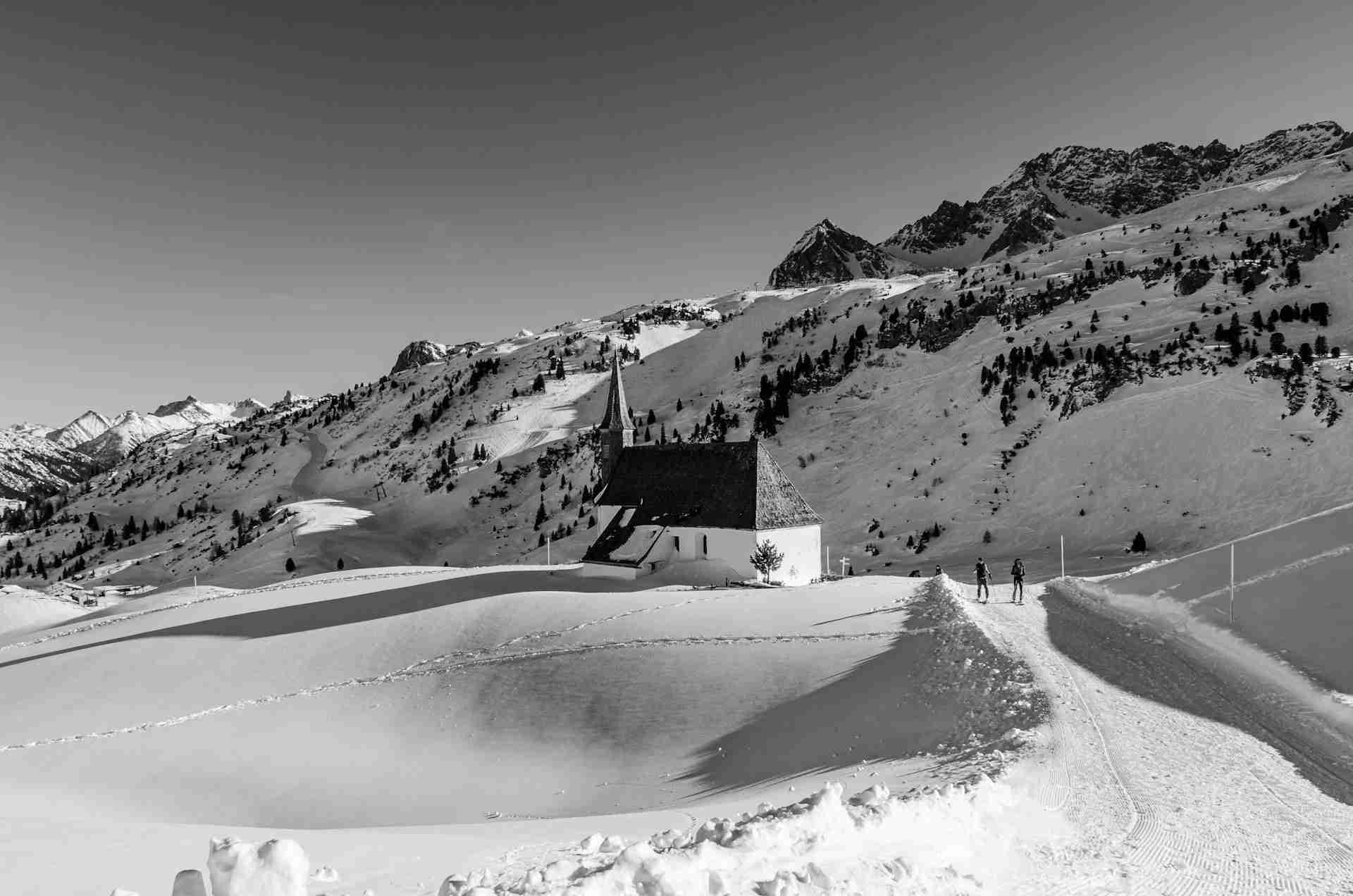
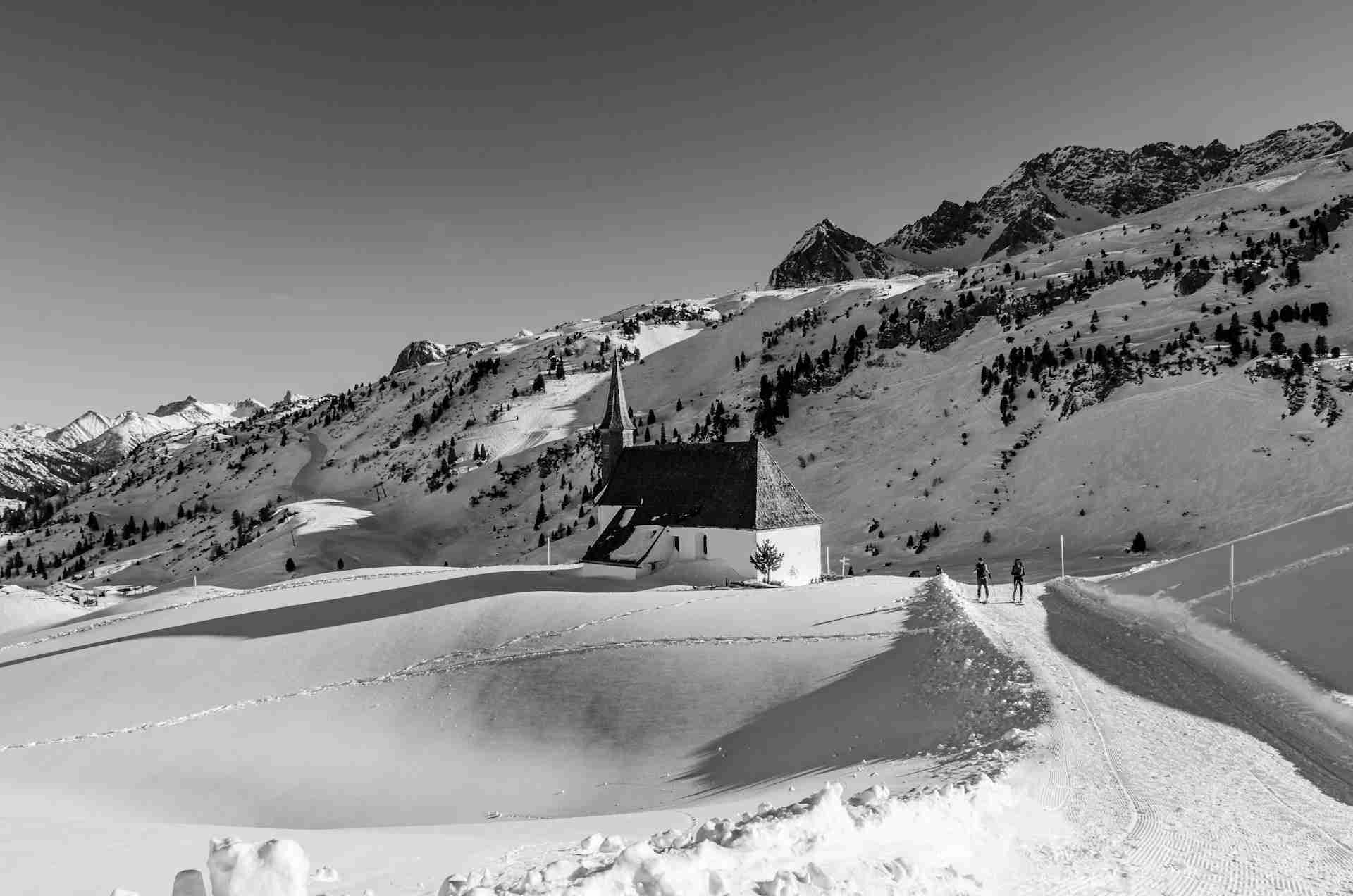
Perched above the small mountain village of Warth, St. Jakobus am Simmel is a chapel that feels both isolated and grounded, set against a sweeping backdrop of the Austrian Alps. Its modest white structure and dark shingled steeple rise cleanly from a grassy slope, often catching the first or last light as it sweeps across the Lechtal mountains. The surrounding landscape is expansive and quiet, giving photographers the ability to work with clear sightlines, changing weather, and broad alpine color. Whether approached on foot or framed from a distance, the chapel offers a consistent visual anchor in a landscape that is always moving. This is a location for patient image-making shaped by elevation, weather, and the slow movement of light through a mountain day.
Best Photography Opportunities
• Full Chapel and Mountain Composition from the Trail Below
The most complete view of St. Jakobus am Simmel comes from the lower trail that curves beneath the hill, allowing you to shoot uphill toward the chapel with the mountain range in the background. A wide-angle lens around 24 millimeters lets you hold both the structure and the peaks in frame without distortion. This shot is strongest during sunrise or sunset when side light brings out the contrast between the white walls and the textured mountain backdrop. Morning offers sharper contrast and clarity, while evening brings more warmth to the grassy slope. A tripod is useful for precision framing and exposure blending during low light.
• Side Profile Framing with Alpine Sky and Meadow Detail
Positioning yourself level with the chapel and moving east or west allows you to capture its profile against sky or ridgeline, depending on light direction. This is a strong composition for spring and early summer when wildflowers and fresh meadow textures fill the foreground. Use a polarizer to manage sky contrast and deepen color, especially on clear days. This side view balances the chapel's geometry with the open natural lines of the hillside and sky. It's also a clean frame that works well for both color and monochrome treatments.
• Close Detail of Rooflines and Steeple with Sky Texture
The chapel's steep rooflines, wooden shingles, and cross-tipped steeple offer excellent detail work when shot against an active sky. A midrange lens like a 50 millimeter allows you to isolate form while retaining some background motion. These images benefit from changing weather conditions such as moving clouds, fog, or late sun breaking through storm cover. Be ready to adapt, as alpine light can shift quickly, creating new opportunities every few minutes. These tighter compositions offer mood and clarity in equal measure.
• Silhouette of the Chapel against Color Shift in the Sky
Shooting from the west during sunset or from the east at sunrise gives you the option to turn the chapel into a clean silhouette. This works especially well when light is low and color is beginning to spread across the horizon. Use a small aperture to maintain sharp lines, and consider bracketing if you want to preserve some shadow detail without flattening the mood. This type of composition emphasizes shape over texture and is strongest when the sky is layered with soft color or filtered cloud.
• Framing with Foreground Wildflowers or Seasonal Detail
During late spring and early summer, alpine flowers and fresh grass offer strong foreground elements that can be used to lead the eye toward the chapel. Work from a lower angle with a wide aperture to create controlled depth of field, or stop down to keep foreground and background sharp. These compositions benefit from early morning dew, soft directional light, or slight overcast conditions that reduce contrast. In autumn, this same approach works with fallen grass, warm soil, or dusting of early snow.
Best Time to Visit
The best time to photograph St. Jakobus am Simmel is from late May through early October, when the trails are clear and the surrounding slopes are accessible on foot. Spring brings fresh alpine growth and vibrant meadow textures, especially during the early mornings when light angles are low and shadows stretch long across the hill. Summer offers clean skies and crisp air, but also faster moving clouds that allow for dynamic sky compositions. Light during this time is brightest in the morning, with sunset often partially blocked by surrounding peaks.
Autumn adds a softer, warmer light across the chapel and hillside, along with occasional low cloud or early frost that adds visual contrast. This season also sees fewer visitors, allowing for more patient shooting conditions. Winter access depends on snow and trail conditions, and the chapel may be surrounded by deep snowbanks. Sunrise and sunset are always best for light, though overcast conditions work well for detail shots and color balance. Weather in this part of the Alps can change within an hour, so flexibility and layered gear are essential.
How to Get There
St. Jakobus am Simmel is located just above the village of Warth in the Austrian state of Vorarlberg. From the village center, it's a short and clearly marked walk via a steep but manageable trail that leads directly to the chapel. The path is paved and well-maintained during warmer months, though traction may be limited after rain or in early spring thaw. Driving access into Warth is available from either Lech to the east or via Bregenzerwald from the west. The route from Lech via the Hochtannberg Pass is especially scenic but should be checked for closures during winter.
There is no entrance fee and the chapel exterior is accessible year-round. The surrounding hillside allows for full movement around the structure, and there is ample space to work with various compositions without obstruction. Drones are permitted with standard altitude and distance restrictions, though strong alpine wind can make aerial work challenging. Parking is available in Warth with easy access to the walking path. For sunrise sessions, plan to arrive early and hike up with a headlamp. The location is quiet and generally uncrowded, making it easy to work without distraction.
Recommended Photography Gear
A lightweight but flexible setup works best for St. Jakobus am Simmel. A wide-angle lens between 16 and 35 millimeters is essential for capturing the chapel within the mountain environment. A midrange zoom such as a 24 to 70 millimeter lens offers excellent versatility for side angles, layered compositions, and detail shots. A short telephoto in the 70 to 200 millimeter range is useful for compressing distant backgrounds or isolating architectural features against cloud or sky.
A stable tripod is critical for golden hour and long exposure work, particularly in low light or for multi-shot panoramas. A circular polarizer helps manage glare on the white chapel walls and deepens color in the alpine sky. A 6-stop neutral density filter is useful for smoothing cloud movement in longer exposures. Be sure to carry a microfiber cloth for wiping lenses in case of condensation or light rain. Weatherproof clothing and protective gear are necessary in all seasons, as conditions can shift quickly. A small pack with room for water and layers will make longer sessions more comfortable.
Nearby Photography Locations
Just over the pass from Warth, Lech offers classic alpine village scenes, riverfront compositions, and dramatic valley light. A walk along the Lech River gives access to bridges, waterfalls, and layered forest backdrops. This area is especially photogenic during sunrise when low light cuts across the valley floor.
A deep blue alpine lake reached by a seasonal shuttle road from Lech, Formarinsee sits below dramatic peaks and is ideal for reflection work and wide environmental frames. Early morning provides still water and cool color gradients. A wide-angle lens and tripod are essential.
A smaller, quieter alpine lake accessible by trail from Schröcken, Körbersee offers water reflections, summer flower meadows, and clean compositions with traditional alpine huts. Fog often forms here during early mornings, adding atmosphere and softness to the frame.
This mountain pass road offers sweeping roadside views of alpine ridges, rolling meadows, and open sky. It's a perfect place for drone photography or telephoto landscapes. Sunset provides strong side light across the upper slopes and ridgelines.
A more ambitious hiking route from the village offers elevated views over Warth and the surrounding valleys. These trails are best explored with light gear and offer strong perspective lines and rock formations. Afternoon light is ideal for shaping terrain with shadow and contrast.
St. Jakobus am Simmel rewards simplicity and patience. It isn't dramatic in size or detail, but it stands in balance with the land around it. For photographers who prefer quiet compositions, natural light, and open alpine rhythm, this chapel offers a focused and uncluttered subject in a location that changes hour by hour. It's a place to return to, not to rush.
Comments
Loading comments…