
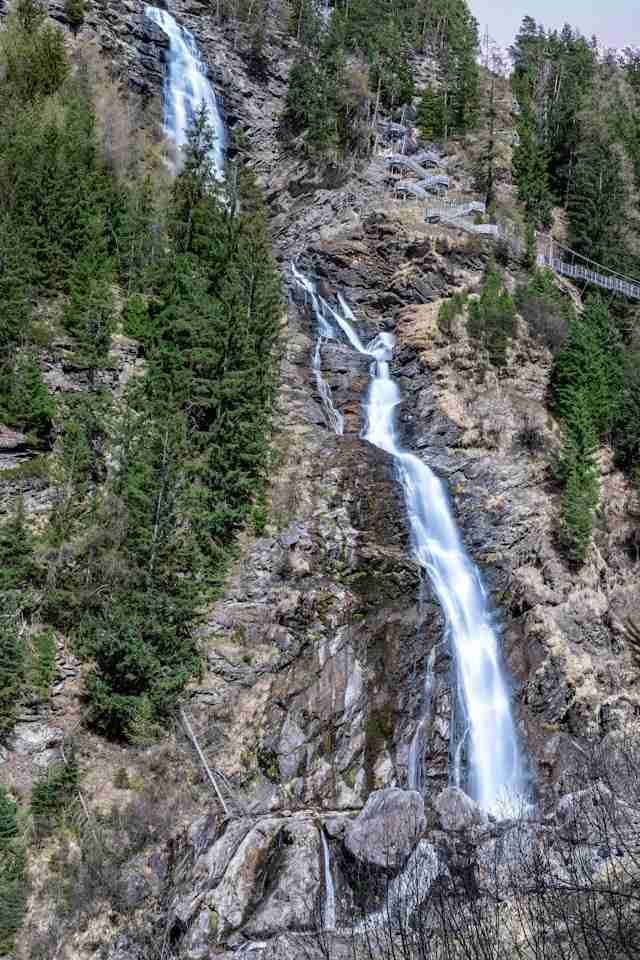
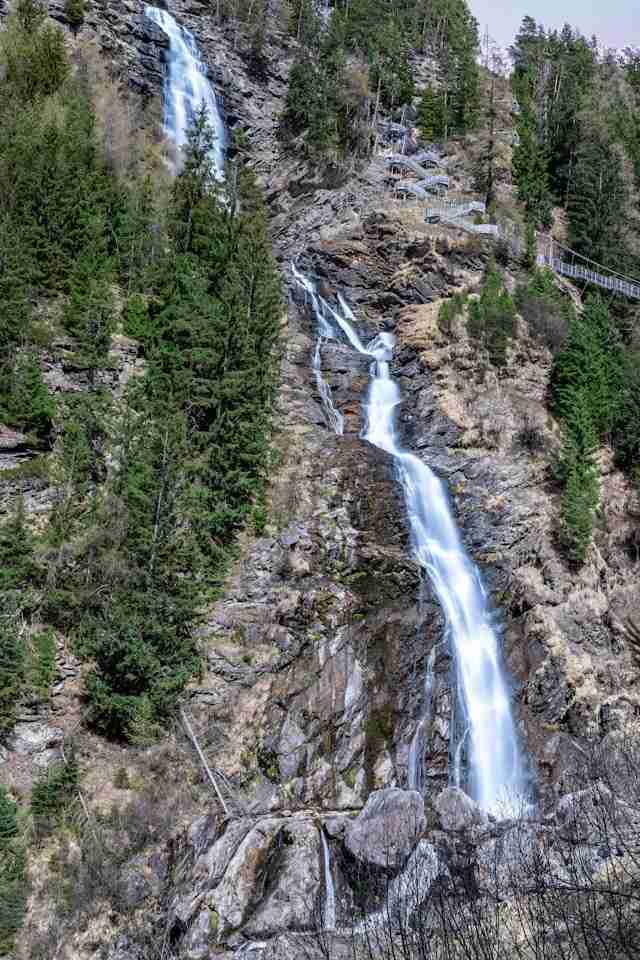
Plunging 159 meters in a roar of spray and motion, Stuibenfall is the tallest waterfall in Tyrol and one of the most visually compelling locations in Austria's Ötztal Valley. Carved into the mountainside near the village of Umhausen and accessible via a dramatic, multi-level trail, the waterfall isn't just a vertical spectacle—it's a dynamic environment of mist, rock, forest, and sound. Whether you're photographing the entire cascade from a distance or studying how its torrents refract afternoon light, Stuibenfall rewards both epic framing and intimate exploration. As part of the alpine system fed by the Niederthai plateau, the falls shift with the seasons and snowmelt, offering changing moods from thundering volume to icy elegance.
Best Photography Opportunities
• Full-Cascade Perspective from the Base Platforms
: At the lower section of the trail, several wooden viewing platforms offer direct sightlines to the entire vertical drop of Stuibenfall. These locations are essential for capturing the full length of the cascade in a single frame. Use a wide-angle lens (14–24mm) and compose with foreground elements like the weathered handrails, moss-covered stones, or wildflowers to add scale and layering. In spring and early summer, when the meltwater is at its strongest, you'll capture the waterfall at peak power. Overcast skies are ideal to avoid harsh highlights and bring out the cooler tones in the spray and surrounding rock. Long exposures here are challenging due to wind and mist, but using a lens hood and frequent wiping allows for subtle motion blur while retaining clarity in the surrounding environment.
• Dynamic Mid-Falls Views from Zigzag Switchbacks
: As the trail ascends, it zigzags across the hillside, offering several pull-offs where the mid-section of the falls is dramatically framed by spruce forest and craggy outcrops. These intermediate viewpoints are perfect for medium focal lengths (35–85mm), allowing you to focus on isolated sections of falling water as it twists and turns across rock ledges. The mist here is ever-present, and sunlight filtering through it can create momentary rainbows or atmospheric light shafts—stay patient and watch for changing angles. Compose with diagonals in mind: the line of the fall often intersects with tree trunks or path railings, offering compositional tension. Shoot handheld with fast shutter speeds to freeze cascading details, or use a tripod for smooth motion trails where safe footing permits.
• Suspension Bridge and Lateral Close-Up of the Upper Falls
: One of Stuibenfall's signature features is the steel suspension bridge that crosses just in front of the upper section of the cascade. This spot offers a side-on, almost face-to-face perspective of the falling water, dramatically framed by the gorge walls and the expanse of forest stretching out behind. With a 24–70mm lens, you can capture both the waterfall in profile and the dynamic foreground elements such as bridge cables, rivets, and railings. Include a hiker in your frame to create a sense of scale and narrative. This location is especially good in late afternoon when side lighting adds dimensionality to the falling water and highlights textures in the cliff face. Use bracketed exposures or an ND filter to control the intense contrast between bright water and darker rock.
• Abstract and Top-Down Views from the Source Pools
: After crossing the bridge, the trail leads to the top of the falls, where you can photograph the stream as it spills into its descent. This upper zone is less about the vertical drop and more about shape, motion, and texture. Here, the water divides and channels through a series of rock shelves, creating small rapids and pools framed by alpine flora and light-colored stone. Use a telephoto lens (70–200mm) to isolate swirling currents, sunlit foam, or the interplay of shadow and texture on wet surfaces. These images work particularly well in soft light—either early morning or under light cloud cover. A circular polarizer helps reduce glare and brings out subtle color in the rocks and foliage. Slow shutter speeds can transform these textures into soft veils, while faster settings capture the energy of the plunge before it becomes mist.
• Nighttime and Blue Hour Long Exposures from the Forested Lower Path
: As night falls, the lower part of the Stuibenfall trail is illuminated by subtle, warm-toned lights, creating a rare opportunity for long-exposure waterfall work after dark. Set up on the trail's lowest viewing platform, where the light from the lamps reflects gently off the falling water and adjacent rocks. Use a tripod, remote shutter release, and low ISO to maximize image clarity during 10- to 30-second exposures. The surrounding trees form dark silhouettes that contrast beautifully against the illuminated flow, and the muted color palette of dusk or blue hour enhances the serenity of the scene. This location also works well for minimalist compositions that emphasize vertical motion and soft light transition. Watch for subtle highlights catching in the spray, and use the ambient glow to paint soft edges around the waterfall's core.
Best Time to Visit
Stuibenfall's character shifts significantly throughout the year, offering unique opportunities depending on the season and weather. From May through July, the snowmelt from the Niederthai plateau feeds the waterfall at maximum volume. During this time, expect the most powerful visuals—roaring torrents, thick mist, and dramatic contrast between water and rock. It's the best season for full-cascade shots and mist-framed views from the switchbacks and suspension bridge.
In autumn (late September to October), the flow slows slightly, but the surrounding forest bursts into color, creating a warm backdrop of orange, yellow, and red. The reduced spray makes long exposures more manageable, and the golden light of early morning brings out incredible tonal variation in the foliage and cliff face.
Winter visits depend on snow and trail conditions, but when accessible, Stuibenfall becomes a frozen sculpture. Ice clings to ledges, mist freezes on branches, and sections of the waterfall may solidify into translucent cascades. With care, this is an exceptional season for high-contrast black-and-white images and minimalism.
Spring offers a transition between these extremes. Snowmelt begins early at the top of the trail, while forest undergrowth remains bare—giving you views of the rocks and textures normally obscured by leaves. Visit during weekday mornings to avoid crowds and to catch the softest, most diffuse light coming through the forest canopy.
How to Get There
Stuibenfall is located just outside the village of Umhausen in the Ötztal Valley, western Austria. The main access point is via the well-maintained parking area near the Ötzi Village and Birds of Prey Park. From the car park, you'll follow signs for "Stuibenfall Wanderweg"—the start of a trail that winds uphill toward the base of the falls. The hike to the first viewing platform takes about 15–20 minutes, while reaching the top viewpoints and bridge takes 45–60 minutes at a moderate pace.
There is no entrance fee to access the waterfall or its trails, though the parking area requires a small fee. In summer, a shuttle service may run from nearby accommodation hubs. Public buses serve Umhausen from Ötztal Bahnhof (the nearest rail station), and from the village center, it's a short walk to the trailhead.
The trail itself includes more than 700 stairs in total and climbs through rocky forest terrain. Footpaths and staircases are well-constructed with safety railings, but hikers should wear sturdy footwear and prepare for elevation gain. Winter access may be limited or closed due to ice—always check with local tourist offices for seasonal conditions and trail status before visiting.
Gear for Capturing Alpine Power and Mist-Laced Forest
Stuibenfall's varied terrain and lighting conditions demand a flexible kit that balances coverage, durability, and control. Start with a wide-angle zoom (14–30mm or 16–35mm) for encompassing the full height of the falls or capturing dramatic compositions from the lower platforms and switchbacks. A standard zoom (24–70mm) is ideal for mid-trail work and compositions that incorporate human scale, such as the bridge, stairs, or trail structures.
A mid-telephoto (70–200mm) lens will help you isolate motion patterns, abstract textures, and the finer details in the upper pools or mist-shrouded rock faces. For long exposure work, bring both a sturdy tripod and a remote shutter release to minimize vibration, especially when working near footpaths or windy edges. ND filters (6- and 10-stop) are essential for smoothing motion or extending exposure time during the day, while a circular polarizer will cut glare and enhance water and foliage contrast.
Keep a microfiber cloth handy—lens surfaces will get wet quickly due to ever-present spray. A lens hood adds some protection, and weather-sealed camera bodies or protective covers are strongly recommended. Wear layers and waterproof hiking shoes, and pack a small rain cover for your bag. For nighttime or twilight shoots, bring a headlamp for navigation and keep ISO low to maintain clean, detailed shadows.
Nearby Photography Locations
• Niederthai Plateau
: Located just above the falls, this high alpine meadowland offers tranquil rural scenes—wooden barns, pastures, and mist rolling over ridgelines at dawn. Ideal for sunrise landscape work and pastoral storytelling.
• Ötzi Village and Badesee Umhausen
: Adjacent to the trailhead, this open-air archaeological park and lake combine cultural interest with reflective landscape potential. Use the still surface of the lake for mirror-like compositions of the cliffs above.
A smaller and lesser-known cascade located farther down the valley. This location provides a tighter, more intimate waterfall setting surrounded by mossy rock and dense trees—perfect for secluded shooting.
: A pristine alpine lake near Oetz, just 15 minutes away. Morning fog, crystal-clear water, and mirrored peaks make this a favorite among photographers seeking calm and symmetry.
• Kühtai Alpine Pass
: A high-elevation area with accessible trails, dramatic peaks, and seasonal lakes. Excellent for combining expansive mountain photography with minimalist alpine compositions at sunrise or dusk.
Stuibenfall is a location of energy and immersion—where you feel the photograph as much as you compose it. The falls are never the same twice, and every section of the trail offers a new angle, a new texture, or a different rhythm. It's a place to slow down, respond to the sound and motion, and let the alpine elements guide your lens.
Comments
Loading comments…