
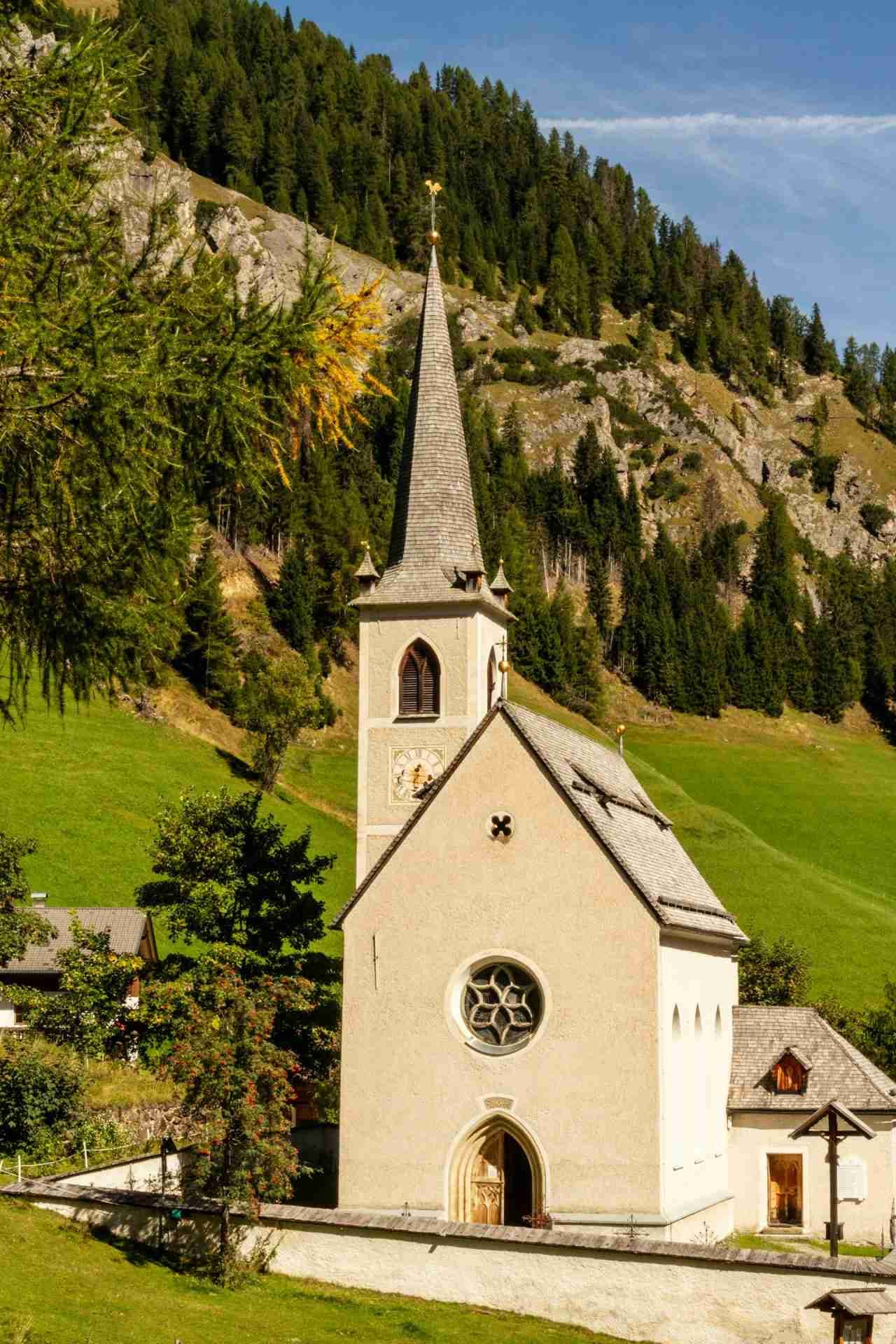
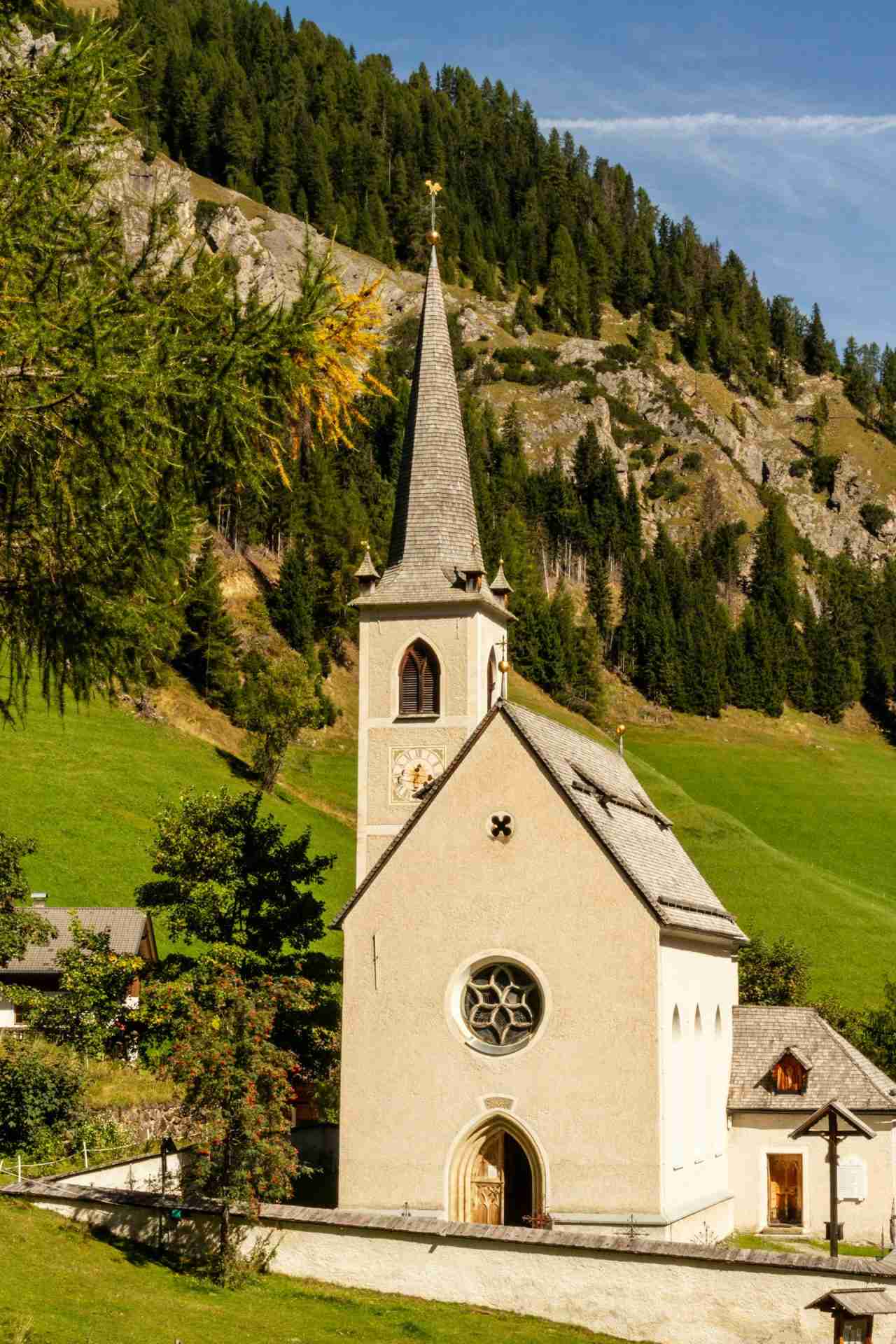
Tucked into the hills above Innervillgraten, Wallfahrtskirche Maria Schnee is a quietly beautiful photography location. This small pilgrimage church looks out over the Villgraten Valley with views stretching across alpine pastures and dramatic ridgelines. The simple white structure with its pointed steeple feels timeless against the rugged landscape, especially when morning fog rises from the valley or when golden light hits the surrounding peaks. Photographers willing to make the journey up to Kalkstein are rewarded with peaceful conditions, crisp air, and a setting that feels far removed from everyday distractions. Whether you're after layered landscapes, moody weather, or minimalist compositions, this is a place where a slower, more patient approach really pays off.
Best Photography Opportunities
• Framing the Church Against the Mountains
The classic shot here is the church set against the dramatic slopes that rise up behind it. You'll find the best angle just below the chapel, where you can shoot slightly uphill and place the steeple against the higher ridgelines. A wide lens will let you include both the church and the larger landscape, especially during golden hour when side light pulls detail out of the hills. In the colder months, snow adds strong contrast between the white walls of the church and the darker peaks. It's a scene that changes constantly with the weather, from bright clear skies to soft clouds drifting through the valley below.
• Morning Fog and Valley Layers
On cooler mornings, fog often settles in the Villgraten Valley, creating beautiful layers when viewed from the church grounds or nearby trails. This is one of the best times to shoot here, as the light filters through the mist and separates the mountains into soft, pastel toned layers. Using a longer lens helps compress the distance and emphasize the stacked ridges and trees that appear to float above the fog. The church itself can also be photographed with this backdrop, offering a quiet, dreamlike scene that feels both remote and serene.
• Simple Compositions with the Chapel Alone
While the grand views are a major draw, the church itself is worth photographing up close. Its clean lines, small windows, and shingled roof make it perfect for minimal, detail oriented shots. Use a standard or short telephoto lens to isolate parts of the structure with soft hills or sky in the background. Overcast days work especially well for this, flattening the light and letting you focus on form and tone. Shooting around the back or side of the church opens up more angles where you can play with negative space and clean backgrounds.
• Seasonal Changes Around the Chapel
Throughout the year, the area around Wallfahrtskirche Maria Schnee changes dramatically. In summer, green pastures surround the chapel dotted with wildflowers. By autumn, the surrounding larch trees turn golden, adding warm tones that pair beautifully with afternoon light. Winter brings full snow cover, and the church becomes a striking shape against the soft white of the landscape. These seasonal differences make it worth returning if you're nearby or planning a longer photography trip through the region.
• Trail Views Looking Back Toward the Church
As you hike away from the chapel along the nearby trails, several spots offer great views looking back toward it with wide mountain backdrops. These vantage points give you more room to work with the relationship between the building and its environment. Framing the church as a small detail in a wide landscape helps show the scale of the area and adds context to tighter shots taken on site. These trail views work especially well at sunrise and sunset when the surrounding peaks catch warm light.
Best Time to Visit
The best light for photography at Wallfahrtskirche Maria Schnee usually happens in the early morning, especially when fog or mist is present in the valley below. The sun rises behind the mountains, and soft side light reaches the chapel within the first hour after sunrise. This creates long shadows across the hillside and highlights the texture of the land without being too harsh. Morning is also the quietest time to shoot, with fewer visitors and more stillness in the air.
Late afternoon and early evening also offer good light, especially in summer and early autumn when the sun sets later behind the western ridges. At this time, golden light sweeps across the landscape and catches the chapel's white walls at just the right angle. Winter shooting can be especially beautiful if you're prepared for colder conditions. Low sun angles, fresh snow, and clear skies create dramatic contrast and clean compositions, but be sure to check road conditions before making the trip.
Weather shifts quickly in the mountains, so it's worth checking the forecast before you go. Light fog, broken clouds, or light snow can turn an ordinary scene into something really special, and having the flexibility to wait for breaks in the light can make a big difference.
How to Get There
Wallfahrtskirche Maria Schnee is located in Kalkstein, a small hamlet above Innervillgraten in East Tyrol. From the village of Innervillgraten, follow the road signs toward Kalkstein for about 5 kilometers. The road is paved and well maintained but narrow and winding as it climbs toward the top of the valley. Once you arrive in Kalkstein, there is a small public parking area near the chapel and a few guesthouses.
The area around the church is open and free to access year round, with no entrance fee or restrictions for photography. In winter, be aware that snow may limit vehicle access depending on the conditions, so check ahead if you're visiting between November and March. Public transit options are limited in this remote part of the valley, so driving is the most reliable way to reach the site.
Recommended Photography Gear
A landscape friendly kit works well here, with lenses that let you move between wide scenic shots and tighter compositions of the chapel or valley. A wide lens, such as a 16 to 35mm, is useful for placing the church within the surrounding landscape or capturing the full scene with the sky and mountains. A mid-range zoom like a 24 to 70mm gives you flexibility if you're walking along the trail and want to switch quickly between detail and context.
A longer lens, like a 70 to 200mm or even a 100 to 400mm, is helpful for compressing the layers of the valley, especially on misty mornings when you want to capture the ridges fading into the distance. A lightweight tripod is a good idea for dawn and dusk, or for longer exposures in changing light. Filters are useful too; a polarizer helps cut glare and deepen sky tones, while a neutral density filter can let you shoot longer exposures if the clouds or fog are moving. Be sure to bring a cloth for wiping off condensation or moisture if you're there early in the day.
In winter, cold temperatures can drain batteries faster, so keep spares warm in your pocket. Waterproof boots are helpful year-round, especially if you're walking around after recent rain or snowmelt.
Nearby Photography Locations
A short hike from Kalkstein leads toward Alfenalm and eventually up to the Oberstaller Alm, a group of historic wooden alpine huts tucked high in the valley. This route is great for mountain compositions and traditional alpine architecture. In the morning, soft light pours into the valley, and fog often hangs in the lower meadows, creating clean, layered views looking back toward Kalkstein.
Down in the valley, Innervillgraten itself is full of small barns, winding roads, and hillside farms that photograph beautifully in all seasons. Early light here often catches the edges of buildings and highlights the folds of the land. Look for simple compositions of wooden structures against the mountain backdrop, especially with snow or golden autumn light.
• Großglockner High Alpine Road (detour)
Though farther away, this scenic road is one of Austria's most famous drives and makes a strong extension to any East Tyrol photo trip. Switchbacks, glaciers, and dramatic mountain peaks dominate the landscape, offering high altitude photography with endless angles. Try combining a quiet morning in Kalkstein with an afternoon along the high road for contrast between solitude and scale.
Comments
Loading comments…