
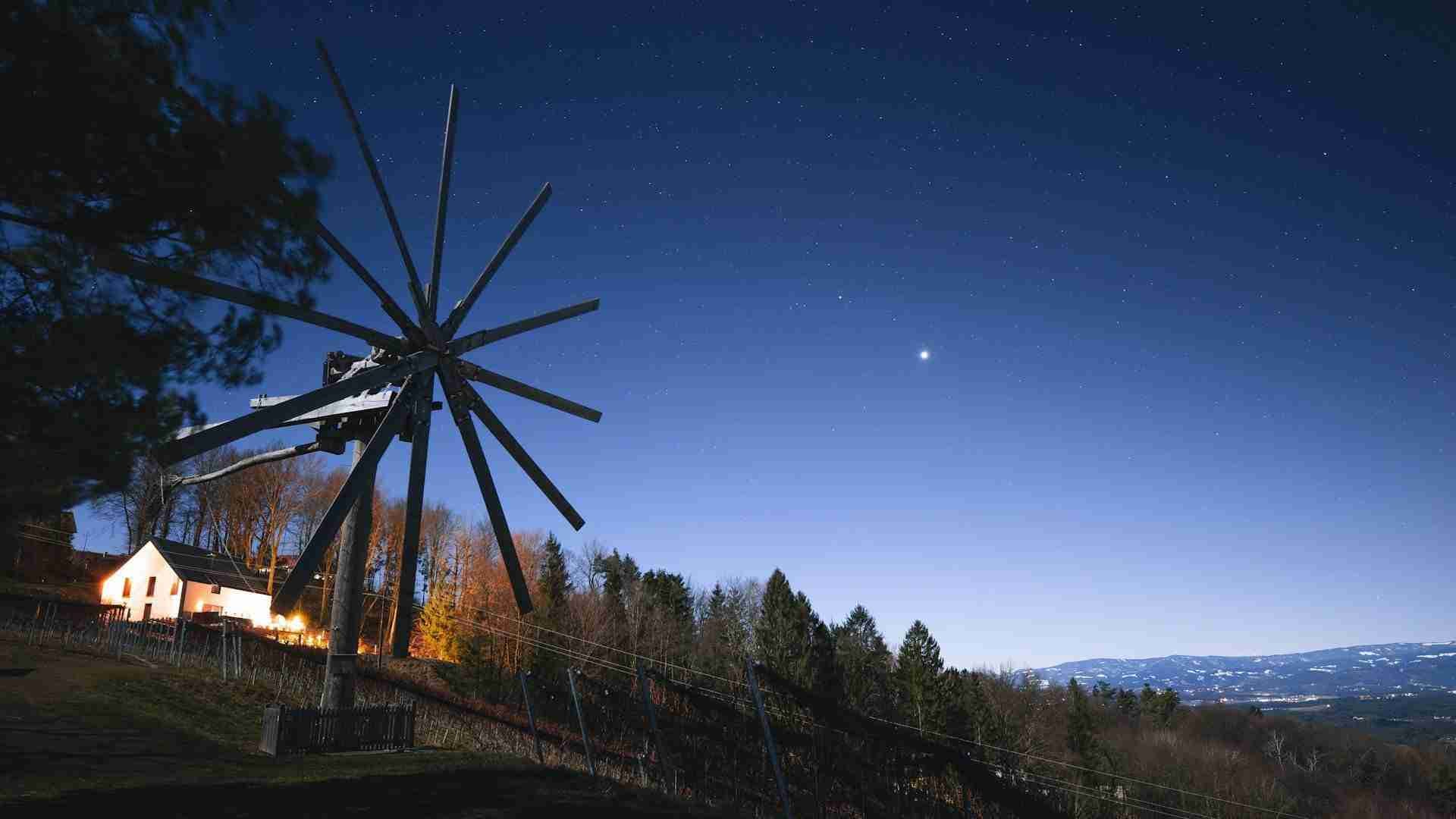
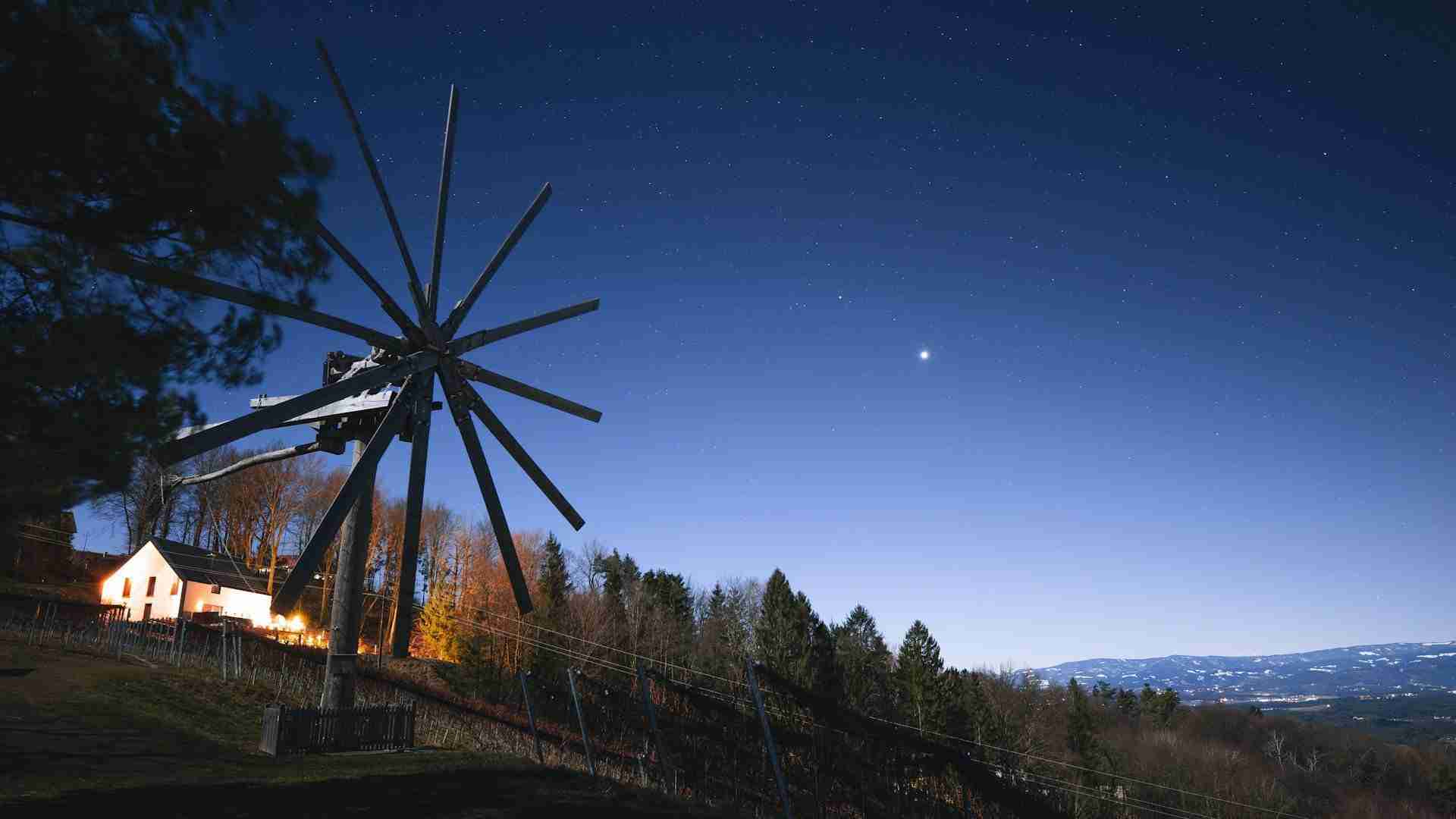
High in the rolling vineyards of southern Styria, the Weltgrößter Klapotetz—the world's largest Klapotetz—stands as both a cultural symbol and a kinetic sculpture of rural life. Towering above the hills near the village of Höch, this oversized wooden windmill-like structure was traditionally built to protect vineyards by scaring off birds with its rhythmic clapping motion. Today, the Klapotetz is an iconic figure of the Styrian wine region, its wooden paddles catching the breeze as they turn slowly over rows of vines. For photographers, it offers a striking and unusual subject: motion, tradition, and landscape all converging in a single sculptural form beneath the changing Styrian sky.
Best Photography Opportunities
• Wide Landscape with the Klapotetz as Focal Point
: The Klapotetz rises from a hilltop, surrounded by lush vineyards that spread across the hills in neat rows. From a mid-distance viewpoint, it becomes the centerpiece of a classic Styrian landscape—one that is especially photogenic in early morning or golden hour when long shadows trace across the land. A wide-angle lens is ideal here, allowing you to incorporate foreground rows of grapevines and distant rolling hills into a balanced composition. Overcast skies can also work well, emphasizing the dramatic silhouette of the Klapotetz without distractions.
• Low-Angle and Motion-Based Compositions
: The size of the Klapotetz allows for dramatic low-angle shots that emphasize its unique structure. Positioning your camera at the base and aiming upward highlights the movement of the wooden paddles against the sky, especially when shot with a fast shutter speed to freeze the rotation or a slower shutter for motion blur. A circular polarizer helps control glare on sunny days while preserving texture in the wood grain.
• Close-Ups of Construction and Craftsmanship
: Built entirely of wood without nails, the Klapotetz showcases impressive joinery and regional craftsmanship. Detail shots of the spokes, blades, and axle offer compelling compositions, especially when lit by side light that enhances the textures. A standard or short telephoto lens will help isolate these features without distortion, and they pair well with shallow depth of field to separate structure from background foliage.
• Vineyard Context and Seasonal Color
: The Klapotetz is visually tied to the vineyard landscape around it, and using the rows of vines as leading lines toward the structure can create a strong visual flow. In spring and summer, vibrant greens and flowering edges offer rich color. In autumn, the Styrian vineyards turn brilliant shades of gold, orange, and burgundy—an ideal time to frame the Klapotetz within a patchwork of warm hues. Low light angles during these seasons bring out layered textures and painterly tonal variation.
• Silhouette and Backlight at Dusk
: At sunset, the Klapotetz becomes a bold silhouette against the fading sky. Composing from the western side of the hill allows you to capture the structure in front of glowing clouds or sun rays cutting across the vineyard. Use a tripod for longer exposures or to bracket shots for HDR blending. The irregular paddles and beams cast distinctive shapes that can add personality and motion to twilight landscapes.
Best Time to Visit
The Klapotetz is most photogenic from late spring through mid-autumn, when the surrounding vineyards are in full leaf and the structure is in active motion. April through June offers fresh greens and flowering rows, while September and October bring harvest season and the most vivid foliage. Morning visits deliver soft directional light from the east, ideal for capturing the structure and vineyard facing downhill. Golden hour in the evening casts warm tones across the wood and landscape, particularly when shot from below looking westward.
Wind is an important factor for dynamic imagery—days with a consistent breeze bring the Klapotetz to life. If you're hoping to capture motion, check local wind forecasts and aim for mid-morning or late afternoon when airflow is most stable. Calm days still offer dramatic potential, particularly for silhouette work and detail photography.
The site is generally quiet year-round, though weekends during wine festivals or harvest season may see increased foot traffic. For uninterrupted shooting, weekday mornings provide the best conditions. Winter visits are possible, but the Klapotetz is often inactive and the vineyards bare, offering a more minimalist, stark aesthetic that may appeal to those seeking clean lines and dramatic skies.
How to Get There
The Weltgrößter Klapotetz is located near the village of Höch in southern Styria, Austria, close to the Slovenian border. The region is accessible by car via Bundesstraße B69, which winds through the scenic Südsteirische Weinstraße (South Styrian Wine Road). From the town of Leutschach or Gamlitz, follow local signage toward Höch and lookout points for the Klapotetz—several parking areas are available nearby.
The Klapotetz itself sits atop a vineyard ridge accessible via gravel walking paths. The approach is short but uphill; sturdy walking shoes are recommended. Some of the best vantage points are along nearby hills and vineyard paths, so allow time for scouting and moving around the perimeter. There are also wine taverns (Buschenschanken) nearby that offer both local fare and elevated terrace views perfect for scouting evening compositions.
While there is no entry fee, the structure is located on private land with public access paths, so visitors should remain on marked trails and be respectful of the surrounding agricultural work.
Recommended Gear and Shooting Tips
A combination of wide and standard zoom lenses will give you the flexibility needed to capture both landscape context and architectural detail. A wide-angle lens (16–35mm) works best for establishing shots and vineyard compositions, while a 24–70mm or 50mm prime gives you sharpness and subtle compression for the structure itself. If you're focusing on moving blades, bring a tripod and consider neutral density filters to allow for slower shutter speeds in brighter light.
Use fast shutter speeds to freeze motion when wind speeds are high, or dial back to 1/15–1/30 second with a tripod to introduce blur and rhythm into the image. Bracketing is useful during sunrise or sunset when dynamic range increases, especially with strong backlight behind the blades.
A polarizing filter helps reduce glare on foliage and wooden surfaces, especially in the middle of the day. Autumn visits benefit from a color-enhancing filter or gentle post-processing to emphasize the vineyard tones. A microfiber cloth is useful year-round due to wind-blown dust from the gravel paths.
Pack lightly if walking through vineyards, and be prepared to adjust quickly to shifting light and wind patterns—conditions can change fast in the open hills. Above all, allow time to explore the structure from all sides; the Klapotetz is surprisingly versatile, with each angle revealing new patterns of motion, shadow, and form.
Nearby Photography Locations
• Südsteirische Weinstraße (South Styrian Wine Road)
: The entire wine road is a photographer's dream, with panoramic vineyard vistas, winding country lanes, and traditional farmhouses perched on ridgelines. Sunrise and sunset are particularly rewarding along this route.
• Gamlitz Vineyards and Wine Cellars
: Just north of Höch, Gamlitz is home to some of Austria's most picturesque vineyards and a collection of well-maintained cellars, terraces, and scenic dining spots ideal for atmospheric compositions and storytelling.
: This charming village serves as a cultural and photographic hub of the region, with historic buildings, vineyard backdrops, and access to hiking paths through wine country.
• Kitzeck im Sausal
: Austria's highest wine-growing village lies about 30 minutes away and offers sweeping views, steep vineyard terraces, and a beautiful hilltop church that makes for a perfect sunrise or fog-layered scene.
• Panoramic Ridge Trails
: Many of the ridgelines near Höch have accessible walking paths that pass through vineyards and small forest clearings, perfect for minimalist compositions, leading lines, and atmospheric wide shots—especially when fog rolls in from the valleys below.
The Weltgrößter Klapotetz is more than a regional curiosity—it's a visual metaphor for tradition in motion, turning steadily with the Styrian wind. For photographers, it offers not just a unique subject, but a setting rich with line, movement, and seasonal color. Whether you're capturing the soft clatter of the paddles or the way light dances through vineyard leaves, this hilltop icon will leave your memory card full and your creative rhythm well tuned.
Comments
Loading comments…