
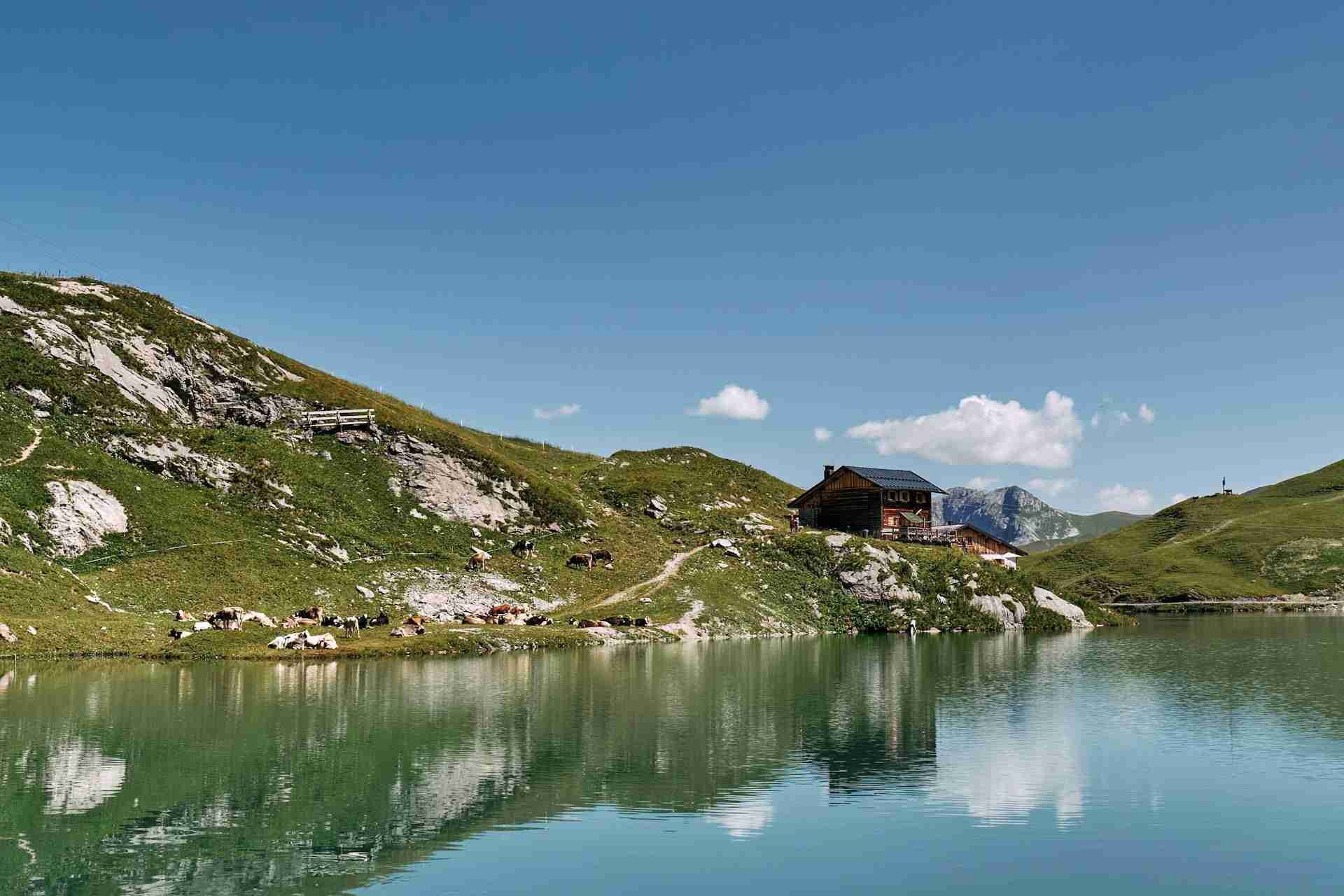
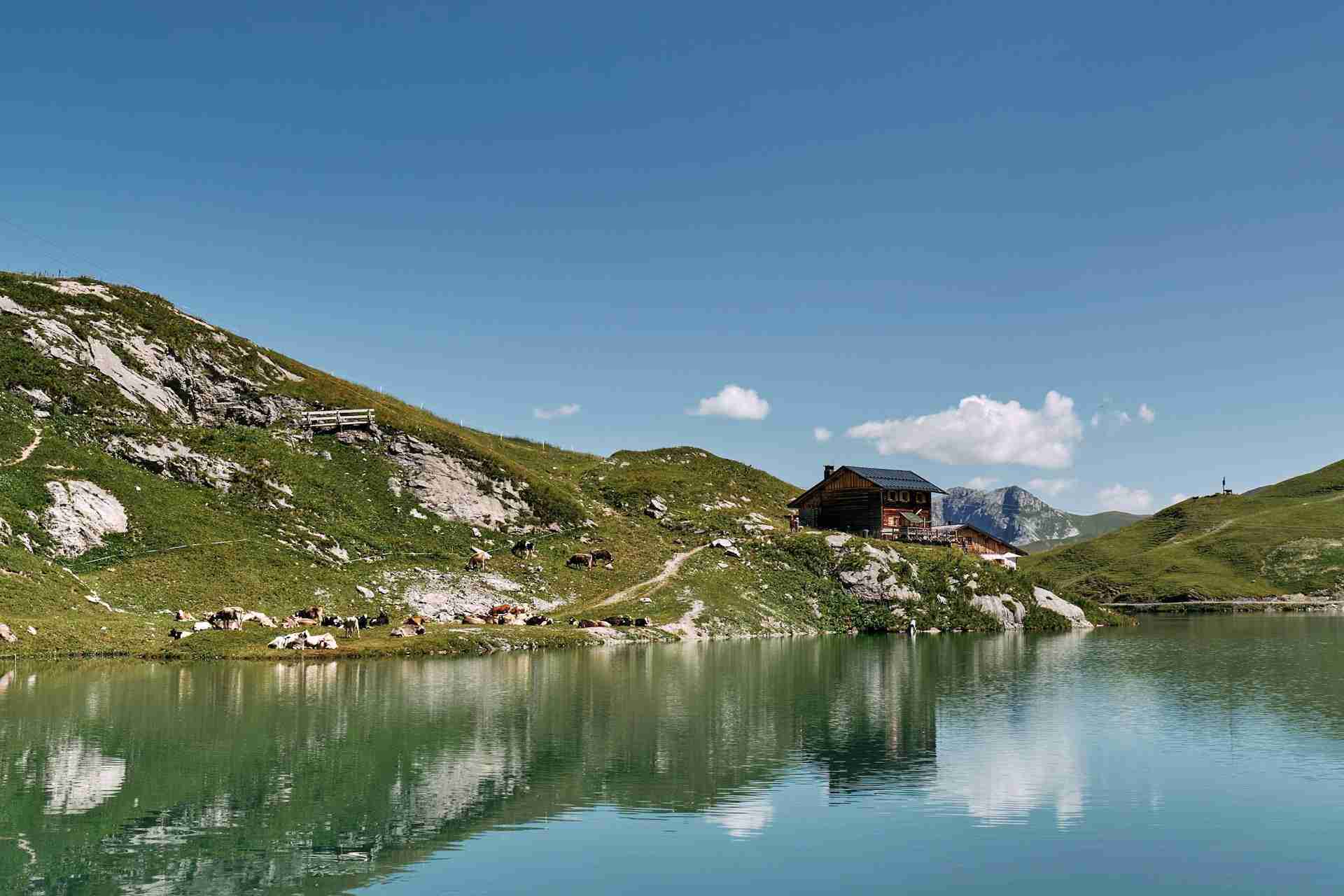
Nestled at an elevation of over 2,100 meters in the Austrian Alps, Zürser See is a hidden gem perched above the glamorous ski resort of Zürs in the Arlberg region. This high-altitude lake, accessible by foot or cable car during the warmer months, provides a pristine canvas for photographers seeking solitude, crisp alpine air, and glass-like reflections framed by rugged peaks. Its small size belies its grandeur, with every angle offering bold compositions—whether you're shooting serene mountain light or atmospheric layers of fog and snow.
Zürser See is more than just a lake; it's a seasonal mirror that transforms with every cloud movement and sunbeam. The surrounding alpine slopes, scattered wildflowers in summer, and snow-blanketed ridges in early spring or late autumn all make for a richly varied photographic setting. With its blend of natural beauty and stillness, Zürser See is ideal for landscape purists, minimalist shooters, and anyone who wants to capture the essence of high-altitude tranquility.
Best Photography Opportunities
• Lake Reflections at Sunrise and Sunset
Zürser See is a near-perfect natural mirror under the right conditions, especially at sunrise and sunset when the wind is still and the light turns golden. During sunrise, the eastern ridgelines glow with warmth, casting long shadows and color into the water. In the evening, the pastel sky often reflects with crystal clarity. Wide-angle lenses are essential for capturing this expansive symmetry. Frame your shot with careful attention to the horizon line, and experiment with leading lines such as shoreline rocks or alpine grass to guide the eye into the reflection. Long exposures can soften ripples and heighten the tranquil mood, while bracketing exposures helps manage contrast between sky and shadowy slopes. Even small movements of wildlife or wind create beautiful, shifting distortions across the surface that can add mood and dimension to an otherwise placid composition.
• Surrounding Alpine Flora and Trail Views
The entire circumference of Zürser See is circled by a scenic path that allows photographers to explore a diversity of angles and foreground elements. In summer, the slopes are speckled with wildflowers, creating a vivid patchwork of color that can be used to add depth and vibrancy to wide-angle compositions. Look for alpine aster, gentian, and globeflower nestled among rocky outcrops. These elements are perfect for building layers into your image—foreground flowers, middle-ground lake, and background peaks. A macro lens reveals intricate floral details, while a shallow depth of field can isolate a single bloom with the shimmering lake behind it. The trails themselves are also photogenic, especially when winding into the distance. Position a subject walking on the path for a human scale reference or capture the path curving into a misty hillside for a more contemplative, minimalist shot.
• Moody Weather and Foggy Atmosphere
Thanks to its alpine elevation, Zürser See often experiences fast-changing, atmospheric weather that lends itself beautifully to moody and expressive photography. On foggy mornings or after a sudden rain shower, low clouds may drift across the lake's surface or cling to the surrounding peaks, creating layers of opacity that invite long-lens compression. Use a 70–200mm lens to isolate these visual layers or highlight a single peak emerging from the haze. Wide shots can benefit from the obscured depth, which adds mystery and atmosphere to the image. Convert these scenes to black and white to further emphasize texture, tone, and shape without the distraction of color. Rain-slicked rocks and glistening grass provide texture-rich foregrounds. This is also the perfect time to experiment with negative space and asymmetric composition to evoke quiet and solitude.
• Night Photography and Star Reflections
Zürser See's remote location and altitude make it an exceptional destination for astrophotography, particularly during summer months when skies are clearest. On moonless nights, the Milky Way is clearly visible and often reflected in the lake's still surface, offering double exposure-style compositions without post-processing. A 14–24mm f/2.8 or faster lens paired with a tripod and remote shutter is ideal. Use the 500 rule or a star tracker to keep stars sharp, and compose to include either a silhouetted peak or some reflective water for context. Try including a warm foreground element—such as a lit tent or camp lantern—for visual grounding. Patience is key: let your eyes adjust, and use red lights to preserve night vision while setting up. In colder months, frosted ground and snow patches can glow under starlight, adding texture and brightness to your night shots.
• Winter Edges and First Snow
In the shoulder seasons—early spring and late autumn—Zürser See takes on a quiet, transitional character that provides compelling contrasts for the camera. Snow may trace the edges of the lake while leaving the central water surface thawed, producing natural graphic patterns. Look for juxtapositions between cold and warm elements: white snow against deep blue water, brown grasses beneath crystal frost, or a lone rock partly submerged in slush. Low-angle side light during this season emphasizes texture, and a polarizing filter helps reduce glare from wet snow and dark water. Consider shooting vertically to include both the sky and the reflective lake, or zoom in on snow-covered ridgelines mirrored in small waves. Footprints in the snow along the trail can also become compositional elements, leading the viewer's eye into the frame. This is a quieter, often overlooked time to shoot, but one that rewards a photographer's sensitivity to subtle change.
Best Time to Visit
Zürser See is typically accessible from mid-June to late September, depending on snowfall and trail conditions. During this window, the lake is completely thawed and the surrounding terrain is lush and walkable. Early July through mid-August offers the best chance to capture vibrant wildflowers and mirror-like water under clear skies. The early mornings are generally calmest, with wind picking up in the afternoons—plan reflection shots accordingly.
Autumn, from early September through the first weeks of October, introduces cooler air and the possibility of snow dusting the surrounding peaks. This shoulder season brings a quiet, moody character to the lake with more dramatic skies and fewer visitors. Late-day light during this time often strikes at a lower angle, emphasizing textures in both terrain and sky, especially with low sun catching ridge details and late fog clinging to the slopes.
For those interested in transitional scenes, early spring may bring melting snow formations along the lake's edge, providing subtle color and form for fine art compositions. While most of winter renders the trail inaccessible, late May or early October can offer a unique combination of alpine conditions, including partial snow coverage and fast-moving fog banks. Each visit brings new atmospheres, making return trips across the seasons highly rewarding.
How to Get There
Zürser See sits just above the village of Zürs am Arlberg, in the state of Vorarlberg. During the summer season, it can be accessed by foot from Zürs via a well-maintained hiking trail that starts near the Flexenpass road. The hike to the lake takes about 45 to 60 minutes depending on pace and fitness, with some moderate incline but no technical difficulty.
In peak summer months, you can also access the lake using the Seekopfbahn chairlift, which reduces the hiking time and elevation gain significantly. This option is ideal for sunrise or sunset sessions, when every minute counts. Parking is available in Zürs village, and the trailhead is clearly marked. There is no admission fee to visit the lake, though use of the lift service requires a seasonal or day pass.
Wear sturdy hiking shoes and bring layers—even in summer, temperatures can drop quickly. Be sure to carry water, and check lift schedules if you plan to descend after dark.
Recommended Gear for High-Altitude Landscape Photography
For a versatile approach to Zürser See, a full-frame camera body paired with a 16–35mm wide-angle lens will serve as your main setup for capturing expansive vistas and mirrored water scenes. For detail work, a 70–200mm telephoto is excellent for isolating peaks, mist layers, or hikers on distant trails. A macro lens or extension tubes will help you explore alpine flora at close range, especially in summer when wildflowers bloom in colorful clusters.
Tripods are a must—whether for long exposures, bracketing for dynamic range, or shooting in low light. ND filters (6–10 stops) are useful for water smoothing, especially at sunrise or during golden hour when surface texture is key. A graduated ND helps balance exposures between the bright sky and darker mountains or foreground. A polarizer enhances color saturation, brings out details in the waterbed, and manages glare from wet surfaces and snow.
Extra batteries are critical, as alpine temperatures, even in summer, can quickly drain power. Bring multiple high-capacity memory cards if you're shooting time-lapse, panoramas, or bracketing HDR sequences. A waterproof camera backpack is strongly recommended due to fast-changing alpine weather, along with microfiber cloths to wipe condensation or light rain from lenses and viewfinders.
Comfort and safety gear also play a role: waterproof hiking boots, a lightweight packable jacket, sunscreen, and fingerless gloves with grip all help you move confidently around the lake terrain. For night photography, a fast lens (f/2.8 or wider), headlamp with red mode, remote shutter release, and even hand warmers make a big difference. If you're aiming for aerial views, a compact drone with collision sensors can provide stunning top-down symmetry—be sure to fly legally and respectfully.
Nearby Photography Locations
: Just below Zürser See, the Flexenpass winds dramatically through the mountains, offering switchback views, guardrails, and cliffside compositions perfect for minimalist or motion-filled alpine road shots. Photograph long exposures here during foggy days or dusk for dramatic results.
: A short drive away, this picturesque alpine town offers a classic Tyrolean aesthetic, with wooden chalets, cascading river views, and flower-lined balconies. Early morning shots along the Lech river reveal subtle mist and warm side light on traditional architecture.
: Accessible via gondola from Lech, this summit offers panoramic views across the Arlberg range and down toward Zürs. It's a superb spot for sunrise photography and high-altitude ridge compositions, with layered peaks and cloud play.
: Another alpine lake known for its reflective beauty, Formarinsee lies a short distance away and offers similar yet distinct scenery—more dramatic peaks and an isolated, serene atmosphere. Combine with Zürser See for a compelling mountain lake portfolio.
: Slightly more off the beaten path, Spullersee features turquoise waters surrounded by rocky terrain and sparse vegetation, ideal for graphic compositions or minimalist framing, especially during early autumn when colors turn warm and soft.
Comments
Loading comments…