
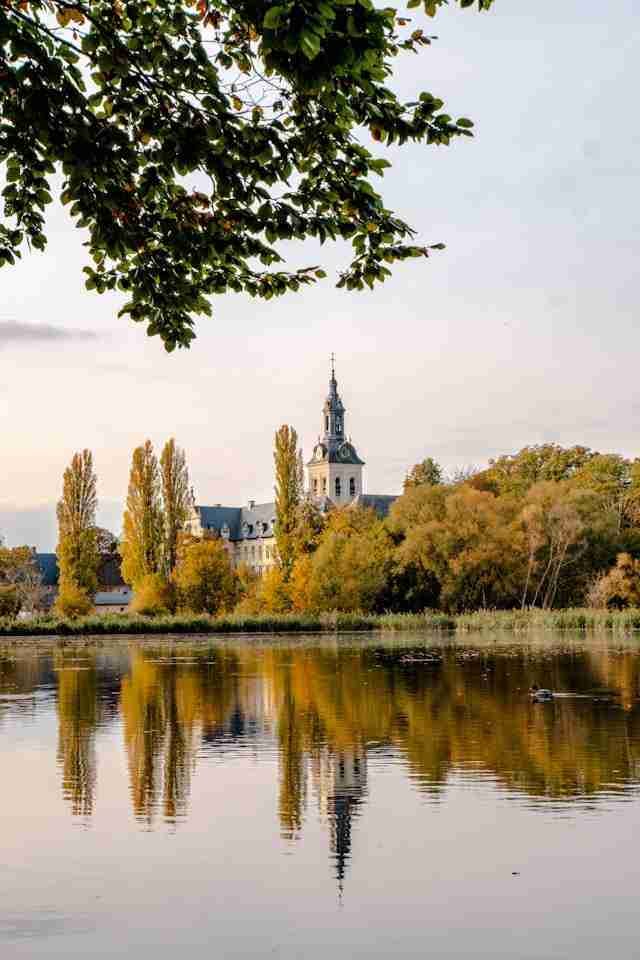
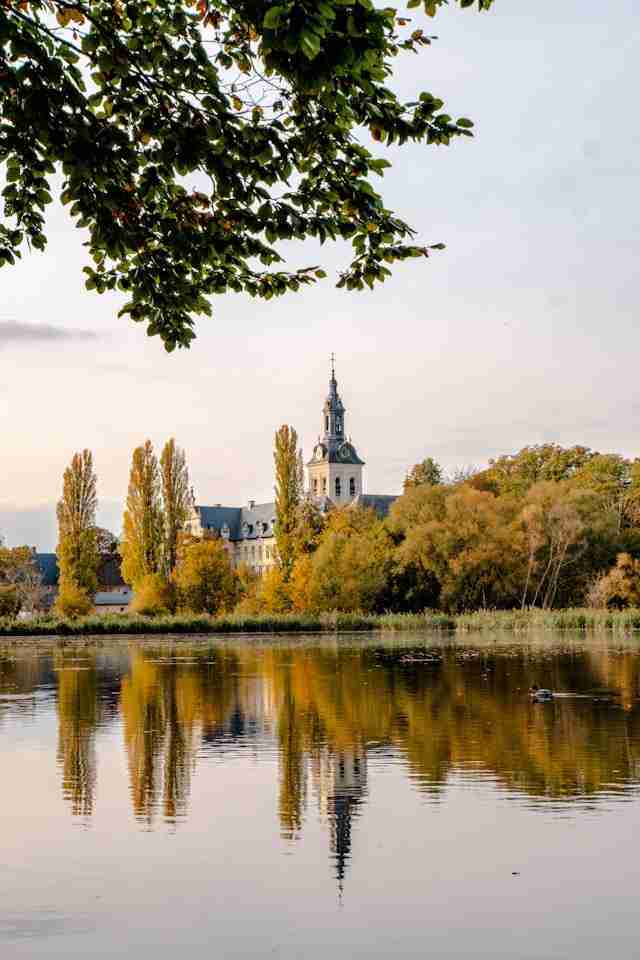
On the edge of Leuven, Abdij van Park offers a remarkably preserved example of monastic architecture and landscape integration that remains highly photogenic in any season. Founded in the twelfth century, this Norbertine abbey sits within a pocket of water, trees, and grazing land, offering a variety of textures and structures for photographers interested in symmetry, reflections, and subdued light. The complex includes a Romanesque church, cloisters, ponds, and agricultural outbuildings, all of which speak to its long-standing spiritual and practical history. The site is quiet but active, with careful restoration preserving its architectural detail and layout. For photographers seeking timeless compositions in a contemplative setting, this abbey offers a full range of interior and exterior subjects that evolve with the light and the seasons.
Best Photography Opportunities
• Reflections in the abbey ponds
The mirror-like ponds at Abdij van Park are among the most rewarding features of the site. On still mornings or evenings, they reflect the long brick facades, arched walkways, and chapel roofs with near-perfect clarity. A wide-angle lens helps frame the waterline and buildings in a single vertical composition, while a mid-range zoom works well for isolating windowlines, doors, and towers. Overcast skies help balance exposure across the scene, and post-rain conditions often heighten contrast and reflection. These compositions benefit from calm wind and low sun, especially in spring or autumn when the surrounding foliage adds color and depth.
• Cloisters and passageways with soft directional light
The abbey's covered walkways are ideal for interior architectural work. These corridors are lined with aged brick, wooden beams, and arched windows that catch ambient light at shallow angles. Shooting early in the morning or under cloud cover helps avoid harsh contrast and maintains texture across the walls and floor. The geometry of the arches and the rhythm of the light lend themselves to symmetrical compositions as well as moodier, off-center frames. Including a figure in motion can add narrative while providing scale in these narrow, repeating spaces.
• Church interior and Romanesque design details
Inside the abbey church, tall rounded arches and understated stone columns create a naturally balanced frame for architectural photography. The windows are small but let in just enough light to highlight textures and form without overpowering the space. A tripod is helpful for working with longer exposures in low-light areas, particularly if you're shooting toward the altar or under the gallery. Detail shots of the woodwork, carved capitals, and floor tiles offer a complementary set of images to wider shots. This is a quiet, slow-shooting environment that suits thoughtful composition and careful observation.
• Perimeter paths and compressed landscape views
Circling the abbey are gravel and dirt paths that lead through small woods and pastures, offering elevated or pulled-back views of the abbey. With a telephoto lens, you can compress these layers to include trees, livestock, and rooflines all in one frame. These views are especially good on misty mornings when the atmosphere softens the background and separates tonal layers. The southern side of the abbey often receives low side light late in the day, which helps define brickwork and roof angles against the darker trees. These areas also tend to be less visited, offering a peaceful environment for scouting and slow shooting.
• Agricultural outbuildings and working textures
Tucked behind and beside the main abbey structures are barns, mills, and storage buildings that speak to the abbey's long relationship with land and food production. These structures often have cracked wood, rusted hinges, and stone surfaces that photograph well in soft, directional light. Oblique angles during golden hour bring out the relief and depth of these materials without needing heavy post-processing. A mid-zoom lens works well here to manage both context and texture. These subjects add visual contrast to the more formal architecture of the abbey itself and round out a varied photographic series from the site.
Best Time to Visit
The site can be photographed year-round, but spring and autumn offer the most rewarding color and light combinations. In spring, the meadows around the abbey fill with subtle greens and wildflowers, and the early sun casts long shadows across the ponds and pathways. Autumn brings gold and red to the tree lines, with fallen leaves providing soft color accents in reflections and framing opportunities along paths and brick walls. Summer provides strong, clear light and long days, but midday conditions can be harsh on reflective surfaces. Winter reduces the palette to muted browns and greys, which works well for minimal compositions and snow-covered detail work.
Time of day is especially important. Morning light provides calm water for reflections and gentle angles for both interior and exterior compositions. Evening light tends to rake across the brick surfaces and define texture with long shadows, particularly on the west-facing walls. Overcast conditions work well for cloisters and interior shots, where contrast control is critical. Blue hour around the pond creates a cool, calm setting as lights from within the abbey begin to appear, adding a subtle glow to otherwise natural scenes.
How to Get There
Abdij van Park is located in Heverlee, a district just south of Leuven, Belgium. It is easily reached by public transport, with local buses stopping near the entrance and frequent service from Leuven's central station. Cyclists can reach the abbey in about fifteen minutes via flat and quiet residential routes. There is a dedicated pedestrian and bike entrance on the western side, making access simple for visitors not arriving by car.
Drivers will find limited parking near the abbey itself, though additional spaces may be available nearby on local streets. There is no entrance fee to walk the grounds or photograph the exterior areas. Access to interior spaces, including the church and cloisters, may be limited during services or special events. Photography inside buildings is generally permitted, though tripods should be used respectfully and not during ceremonies or busy hours. It's best to check the abbey's official site for updated hours and access guidelines before visiting.
Recommended Photography Gear
A wide-angle lens between 16 and 35 millimeters is essential for working inside the cloisters and capturing full-width pond reflections. A standard zoom, such as 24 to 70 millimeters, offers flexibility across interior and exterior work and performs well in soft light without distortion. A short telephoto lens between 70 and 200 millimeters helps compress the surrounding landscape and isolate architectural layers from a distance.
A tripod is highly recommended for low-light shooting in the church or cloister walkways, and for long exposure work near the ponds. A circular polarizer is helpful in managing reflections on water and reducing glare on wet stone and windows. A remote shutter release or built-in timer ensures clean exposures when working at slow shutter speeds. If visiting in fall or winter, bring lens cleaning gear, as condensation and light rain are common. A lightweight camera bag and good walking shoes are helpful, as you will be covering gravel paths and grassy fields around the abbey complex.
Nearby Photography Locations
This historic beguinage is just minutes from the abbey and features narrow brick alleys, small gardens, and gabled rooftops. It offers quiet urban compositions and textured architectural elements that contrast nicely with the broader layout of the abbey.
Located a short drive or bike ride away, this moated castle combines late Gothic and Renaissance design. Its reflection in the surrounding water, especially at sunrise or sunset, offers a strong architectural subject framed by parkland.
Running along the Dijle River, this park offers footbridges, flowing water, and layered views of Leuven's architecture. It's well suited for handheld walk-and-shoot sessions, particularly in spring when new leaves filter soft light across the paths.
The highly ornate stonework of the city hall provides an intricate visual counterpoint to the abbey's simplicity. Best photographed in early morning or golden hour, it presents opportunities for both wide angles and close-up texture studies.
This expansive park includes wooded trails, open lawns, and water features that shift dramatically with the seasons. Ideal for landscape photography, especially in fog or low light when mood and softness define the scene.
Abdij van Park rewards quiet observation and a patient photographic approach. Its blend of history, architecture, and landscape offers something new with each visit, whether you're working in close or shooting wide. With time, changing light, and seasonal variation, this abbey remains one of the most visually consistent and rewarding locations for photographers in the region.
Comments
Loading comments…