
Antwerpen-Centraal Station is more than a transit hub. It is one of Europe's most visually rewarding railway stations for photographers interested in architectural symmetry, scale, and light. Located in the heart of Antwerp, this historic station blends late 19th-century stone architecture with modern steel and glass additions, offering a wide range of compositions in a single structure. From its grand concourse to the layered platforms below, Antwerpen-Centraal feels both monumental and welcoming, drawing the eye upward, downward, and across with purpose.
The station's design creates a seamless interplay between old and new. The stone dome and richly detailed facade are classic examples of railway architecture from the Belle Époque period, while the multi-level platforms, with their exposed beams and curved glass roof, give it a contemporary energy. The result is a space that feels timeless, perfect for photographers seeking contrast, geometry, and human scale. Whether you are interested in architectural studies, street photography, or long exposures of moving trains, this station offers variety and depth in every direction.
Best Photography Opportunities
• The Grand Concourse from the Main Entrance
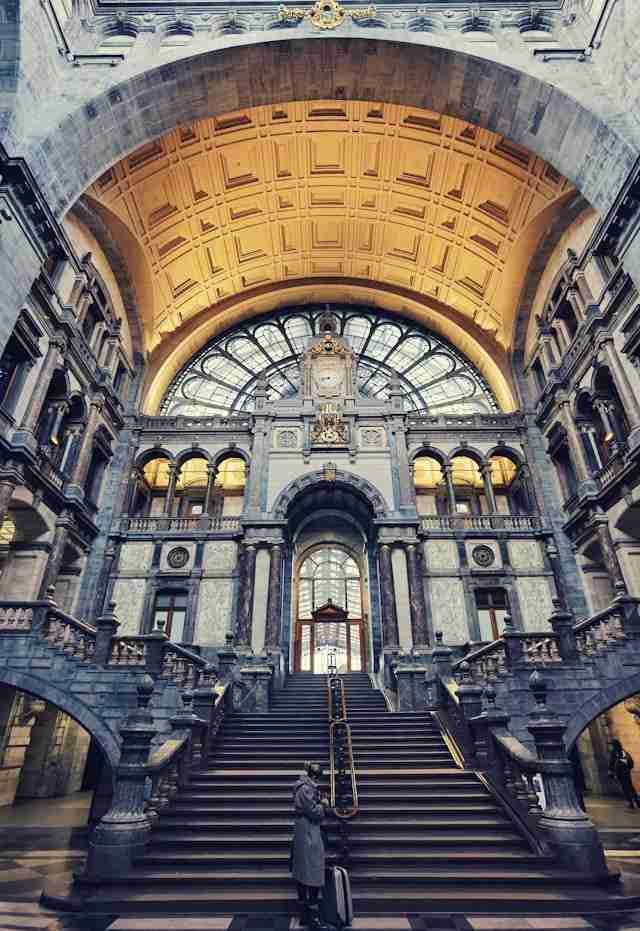
As you enter the station through the main doors on Koningin Astridplein, the first view is also one of the most powerful. The concourse opens up beneath a high, vaulted ceiling with arched windows, chandeliers, and stone staircases that rise in multiple directions. This is a space of grand scale, but it also offers intricate detail. A wide-angle lens is best here to take in the full height and depth of the interior. Try framing the scene symmetrically, with the staircases leading toward the large central clock. Morning light from the upper windows creates beautiful contrast along the stonework.
• The Platform Levels from the Top of the Escalators
Antwerpen-Centraal is built vertically, with multiple layers of platforms stacked beneath the main hall. From the top of the escalators or balconies above the lower levels, you can shoot directly down through these platforms, capturing the repeating lines, steel girders, and moving trains. A longer lens helps compress the layers, while a tripod can support longer exposures to blur motion and create energy in the frame. In late afternoon, the light enters from the west, filtering through the glass ceiling and lighting the beams with a warm tone.
• The Exterior Facade from Astridplein and Pelikaanstraat
Outside the station, the ornate stone facade features carvings, spires, and arched windows that deserve time and close observation. From Koningin Astridplein, you can capture the full height of the dome rising above the main entry. From the side streets, like Pelikaanstraat, tighter compositions reveal symmetry in the arches and doorways. Use a tilt-shift lens if available to keep lines clean and reduce distortion when shooting upward. Late day light gives the stone a golden color, and wet pavement after rain can add reflections for more complex compositions.
• Motion and Light on the Lower Platforms
Down at the platform level, trains arrive and depart in a rhythm that makes this space ideal for capturing motion. Long exposures blur trains into lines of color, while overhead lights reflect off rails and glass panels. Use a neutral density filter if shooting during daylight to allow longer shutter speeds, and frame the shots to include the lines of the tracks leading into the distance. Early morning or evening hours are quiet enough to set up your tripod without crowding, and the light during these times is more even and controlled.
• People and Movement in the Central Passage
Between the old and new sections of the station, you'll find a busy corridor where travelers pass beneath stone arches and glass ceilings. This is a good place for candid photography or environmental portraits. The blend of modern signage, historic walls, and daily activity gives a sense of time and place. Use a medium focal length to isolate subjects against architectural elements, or shoot wider to show the movement of the crowd. Reflections from the polished floor add to the layered feel of this transitional space.
• Evening Blue Hour from Across the Square
As daylight fades, the station lights up from within, and the glow from its windows spills onto the plaza outside. Set up across the square on Koningin Astridplein and shoot toward the dome and facade. Blue hour offers a deep sky that contrasts with the warm interior light, especially on cloudy days when reflections are visible on the wet pavement. This is a strong time for symmetry and reflection-based compositions, as traffic and people slow and the station takes on a calm, glowing presence.
Best Time to Visit
Antwerpen-Centraal can be photographed year-round, but the best time depends on the kind of light and energy you are seeking. For interior architectural work, mornings provide soft, clean light from the high windows. This is especially useful for capturing stone texture and avoiding harsh contrast. By late afternoon, the glass roof over the platforms lights up in gold tones, perfect for warm shots of the metalwork and platforms.
Weekdays are generally better for calm shooting, as weekends and holidays bring heavier foot traffic. If you are planning to use a tripod or shoot long exposures, early morning and late evening are best. Blue hour, about 30 to 45 minutes after sunset, is ideal for exterior shots when the station lights are fully on and the sky still holds color.
Rainy or cloudy days can actually be helpful when working with reflective surfaces inside or outside the station. Wet pavement outside the main entrance offers mirrored textures that complement the stonework, and cloudy skies soften the light coming through the glass roof, reducing harsh shadows.
How to Get There
Antwerpen-Centraal is located in the heart of Antwerp and is one of the main transport hubs in Belgium. Trains arrive frequently from Brussels, Ghent, and international cities like Amsterdam and Paris. The station is also easily reached by tram, bus, and taxi, with a major stop right outside on Astridplein.
If arriving by car, several parking garages are located nearby, including those beneath the Radisson Blu and along the streets surrounding the Zoo and Aquatopia. Once inside the station, all photographic areas are accessible on foot. Elevators and escalators connect all platform levels, making it manageable even with a full camera kit.
There is no fee to photograph inside or outside the station, though drone use is not permitted. Tripod use is generally accepted in public areas but may draw attention from security during peak times. Be respectful of travelers and avoid blocking traffic in busy corridors or platform areas. If planning a professional shoot or using large equipment, it's worth contacting the station in advance to confirm current guidelines.
Recommended Photography Gear
A wide-angle lens is essential for capturing the interior scale of the grand hall and the platform levels. A 16–35mm or 24mm prime works well for full-room views and dramatic vertical shots. For exterior work or compressed compositions inside, a 70–200mm zoom allows you to frame smaller elements like windows, statues, and clock faces while keeping lines tight.
A tripod is highly recommended for blue hour, interior low-light shots, and long exposures of moving trains. Use a circular polarizer when shooting glass or wet surfaces to reduce glare and deepen reflections. If you're planning to do motion studies of commuters or trains, consider bringing a neutral density filter to extend shutter speeds even in bright indoor light.
Protect your gear with a lightweight, secure backpack. Wear comfortable shoes, as you will likely be moving between platforms and up staircases to reach the best viewpoints. A microfiber cloth is handy for cleaning your lens, especially on rainy days or when working near the platforms.
Nearby Photography Locations
, located directly next to the station, offers natural subjects, historic architecture, and beautifully designed garden spaces. It's especially photogenic during early morning hours or in low light when animals and structures are well lit.
, just south of the station, is filled with shop windows, textured walls, and close-up street scenes. The mix of cultures and street signs provides strong material for street photography and environmental portraiture.
, a short walk from the station, features grand buildings, storefront reflections, and dynamic pedestrian movement. It is a good place to capture city life in a setting framed by classical architecture.
, a short tram ride away, offers panoramic views of Antwerp from the rooftop and excellent compositions of the port, modern design, and waterfront lines. Sunset from the upper floors is especially rewarding.
• Cathedral of Our Lady
, in the old town, combines Gothic architecture with the narrow streets around it. It provides a strong contrast to the industrial style of the station, giving you a complete city narrative from classic to contemporary.
Antwerpen-Centraal Station offers more than grand design. It gives photographers a stage where light, steel, and stone come together in constant motion. Whether you're drawn to the geometry of the platforms, the quiet detail of the stone carvings, or the glow of evening across the square, this station rewards return visits and patient observation. It is a place where architecture meets transit, and where every traveler becomes part of the frame.
Comments
Loading comments…