
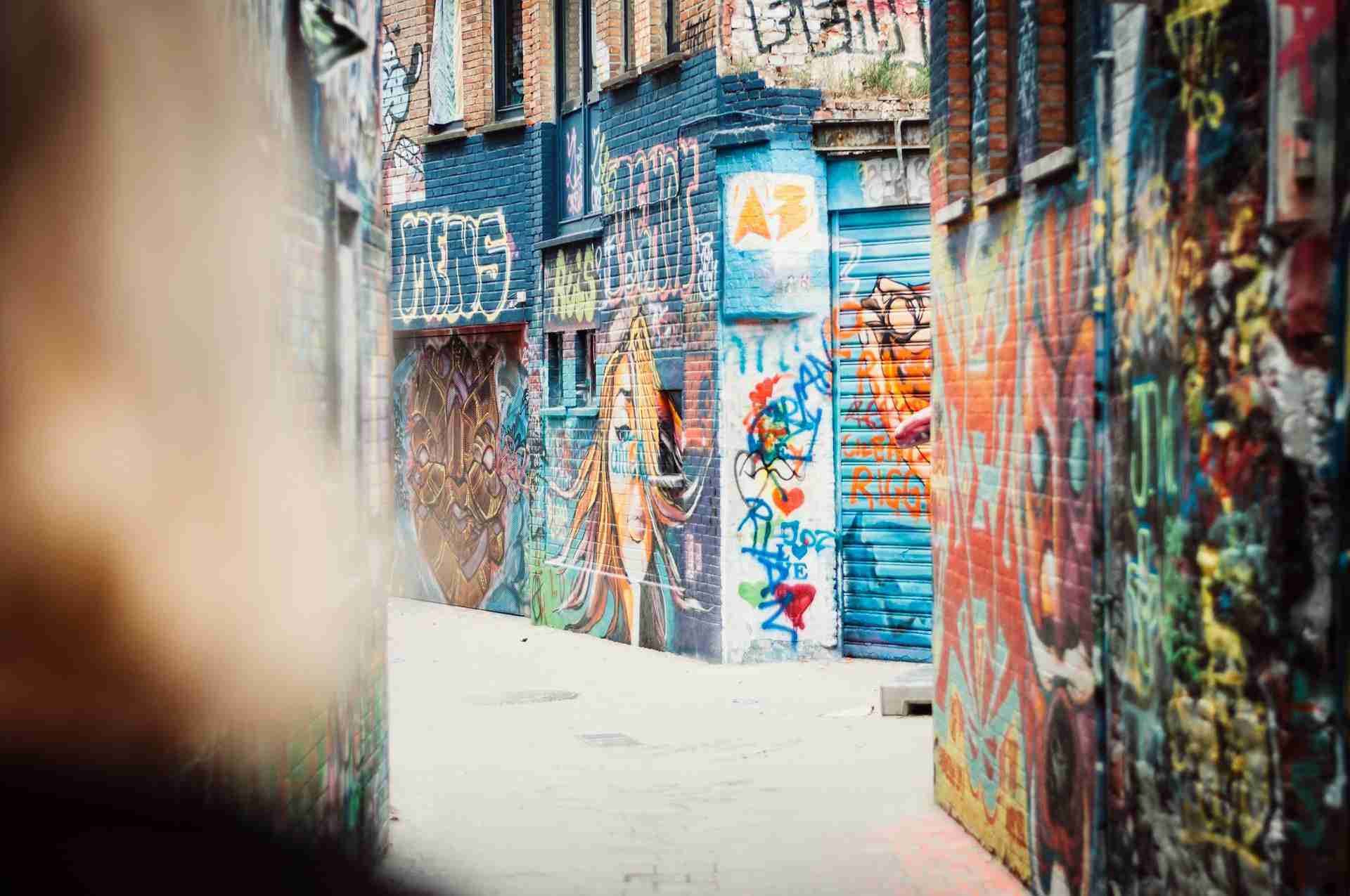
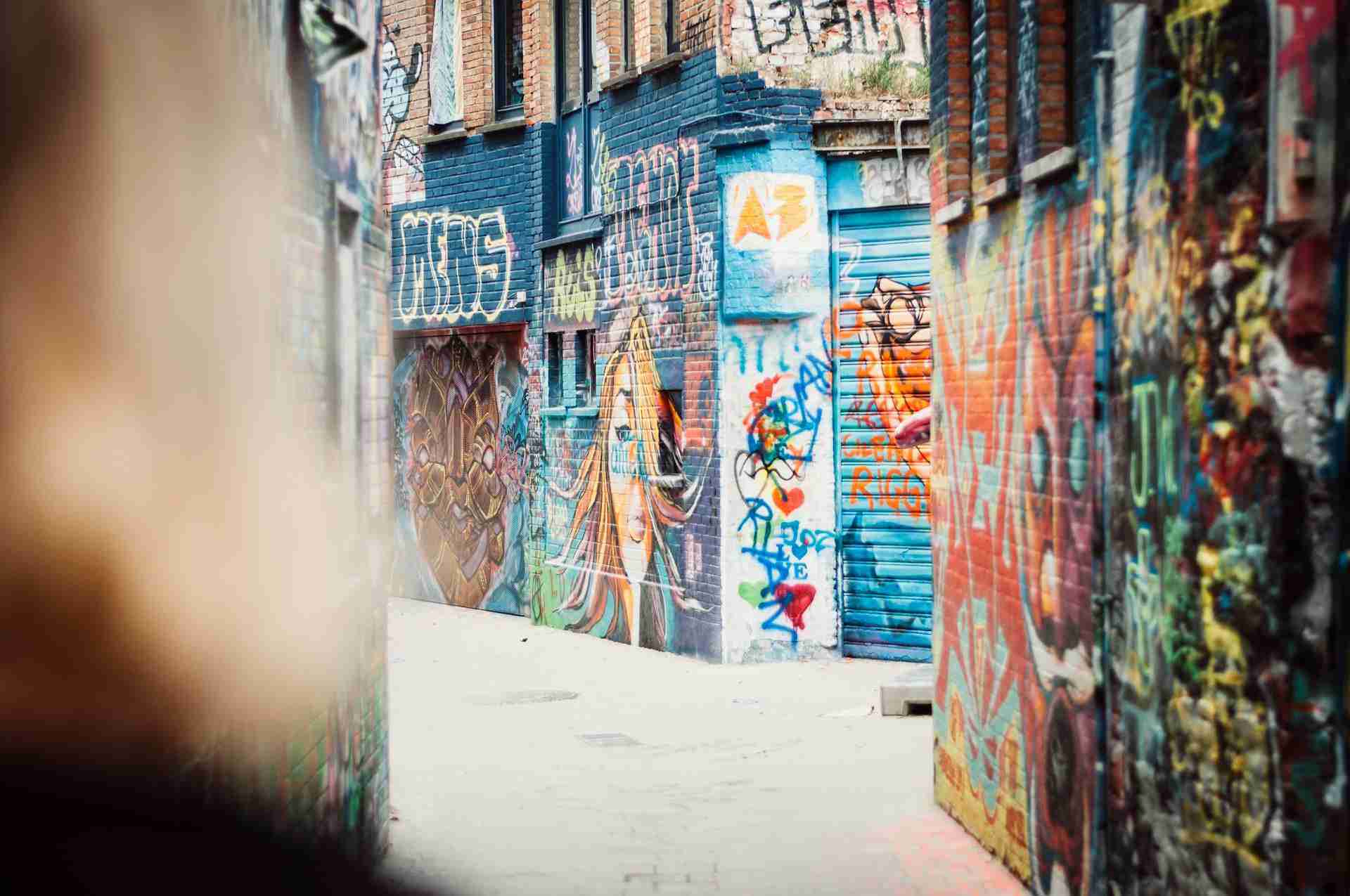
Hidden in the medieval heart of Ghent, Graffitistraat is a narrow pedestrian alley transformed into a legal canvas for street artists. Unlike the preserved façades of the old city, this ever-changing corridor offers a riot of color, texture, and expression across its brick and concrete walls. For photographers, Graffitistraat provides a visual contrast to the rest of the city, where classical architecture and Gothic spires give way to layers of spray paint, stencils, tags, and murals. The alley's long, straight form and tight enclosure create strong lines of perspective, while the walls themselves offer endless opportunities for detail, repetition, and color study. Each visit is different, as new artwork is constantly added, making it one of the few locations in Ghent that reinvents itself every week.
Best Photography Opportunities
• Linear Perspectives Through the Alley
The alley's long, straight layout creates natural leading lines that guide the viewer's eye from foreground to vanishing point. Use a wide-angle lens to exaggerate this sense of depth, especially when shooting from a low angle near the ground. Early morning offers soft, even light with fewer pedestrians, allowing you to capture the full span of the alley uninterrupted. Include small elements like paint cans or step ladders if present, which can hint at the space's constant transformation. This composition works well in both color and black-and-white, depending on how you want to emphasize the structure or saturation.
• Close-Ups of Texture and Layered Paint
Some sections of the wall feature years of accumulated paint, where layers have built up into peeling surfaces, cracks, and warped forms. These close-up shots reveal a tactile, almost sculptural quality and can be powerful as abstract compositions. A macro or standard prime lens will allow you to isolate areas of texture, brush strokes, or drips with precision. Overcast light is best for this kind of detail work, avoiding reflections or glare that might wash out the surface. Look for small pieces of text or imagery half-covered by newer layers, as these tell the story of the wall's constant evolution.
• Capturing Artists at Work
Depending on when you visit, you may encounter local artists actively painting or preparing sections of the wall. These moments offer dynamic, human-focused compositions that blend creativity and environment. Use a fast prime lens for better separation of subject and background, especially in tight quarters. Shoot wide to include the artist's tools, spray patterns, and posture, giving context to their process. Always ask permission before photographing people up close, and be respectful of the space as a working studio.
• Color Harmonies and Contrast Studies
One of the most visually rich opportunities in Graffitistraat lies in the intentional or accidental harmonies created between colors. Murals often clash or align with each other in surprising ways, and walking the alley slowly reveals these relationships. Use a standard zoom to find color blocks, high-contrast pairings, or repeated tones across different sections of the wall. Shooting at f/4 or f/5.6 offers sharpness without losing depth. These frames work well as a series, comparing how different hues and forms interact along the same surface.
• Evening Blue Hour with Ambient Light
As daylight fades, the alley takes on a more subdued tone. Ambient light from nearby windows and street lamps provides warm color temperatures that contrast with the cooler blue of the evening sky. A tripod allows for slower shutter speeds and careful exposure control in these conditions. Use a wider aperture to balance light fall-off and maintain clarity. Reflections in puddles or wet pavement can add interest and mirror the saturated walls, expanding your framing options in low light.
Best Time to Visit
Graffitistraat is open and accessible year-round, but lighting and foot traffic vary throughout the day. Early morning is the best time for soft, even light and minimal crowds. This timing allows you to shoot undisturbed and experiment with both wide and close compositions. Cloudy days are ideal for color work, preventing harsh shadows and allowing for accurate tone reproduction.
Late afternoon offers stronger contrast, with patches of directional sunlight cutting into the alley. These moments can be dramatic, especially when photographing high-contrast graffiti sections or silhouette subjects moving through the corridor. Blue hour brings its own atmosphere, particularly if you plan to work with longer exposures or ambient city light.
Each season brings new material to the walls, and repeat visits are highly encouraged. The graffiti is constantly changing, so returning even just a few weeks later can yield an entirely different visual experience.
How to Get There
Graffitistraat, officially known as Werregarenstraat, is located in the center of Ghent, just a short walk from the Saint Bavo Cathedral and the bustling Korenmarkt area. The alley is pedestrian-only and easily accessed on foot while exploring the city's historical core.
From the main train station (Gent-Sint-Pieters), take tram line 1 to Korenmarkt and walk a few minutes through the cobbled streets to reach the alley. There are no entrance fees or restrictions, and photography is permitted at all times. Tripods are allowed, though the narrow width of the alley may require patience to work around pedestrians, especially during busy hours.
The location is well-lit at night and safe to visit, but as with all urban shooting locations, keep your gear close and be aware of your surroundings. Comfortable walking shoes and a compact camera bag are recommended, as the surrounding area is ideal for extended city photography sessions.
Recommended Photography Gear
A wide-angle lens between 16 and 35 millimeters is crucial for capturing the full breadth of the alley and exaggerating its linear perspective. A standard zoom, such as a 24 to 70 millimeter, is ideal for switching between wall details and street scenes without changing lenses. A fast prime lens around 35 or 50 millimeters is excellent for low-light shooting and subject separation when capturing artists or visitors.
A lightweight tripod is useful for early morning or evening photography, especially when working with slower shutter speeds or bracketing exposures. A polarizer is not essential here, but can help reduce glare on painted surfaces if used carefully. A microfiber cloth is useful for lens maintenance, as the alley can be dusty or damp depending on weather.
A compact camera bag that allows quick access to gear will help in the narrow space. Extra batteries and memory cards are essential, as shooting here often involves frequent repositioning and experimentation. Consider carrying a small LED light for detail shots in shadowed areas, especially when ambient lighting is uneven.
Nearby Photography Locations
These historic quays along the Leie River offer a complete contrast to Graffitistraat, with classical Flemish architecture, canal reflections, and lively street activity. Sunset and blue hour are especially good for capturing the riverside buildings lit from within.
Just a few minutes away, this bridge offers one of the best panoramic views in Ghent, with Saint Nicholas' Church, the Belfry, and Saint Bavo's Cathedral all aligned. Ideal for golden hour and twilight cityscape photography.
This medieval quarter features narrow cobbled alleys, hidden courtyards, and stone buildings that photograph beautifully in soft light or during quiet morning walks. The architectural rhythm and textures make for excellent detail shots.
For a broader look at Ghent's street art culture, head to the post-industrial area of Dok Noord, where large-scale murals and legal graffiti walls provide more open space and variety in scale and subject.
The tower itself offers high vantage points over the old city, while its ornate stonework and sculptural details are rewarding subjects for telephoto and architectural studies from below.
Graffitistraat is not a static subject. It is a living archive of expression, color, and change that invites photographers to think in layers, return often, and look closely. Whether you're drawn to structure, spontaneity, or just bold visuals, this alley offers something new with every frame.
Comments
Loading comments…