
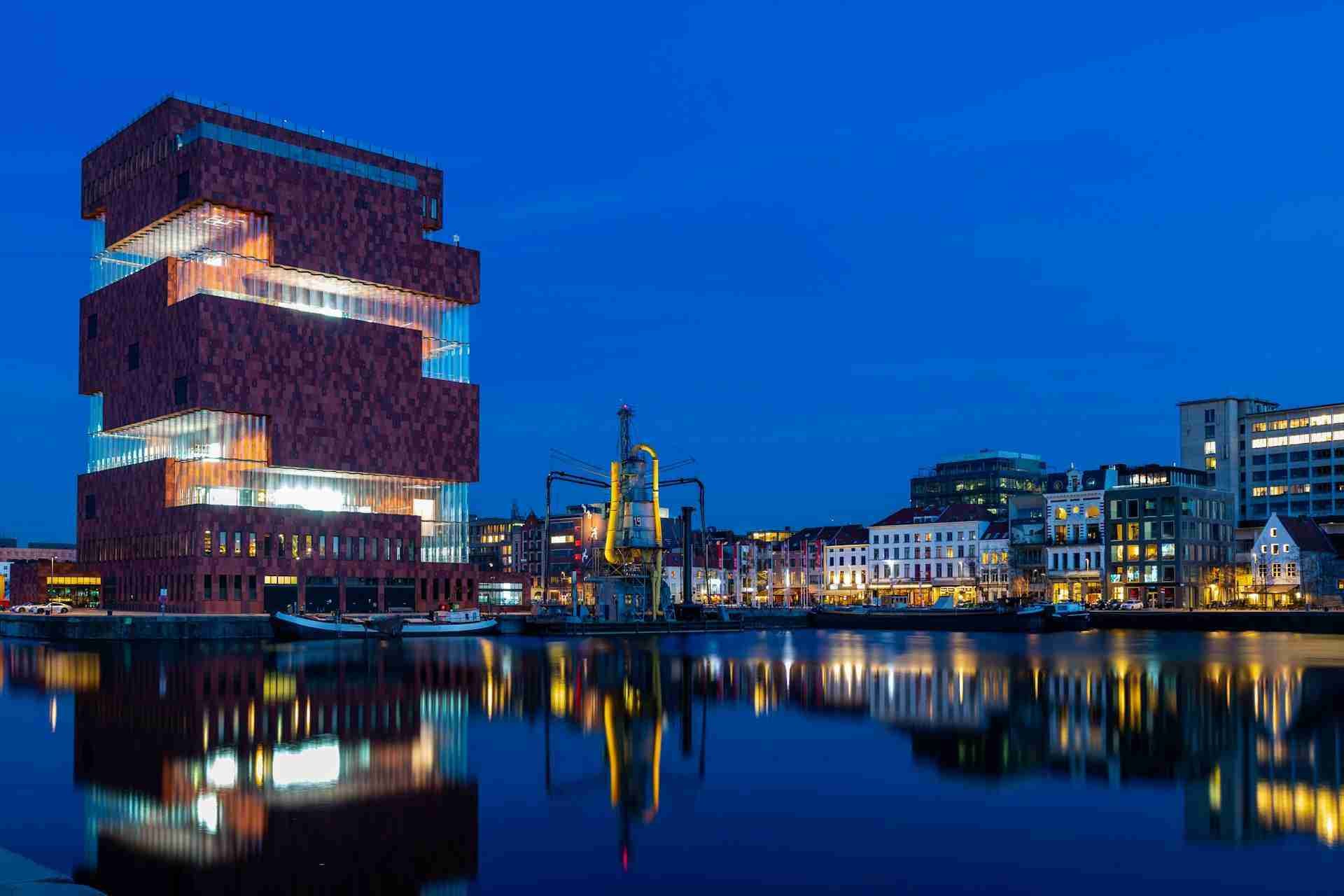
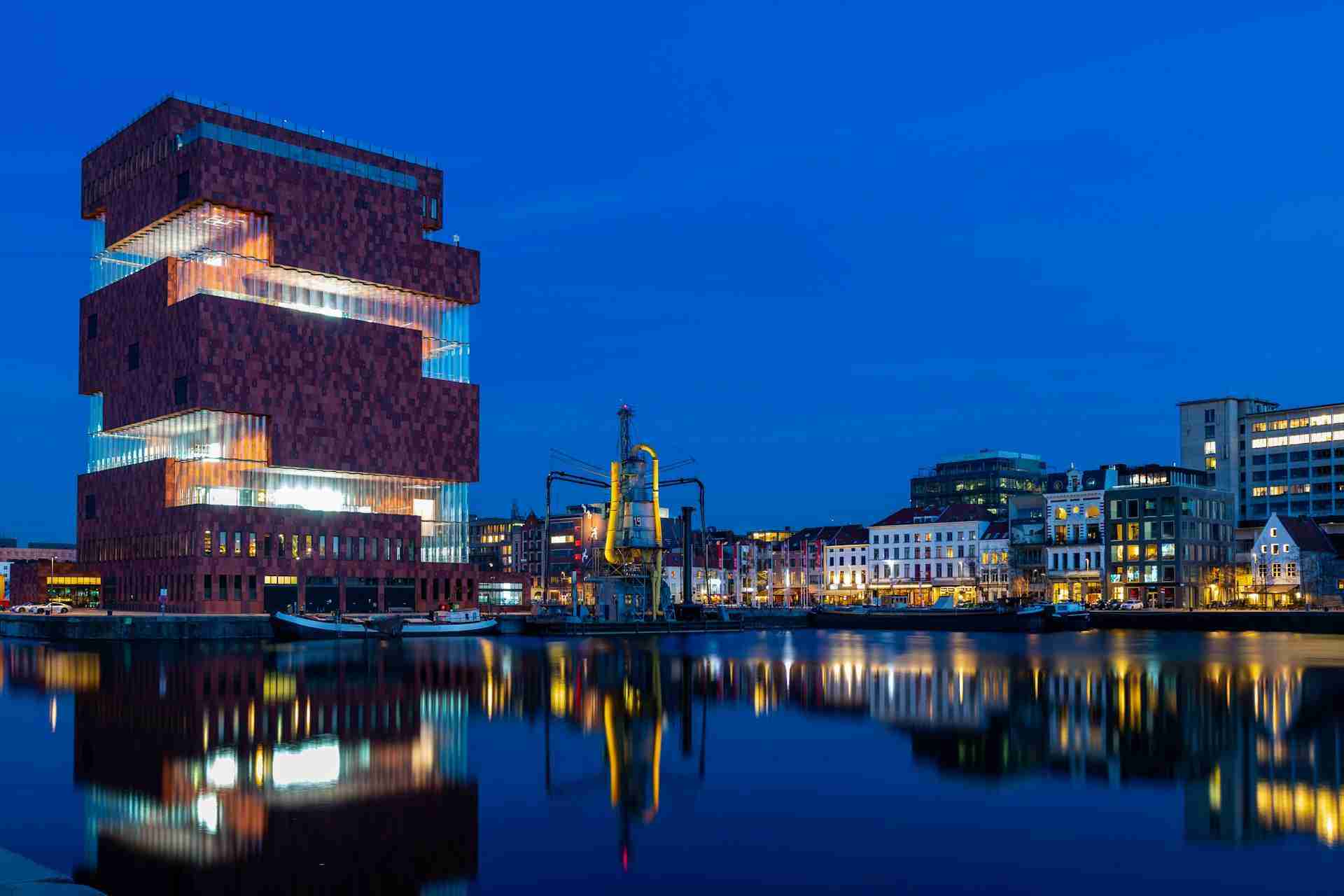
Standing along the banks of the River Scheldt, the MAS – Museum aan de Stroom is one of Antwerp's most visually commanding landmarks, both architecturally and photographically. Designed as a vertical sequence of red sandstone and curved glass, the building itself is a study in repetition, rhythm, and modern form. Each level reveals a new perspective over the city, and its pixel-like composition allows photographers to explore lines, contrast, and reflection from every angle. It's not just a museum but a sculptural form that interacts constantly with the shifting light of the river and the industrial landscape surrounding it. For those who love clean geometry and urban contrasts, MAS offers a wealth of material at all times of day and in all weather conditions.
Best Photography Opportunities
• Riverside Elevation and Reflections
: From the west side of the River Scheldt, MAS rises like a stack of shifting blocks, and the water acts as a mirror during calm mornings and late evenings. The glass panels along the building's vertical bands reflect sky, clouds, and adjacent port structures, giving the museum a changing surface throughout the day. This location works well with a wide-angle lens to exaggerate the mass of the building and its proximity to the river. Early morning light brings out the red tones in the sandstone, while cloudy days make the reflection more subtle and moody. For long exposures, this is an ideal spot to blur the water while keeping the architecture crisp.
• Plaza and Street-Level Details
: The plaza surrounding MAS includes granite tiles, art installations, and minimalist water features that complement the building's angular design. Shooting from this area allows you to highlight the verticality of the museum and contrast it with the open space of the square. The repeating rhythm of the facade is best emphasized with a tilt-shift lens or by standing at a distance with a moderate zoom to avoid distortion. The surrounding public art adds interest to wide compositions, especially in early evening when the museum starts to glow from within.
• Inside the Spiral Walkway
: The museum's interior is just as photogenic as its exterior. The spiral walkway, with its curved glass panels and sweeping views of the city, provides a constantly changing visual experience as you ascend. Light streams through the curved windows, casting soft arcs of shadow across the concrete floors. This is a strong location for handheld shooting with fast lenses, especially during sunset when the light warms up and silhouettes of visitors add life to the frame. Reflection and distortion through the curved glass can be used creatively with care.
• Rooftop Panoramas
: The rooftop terrace of MAS is one of the best vantage points in Antwerp, offering uninterrupted 360-degree views of the port, the old city, and the modern skyline. A wide-angle lens captures the full sweep of the river and city, while a telephoto lens can be used to isolate ships in the harbor or church spires in the distance. Shooting during blue hour gives the city a soft, layered quality, and the museum's glass panels can be incorporated into the composition for framing or reflections. Tripods are allowed but should be used discreetly, as the rooftop can get crowded during sunset.
• Nighttime Illumination and City Lights
: As the sun sets, MAS becomes an illuminated beacon along the river. The interior lighting glows through the glass bands, creating a warm vertical contrast against the cool night sky. From across the water or from nearby docks, this effect is amplified and works well with long exposures that catch boat trails or passing traffic. The reflection of MAS in the water becomes more intense after dark, and the surrounding port lights provide a secondary layer of interest. This is a location where timing and patience can yield dramatic architectural images that feel both structured and cinematic.
Best Time to Visit
MAS is a year-round photography destination, but conditions and light vary significantly with the seasons. Spring (March to May) brings clear skies and moderate temperatures, making it easier to capture clean reflections and vibrant tones in the red sandstone. Morning light is cool and directional, especially effective for the riverside elevation, while late afternoon provides rich color and softer shadows across the plaza. Summer (June to August) extends the daylight hours dramatically, giving photographers more flexibility with timing but also introducing harsher light in the middle of the day. It's best to shoot early or late, particularly on cloudier days when contrast is reduced.
Autumn (September to November) brings moodier skies and more atmospheric scenes. Overcast days flatten the building's details but add depth through diffused reflection in the river. This is also the best time for cityscape photography from the rooftop, as visibility tends to be good and the city's warm tones complement the sandstone of MAS. Winter (December to February) offers minimal crowds and dramatic lighting conditions. Low sun angles during the day highlight the museum's textures, while long nights open up opportunities for extended blue hour and night photography. The museum's glowing windows stand out more starkly against the dark winter sky, making night shots particularly compelling. Throughout the year, weather in Antwerp changes quickly, so checking light conditions and cloud cover in real time is often the key to a successful session.
How to Get There
MAS is located in the Eilandje district, a revitalized area north of Antwerp's city center. From the main train station (Antwerpen-Centraal), you can reach the museum by tram, bus, or a 20-minute walk through the historic quarters of the city. The museum sits at Hanzestedenplaats, just off the Willemdok marina, and is surrounded by pedestrian-friendly walkways and open public spaces. Cyclists will find dedicated bike lanes and bike racks nearby, and there are car parks within walking distance for those arriving by vehicle. There is no admission fee to access the rooftop terrace or exterior grounds, but entry to the interior exhibitions does require a ticket. Photography is permitted throughout the public areas of the museum, including the spiral walkway and rooftop, although flash and tripods may be restricted indoors. For exterior night photography or shooting from across the river, access is unrestricted and there are no permits required.
Recommended Photography Gear
Photographing MAS is about mastering contrast, scale, and reflection, so packing the right gear can significantly enhance your results. A high-resolution camera body will help preserve sharpness when capturing the intricate textures of the red sandstone and the complex layering of the glass elements. Since you'll be dealing with both broad architectural scenes and more intimate interior perspectives, a combination of wide-angle and telephoto lenses is highly recommended. A 16–35mm wide-angle zoom allows for strong foreground-background compositions in the plaza or on the rooftop, while a 70–200mm zoom is ideal for compressing urban details from elevated viewpoints or across the river.
A lightweight tripod is a must for low-light scenes, especially during blue hour or when photographing reflections across the water. While tripods may be restricted inside the museum, they are permitted on the rooftop and along exterior pathways. A circular polarizer will help reduce glare on the glass and bring out deeper tones in the stone, particularly useful during bright midday sessions. For long exposures near the river, ND filters will let you stretch shutter speeds to soften water movement and enhance reflections.
Lens hoods are recommended to avoid flare from the glass panels, especially when shooting into the sun during golden hour. Gloves and a weather-resistant camera bag are useful during the colder months when wind and light rain are common. If you're planning to spend extended time on the rooftop or near the river, an extra battery and microfiber cloth should be part of your kit, as both wind and moisture can deplete power and fog up lenses quickly. Given the building's height and the varied angles it offers, don't overlook the value of a tilt screen or external viewfinder for easier framing in awkward positions. Finally, bring a small lens cloth specifically for cleaning fingerprints off your lenses—interior glass panels and rooftop barriers can accumulate smudges that interfere with clean shots if you're shooting through them.
Nearby Photography Locations
: Just a short walk north of MAS, the Port House offers a dramatic contrast in architectural style. Designed by Zaha Hadid, its angular glass structure rests atop a historic fire station and appears to float over the surrounding docks. It's best photographed during the golden hour when the reflective surfaces pick up color from the sky, and the mirrored water adds symmetry to your compositions.
• Het Steen and the Scheldt Riverbank
: Heading south along the river brings you to Het Steen, a medieval fortress with cobbled walkways, historic stone walls, and broad river views. This location works especially well for sunrise photography, when light floods across the river from the east and silhouettes the boats and bridges in the distance.
: A few blocks northeast of MAS, this urban park mixes modern landscaping with industrial remnants like water towers and steel structures. It's a good spot for environmental portraits or wide shots that integrate green space with city architecture. The park is particularly photogenic in late afternoon when light filters through tree lines and open lawns.
• Antwerp Central Station
: This ornate transportation hub is one of the most detailed and visually rich train stations in Europe. The main hall features vaulted ceilings, marble staircases, and intricate stonework that photographs beautifully in both natural and artificial light. A fast wide-angle lens and a steady hand (or monopod) are useful here, especially during peak travel hours.
• Felix Pakhuis and Bonaparte Dock
: Just east of MAS, this converted warehouse and its adjacent dock provide quieter photographic moments. The reflections on the narrow dockside water, coupled with textured brick exteriors and antique mooring equipment, offer strong opportunities for composition-driven work. It's a good location to explore during overcast weather or blue hour when artificial lighting becomes the main source of drama.
Photographing MAS is as much about capturing the building as it is about capturing the way it fits into the landscape of Antwerp. The structure constantly changes with the light, the sky, and your position, making it a subject you can return to again and again. Whether you're shooting reflections, cityscapes, architectural studies, or long exposures, MAS and its surrounding district offer a compact but incredibly rich canvas for any visiting photographer.
Comments
Loading comments…