
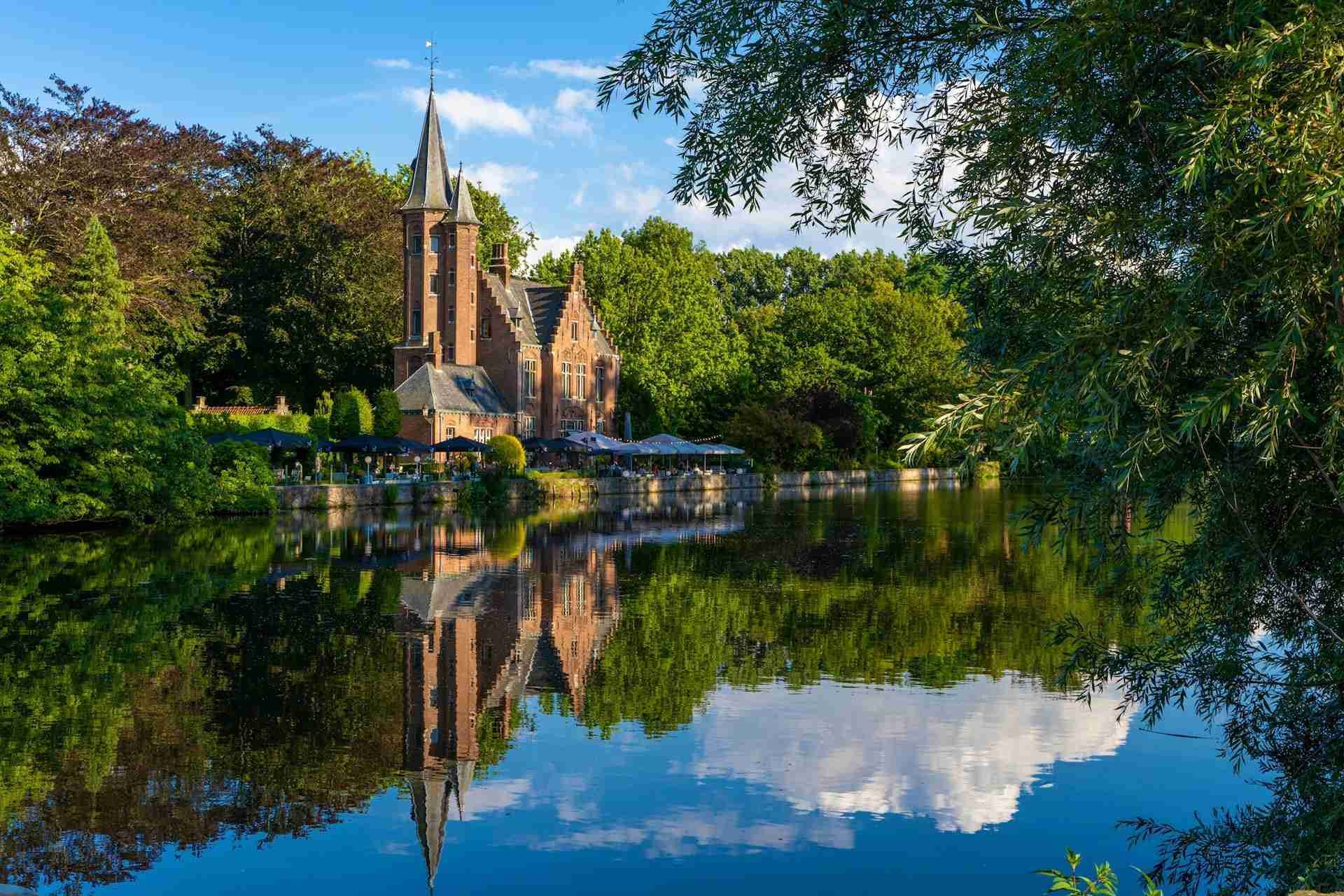
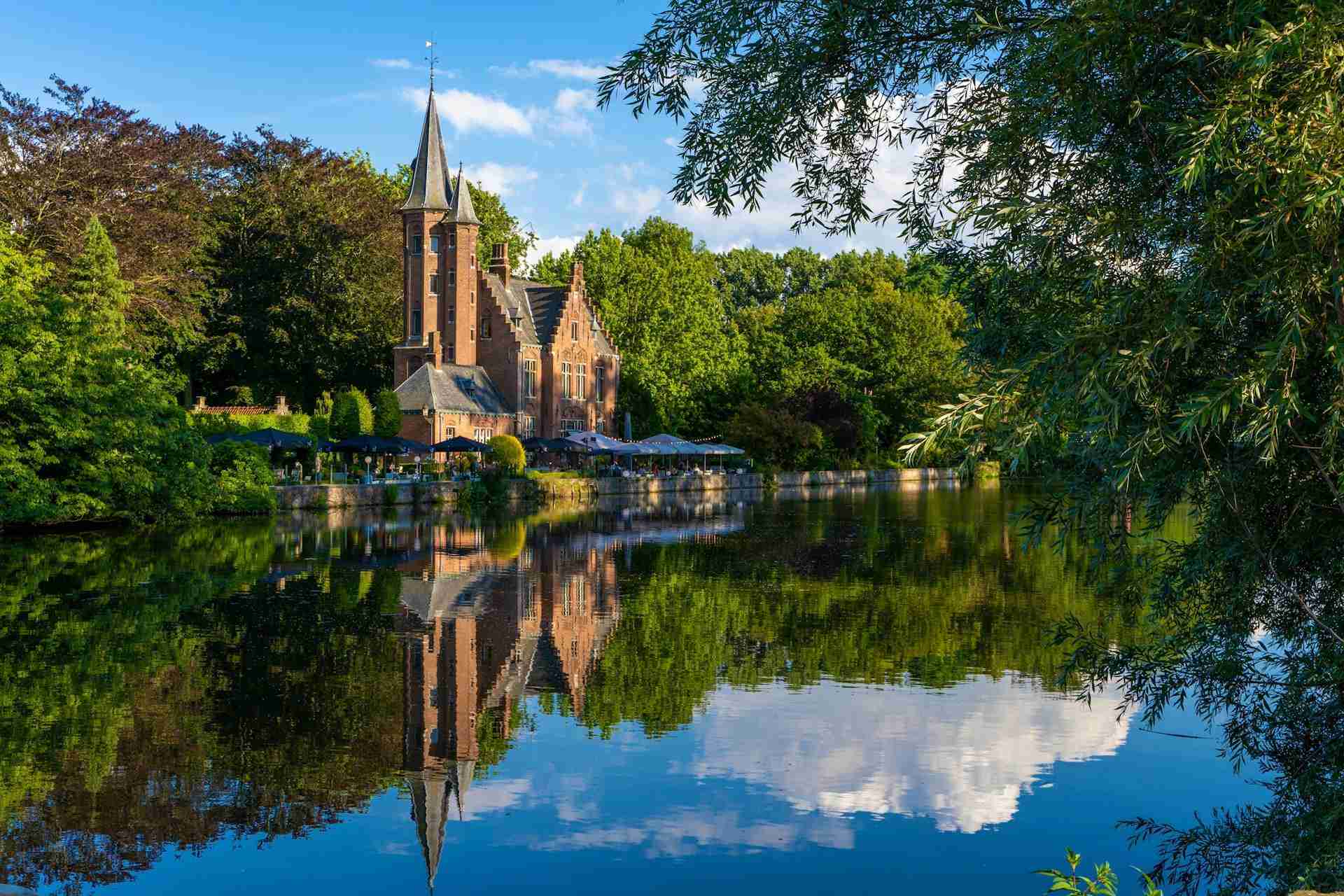
Minnewaterpark is one of those places that feels like it was made for photography, even if it never tries to draw attention to itself. Centered around Minnewater Lake and anchored by the pointed rooftops of Kasteel Minnewater, this quiet corner of the city offers still water, old stone bridges, and layers of greenery that frame every shot naturally. The name translates to "Lake of Love," and while it is popular with visitors, it still manages to feel slow and grounded. Whether you're shooting reflections across the lake, soft light falling through trees, or details in red brick and ivy, Minnewaterpark gives you the kind of scenes that hold together no matter how you compose them. It's an ideal location for early light, layered framing, and relaxed shooting with space to move.
Best Photography Opportunities
• Minnewater Lake Reflections with Kasteel Minnewater
One of the most recognizable scenes in the park is the view across Minnewater Lake toward Kasteel Minnewater. The pointed tower and stepped gables of the castle reflect cleanly in the water on calm days, creating a classic postcard shot. Use a standard or wide lens to include trees on both sides of the frame, which helps lead the eye inward and adds symmetry. Early morning light is best here, especially in spring and autumn, when color and contrast are more balanced and the water is often still. Overcast skies also work well, reducing glare and letting the red brick stand out against softer tones in the background.
• Stone Bridge Framing Across the Canal
At the southern end of the lake, a small stone bridge crosses the water and creates one of the best natural framing tools in the park. You can shoot through the arch to frame trees or walkers, or back up to include the bridge itself reflecting into the lake. Try a low angle close to the edge of the water to maximize the reflection. Long exposures work well here, especially in the early morning when foot traffic is light and the water is undisturbed. A polarizing filter can help remove glare from the water surface, or you can leave it off to enhance reflections depending on the light.
• Kasteel Minnewater Detail Shots
The castle itself is compact but rich in texture. Red brick, sharp gables, and arched windows make it perfect for architectural detail photography. Move around the building and look for repeating lines or surface changes in shadow and light. The rooflines photograph well when backlit during the golden hour, while the surrounding ivy and shrubs offer soft color and natural framing throughout most of the year. A short telephoto lens helps you isolate windows, patterns, and corners without flattening the depth of the structure. Look for scenes that combine architecture with nearby trees or water elements for more layered compositions.
• Walking Paths and Seasonal Forest Canopy
The paved paths that circle the lake and move through the park are lined with tall trees, making them ideal for seasonal photography. In spring, new leaves filter the light into soft green tones. In autumn, golden and red leaves create overhead color and ground texture that hold together in vertical compositions. These scenes are best shot with a wide lens and a lower perspective to emphasize leading lines and depth. Morning and late afternoon light come in at just the right angle to highlight tree trunks and soften the contrast between the sky and path. These areas also work well with people in the frame for a sense of scale or to tell a more narrative image.
• Birds, Water Texture, and Subtle Motion
Minnewater is home to swans, ducks, and other birds that are used to human presence and often drift calmly across the lake. Including a swan in your reflection shot adds movement and softness to an otherwise still scene. Use a longer lens or position yourself quietly at the edge of the lake to frame birds gliding through open water or passing beneath the bridge. Fast shutter speeds work best to capture sharp detail in feathers and water drops. On overcast days, the muted water surface acts like a backdrop that simplifies the shot and lets the shape and contrast of the bird stand out.
Best Time to Visit
Minnewaterpark photographs best early in the morning, especially just after sunrise when the light is low and warm and the lake is at its calmest. This is also when the area is quietest, giving you more control over your compositions and reducing the need to work around foot traffic. Golden hour works well in both the morning and evening, but mornings tend to offer clearer reflections and more balanced light across the park.
Spring brings soft green tones and fresh growth, which pairs well with the warm red and brown brickwork of the castle. In summer, the park is more crowded, but early and late hours still offer space to shoot without distraction. Autumn is ideal for color contrast, with falling leaves covering paths and water surfaces. Winter has fewer visitors and cleaner sightlines through the trees, and if you are lucky enough to catch the lake with a thin layer of ice or frost on the ground, you'll get a more graphic, minimal version of the same familiar scenes.
How to Get There
Minnewaterpark is located on the southern edge of Bruges' city center and is easy to reach on foot from anywhere inside the old town. From Bruges train station, it is about a five-minute walk north toward the old city walls. The entrance to the park is clearly marked, and walking paths loop through the area with easy access to the lake, the castle, and the nearby bridge. If you're carrying gear, the flat paths and close proximity to transit make this one of the most manageable photo locations in the city.
There are no entrance fees to access the park, and it is open year-round. The grounds are well maintained and generally safe, with benches, water access, and spots to rest if you are shooting for a long stretch. Tripods are allowed and do not draw much attention, but as always, be respectful of space and other visitors. If you're planning a long exposure or wide scene near the bridge or water's edge, arrive early to claim your spot before the foot traffic builds up.
Recommended Photography Gear
A standard zoom lens in the 24–70mm range will cover most of your work in Minnewaterpark, from wide lake views to medium close-ups of architectural details. Pair this with a wide-angle lens, such as a 16–35mm, if you plan to emphasize foreground elements or shoot along the walking paths. A short telephoto lens in the 70–200mm range is helpful for isolating architectural details or capturing birds and subtle movement on the lake without disturbing the scene.
A tripod is strongly recommended for shooting reflections, long exposures, and low-light compositions during golden hour. A circular polarizer is useful for managing reflections on the lake surface and enhancing contrast in tree leaves or brick textures. If you are visiting in colder months or early morning, bring a microfiber cloth to keep your lens clear of condensation. A compact backpack or shoulder bag is all you need to carry your gear comfortably across the flat and well-kept paths.
Nearby Photography Locations
Just steps away from the park, this quiet courtyard and convent area is known for its white houses, tree-lined paths, and stillness. Spring is especially beautiful here when the lawn is filled with blooming daffodils. Use a standard or wide-angle lens to capture symmetry and soft light through the tree canopy.
This picturesque footbridge sits just northeast of the park and offers views back toward the lake and castle. The small lockhouse adds an extra architectural element that can be framed with overhanging branches or early morning mist. This area is particularly strong during the first hour after sunrise.
• Bonifacius Bridge and Arentshof
A short walk into the old city brings you to one of the most photogenic medieval bridges in Bruges. Framed by old brick buildings, overhanging trees, and a quiet canal, this spot is excellent for twilight shooting or early morning compositions. Use a tripod to balance exposure across the water and stone.
These adjacent sites offer rich architectural detail, from spires and brick towers to carved stone and winding passageways. The museum courtyard is often less crowded and gives a good angle on the church with clean light during mid-morning or late afternoon.
• Canals along Katelijnestraat and Wijngaardstraat
Just outside the park area, these canals offer quieter views of traditional Bruges architecture reflected in still water. Early or late in the day, the light creates long reflections and soft shadows that work well for wider compositions or mirror-like studies.
Minnewaterpark is the kind of place that supports long, easy sessions with a camera. You do not have to rush or chase perfect conditions. With soft light, calm water, and timeless architecture within walking distance, it is one of Bruges' most rewarding spots to photograph at your own pace. Whether you are building full compositions or studying small details, the images you bring home from here will always feel complete.
Comments
Loading comments…