
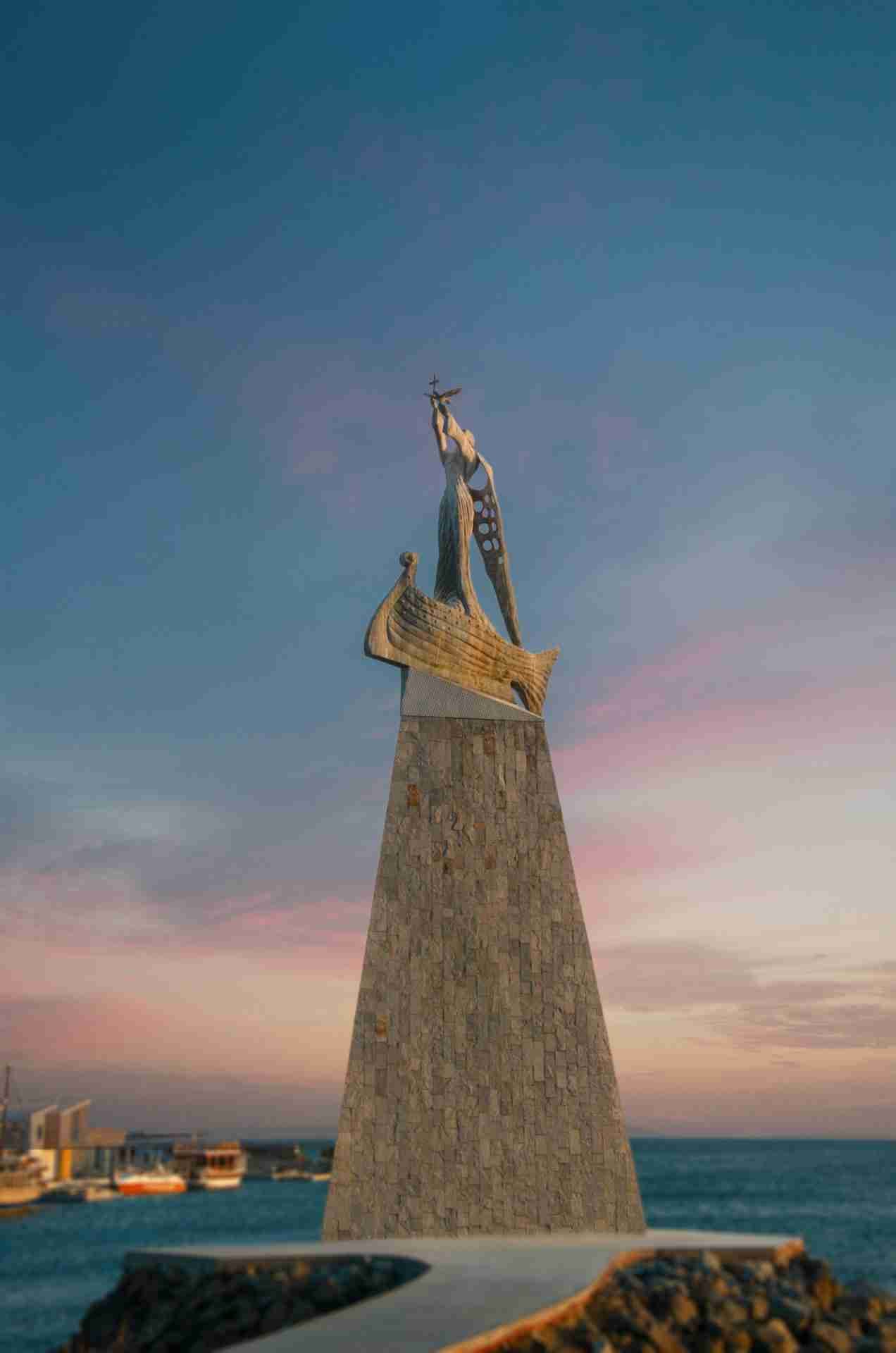
Perched near the edge of the ancient Black Sea coastline, the Statue of St. Nicholas in Nessebar stands as a tribute to the patron saint of sailors and a symbolic guardian of this historic town. The sculpture depicts the saint cradling a small ark, often interpreted as Noah's vessel, tying together Christian tradition and maritime heritage. Positioned at the entrance to the old town's narrow causeway, the statue faces the sea with a quiet dignity that resonates in both direct sunlight and soft twilight. With wind etched stone underfoot and endless sky behind it, the statue is both a focal point and an anchor within a wider coastal landscape. For photographers, it offers opportunities to work with bold silhouettes, expansive seascapes, and layered narratives that tie place, faith, and water together.
Best Photography Opportunities
• Silhouettes Against the Black Sea at Sunset
The statue's orientation and position along the causeway make it ideal for silhouette photography as the sun sets over the sea. Use a wide angle lens to frame the figure in front of the glowing horizon or step back for a more minimalist composition that emphasizes negative space. Golden hour provides warm tones across the water, while the shape of the statue remains sharp and expressive even as the light fades. Small fishing boats or walkers along the nearby path can be included to introduce scale and movement. For best results, expose for the sky to deepen color and preserve the shape of the monument in shadow.
• Close Detail Work and Sculptural Texture
Up close, the surface of the statue reveals fine textures in stone and metal that respond differently to changing light. Side lighting in the early morning or late afternoon enhances detail, casting subtle shadows across the carved folds and the stylized form of the ark. Use a short telephoto or fast prime lens to isolate hands, robes, or the boat form without crowding the frame. These tighter shots are excellent for creating a more intimate and abstract interpretation of the monument. Overcast light also works well here, as it reduces harsh contrast and helps emphasize surface texture.
• Aerial and Elevated Views from the Causeway
Shooting from above or slightly behind the statue allows you to position it against the curve of the causeway and the old town's historic skyline. The interplay between the geometric line of the road, the organic shape of the statue, and the open water creates strong visual structure. Early morning drone flights or handheld shots from higher ground reveal the statue as part of the wider landscape, especially when the light glances across the surface of the sea. Reflections from wet pavement or tide pools can add further compositional depth.
• Long Exposure Seascapes with the Statue as Anchor
Use a tripod and neutral density filter to turn the Black Sea's surface into a soft gradient while keeping the statue sharp and steady in the frame. This technique works best during calm conditions, with slow moving clouds or subtle wave patterns creating tonal layers across the scene. Frame the statue off center and allow the horizon to sit slightly above midline to avoid dividing the image evenly. The result is a balanced composition that speaks to stillness, time, and presence. These types of images are particularly suited for monochrome processing or toned color palettes.
• Contextual Storytelling in the Old Town Environment
The statue is only steps away from Nessebar's cobbled streets, Byzantine ruins, and traditional wooden houses. Use these elements to build a broader visual story around your visit, connecting the monument to its cultural setting. Photograph locals walking past the statue, or include elements of street life and architecture in the background. A wider lens helps you combine multiple layers into a single frame, while a narrow depth of field can guide attention toward the statue while still suggesting place. These storytelling images are ideal for editorial or travel work.
Best Time to Visit
Sunrise and sunset are the most rewarding times to photograph the Statue of St. Nicholas, with low sun angles casting warm light across the sea and highlighting the structure's sculptural form. Sunset is particularly strong for silhouette work, as the statue faces directly toward the open sea with minimal obstructions. Mornings are quieter and better for slower paced compositions, especially if you want to capture the interplay between the statue and the nearby town. Summer months provide longer shooting windows and more color in the sky, though the area becomes busier. Spring and autumn offer softer light and fewer tourists. Overcast conditions work well for close detail work and subtle texture, while fog or sea mist can add mood and mystery to wider compositions.
How to Get There
The statue is located at the entrance to the old town of Nessebar, along the narrow isthmus that connects the historic peninsula to the mainland. It is accessible on foot from any point in Nessebar, with nearby parking lots for visitors arriving by car. There is no fee to access the statue or the surrounding promenade, and the area is open to the public at all hours. The walkway is paved and relatively flat, making it easy to carry gear or set up for longer sessions. Cafés and public restrooms are available nearby, and the old town's compact layout makes it easy to combine the statue shoot with architectural or street photography in the same visit.
Recommended Photography Gear
A wide angle lens is essential for capturing the statue within the broader seascape or urban context. A mid range zoom allows for tighter compositions, portrait style framings, and layering with surrounding elements such as the town or sea wall. A small tripod is helpful for long exposure work and golden hour shooting, especially along the promenade. A circular polarizer can reduce reflections on the water and deepen color in the sky, while a neutral density filter allows for extended shutter times. If you plan to shoot close detail or low light, a fast prime lens and microfiber cloth for sea spray or moisture are recommended. Lightweight gear is ideal here, as you'll likely be moving between the statue and nearby locations on foot.
Nearby Photography Locations
Located in the heart of old Nessebar, this partially ruined Byzantine basilica features layered stonework and arched windows that frame the sky. It is especially beautiful in early light or soft overcast conditions.
The narrow streets are lined with traditional wooden homes that photograph well with natural side light and quiet backgrounds. These structures add depth and cultural texture to any photo walk.
• Harbor and Fishing Boats
The small harbor near the statue offers rows of boats, nets, and weathered details that suit both documentary and abstract shooting styles. Reflections in the calm water make early morning particularly productive.
This wide stretch of sand curves gently along the edge of the town and offers wide coastal views, especially at sunset. It's ideal for long lens shots of silhouettes, boats, and dramatic skies.
• The Windmill, Nessebar
Just a short walk from the statue, this restored windmill is one of Nessebar's most recognizable landmarks. It works well in both isolation and as part of a layered coastal composition.
Comments
Loading comments…