
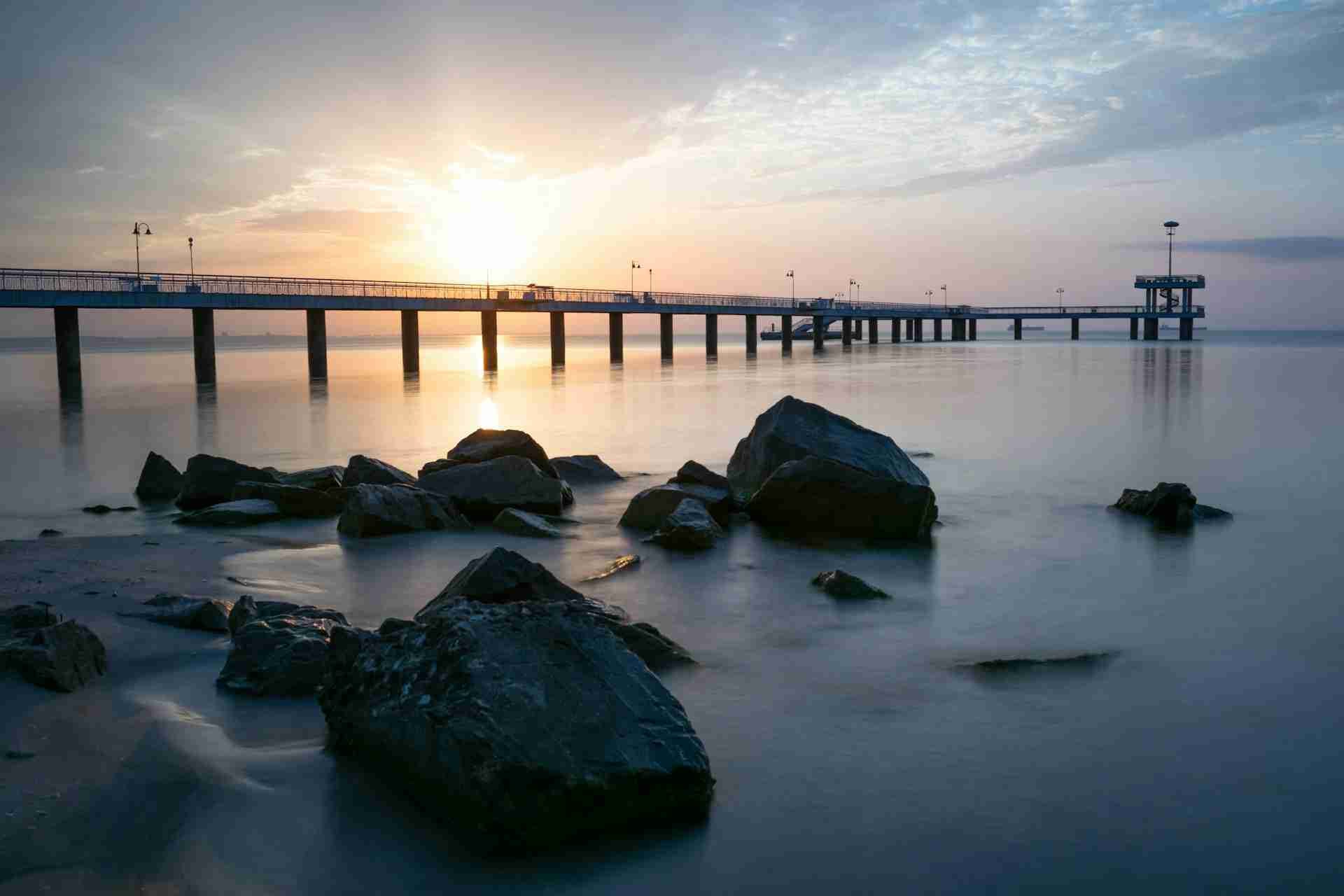
Stretching out into the Black Sea from the bustling coastal city of Burgas, the Burgas Pier is a long, concrete structure that offers a clean horizon, open skies, and uninterrupted views of the sea. While it serves as a public walkway and local gathering spot, the pier's straight lines, rhythmic columns, and changing light make it a prime setting for photographers interested in symmetry, scale, and the interplay between man-made structure and open water. Unlike ornate or overbuilt piers, this one is minimalist, geometric, and stark in its presentation. For sunrise shoots, abstract studies, and long exposures that isolate shape and motion, the Burgas Pier offers an ideal environment.
Best Photography Opportunities
• Sunrise on the Eastern Horizon
Because the pier faces directly east, it's one of the best places in the region to catch the sun rising over the Black Sea. The elevated viewpoint and open water provide a direct line to the horizon. Arrive early enough to capture the first color shift in the sky, which can be soft pinks and blues on clear mornings or glowing orange gradients when low clouds scatter the light. Use a wide-angle lens to take in the full scene, or a longer lens to compress the sun as it lifts just above the sea surface. Long exposures smooth the water and accentuate the sky's gradients.
• Leading Lines and Symmetry
The pier's walkway creates a strong linear perspective, drawing the eye toward the lookout point at its end. With evenly spaced lights and railings on both sides, it's a textbook example of one-point perspective in architectural photography. Use a centered composition for graphic symmetry or shift your angle slightly to create tension and depth. The structure also works well in black and white, where shadows and shapes can take center stage.
• Long Exposure Water and Sky Studies
On calm days or with a slight breeze, the pier becomes an excellent subject for minimalist long exposures. Use a 6-stop or 10-stop ND filter to stretch your shutter times and flatten the sea while streaking the clouds. Even in the middle of the day, the uniformity of the scene supports this approach, especially when the sky is lightly overcast. Compose with just a portion of the pier, or shoot from beneath it to include the support columns and repeating patterns.
• Under the Pier and Side Angles
Access to the beach on both sides allows for creative side profiles and views beneath the pier. From these angles, the structure's supports and shadows create patterns that shift with the tide and time of day. Shooting during golden hour from the north side captures warm light wrapping around the columns. From below, the view between the supports can create a tunnel effect leading out to the sea. This is a great spot for working with contrast, reflections in the wet sand, and abstract geometries.
• Blue Hour and Evening Streetlight Glow
As evening sets in, the pier's lights switch on and create a string of soft yellow pools along the walkway. In blue hour, these contrast beautifully with the cool ambient light, offering chances for high dynamic range captures or cinematic stills. Use a fast lens or a higher ISO to work handheld as the light fades. Reflections in puddles or wet surfaces can double the impact of the lights and add another compositional layer.
Best Time to Visit
The pier can be photographed in every season, but timing and light make a significant difference in how it appears. The most favorable season for color and conditions is from late April to early October, when the Black Sea is relatively calm and the skies often stay clear. Summer mornings bring soft, warm light from the east, ideal for balanced exposures with little haze.
Spring and autumn are especially rewarding for dynamic skies. Passing fronts can create layered clouds that add motion and structure to long exposures. Mornings remain the best time for shooting the full length of the pier into the horizon, while late afternoon works better for working beneath the pier or along the side if you're chasing warm sidelight.
In winter, the scene becomes more stark and minimalist. Low-angle sunlight and fewer crowds create opportunities for clean architectural studies or moody weather shots. Snow is rare but impactful, especially when it clings to the concrete or traces the edges of the pier.
The most photogenic window is typically within one hour after sunrise or before sunset. Early morning is best for catching undisturbed surfaces and fewer people on the walkway. Blue hour provides rich color and artificial light contrast if you're planning a more stylized or cinematic look.
How to Get There
The Burgas Pier is located within the Sea Garden (Morska gradina), a large public park that stretches along the city's coastline. From the city center, it's a short walk through the park to the pier, which begins near the central beach area and extends out approximately 300 meters into the sea.
Public transportation, including buses and taxis, will bring you close to the park entrance. If arriving by car, there are parking areas near the Sea Garden, but during summer months they can fill quickly, especially around midday. Arrive early in the morning for easier access and better light.
There is no fee to access the pier or the surrounding beach area. The walkway is open year-round during daylight hours, though lighting is installed along the path if you're shooting around sunset or during evening blue hour. Tripods and handheld stabilizers can be used freely. Be mindful of joggers, families, and other walkers, especially on weekends or during festival periods.
The pier and its approaches are flat and fully accessible, making it easy to work with wheeled camera bags or carts. If shooting beneath the pier, access to the sand is straightforward, though you'll want to check tide levels and avoid higher surf during stormy conditions.
Recommended Photography Gear
Bring a flexible setup that can handle both wide-angle scenes and telephoto compression. A 16 to 35mm lens is ideal for leading lines and shooting from under the pier, while a 70 to 200mm lens works well for isolating sections of the structure or pulling the sun into frame at sunrise.
A sturdy tripod is essential for long exposures and shooting in low light. The pier surface can vibrate slightly with heavy foot traffic, so position your tripod at the edge or shoot from the beach for more stability. Use a remote shutter or timer mode to avoid any residual shake.
Neutral density filters are key for shooting long exposures, especially a 6-stop or 10-stop filter for water smoothing and cloud motion. A circular polarizer will help manage glare on wet surfaces or water when the sun is higher. Pack lens cloths for salt spray or mist in humid conditions.
Because the pier is exposed to open wind, a weighted tripod hook or sandbag can help stabilize your setup. A weather-sealed camera body or rain cover is smart if you plan to shoot in changing conditions. During sunrise shoots, bring layers. Even in summer, the sea breeze can be surprisingly cool in the early hours.
Nearby Photography Locations
This long coastal park is filled with tree-lined paths, sculptures, flower beds, and viewpoints over the sea. It offers softer compositions and people-in-landscape scenes, especially in golden hour light. The variety of textures, lines, and foliage makes it worth exploring with a 50mm or short telephoto.
Flanking the pier on either side, the beach provides excellent foreground material for sunset or sunrise shots. You can capture footprints, wet sand reflections, or silhouettes of early morning swimmers and walkers. Shoot wide or get low to use the pier as a visual anchor from the side.
Just north of the city, these shallow evaporation pools shift in color depending on season and water levels, with hues ranging from soft pinks to rusty orange. They offer a completely different visual environment with bold abstracts and color field compositions.
Located along the coast south of Burgas, this wetland area is home to birds, reeds, and still water scenes. It's ideal for wildlife and minimalist landscape photography, especially in the early morning when the light skims across the water's surface.
• Burgas Port Area
Though more industrial, the working port offers strong lines, repeating patterns of cranes, and moody seascape opportunities. It is best approached from elevated areas or behind fencing, but there are a few good public viewpoints if you're after contrast-heavy, urban waterfront shots.
The Pier of Burgas gives you more than just a walkway over the water. It's a platform for practicing composition with intent, for using light deliberately, and for finding stillness in the middle of a vibrant coastal city. Whether you're chasing the sun across the water or waiting for the lights to flicker on one by one, this stretch of concrete and sea is a place where your frame slows down and holds its shape.
Comments
Loading comments…