
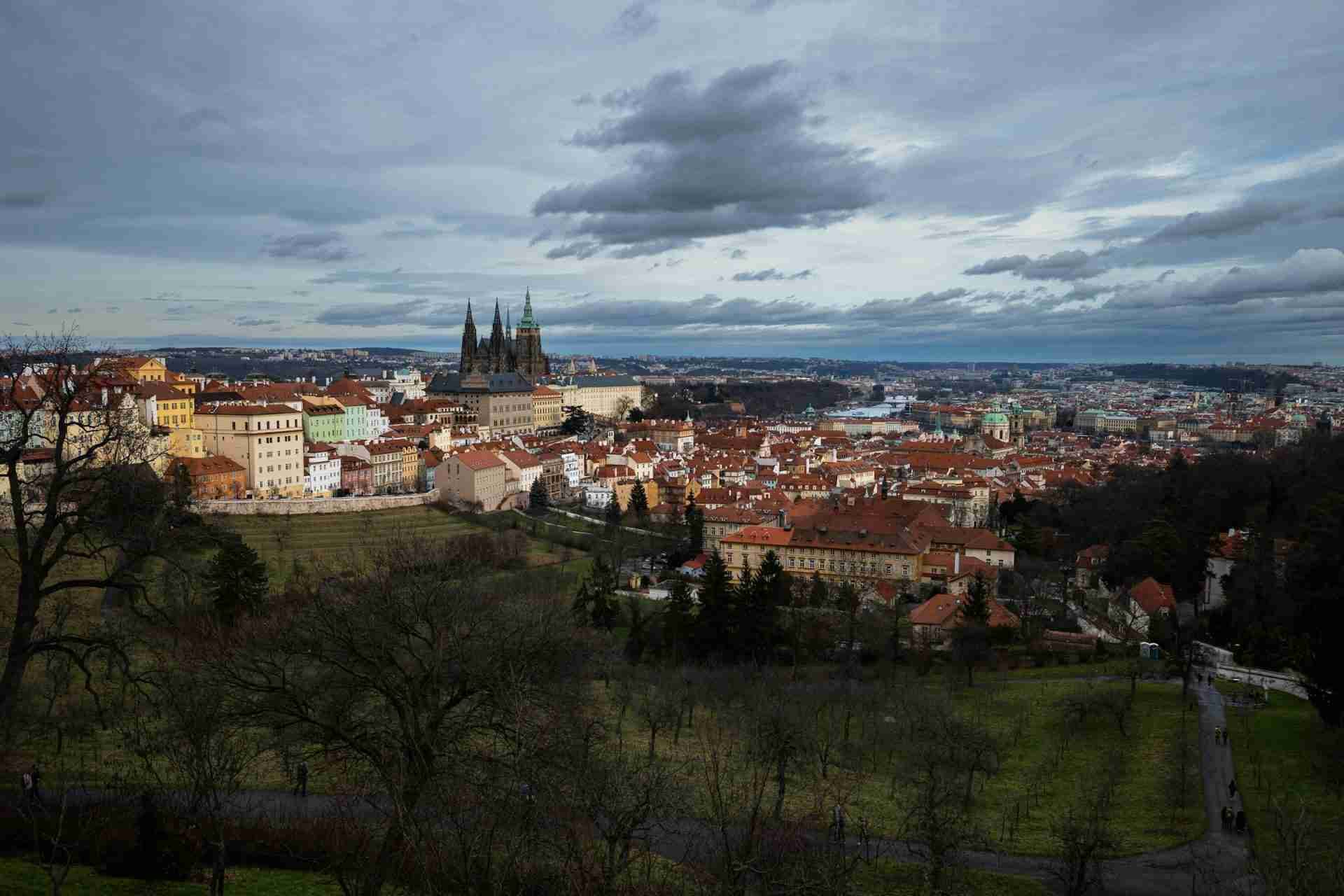
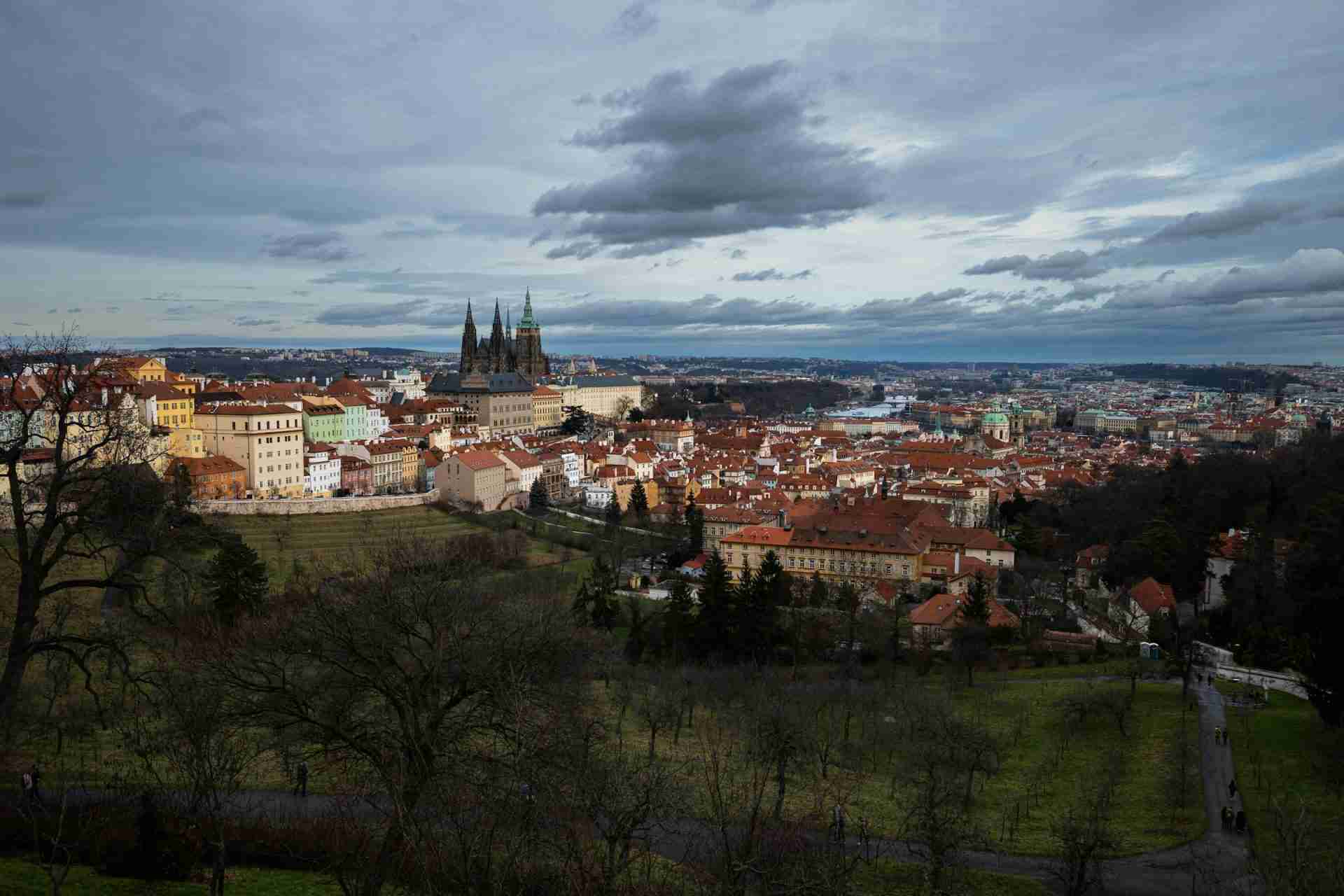
High above the cobblestone lanes and copper spires of the Czech capital lies a quiet terrace that rewards photographers with one of the most complete views of Prague's historic core. Nestled behind the Strahov Monastery, this overlook does not announce itself loudly but offers a composition that feels cinematic. From this elevation, you can see it all: the Old Town's clustered rooftops, Charles Bridge slicing across the Vltava River, the intricate maze of Lesser Town, and the gothic silhouette of Prague Castle anchoring the skyline. It is a place where early morning fog drifts below eye level and where the shifting light of day reshapes centuries of architecture into countless photographic stories.
Best Photography Opportunities
• Comprehensive Cityscape Composition
This location features a sweeping view that brings Prague's historical districts into a single, layered frame. The city stretches out beneath you, with the bridges and spires forming natural focal points. A full frame sensor paired with a moderately wide lens works well here, especially if you want to retain details without distorting the skyline. Using longer focal lengths also lets you isolate subjects like the castle or bridge with the stacked city behind them. The dynamic range of this view changes dramatically with the light, so shooting at various times of day can produce completely different results.
• Charles Bridge from Elevation
Instead of photographing this bridge from river level like most visitors, this spot allows you to view it from above, revealing its full curve and pedestrian activity in context with the riverbanks and towers on either side. The repetitive arches across the water make for a strong compositional anchor, especially in symmetrical or leading line compositions. Shoot during the morning blue hour to capture a quieter scene with soft light and fewer people on the bridge. A tripod helps with long exposures that smooth the river surface or capture the early light trails of passing trams. If fog is present, the bridge appears as a ribbon through the haze, adding depth and mood.
• Evening Transitions and Blue Hour
This overlook is well situated for shooting the transition from sunset into night. The west facing orientation ensures warm backlighting on the Old Town and Lesser Town as the sun dips, and as the lights of Prague switch on, you can capture that signature golden glow that lingers just after the sun disappears. Blue hour long exposures here are particularly effective in balancing artificial lighting with the coolness of the sky. This timing also helps avoid harsh contrast and reveals subtler color gradients along the rooftops and river. It is an excellent time to experiment with bracketing and blended exposures to manage the wide exposure range.
• Seasonal Garden Foregrounds
Depending on the time of year, you can use blooming trees or textured shrubs from the nearby monastery gardens as foreground layers. Spring blossoms and autumn leaves bring seasonal variety into your frame, giving you the option to bracket for focus stacking or isolate details with shallow depth of field. These elements can also help lead the eye into the wider city view and soften the otherwise stone heavy palette of Prague's old town architecture. Composing through tree branches or between garden hedges allows for natural framing techniques. It is also an ideal way to vary compositions across repeat visits.
• Low Fog and Early Morning Light
In colder months, Prague often wakes under a layer of low fog. From this overlook, the city appears to emerge from a sea of white, with church domes and towers piercing through the haze. Arriving before sunrise lets you prepare and experiment with light metering as the fog shifts and the sun breaks through. This is one of the most dramatic ways to photograph the city, and no two mornings will offer the same effect. Focus on layered compositions and use exposure compensation to retain midtones within the mist.
Best Time to Visit
The overlook is most rewarding in the early morning when the light is soft and directional, casting long shadows across the Old Town and eliminating most of the foot traffic below. Sunrise in spring and fall brings the best balance of color temperature and visibility, and these seasons also see frequent fog events that add texture to the wide view. Summer mornings are clear and calm, but midday light can quickly become flat and overly contrasty. Late afternoon and golden hour are also productive, especially for backlit compositions and twilight cityscapes. Winter offers a more subdued color palette, and snow can transform the rooftops into graphic shapes, but be prepared for cold winds and slick paths.
How to Get There
To reach the overlook behind the Strahov Monastery, take tram line 22 to the Pohořelec stop, which places you at the upper edge of Petřín Hill. From there, it is a short walk east through the monastery grounds. The overlook is located behind the main complex, past the Strahov Library. The route is paved and generally easy to walk, but cobblestones and mild inclines may be challenging in icy weather. While there is no entrance fee to access the overlook itself, access to the interior of the monastery or its libraries may require tickets. Parking is limited, so public transport is the most reliable option. From Prague's central districts, expect a 30 to 40 minute commute including the walk.
Recommended Photography Gear
Given the expansive view and wide range of compositions available from this location, a zoom lens in the 24 to 105mm range offers excellent versatility for both establishing shots and tighter crops. A full frame body handles the dynamic lighting conditions well, especially during low light sessions at dawn or dusk. A tripod is essential for long exposures, particularly if you are shooting city lights or pre sunrise fog. Filters are not always necessary, but a circular polarizer can help cut haze on clear days and improve contrast across the rooftops. A remote shutter release is helpful when bracketing exposures. Wear good walking shoes and dress for the hilltop breeze, especially in winter or during sunrise visits.
Nearby Photography Locations
Modeled after the Eiffel Tower and perched atop Petřín Hill, this structure provides a higher and more central view of Prague. Climbing the tower offers unmatched perspectives down into the city center and across to Prague Castle. The metal framework and internal staircases also offer compelling structural compositions.
Just a few minutes' walk from the overlook, this religious site features a bell tower, detailed stucco work, and a courtyard filled with balanced symmetry. It is best photographed in the early morning when soft light brings out the textures in the stone and the square is still quiet.
One of the city's defining landmarks, the castle complex includes a wide variety of subjects: open courtyards, Gothic architecture, and panoramic terraces. It is particularly photogenic just after opening or before closing when crowds thin out. Details on the cathedral and palace surfaces are best captured with a telephoto lens in the angled afternoon light.
This tucked away lane below the castle offers a more intimate shooting experience. Its narrow passage, uneven cobblestones, and colorful buildings create interesting depth when shot with a short telephoto or even a prime lens. The area is often quiet, making it ideal for spontaneous portrait or detail work.
Hidden within Lesser Town, this terraced garden is a beautifully arranged space that opens toward the sky and offers views back up to the castle. In spring and early summer, the layout comes alive with color and line. Its structured hedges and layered platforms are ideal for compositions that play with perspective.
Comments
Loading comments…