
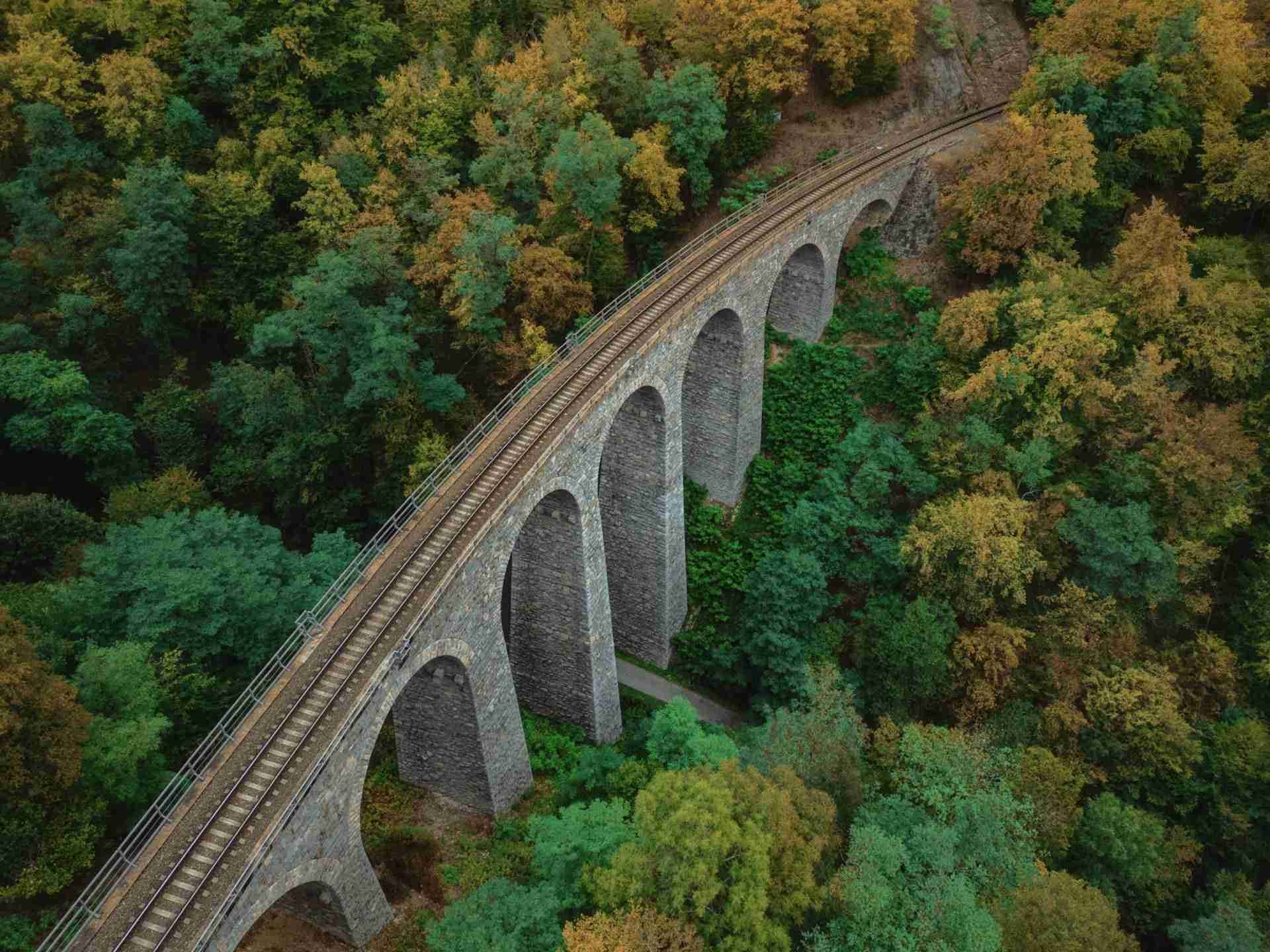
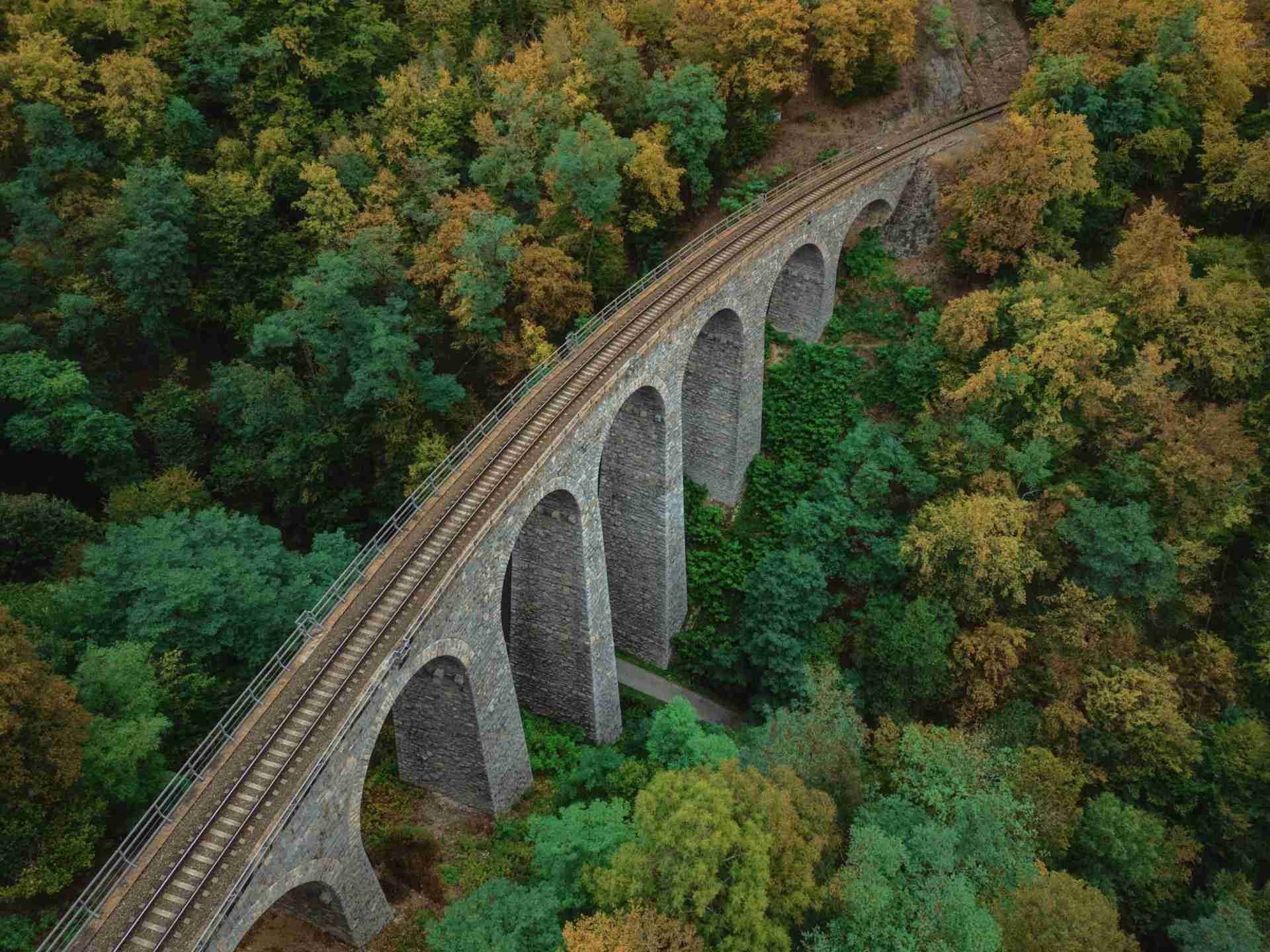
The Žampach Viaduct is one of the Czech Republic's most striking railway bridges, standing tall above a forested valley just outside Jílové u Prahy. With soaring stone arches stretching across a wide curve of hillside, this structure offers a commanding subject for photographers interested in industrial architecture surrounded by natural landscape. Its height, over 40 meters, makes it the tallest stone railway viaduct in the country, and its proportions are well balanced against the forest canopy that shifts with the seasons. Though the viaduct still serves a functional rail line, it's located in a quiet rural area where photographers can move slowly, explore different elevations, and frame the bridge in relation to the surrounding woods, meadows, and sky. This is a rewarding destination for those who enjoy combining engineered form with natural light and texture.
Best Photography Opportunities
• Full Length Views from Below
The best place to appreciate the scale of the Žampach Viaduct is from below, where the full curve of its stone arches stretches across the landscape. From this low angle, the bridge appears monumental as it cuts through the treetops, and the symmetry of the arches creates a repeating pattern that works well in wide or panoramic formats. Shooting from slightly off center adds depth and lets the trees on either side act as a natural frame. During golden hour, the side light brings out the texture in the stone and the warmth of the surrounding foliage. Even overcast conditions are useful here, as the soft light allows you to control contrast and highlight structural detail without harsh shadows.
• Framing Through the Forest
The wooded hillsides around the viaduct provide multiple vantage points for shooting through branches or placing the bridge within a layered natural frame. This technique works especially well in spring and autumn, when the trees either open up or explode in color, giving photographers different tones and light qualities to work with. You can use a longer lens to compress the scene and pull the viaduct visually closer to the foreground, or a wide angle to show its position in the landscape. Look for breaks in the trees along the hiking trails to find compositions where the arches peek through the canopy. These shots tend to feel more intimate and immersive, giving a sense of being tucked into the environment.
• Capturing Trains in Motion
Trains still cross the Žampach Viaduct regularly, and timing your shot to include one in motion adds a strong visual element to the otherwise static composition. A passing train gives a clear sense of scale and brings a dynamic contrast to the fixed geometry of the stone arches. With a fast shutter, you can freeze the train in place for a clean shot, or use a slower exposure to add motion blur if you want to emphasize the difference between movement and structure. This approach is best executed from a mid range distance where the entire train can be seen crossing the viaduct without being obscured by trees. Patience is required, as train frequency is low, but the payoff can be worth it.
• Seasonal Changes and Morning Light
Each season brings a different photographic mood to this location. In autumn, the trees surrounding the viaduct turn to shades of orange and red, contrasting beautifully with the cool gray of the stone. Winter brings snow that clings to the arches and bare branches, giving a more graphic and minimalist appearance. Spring is ideal for soft greens and blooming undergrowth, while summer's full foliage frames the bridge in rich color. Morning light is best for capturing the viaduct in soft, directional illumination, especially from the eastern approach. Low sun angles help highlight the relief in the stone and cast long shadows that add depth to the frame.
• Details in Stone and Structure
While the full length of the viaduct is impressive, there is also photographic value in the small details of its construction. The individual stones, joints, and wear marks tell the story of a century of use, and close up shots can highlight this texture beautifully. Look for moss-covered surfaces, shadowed arches, or the play of light across a single support column. These compositions work well in monochrome and often reveal overlooked beauty in the structure. Shooting directly underneath the viaduct also gives you strong vertical symmetry and a chance to play with contrast and light as it filters through the arches.
Best Time to Visit
Žampach Viaduct is accessible and photogenic year round, but your experience will change dramatically with the seasons. Autumn is the most visually dramatic, with the surrounding forest turning vivid shades that contrast well with the gray stone. Winter can be striking if snow covers the ground and dusts the bridge, though icy paths may make some angles harder to reach. Spring offers a softer, fresh palette with new growth and gentler light, while summer gives full foliage and strong directional sunlight.
Light is best early in the day when the sun comes in from the east and side lights the structure, helping to define the arches and bring out the texture in the stone. Midday light can flatten the scene, especially if the sky is clear, but overcast conditions are also productive for more muted and detail focused work. If you want to include a train, plan your visit based on the schedule of the regional line that still uses the track.
How to Get There
The viaduct is located near the village of Žampach, just outside Jílové u Prahy, and is accessible by car or regional train. If you're driving, you can reach the area from Prague in about 40 minutes, with nearby parking available on local roads. From the town of Jílové u Prahy, hiking trails lead up to the viaduct through the forest, and the walk is relatively short and manageable. Trains also run to nearby stations, and the area can be reached on foot from there. The viaduct itself is not enclosed or fenced off, and while the tracks are active, there is no restriction on photographing from surrounding trails or open ground.
Recommended Photography Gear
A wide angle lens is essential for capturing the full span of the viaduct from up close or from below, especially when shooting from the forest floor. A mid range zoom helps when framing the bridge through trees or shooting passing trains with more control over composition. A tripod is useful for early morning, low light, or long exposures, particularly if you are working with soft light or hoping to blur motion. A circular polarizer can help manage reflections on wet stone and deepen sky contrast when shooting through foliage. Comfortable hiking shoes are recommended, as you'll likely be exploring uneven forest ground to get the best angles.
Nearby Photography Locations
• Jílové u Prahy Historic Center
The town's small streets and historic buildings provide a charming setting for street photography and architectural detail, especially in soft morning or evening light. The church tower and surrounding hills make for good elevated shots.
• Sázava River Valley
Not far from the viaduct, the river cuts through wooded hills and offers trails, bridges, and calm water scenes. Reflections, riverside textures, and quiet forest paths make this area ideal for slower-paced landscape work.
• Kamenný Přívoz Rail Bridge
Another arched stone railway bridge located further down the line, this structure offers a similar subject in a slightly more open riverside setting. It is worth a visit if you are exploring the region by train or car.
• Viewpoints near Luka pod Medníkem
Higher elevations along the trails near this nearby village offer wide views over the Sázava River and rolling hills, especially in early morning mist. These make good companion shots if you are building a broader landscape set.
• Posázavská Stezka Hiking Route
This well-known trail runs through the region and connects various scenic spots along the river and forest ridges. It is a good route for capturing layered terrain, footbridges, and occasional views of passing trains or distant villages.
The Žampach Viaduct is one of those locations that rewards patience and exploration. Whether you're after sweeping forest scenes, the precise geometry of stonework, or a fleeting train crossing high above the ground, this bridge offers more than just a quick photo stop. It invites photographers to slow down and frame its presence within the rhythm of the hills that surround it.
Comments
Loading comments…