
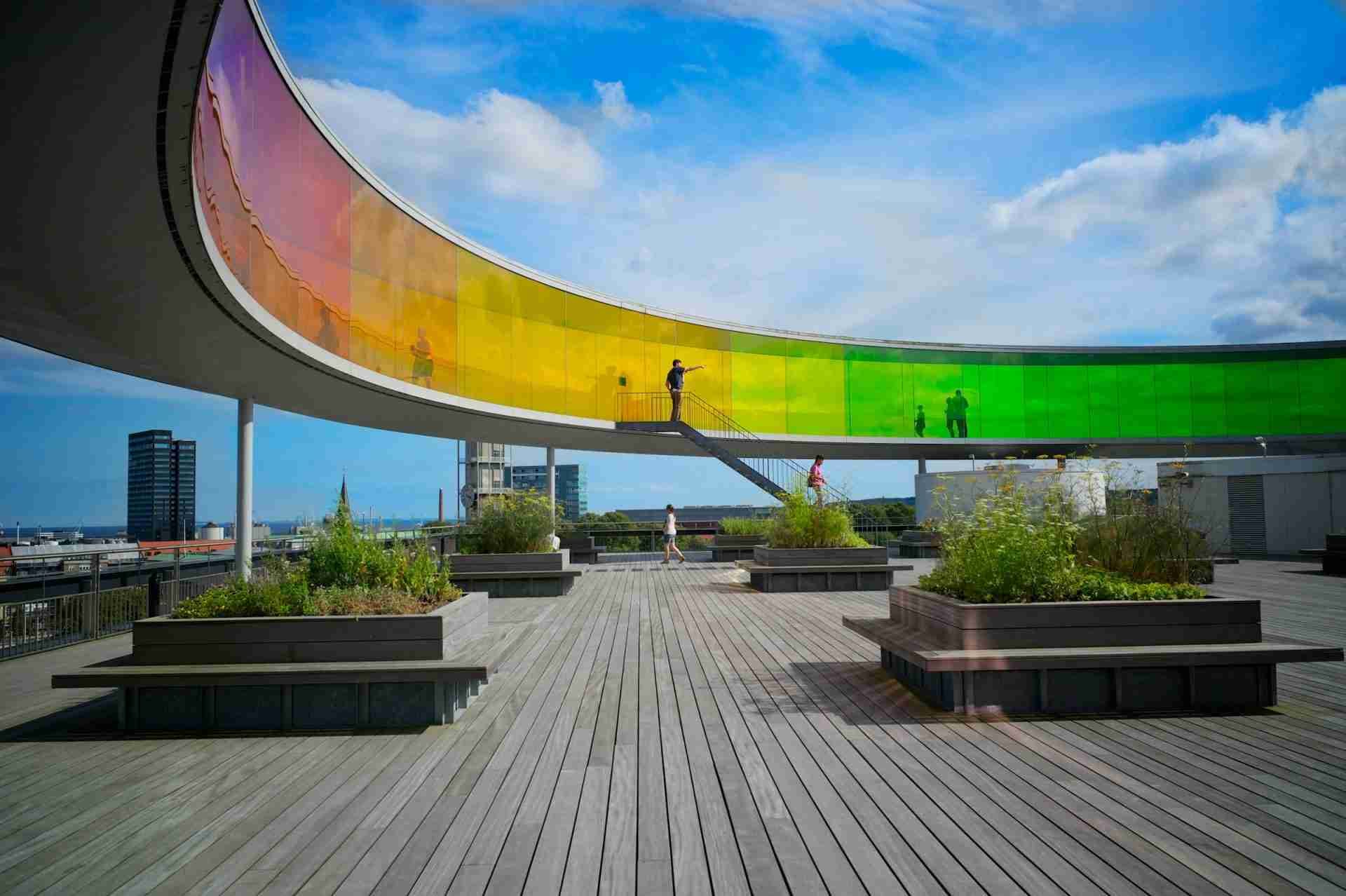
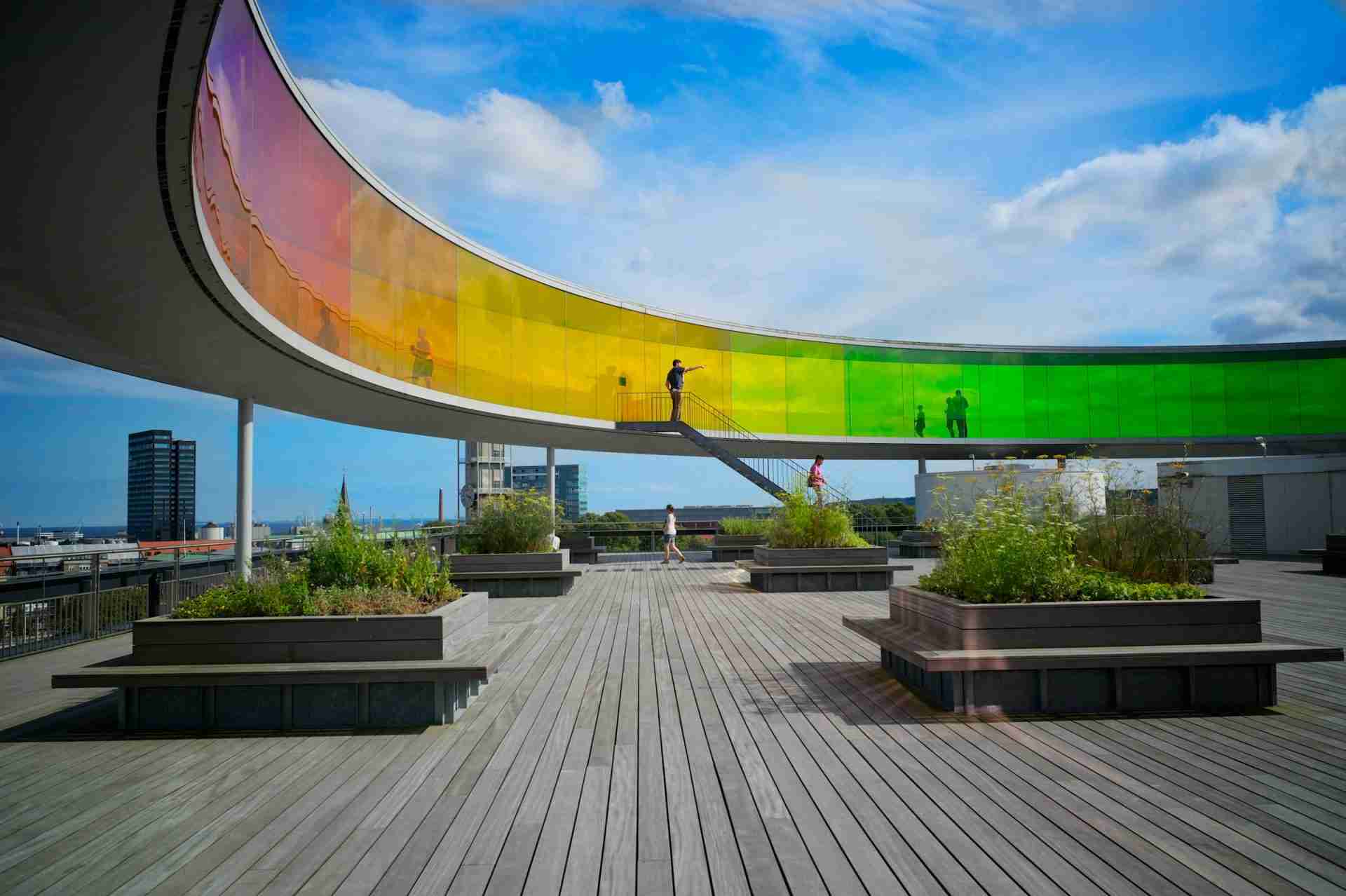
ARoS Art Museum stands in the heart of Aarhus as one of the city's most recognizable landmarks, both for its scale and its distinctive circular rooftop installation. The building itself is modern and geometric, with clean lines that contrast against the surrounding city streets, but what draws most visitors is the rainbow panorama that sits on top. This elevated walkway wraps around the roof in a continuous circle, offering views across Aarhus through shifting bands of colour. Inside, the museum spans multiple floors with large gallery spaces, open staircases, and a mix of contemporary exhibitions that give the interior a sense of depth and variety. The atmosphere changes as you move through the building, from quiet, controlled gallery rooms to the bright and open rooftop where the city feels much closer. It is a place that works just as well for a casual visit as it does for a more focused photography session, with clear transitions between indoor and outdoor spaces.
Best Photography Opportunities
• Rainbow Panorama Walkway
The circular rooftop installation is the defining feature of ARoS and offers a unique way to photograph the city. As you move through the walkway, the coloured glass panels shift the tone of everything outside, creating a series of different visual moods within the same scene. You can frame the city through individual colour sections or include the curvature of the structure to emphasize its shape. Positioning people within the walkway adds scale and gives context to the space. Reflections on the glass can also be used creatively, layering interior and exterior elements together. Taking time to walk the full circle allows you to see how light and colour interact at different points.
• Interior Architectural Lines And Levels
Inside the museum, the layout is built around large open spaces, staircases, and clean architectural lines. These elements make it well suited for compositions that focus on shape, symmetry, and perspective. Shooting from different levels allows you to layer floors and create depth within the frame. The contrast between light and shadow in these spaces can add definition without becoming too harsh. You can also use people within the frame to give a sense of scale and movement. This is an area where careful positioning and timing can lead to very controlled, balanced images.
• Framed City Views From Above
The rooftop walkway provides elevated views across Aarhus, which can be framed through the structure itself. Using the circular form as a compositional element helps anchor the image while still allowing the city to remain the main subject. Different sections of the walkway offer slightly different perspectives, so moving around is important to find the strongest angle. The coloured glass can either be embraced as part of the image or avoided by shooting between panels. This flexibility allows you to create a range of results from the same location. It is a good place to experiment with both wide and tighter compositions.
• Silhouettes And Backlit Figures
The lighting inside the walkway can create strong opportunities for silhouette work. When the light is bright outside, people walking through the coloured panels can appear as darker shapes against the glowing background. Positioning yourself so that subjects pass through stronger light areas helps define their outline. This works particularly well when the scene is simplified and distractions are kept to a minimum. Timing is important, as the movement of people through the space is constant but unpredictable. With patience, you can capture clean and striking silhouettes.
• Minimal Details And Colour Studies
Beyond wider compositions, the museum also lends itself to more focused detail work. Sections of coloured glass, structural joints, and repeating patterns can be isolated to create simpler, abstract images. By narrowing your frame, you can remove context and focus entirely on colour and shape. Light plays a big role here, as it affects how saturated or subtle the colours appear. Small changes in angle can shift reflections and alter the overall feel of the image. This approach works well if you want to explore a more graphic style within the space.
Best Time to Visit
Early morning or late afternoon are the most effective times to photograph ARoS, particularly if you want softer light for the rooftop views. During these times, the light entering the rainbow walkway is less harsh, which helps maintain detail while still allowing the colours to stand out. Midday can produce stronger light, which increases contrast and can make exposure more challenging, especially when shooting through coloured glass.
Weekdays tend to be quieter than weekends, making it easier to work without constant foot traffic in your frame. Visiting earlier in the day also helps avoid peak visitor times. Seasonally, the museum can be photographed year round, but shorter days in winter may limit how long you can work with natural light on the rooftop. Overcast conditions can actually be beneficial, as they soften the city views and reduce harsh highlights.
How to Get There
ARoS Art Museum is located in central Aarhus and is easy to reach on foot from most parts of the city centre. If you are arriving by public transport, Aarhus Central Station is within walking distance, making it a convenient starting point. Bus routes also serve the area, with stops nearby.
If you are driving, there are parking facilities in the city centre, including options close to the museum, though availability can vary depending on time of day. Access to the museum requires an entry ticket, as it is not a free public space. Once inside, movement between floors is straightforward, and the rooftop walkway is accessible as part of the visit. Keep in mind that tripods and larger equipment is restricted, so it is best to travel light and work within the museum's guidelines.
Recommended Photography Gear
A standard zoom lens in the range of 24 to 70mm is ideal for this location, allowing you to capture both interior architecture and rooftop views. A wider lens can be useful for emphasizing the scale of the walkway and interior spaces. A fast prime lens can help in lower light conditions inside the museum, especially since tripods are not permitted.
Because you will be moving through indoor spaces with varying light levels, it is important to have a camera that handles higher ISO well. A lens hood can help reduce unwanted reflections when shooting through glass, though some reflections can also be used creatively. Keeping your setup compact will make it easier to move through the museum and adapt quickly to changing scenes.
Nearby Photography Locations
Aarhus City Hall offers clean architectural lines and a more formal setting compared to ARoS. The surrounding plaza provides open space for composing wider shots, while the building itself works well for detail and symmetry based photography. It is close enough to combine easily in the same outing.
Located next to ARoS, Musikhuset Aarhus features modern design elements and glass surfaces that reflect light in interesting ways. The area around it includes open walkways and structured spaces that work well for architectural compositions. It is a natural extension of a visit to the museum.
The Botanical Garden offers a completely different environment with plant life, pathways, and greenhouse structures. It is a good option if you want to shift from urban and architectural photography to something more natural. The variety within the garden allows for both wider and more detailed shots.
Den Gamle By is an open air museum with historic buildings that recreate different periods of Danish life. It provides a more traditional setting with detailed environments that contrast with the modern feel of ARoS. This makes it a strong complementary location for storytelling photography.
• Aarhus River Walk
The Aarhus River Walk runs through the city centre and offers a mix of urban life, reflections, and layered compositions. Cafes and buildings line the water, creating opportunities for both candid and structured shots. It is especially effective in the evening when lights begin to reflect on the water.
Comments
Loading comments…