
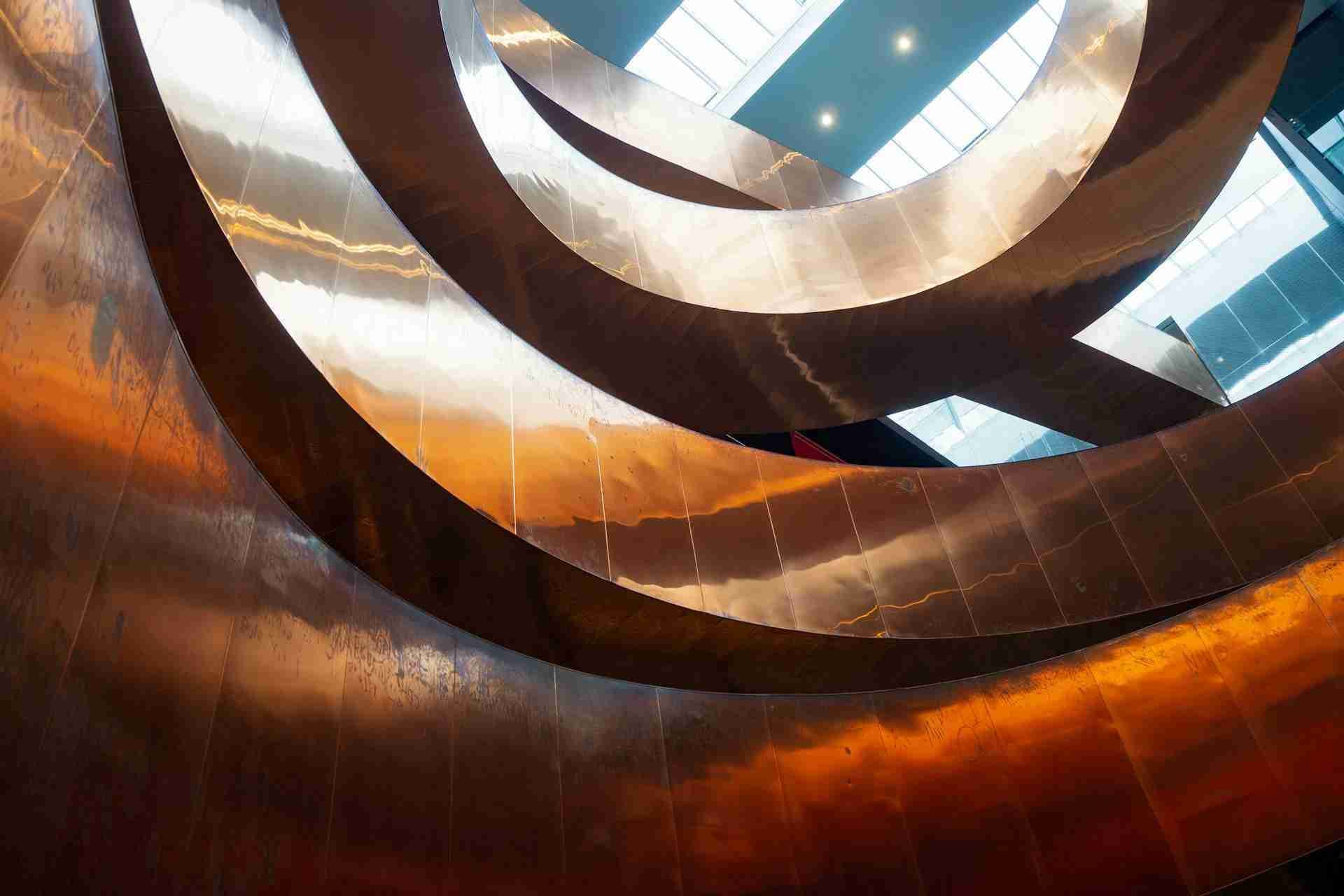
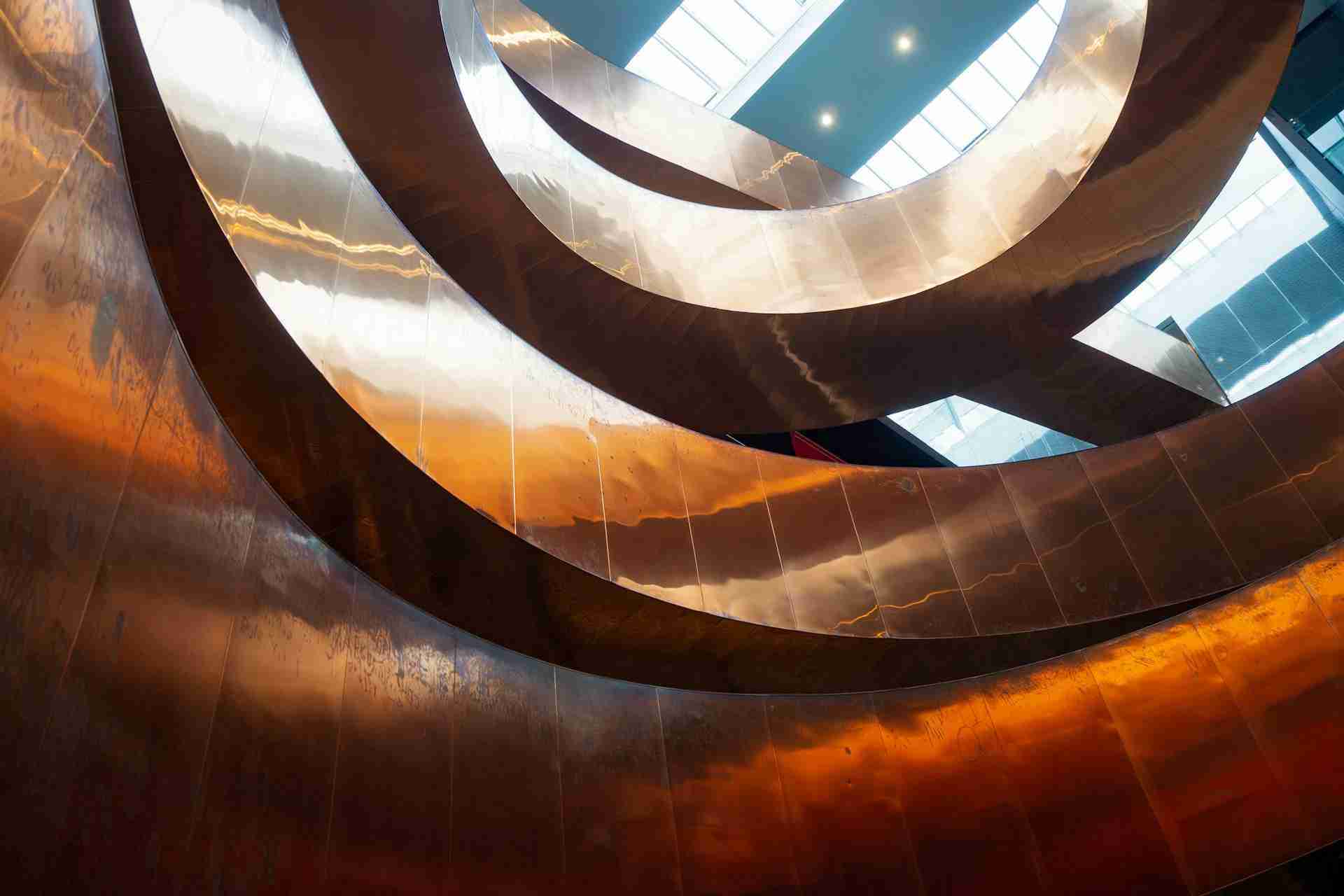
Experimentarium in Hellerup, just north of Copenhagen, is a striking example of contemporary Danish architecture that blends surface texture with fluid design. Renovated and expanded in 2017 by CEBRA Architecture, the building features a twisting copper-clad double helix staircase, dramatic interior lighting, and a clean, modern façade that contrasts clearly with the surrounding neighborhood. Photographers are drawn to the way geometry, materials, and light interact across its structure. The visual experience is centered on movement, both in the physical form of the building and in the flow of light and visitors. It is an ideal location for capturing intentional compositions rooted in line, contrast, and controlled motion.
Best Photography Opportunities
• Double Helix Staircase from Ground Level
The copper staircase is the main interior subject and offers one of the most visually compelling spiral forms in modern Danish design. Standing at the base, you can frame the full curve as it rises into the upper levels, using a wide-angle lens to exaggerate the height and twist. Light from the skylights above adds depth and warmth across the copper surface. The space is open but often busy, so handheld shooting is best, particularly during quiet morning hours. A slower shutter can still be effective if you work with stabilization and time your shots between visitor movement.
• Top-Down Spiral Views from the Upper Walkway
From the upper landings, you can shoot directly into the core of the spiral. These shots produce graphic, layered frames with strong visual rhythm. A short telephoto lens compresses the shapes and allows you to work without distortion. The even, ambient light from the roof windows highlights the metallic surface and reveals subtle shadows without overpowering the form. This is also a good opportunity to shoot tighter abstracts that reduce the staircase to lines and curves.
• Exterior Minimalism with Copper and Sky
The exterior of the building features a copper façade arranged in a gridded layout that catches light at different angles throughout the day. Clean, minimal compositions can be made by isolating portions of the wall against the sky or pavement. Use a standard or mid-range lens to frame details without including visual clutter. Overcast conditions reduce glare and emphasize the natural tones of the metal, while golden hour adds warmth and side light that brings out the pattern in the panels.
• Glass Reflections and Interior Layers at the Entrance
The entrance area includes a large glass curtain wall that reflects both the exterior and interior forms, creating a layered photographic field. Use a polarizer to manage reflection strength or lean into the complexity by framing overlapping shapes. A standard zoom lens works well here, allowing you to capture depth and subtle changes in lighting across both surfaces. Late afternoon or early evening provides soft light from the west while still maintaining enough interior visibility for mixed exposures.
• Contextual Urban Frames from Across Tuborg Havnevej
Step back across the road to include the entire building with its surrounding sidewalk and nearby structures. This wider view helps place Experimentarium in its urban setting and reveals how its bold design stands apart from the more traditional architecture nearby. Use a 24–70mm lens to include people or cars for scale. Early morning or golden hour provides softer light across the façade and cleaner shadows on the pavement.
Best Time to Visit
The Experimentarium is open throughout the year, and light conditions indoors are consistent thanks to skylights and internal lighting. For interior photography, weekday mornings are best. There are fewer visitors, and light filtering from above is balanced and soft. Overcast weather also works well for indoor sessions by helping to control contrast.
Exterior photography is strongest in spring and autumn when the angle of the sun adds definition across the copper cladding. Golden hour provides directional light that warms the metal surface and lengthens shadows along the street. Overcast days allow for neutral, high-key compositions of the façade. Blue hour can also be effective if you want to capture the glow of interior lighting from outside.
How to Get There
Experimentarium is located at Tuborg Havnevej 7 in Hellerup, a northern suburb of Copenhagen. The most convenient way to get there is by S-train to Hellerup Station followed by a short walk or bike ride. Several bus routes also stop nearby. There is paid parking on site for those driving.
Exterior access is open at all times, and the surrounding public space allows for unrestricted tripod use. Entry to the interior requires a ticket, and photography may be limited during peak visitor hours. Tripod use indoors is generally restricted, so handheld shooting or use of fast lenses is recommended. Check Experimentarium's website for current hours and visitor policies if you plan to shoot inside.
Recommended Photography Gear
A 16–35mm wide-angle lens is essential for capturing the full staircase and interior space. A 24–70mm zoom provides flexibility for switching between wide architectural frames and tighter surface details. A 70–200mm lens is helpful for compressing exterior forms or abstracting curves and copper paneling.
For indoor photography, use a fast lens and image stabilization to compensate for lower light and limited tripod access. A circular polarizer helps control reflections on glass surfaces and metal cladding. Bring a microfiber cloth to manage smudges or moisture on your lens, especially when working near high-traffic areas or during variable weather.
Nearby Photography Locations
• Tuborg Havn Waterfront
A short walk east brings you to a modern marina district with open views, clean lines, and reflective water. Long exposures here work well during golden hour or overcast days, and the horizon line can anchor minimalist frames.
Just west of the building, the beach and pier provide a complete change in subject with natural tones and simple compositions. It is an ideal location for sunrise or late afternoon work with shifting skies and water texture.
North of Hellerup, this green space offers a mix of wooded trails, coastline, and historic military structures. It is a good complement to the clean geometry of Experimentarium, especially in early morning mist or filtered afternoon light.
Southwest of the site, this classical estate is surrounded by trees and walking paths. The museum's white façades and sculpted gardens provide a formal balance to the copper textures and modern curves of the Experimentarium.
Further north, the Technical University of Denmark's campus features a variety of modern buildings and design elements. It is a useful secondary location if you are looking to continue architectural work in a nearby academic setting.
Experimentarium rewards photographers who are looking to explore architecture through shape, rhythm, and light. Its design is precise without feeling rigid, and it allows for work that moves between technical documentation and creative abstraction. Whether you are focused on the copper curves of the staircase or the shifting reflection patterns on the exterior, this is a space that supports clear framing and repeated exploration from many different angles.
Comments
Loading comments…