
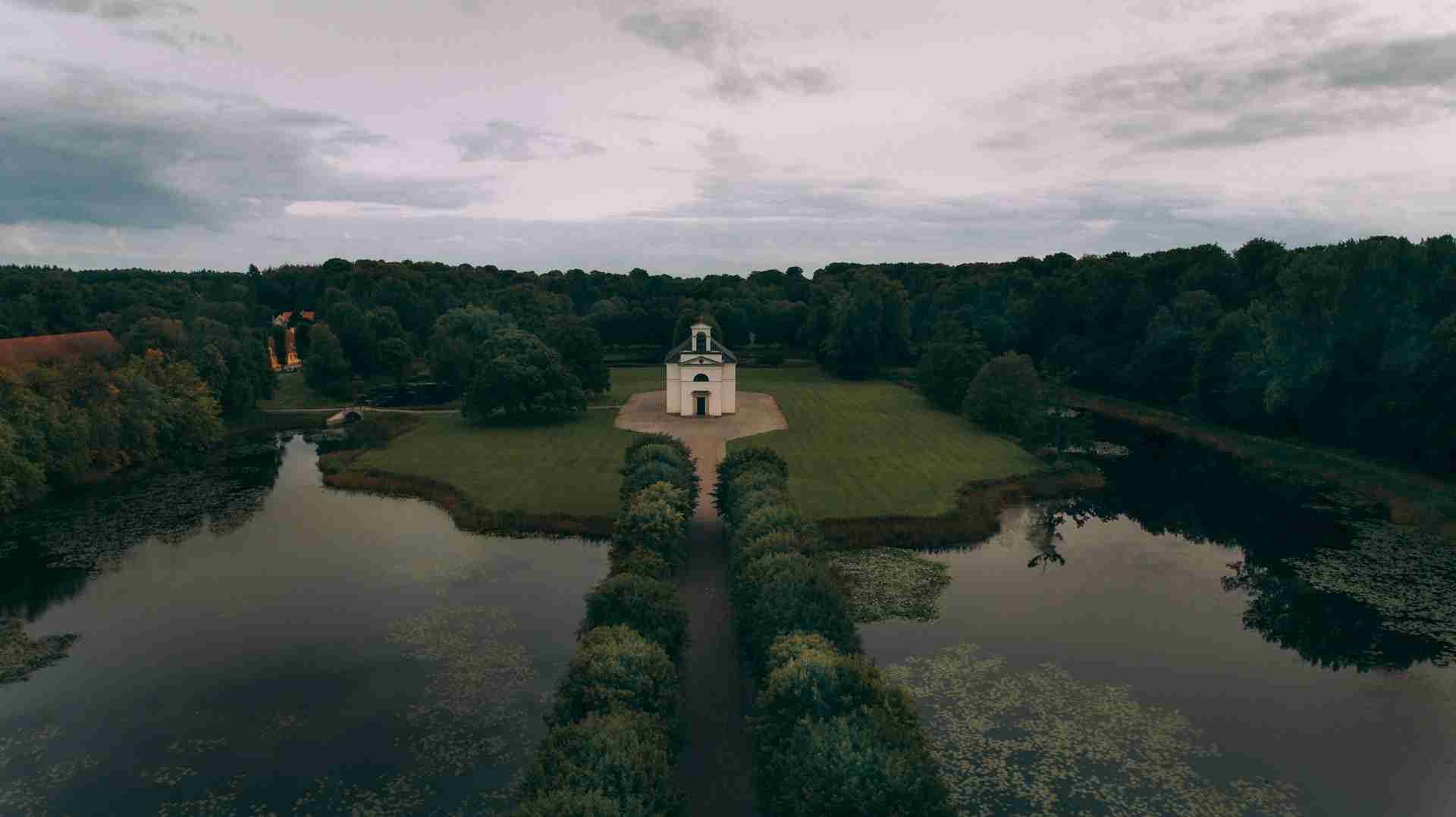
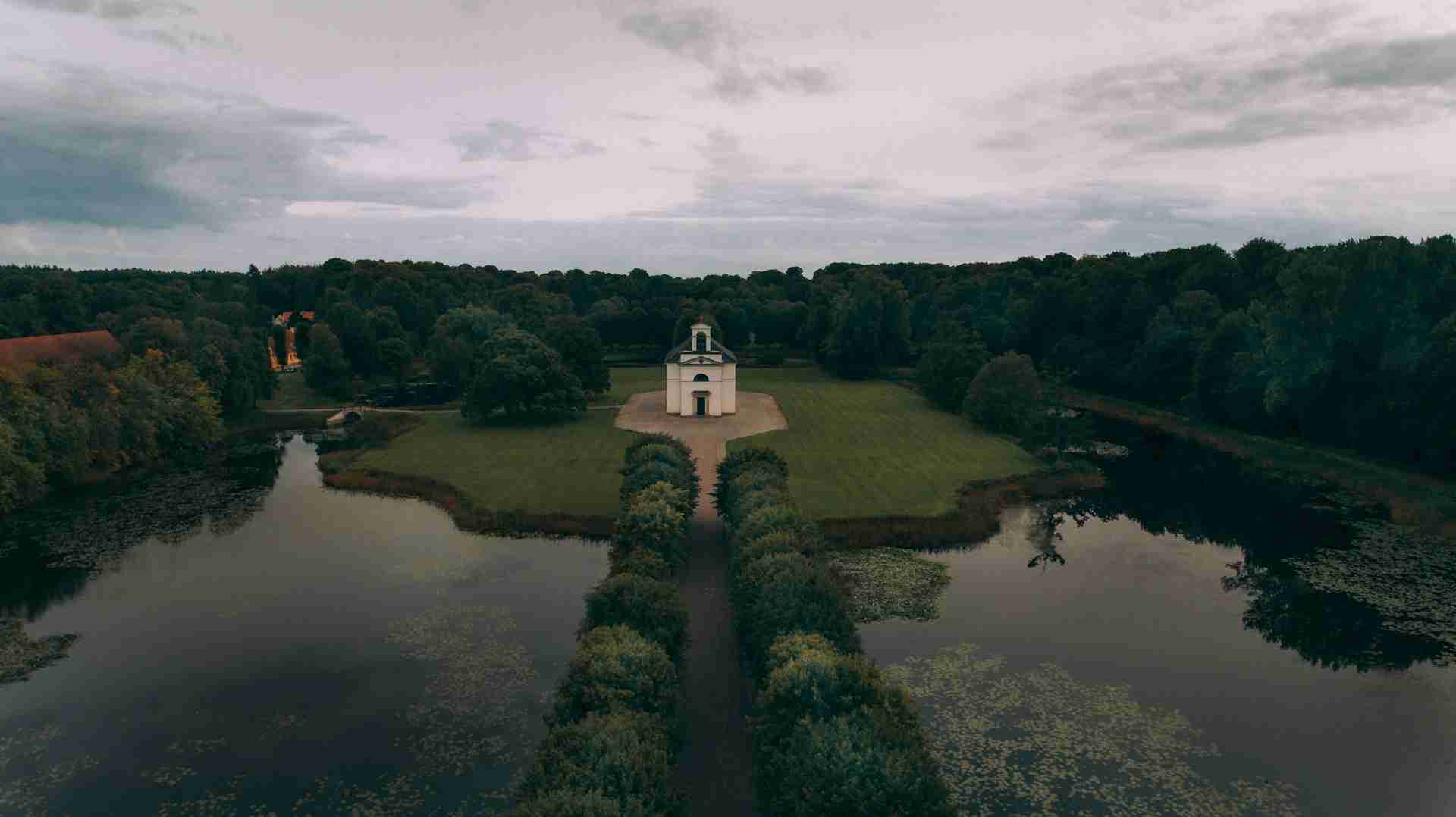
Hørsholm Kirke sits on a small island in the middle of a lake just north of Copenhagen, surrounded by still water, dense greenery, and a clean, classical silhouette that photographs well from every direction. Built in the early 1800s in a restrained neoclassical style, the white church rises above Slotssøen, the former site of Hirschholm Palace. The church's symmetry, pale brickwork, and prominent tower make it a standout subject, especially when viewed across the lake where its full form reflects clearly in calm water. The nearby park paths, wooded banks, and historical remnants all work together to create a contained, simple environment where light, line, and reflection do most of the visual work. This is not a location for rushing, but one that rewards walking slowly and returning at different times of day to see how the setting shifts.
Best Photography Opportunities
• Full Reflections from Across Slotssøen
The most striking way to photograph Hørsholm Kirke is from the eastern or northern shore of the lake, where the church stands fully reflected in still water. In the morning, the lake is often calm, and the soft side light reveals the texture of the church's pale surfaces while keeping shadows gentle. Use a standard zoom or wide lens to include both structure and reflection in a balanced frame. A tripod and polarizer can help fine-tune the surface reflections depending on the light and wind. Framing with trees or reeds along the edge gives a natural border that keeps the image feeling grounded.
• Symmetrical Front View with Framing Trees
From the narrow footbridge or central island path, you can photograph the church head-on with the entrance and tower centered in the frame. The symmetrical neoclassical design is clean and simple, with repeated shapes in windows and rooflines. This view works best with a standard focal length and a centered, low perspective that allows the steps and doors to lead the eye upward. Shoot during late afternoon when the light begins to warm and the surrounding trees cast longer shadows. This approach also works in soft overcast conditions, which remove glare and help even out the highlights on the bright facade.
• Detail Shots of Architectural Texture
While the church's form is simple from a distance, closer inspection reveals fine details in the whitewashed brick, iron lamps, and carved stonework. These elements are ideal for tight compositions that emphasize shape and craftsmanship. Use a short telephoto lens to frame window arches, door handles, or portions of the tower against plain wall surfaces. Overcast skies are useful here, providing diffuse light that highlights texture without overpowering contrast. Including small foreground elements like leaves or water droplets adds another layer of interest and depth to these detail shots.
• Water-Level Views with Foreground Plants
Walk the lakeside paths and you will find spots where reeds and overhanging branches naturally frame the view back toward the church. These areas allow for lower-angle compositions with strong foreground interest, especially in summer and early autumn when the foliage is full. Shoot from just above the waterline to create separation between the church and the reflection, or use a long lens to compress the scene and focus on layers of texture. Early morning light or evening glow across the lake helps warm up the shot without adding harsh shadows.
• Seasonal Atmosphere with Fog or Snow
Hørsholm Kirke works well in winter or foggy conditions, when the water and surrounding trees lose color and the white of the building stands out more sharply. In fog, the reflection becomes muted and soft, creating a more moody or abstract feel. In snow, the church blends into the scene with subtle tone shifts between sky, brick, and ground. Use a long exposure during foggy mornings to flatten the water surface and create a simple composition with minimal distractions. These quiet conditions are especially good for black and white treatments or muted color palettes that reflect the tone of the environment.
Best Time to Visit
The most productive time to photograph Hørsholm Kirke is during the early morning, especially just after sunrise when the lake is still and the light is soft. Calm water is key for full reflection shots, and morning air in spring, autumn, and winter is typically the most stable. Midday can be bright and flat, especially in summer, making detail work or interior shots more difficult. Late afternoon brings warm light across the island from the west, lighting the facade and tower while casting longer shadows around the edges of the lake.
Spring and autumn offer the most color contrast and soft weather conditions. Spring brings clean greens in the trees and clearer air, while autumn adds golden tones and fallen leaves that photograph well along the paths. In winter, light is lower all day and the area is usually quiet, giving you space and time to work slowly. Fog, light snow, and overcast skies are common and helpful for minimalist images and architectural studies.
How to Get There
Hørsholm Kirke is located about twenty-five kilometers north of Copenhagen. From the city, you can reach Hørsholm by train or car. By train, take the regional line to Rungsted Kyst Station, then a local bus or short taxi ride to the church site. By car, follow Route 19 north, then turn east onto Usserød Kongevej toward Hørsholm Slotshave. Parking is available near the Slotsholm grounds, with walking paths leading directly to the church.
There is no fee to visit the grounds, and the lake paths are open year-round. The church itself may be closed outside of service hours, but the exterior and surrounding area are accessible at all times. Tripods are allowed and draw little attention, though be mindful of other visitors, especially during weekends or events. Bring weather-appropriate gear and comfortable shoes, as the lake paths can be muddy or icy depending on the season.
Recommended Photography Gear
A standard 24–70mm zoom lens will cover most of the key angles around the church and lake. Pair it with a wide-angle lens such as a 16–35mm if you want to emphasize foreground in reflection shots or shoot from tight areas along the shore. A 70–200mm lens is helpful for compressing distant trees, isolating reflections, or picking out architectural details from across the water.
Bring a tripod for long exposures, early morning low light, and any work involving reflections or smooth water. A circular polarizer is useful for managing glare on the lake and can also help enhance contrast in the trees and sky. In colder months, carry a microfiber cloth to manage moisture buildup on your lens. A lightweight backpack or shoulder bag is all you need to carry gear comfortably around the short, level trails around Slotssøen.
Nearby Photography Locations
• Hørsholm Slotshave
Surrounding the church, the park known as Slotshave includes manicured paths, wooded sections, and water views in every direction. Morning light filters through the trees and creates soft shadows across the trails. It is ideal for slower walking with a camera and building a series of detail shots that complement your main compositions of the church.
Located a short drive away in Rungsted, this historical home offers soft garden paths, a preserved traditional house, and views of the Øresund coast. The forest trails and quiet grounds are excellent for storytelling photography or capturing the atmosphere of Danish cultural history.
• Vedbæk Harbour
This nearby coastal harbor offers clean, minimal scenes of small boats, rock walls, and horizon lines. Visit at sunrise or blue hour for calm water and pastel sky. Reflections and long exposures work especially well here, especially during calm winter mornings.
Just west of the church, this large botanical forest features a wide range of tree species, open clearings, and winding trails. It is an ideal location for photographing seasonal change and soft filtered light under tree canopies. Spring and autumn are particularly strong here, with flower growth and falling leaves offering natural variation in color and texture.
A short drive south brings you to Jægersborg Dyrehave, a large forest park known for its deer, old oaks, and wide open meadows. The Hermitage Palace sits in the center of the park and can be photographed from distance with long lenses across the open landscape. Fog and side light work especially well for shooting among the trees and gentle rolling hills.
Hørsholm Kirke is the kind of location that does not need to be big or complex to photograph well. The structure, water, and surrounding park offer clean lines and quiet light that support simple, steady compositions. Whether you visit for a morning walk around the lake or return again and again in changing conditions, this small island church continues to offer new ways to see what is already right in front of you.
Comments
Loading comments…