
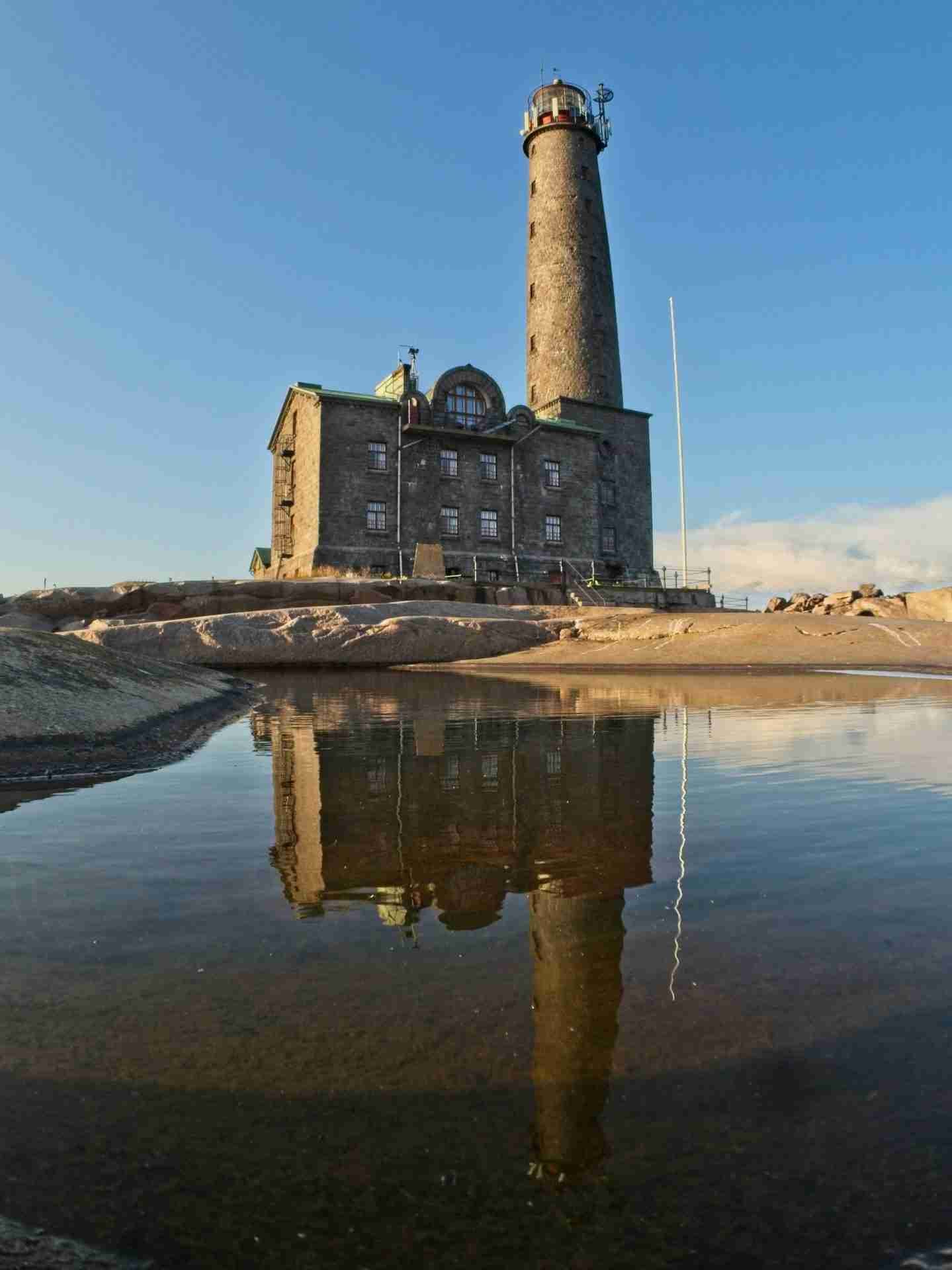
Bengtskär Lighthouse stands on a wave-battered islet in the Gulf of Finland, six kilometers south of the Rosala Archipelago. This remote granite tower is the tallest lighthouse in the Nordic countries and has guided ships through the Archipelago Sea since 1906. Surrounded by open water, bare rock, and low windswept vegetation, the island feels completely exposed to the elements. For photographers, it's a location built on contrast; solid stone against moving waves, human structure against wild sea. The light shifts constantly, and even in calm weather, the sky and water rarely stay the same for long. Bengtskär is one of those places where the subject never moves, but the surroundings never stop changing.
Best Photography Opportunities
• Wide View of the Lighthouse
One of the most reliable ways to show the size and location of the lighthouse is by walking to the edge of the island and shooting back toward the tower. From here, you can frame the building with open sea behind it and use the rocky surface as foreground. These wide compositions help show how exposed the lighthouse really is. Light from the early morning or late afternoon brings out the colors and texture of the granite, while cloudy days give the scene a softer, more even tone. There's little to block your view, so it's easy to experiment with different angles around the island.
• Waves and Shoreline
The edge of the island is full of natural detail. As you move closer to the water, you'll find tide pools, cracks in the granite, seaweed, and places where waves break against the rock. These smaller features work well as subjects on their own or as foreground elements in wider shots of the tower. Even on calm days, the movement of the sea adds life to the frame. When wind picks up, this area becomes more dramatic, and fast shutter speeds can help you freeze wave action for a stronger sense of power and motion.
• Looking Up at the Lighthouse from the Base
Standing directly below the lighthouse gives you a good chance to show its height and structure. From this angle, the tower rises straight into the sky, and with a wide lens, you can include parts of the ground and nearby outbuildings to frame the shot. This also gives you an opportunity to use strong vertical lines and work with shadow patterns created by low sunlight. The rough texture of the stone is clear from close up, and early or late light helps bring that out. Avoid the middle of the day when the sun is high and the contrast becomes too harsh.
• View from the Lighthouse Balcony
From the top of the lighthouse, you can look out in all directions over the Gulf of Finland. You'll see distant islands, open water, and the small footprint of the island itself below. These views work well with a longer lens to compress waves and sky, or with a wide lens to show the full horizon. Shooting down from the balcony also gives you a different way to show the lighthouse grounds, including walking paths and rooflines. If you're staying overnight, this is one of the best places to watch the light change at sunset or sunrise.
• Fog or Cloudy Weather
Bengtskär often experiences fog, mist, and low cloud cover, especially in late summer and early autumn. These conditions may seem challenging, but they are perfect for making calm, minimal photographs. With the lighthouse as the only clear shape in the frame, you can create simple images that feel quiet and focused. Black and white works well in this light, but muted color can also be effective. The softness of the weather helps reduce distractions and gives you a different way to photograph the island.
Best Time to Visit
Bengtskär is only open to visitors from late May through early September, and most photography is done within the summer season. During this period, mornings and evenings give you the best light, with low sun angles that create longer shadows and warm color across the stone. Early in the day, the water is usually calm, and the island is quieter before the day tours arrive. In the evening, sunset light can be strong if the sky stays clear, and the building takes on golden tones from the western light.
Cloudy days are common and often more helpful than bright sun. The soft light is better for texture and surface detail, especially when photographing close to the shoreline or the tower walls. Fog is not unusual and can create some of the most unique conditions for photography. If you want to avoid crowds and have time to shoot without rushing, consider staying overnight. This gives you access to early and late light that day visitors will miss.
How to Get There
The only way to reach Bengtskär is by boat, usually on a guided tour from Rosala Island. To get there, you'll first drive to Kasnäs on the Finnish mainland, then take a ferry to Rosala. From the Rosala harbor, boats depart for Bengtskär once a day during the summer months, depending on weather. The trip to the lighthouse takes about an hour but can be affected by wind or sea conditions.
Once on the island, everything is within walking distance. The ground is flat but uneven, with worn walking paths across the rock surface. The lighthouse is open to the public and includes a museum, small chapel, and access to the upper balcony. There is a small entrance fee. You can also stay overnight in one of the old keeper's rooms, which is the best option for photographers who want more time and fewer people around.
Recommended Photography Gear
Start with a wide angle lens, such as a 16 to 35mm, to cover full views of the lighthouse and surrounding landscape. This is your go to lens for shooting up at the tower, capturing the shoreline, or working in tight spaces near the base. A 24 to 70mm lens will help with mid range shots of rock texture, boat landings, or distant weather patterns on the sea. If you want to shoot distant islands or compress the waves and clouds from the top of the tower, a 70 to 200mm lens can also be useful.
Bring a tripod if you plan to do long exposures or shoot in low light. A polarising filter can help control reflections on wet rock or water. A lens cloth is important for dealing with sea spray or fog. Dress for changing weather with windproof and waterproof layers, and pack a small, secure bag that won't shift while you move across uneven ground. If you're staying overnight, bring extra batteries and cards so you don't miss opportunities during the early and late hours.
Nearby Photography Locations
Located on Rosala Island, this small museum has Viking-style buildings and wooden structures that make good subjects for quiet, detailed photography. The site includes carved doors, turf roofs, and interior spaces with controlled light that are useful for low-light handheld shooting.
The small islands between Kasnäs and Rosala are full of natural inlets, tree-covered slopes, and scattered cottages. If you take a private boat trip or extra time in the area, you'll find plenty of scenes with shoreline detail and clean water reflections, especially in early morning.
• Kasnäs Harbor and Coastline
Back on the mainland, the harbor area at Kasnäs offers peaceful views, wooden docks, and rocky coastlines. This is a good spot for sunrise photography before your ferry, or for photographing boats and quiet coves in soft early light.
Another remote island location accessible by boat, Örö has a long military history and many coastal structures that make good subjects. The trails and cliffs offer wide views out to sea, and the mix of built and natural elements gives you a variety of ways to shoot.
Comments
Loading comments…