
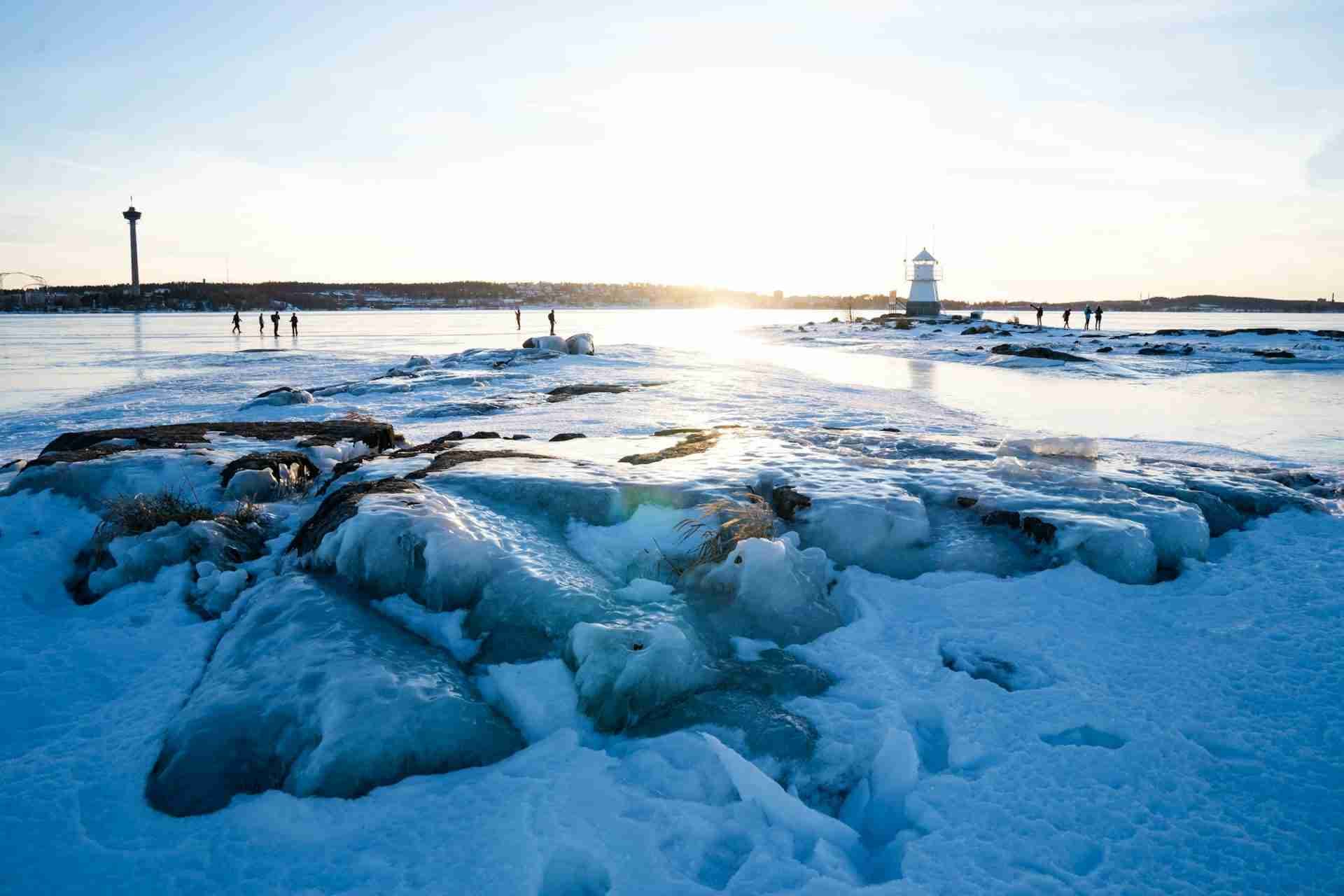
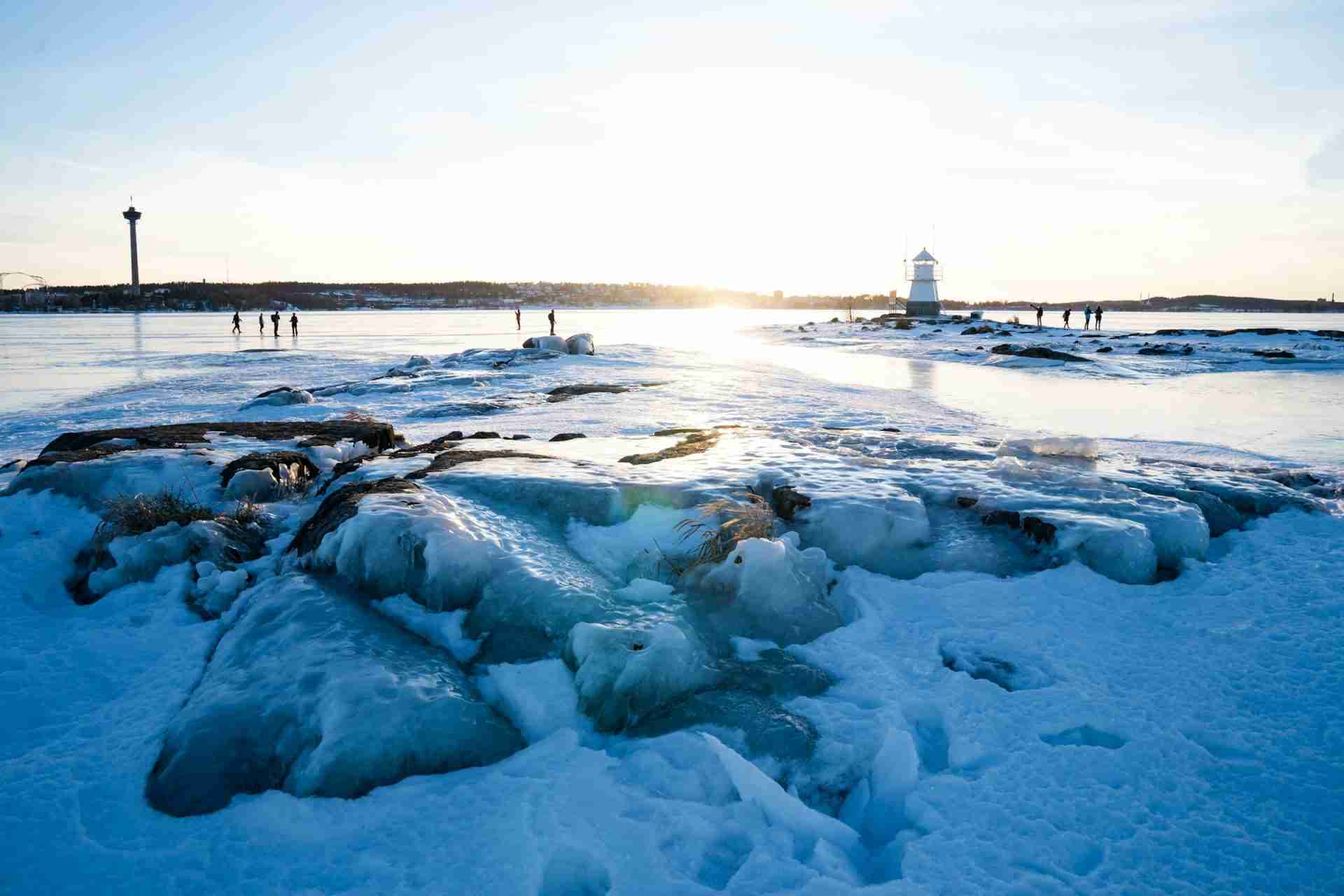
Siilinkari Lighthouse sits on a low rocky islet in Lake Näsijärvi just off the city of Tampere in Finland. Despite being close to an urban center, the setting feels surprisingly open. Water and sky dominate the scene for most of the year, creating a simple backdrop that allows the small white beacon to stand out clearly. The islet itself is flat and minimal, with exposed rock that gives you just enough foreground texture without clutter. Because the lighthouse is compact, composition becomes about balance and spacing rather than scale alone. In winter, when the lake freezes, the entire environment changes character and opens up creative angles that are not possible in other seasons.
Best Photography Opportunities
• Lakeside Framing from Shore –
From the mainland shoreline, you can frame Siilinkari Lighthouse across open water with a clean, uncluttered horizon. This angle works especially well during calm conditions when the lake surface reflects subtle color from the sky. Including shoreline rocks in the foreground adds depth and prevents the frame from feeling empty. A slightly longer focal length can help isolate the lighthouse and compress the water between you and the islet. Small changes in position along the shore can dramatically affect how the lighthouse aligns with background sky and distant treeline, so it is worth walking a bit before committing to a composition.
• Low Rock Foreground on the Islet –
When access conditions allow, photographing from the islet itself gives you more control over foreground elements. The exposed rock around the beacon provides texture and natural leading lines that guide the eye toward the structure. By shooting from a lower angle, you can make the lighthouse feel more prominent against the sky. Early morning and late afternoon light help define cracks and contours in the rock without creating harsh contrast. This approach is ideal for wide compositions that emphasize the simplicity of water, sky, and stone.
• Winter on the Frozen Lake –
Winter transforms Siilinkari into a completely different photographic experience. When Lake Näsijärvi freezes solid, you can walk out across the snow covered surface and approach the lighthouse from almost any direction. The bright snow adds clean contrast against the dark rock and the white beacon, creating bold graphic compositions. Wind shaped snow patterns in the foreground can introduce subtle texture that enhances otherwise minimalist frames. Including a small human figure in the distance helps communicate scale and emphasizes how exposed and open the setting feels. Soft winter light, especially during sunrise or just before sunset, adds gentle color to the snow without overpowering the scene.
• Silhouettes at Sunset –
Facing west across the lake, sunset can provide strong backlighting opportunities. Position yourself so the lighthouse is clearly separated from the horizon line to create a clean silhouette. A slightly underexposed frame preserves color in the sky while keeping the beacon's shape strong and defined. If thin clouds are present, they often catch warm tones that add depth to the composition. This is a straightforward setup, but it relies heavily on clean framing and careful horizon placement.
• Minimalist Blue Hour Compositions –
After sunset, the lake and sky often shift into cool blue tones that complement the simple form of the lighthouse. During blue hour, the absence of strong shadows creates a smooth tonal transition between water and sky. Long exposures can help soften any surface movement on the lake during ice free months. Keeping the composition minimal, with plenty of negative space, reinforces the quiet character of the location. This is a strong option when you want a calm, understated interpretation rather than a dramatic one.
Best Time to Visit
Siilinkari Lighthouse works well year round, but each season offers a different feel. Summer provides easy shoreline access and long evenings with extended golden hour light. Calm mornings often deliver the smoothest water and softest reflections.
Autumn can bring moody skies and shifting cloud layers that add depth to wide lake views. Winter is especially compelling when the lake freezes, opening up new angles and allowing you to approach the islet directly on foot. Snow cover simplifies the scene and strengthens contrast, but always confirm ice safety before venturing onto the lake. Spring conditions vary depending on ice melt, so flexibility is important during transitional periods.
How to Get There
Siilinkari Lighthouse is located on Lake Näsijärvi just off Tampere in the Pirkanmaa region of Finland. From central Tampere, you can reach shoreline viewpoints around the lake by car, bicycle, or on foot depending on your starting point. Several public access points along the lake provide clear views toward the islet.
During winter, locals often access the frozen lake from established shoreline entry points once the ice is considered safe. There is no formal entrance gate to the lighthouse itself, but always respect local guidelines and posted safety information regarding ice conditions. Parking availability depends on which shoreline access point you choose. Because weather and ice thickness vary year to year, checking local conditions before heading out is essential.
Recommended Photography Gear
A wide lens works well for emphasizing open sky and expansive lake surfaces. A mid range zoom provides flexibility when adjusting framing from shoreline viewpoints. A tripod is highly recommended for sunrise, sunset, and blue hour sessions, especially when working with long exposures.
In winter, insulated footwear and proper cold weather clothing are just as important as camera gear. Extra batteries are essential, since cold temperatures reduce battery life quickly. A polarizer can help manage glare on water during ice free months, but use it carefully to maintain natural reflections. If shooting on snow, be mindful of exposure compensation to prevent highlights from blowing out.
Nearby Photography Locations
offers elevated views across Lake Näsijärvi and the surrounding forested landscape. From the top, you can capture sweeping panoramas that contrast nicely with the minimalist feel of Siilinkari. Sunrise and sunset both work well here, especially when low light grazes the treetops.
provides architectural subject matter in the heart of the city. Its stone structure and surrounding streets offer opportunities for detail studies and broader urban compositions. Pairing city scenes with lake landscapes adds variety to a Tampere photography trip.
extends into Lake Näsijärvi and provides waterfront angles back toward the city skyline. It offers a mix of natural shoreline and recognizable landmarks. The combination of water and urban elements gives you additional compositional options.
features landscaped gardens and lakefront paths. Seasonal color changes make it particularly strong in late spring and autumn. It provides a softer, more botanical contrast to the stark simplicity of Siilinkari.
offers forest trails, small lakes, and quiet natural scenes outside the city center. Boardwalks and open water create layered compositions that differ from the exposed lake setting at Siilinkari. It is a good choice if you want to balance minimalist lake imagery with woodland landscapes.
Comments
Loading comments…