
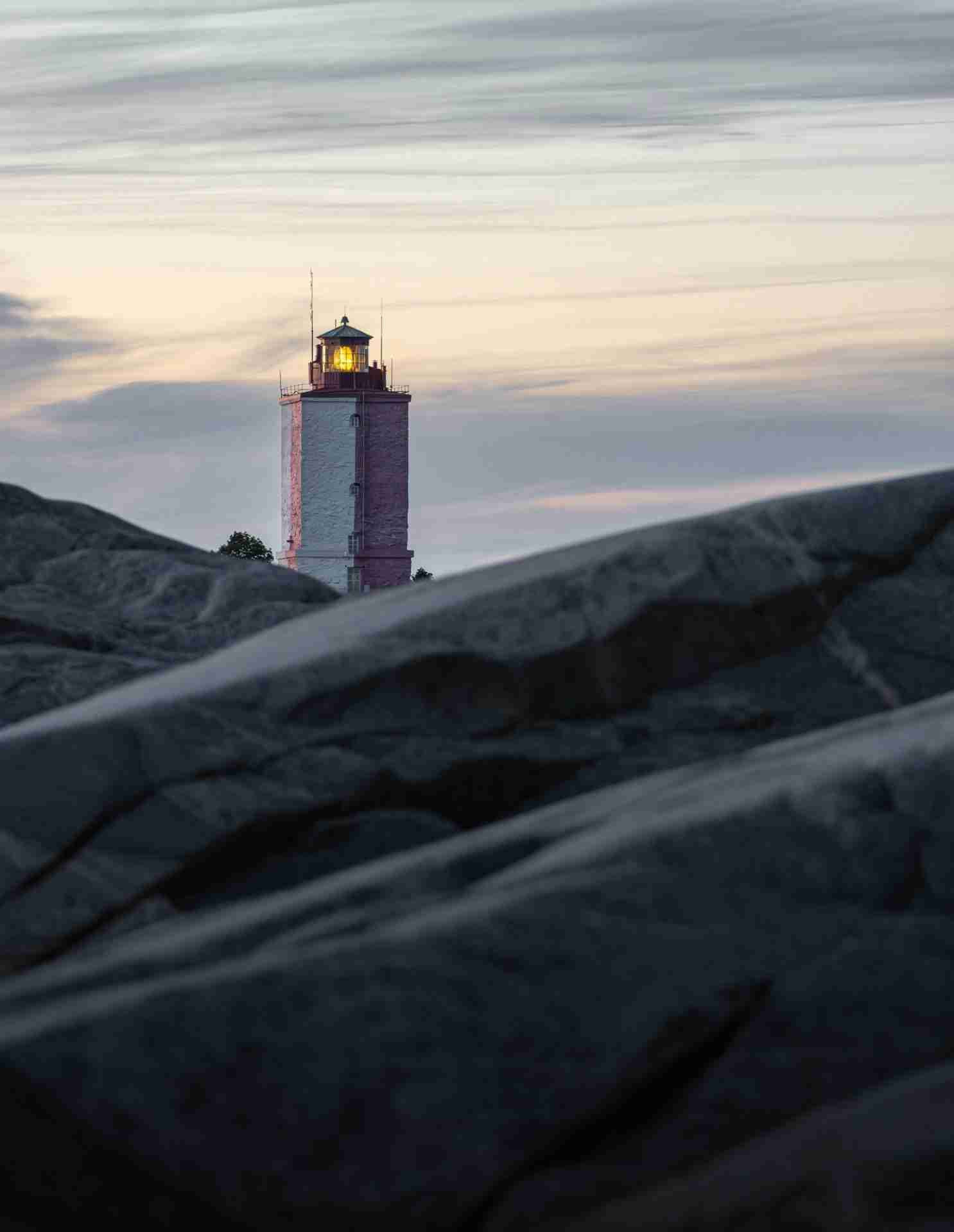
Located on the remote southern edge of the Finnish Archipelago, Utö Lighthouse sits exposed to the full force of the Baltic Sea, offering a stark and elemental setting for photographers who are drawn to minimalist compositions and maritime light. As Finland's oldest still-operating lighthouse, its red-and-white square tower rises above the granite island, surrounded by low houses, military remnants, and weathered shorelines. The island is small but visually layered, with constantly shifting skies, rough coastal textures, and dramatic changes in mood brought by wind and weather. Whether you're working with soft fog, side light over stone, or clear northern skies, Utö delivers quiet drama that rewards patience and careful framing. The remoteness and rhythm of the island encourage slower shooting and attention to light rather than volume.
Best Photography Opportunities
• Full View of the Lighthouse with Sky Movement
The most iconic angle is a full-body composition of the lighthouse with sky or sea as the backdrop, typically framed from the open rock outcrops to the north or east of the structure. A wide-angle lens allows you to include the weather-worn stone foreground and some of the low island buildings, creating a strong contrast between the rigid tower and organic textures. Cloud movement is common and works well with long exposures, especially during shifting weather. This is a location where sky plays a critical role in the shot, so patience with light conditions pays off. Early morning or late evening light brings out subtle color in the rock and helps balance the frame.
• Close-Up Architectural and Material Studies
The lighthouse's blocky form, metal accents, and painted surfaces provide opportunities for tighter compositions focused on structure, texture, and weathering. A midrange zoom is perfect for isolating windows, corner details, or the tower's aging paint layers. Look for rust marks, bolts, and seams that add interest to otherwise minimal walls. These details are strongest under soft light, particularly on cloudy days when contrast is low and colors feel more muted. These close-up shots work well in a visual series when combined with wider context frames taken elsewhere on the island.
• Weather-Driven Coastal Compositions
The granite shoreline that surrounds the island is raw and uneven, offering foreground interest for wider compositions or standalone frames of water and rock. On stormy days, waves crash against the southern edge of the island, producing dramatic sea spray and strong motion in the frame. A longer exposure can soften the water while keeping the granite sharp, while a fast shutter speed freezes impact in full force. A tripod is essential here, especially in wind. These scenes often benefit from a lower viewpoint to emphasize texture and scale without including too much sky.
• Fog and Soft Light Island Scenes
Utö is well known for its fog, especially during late spring and early autumn when warm air meets cold sea. In these conditions, the island transforms into a soft-edged landscape where distance collapses and shapes simplify. The lighthouse often fades partially into the mist, which can be used creatively to build mood and subtle framing. Use a fast prime or stabilized lens to move freely in low visibility, and expose carefully to maintain detail in bright fog. These shots work well in monochrome or muted color profiles to highlight the atmosphere.
• Sunset and Golden Hour from the Western Shore
On clear or partly cloudy days, sunset brings long light that reaches across the island from west to east, casting warm tones on the lighthouse and painting the granite surface with gold and orange hues. Composing from the western outcrops back toward the tower allows you to capture this side lighting along with the open sea beyond. The lower the sun, the stronger the texture on the rock surface and the more separation you'll get between buildings. This is the best time for silhouettes, shadow lines, and high-contrast compositions that still retain warm color.
Best Time to Visit
The best months for photography on Utö Island are from May through early October, when ferry access is reliable and daylight hours are long. May and June bring the most interesting weather shifts, with clear light followed quickly by fog or incoming storms. These conditions allow for varied sky and water combinations in a single day. Late June and July provide the most dramatic sunsets due to the northern latitude, with long golden hour light and slow transitions. August and September continue to offer soft skies and a higher chance of fog, especially in the early morning.
Winter is technically possible but presents challenges including limited ferry access, icy wind, and harsh contrast due to low sun angle. Spring offers sharp clarity and more favorable light angles on the landscape. The best times of day are early morning and late afternoon, when shadows on the lighthouse and surrounding rocks stretch long and add depth. Overcast days work well for detail shots and fog scenes, while post-storm conditions bring the most dynamic skies and light patterns.
How to Get There
Utö Island lies in the Archipelago Sea of southwest Finland and is reachable only by boat. The most common access point is the ferry terminal in Pärnäs (Parainen), roughly two hours by car from Turku. From there, a public ferry services Utö year-round, though schedules vary seasonally and should be checked in advance. The ferry ride takes about five hours and is free for foot passengers. Vehicles are not typically allowed on the island, so photographers should pack light and be ready to move on foot across uneven terrain.
Once on the island, everything is accessible by walking. The lighthouse itself is in the center of the island and easily reached via gravel paths and marked trails. The surrounding coastlines, outcrops, and small harbors are all within a fifteen-minute walk from the ferry dock. There is no entrance fee for visiting or photographing around the lighthouse exterior, but interior access is restricted unless part of a guided tour. Drone use is restricted due to nearby military presence and airspace rules, so check current regulations before planning aerial work.
Recommended Photography Gear
Due to the remote location and exposed terrain, a compact but versatile kit is ideal for photographing Utö. A wide-angle lens between 16 and 35 millimeters is essential for capturing the full lighthouse with foreground rock or sky movement. A midrange zoom like a 24 to 70 millimeter lens allows for tighter framing of structural and coastal details. If space allows, bring a lightweight telephoto to compress shoreline elements or isolate the lighthouse against the sea in stormy conditions.
A sturdy travel tripod is important for long exposures, particularly in low light or during windy weather. A circular polarizer will help reduce glare on wet rock and water, while a 6- to 10-stop ND filter enables longer shutter speeds for smoothing wave action. A microfiber cloth is essential for wiping down gear in mist or sea spray, and a weather-sealed camera body is recommended if storms are likely. Bring a dry bag or waterproof cover for gear transport, and be prepared to shoot in rain or high wind with little shelter nearby.
Nearby Photography Locations
Often included as a ferry stop en route to Utö, Jurmo features a barren, treeless landscape with glacial rocks, lichen-covered ground, and a narrow isthmus perfect for wide-angle compositions. The stark contrast to Utö's built environment makes it ideal for minimalist and abstract shots. Early morning or evening light enhances the island's subtle color palette.
Larger than Utö, Nötö offers traditional red wooden homes, forest paths, and smoother shorelines. It is best photographed in soft light, with strong opportunities for documenting rural life and quiet harbor scenes. A midrange lens works well for intimate compositions of the village and boats.
Accessible by road and rail from Helsinki, Hanko's coastline includes sandy beaches, rocky headlands, and another historic lighthouse. While less remote than Utö, the varied shoreline and older buildings offer a wide range of subjects under changing light. Sunset is particularly strong here, especially after storms.
The wider region surrounding Utö includes dozens of small islands accessible by charter or kayak, many with little or no development. These outer islands are ideal for drone photography, long-lens compositions of untouched coastline, and wildlife. Weather and tide conditions should be carefully monitored when traveling in this area.
On the mainland route to Pärnäs, the scenic drive passes over several low bridges that connect small villages and islets. These bridges provide excellent locations for wide water shots and clean compositions of boats, harbors, and reflections in calm water. Early morning is best for soft color and minimal traffic.
Utö Lighthouse rewards careful, unhurried photography shaped by weather, light, and the rhythm of the sea. It is not a place for fast shooting or checklist-style work. Instead, it invites you to spend time watching how the sky shifts over stone and water, and how a single structure can hold its place against the elements for centuries. With limited distractions and constant variation in light and mood, Utö gives photographers space to slow down and work with intention.
Comments
Loading comments…