
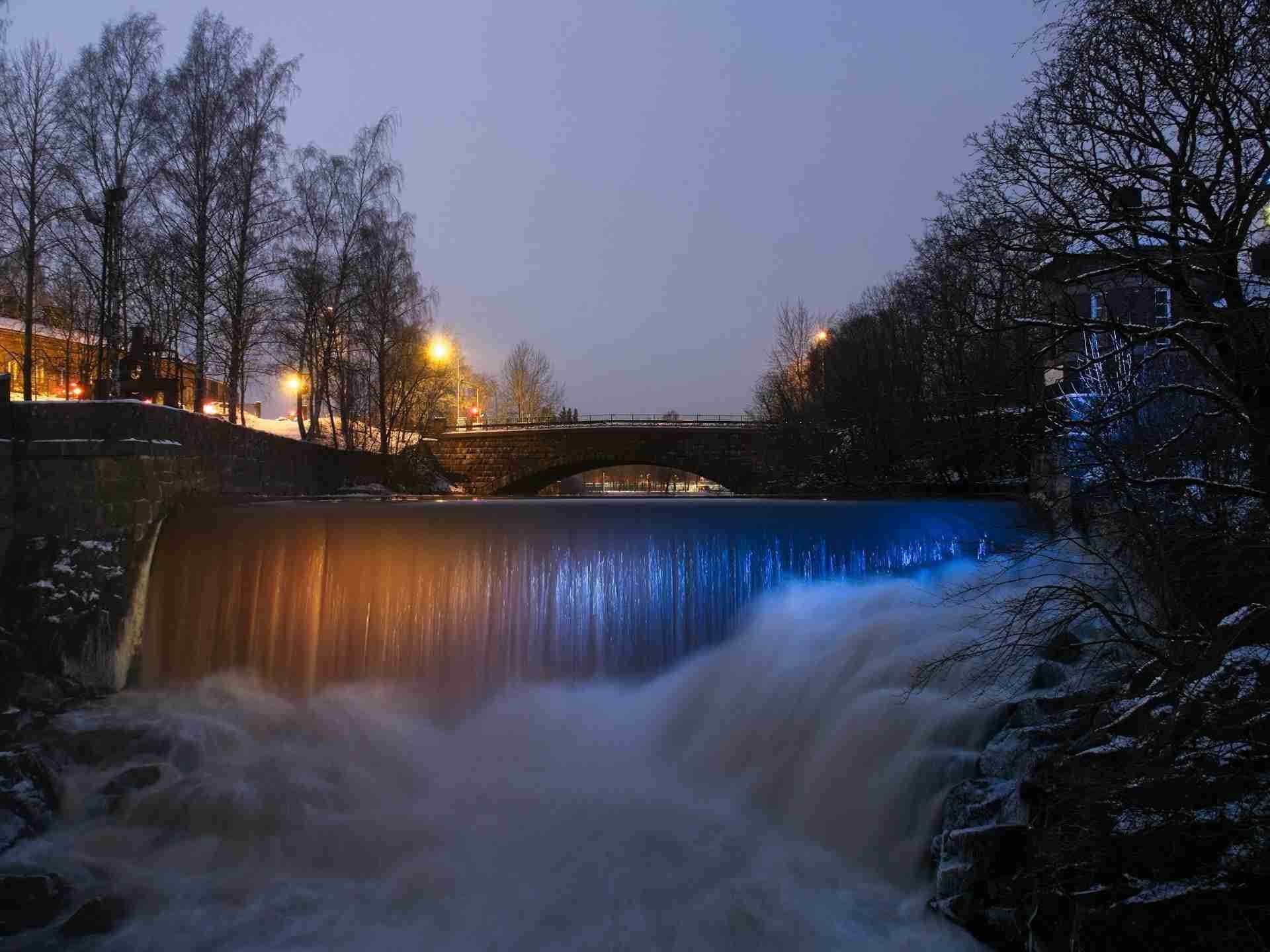
On the eastern edge of Helsinki where the Vantaa River breaks into a dramatic cascade, Vanhankaupunginkoski Dam delivers a compelling visual story rooted in history and natural force. This small but powerful dam sits on the original founding site of Helsinki, framed by rugged stonework, flowing rapids, and moss-covered banks. The juxtaposition of industrial remnants and wild water creates a dynamic subject for photographers who enjoy exploring textural contrast and movement. With changing conditions throughout the year, this location rewards patience and curiosity, offering scenes that range from energetic water flow to frozen stillness.
Best Photography Opportunities
• Main Cascade from the Downstream Bank
The dam's primary spillway is where the Vantaa River dramatically splits and tumbles down over worn granite steps. This is the dam's signature view, and long-exposure techniques are essential for capturing its full photographic potential. Using shutter speeds from one to thirty seconds, you can create milky ribbons of water that contrast against the hard geometry of stone and concrete. In spring, the volume of water is especially high, creating dynamic motion that fills the frame. Shooting from the right bank allows for compositions that incorporate the full breadth of the cascade, often with subtle foreground elements like driftwood or mossy stones adding natural texture.
• Side Channels and Overgrown Trails
Beyond the central cascade, the dam's overflow cuts through quieter channels on both sides, where water trickles between rocks and reeds. These lesser-known spots provide excellent opportunities for more introspective compositions. Using a telephoto lens here allows you to isolate moments of tension between movement and stillness—where water hugs the curves of stone or a single leaf balances in the current. Trails leading from the southern bank wind into densely vegetated areas that offer frame-within-frame compositions using overhanging branches, adding complexity and depth to your work.
• Industrial Remains and Power Structures
The adjacent buildings, relics from early hydroelectric use, add an entirely different narrative layer. Their brickwork and metal pipes are slowly succumbing to rust and vegetation, offering compelling studies in decay. Close-up shots of corroded surfaces or framing windows through which water can be seen flowing offer more abstract or conceptual approaches to the site. For those with a tilt-shift lens or an eye for architectural lines, the geometry of these structures plays well against the organic flow of the river. Overcast skies or early morning fog often soften the background, allowing the structural forms to dominate without distraction.
• Autumn Canopy Reflections and Mist
By late September, the riverbanks begin to shift in tone, with layers of color appearing in the trees lining the water. The foliage forms a partial canopy that reflects onto the calmer sections of the river, creating mirror-like compositions ideal for shooting with polarizing filters. If you arrive just after dawn during the fall, you'll often find a thin layer of mist hovering above the surface. Combined with warm early light, this condition brings a subtle drama to wide-angle compositions, especially when the water is still and the trees are full of color. Compositionally, this is the time to think about symmetry and balance.
• Ice and Texture in Winter Flow
Helsinki's winters freeze portions of the river, including areas of the dam itself, producing compelling textural contrasts between stillness and motion. Small cascades continue to flow between solid sheets of ice, allowing for dual-layer compositions: the blur of water juxtaposed against crystalline structures. These scenes are best captured in monochrome, emphasizing shape and contrast without distraction from color. Macro lenses are useful for capturing frost patterns on nearby rocks and rails, while wide shots benefit from the added clarity that comes with the sharp, low-angled light common during Finnish winter afternoons.
Best Time to Visit
Each season at Vanhankaupunginkoski Dam brings a distinct photographic atmosphere, and serious photographers will find justification for visiting multiple times throughout the year. Spring begins with heavy runoff, causing the dam to churn and foam with full force. This is the best time to capture powerful long exposures with wide-angle lenses, though you'll need waterproof footwear to get close to the most dynamic angles. Summer offers lush greens and longer shooting windows, but the light can be challenging around midday. Sunrise and sunset become key times for softer light and more manageable contrast.
Autumn is the most rewarding for color work. The trees flanking the dam and surrounding channels light up in fiery shades, and frequent morning mist enhances depth and drama. The combination of strong color, layered light, and frequent moisture on the rocks adds richness to every frame. Winter, by contrast, strips the color but introduces sculptural elements. Frozen water, glistening branches, and even snowfall can simplify the scene into a high-contrast study in tone and texture. Lighting is more forgiving during winter, with the low sun casting long shadows even in mid-afternoon. Cloudy skies also serve well here, acting as a natural diffuser for long exposures without harsh glare or blown highlights.
How to Get There
Vanhankaupunginkoski Dam sits in the Vanhakaupunki neighborhood, roughly 5 kilometers from Helsinki's central station. Public transportation offers several efficient options. Bus lines 55 and 71 have stops within easy walking distance, typically taking under 20 minutes from the city center. Trams also reach nearby neighborhoods, and a well-developed network of bike paths makes this a convenient destination for those using a bicycle.
If arriving by car, limited parking is available along Vanhankaupungintie or near the Museum of Technology, which is adjacent to the dam site. These parking areas are free of charge, but they tend to fill quickly during autumn weekends or when snowmelt swells the river in spring. Paths around the dam are well-maintained and accessible year-round, including wooden footbridges, viewing platforms, and riverside walkways. There are no entrance fees to visit the dam or photograph from any of the surrounding areas, though some trails may close temporarily during periods of heavy snow or maintenance. Facilities such as public restrooms and benches are available within a short walking distance, making it a comfortable location for extended shooting sessions.
Recommended Photography Gear
To fully explore the visual potential of Vanhankaupunginkoski Dam, a combination of landscape and detail-oriented equipment is recommended. A sturdy tripod is absolutely essential, especially for long exposures along the river's edge where uneven ground and slippery stones demand stable footing. For those working with water motion, neutral density filters ranging from 3 to 10 stops allow creative control over shutter speeds. A circular polarizer is equally important, reducing glare on wet rocks and enhancing surface reflections in slower-moving water.
A wide-angle lens in the 16–35mm range enables you to capture the full breadth of the spillway and surrounding environment, while a mid-range telephoto between 70–200mm helps isolate architectural details, water patterns, and compressed layers of color in the fall. Macro shooters will find plenty of opportunity during winter, when frost, ice, and lichen form intricate subjects close to the ground or on stone railings. Weather protection is key year-round: a rain cover for your camera in the wetter months, and insulated gloves for winter when metal tripods become uncomfortable to handle. Waterproof boots or hiking shoes are highly recommended, as some of the most rewarding angles are accessed from damp river edges or muddy footpaths.
Nearby Photography Locations
Located directly east of the dam, this area offers a peaceful contrast with its open marshes, boardwalk trails, and abundant birdlife. The morning light over these wetlands creates a soft glow that plays well with silhouettes of reeds and distant trees. It's an ideal spot for longer focal lengths and telephoto work, particularly during spring and autumn migration seasons.
Following the Vantaa River westward, the Arabianranta district merges clean-lined modern architecture with quiet riverside views. Buildings with glass and steel facades reflect beautifully in the slow-moving sections of the river. Photographers interested in minimal compositions or architectural abstracts will find opportunities along the walking paths that parallel the water.
A short walk inland brings you to the Viikki Arboretum, a collection of native and imported tree species arranged along well-tended trails. Seasonal transitions are particularly striking here, with flowering trees in spring and deep autumn tones later in the year. The variety of leaf shapes, textures, and bark patterns make it ideal for close-up work and layered compositions.
Further east along the shoreline, Kivinokka offers unobstructed sunrise views over the sea and a quiet mix of forest, beach, and small summer cottages. Early light filters through the trees and casts long shadows across gravel paths and wooden piers. This is a rewarding location for minimalist seascapes, backlit forest shots, and environmental portraits.
• Herttoniemi Manor and Park Grounds
Within cycling distance, this historic manor site offers a well-manicured park complete with stone steps, old trees, and a reflecting pond. The formal garden layout and symmetrical paths create strong lines for composing structured, intentional frames. During golden hour, the trees cast long shadows across the gravel paths, adding a timeless feel to your images.
Vanhankaupunginkoski Dam is more than a stopover for photographing moving water; it's a dynamic, story-rich location that rewards both careful planning and spontaneous exploration. Its mix of flowing energy, historical structure, and natural setting offers a rare concentration of subjects within a compact, accessible area. Whether you return to capture each season or dive deep into a single visit, this site challenges your technical skill while nurturing creative growth.
Comments
Loading comments…