

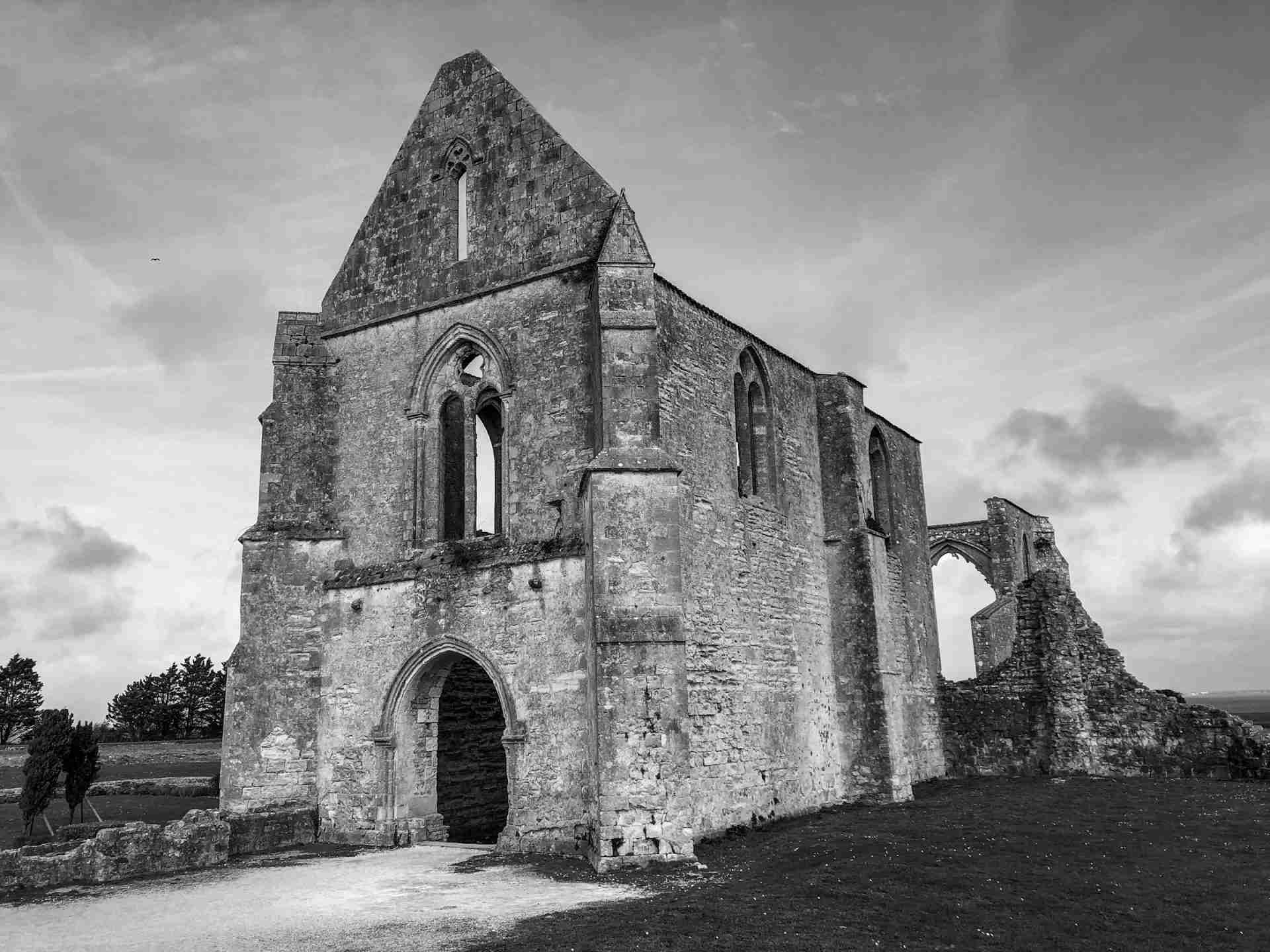
Abbaye des Châteliers stands as a striking medieval ruin on the eastern side of Île de Ré, not far from the town of La Flotte on France's Atlantic coast. Founded in the twelfth century by Cistercian monks, the abbey once formed an important religious center on the island before suffering damage during later wars and eventually falling into ruin. Today only portions of the structure remain, most notably a tall stone wall with narrow Gothic windows that rise above the surrounding fields. The open setting around the abbey allows the remaining architecture to stand clearly against the sky, creating a dramatic focal point in an otherwise quiet rural landscape. For photographers, the site offers a combination of historic stonework, simple countryside scenery, and changing coastal light that shifts throughout the day.
The abbey sits beside open farmland with views toward the nearby coastline and salt marshes of Île de Ré. Without dense development around it, the structure appears isolated and almost sculptural within the landscape. Its surviving arches and tall windows frame the sky beyond, creating natural shapes that work well in photographic compositions. Because the ruins are relatively small compared to some European abbeys, photographers can easily walk around the structure and explore different perspectives that highlight its textures and geometry.
Best Photography Opportunities
• The Tall Abbey Wall and Gothic Windows
The most recognizable feature of Abbaye des Châteliers is the tall surviving wall with its narrow Gothic window openings. These windows form elegant vertical shapes that immediately draw attention when photographed from the surrounding field. Standing slightly off center helps create a composition where the windows frame sections of sky within the stone structure. The weathered limestone blocks also reveal centuries of wear, adding texture to the scene. Changing light throughout the day often brings out these details in the stonework.
• Wide Landscape Views with the Ruins
Because the abbey stands within open fields, photographers can capture wide compositions where the ruins appear within the larger landscape. The surrounding grass and farmland provide simple foreground elements that help emphasize the isolation of the structure. From a distance the remaining wall appears almost like a sculpture rising from the countryside. Including the sky and horizon line helps show the relationship between the ruins and the coastal landscape of Île de Ré. These wider scenes often feel calm and minimal compared to closer architectural views.
• Framing Through the Stone Arches
Several openings within the ruins allow photographers to frame the surrounding fields and sky through the remaining stonework. These natural frames create layered compositions where the foreground architecture leads the viewer toward the landscape beyond. Positioning yourself carefully within the ruins can help align these shapes with distant trees or the horizon. This technique works especially well when the sky contains moving clouds behind the structure. The contrast between solid stone and open sky often strengthens the visual impact of these images.
• Close Details of Weathered Stone
Beyond the wider scenes, the abbey contains many smaller details that reward closer attention. The surface of the limestone blocks shows signs of erosion, moss growth, and centuries of exposure to coastal weather. Photographers can isolate these textures to capture the character of the building materials. Carved edges and broken arches also reveal how the structure has changed over time. These details help communicate the age and history of the ruins.
• Evening Light Across the Ruins
The open landscape surrounding the abbey allows sunlight to reach the structure from many directions throughout the day. During late afternoon and early evening the lower angle of the sun often casts warm light across the stone walls. This light helps reveal the textures of the limestone while creating long shadows across the grass. Photographers can position themselves so the ruins stand against the glowing sky or illuminated fields. These conditions often produce the most atmospheric images of the site.
Best Time to Visit
Late afternoon and sunset are often the most rewarding times to photograph Abbaye des Châteliers. The lower angle of the sun highlights the texture of the stone walls and creates warm tones across the surrounding fields. The open landscape allows the light to fall directly on the ruins without obstruction.
Morning visits can also provide calm conditions with fewer visitors around the site. Early light often produces softer tones across the grass and stonework. Spring and early autumn are particularly pleasant seasons when the surrounding countryside appears green and the weather remains comfortable for exploring the ruins.
How to Get There
Abbaye des Châteliers is located near the village of La Flotte on Île de Ré, an island connected to mainland France by a bridge from the city of La Rochelle. The ruins sit just outside the village along quiet rural roads. Visitors can reach the abbey by car or bicycle from La Flotte in only a few minutes. Île de Ré is well known for its extensive cycling paths, and many visitors choose to reach the site by bike while exploring the island. Small parking areas and roadside access points allow visitors to stop near the ruins.
Access to the abbey ruins is free, and the surrounding area is open to visitors throughout the day. Because the site sits within open countryside, visitors are encouraged to respect the landscape and avoid climbing on fragile sections of the historic structure.
Recommended Photography Gear
A wide lens works well for photographing Abbaye des Châteliers because the ruins and surrounding fields lend themselves to broad landscape compositions. This allows photographers to capture the structure along with the open sky and countryside around it. A moderate zoom lens can also help isolate architectural features such as the Gothic windows or stone textures.
A tripod can be useful during sunset when light levels begin to drop and longer exposures become helpful. A circular polarizing filter may help deepen the color of the sky and reduce glare on the limestone surfaces during bright daylight conditions.
Nearby Photography Locations
The harbor in La Flotte is one of the most charming ports on Île de Ré. Fishing boats and sailboats line the waterfront while historic stone buildings surround the harbor square. Photographers can capture reflections of boats in the water and lively scenes along the quayside.
• Saint Martin de Ré Fortifications
The fortified town of Saint Martin de Ré contains historic stone walls and star shaped defenses designed by Vauban in the seventeenth century. Elevated viewpoints along the walls reveal sweeping views across the harbor and surrounding island. The historic streets inside the fortifications also provide strong architectural subjects.
• Phare des Baleines Lighthouse
Located at the western tip of Île de Ré, this lighthouse rises above the coastline and offers wide views across the Atlantic Ocean. Photographers can capture the lighthouse from the surrounding dunes or climb the tower for elevated perspectives of the island. The nearby beaches also create excellent coastal compositions.
The salt marshes scattered across the island create a unique landscape of shallow water channels and small embankments. Photographers can capture reflections, wildlife, and traditional salt harvesting scenes within these wetlands. Early morning often produces calm water and soft light across the marshes.
The village of Ars en Ré is known for its white houses with green shutters and the distinctive black and white church spire rising above the town. The narrow streets and small harbor provide many opportunities for photographing traditional island architecture. The surrounding marshlands also create scenic views around the village.
Comments
Loading comments…