
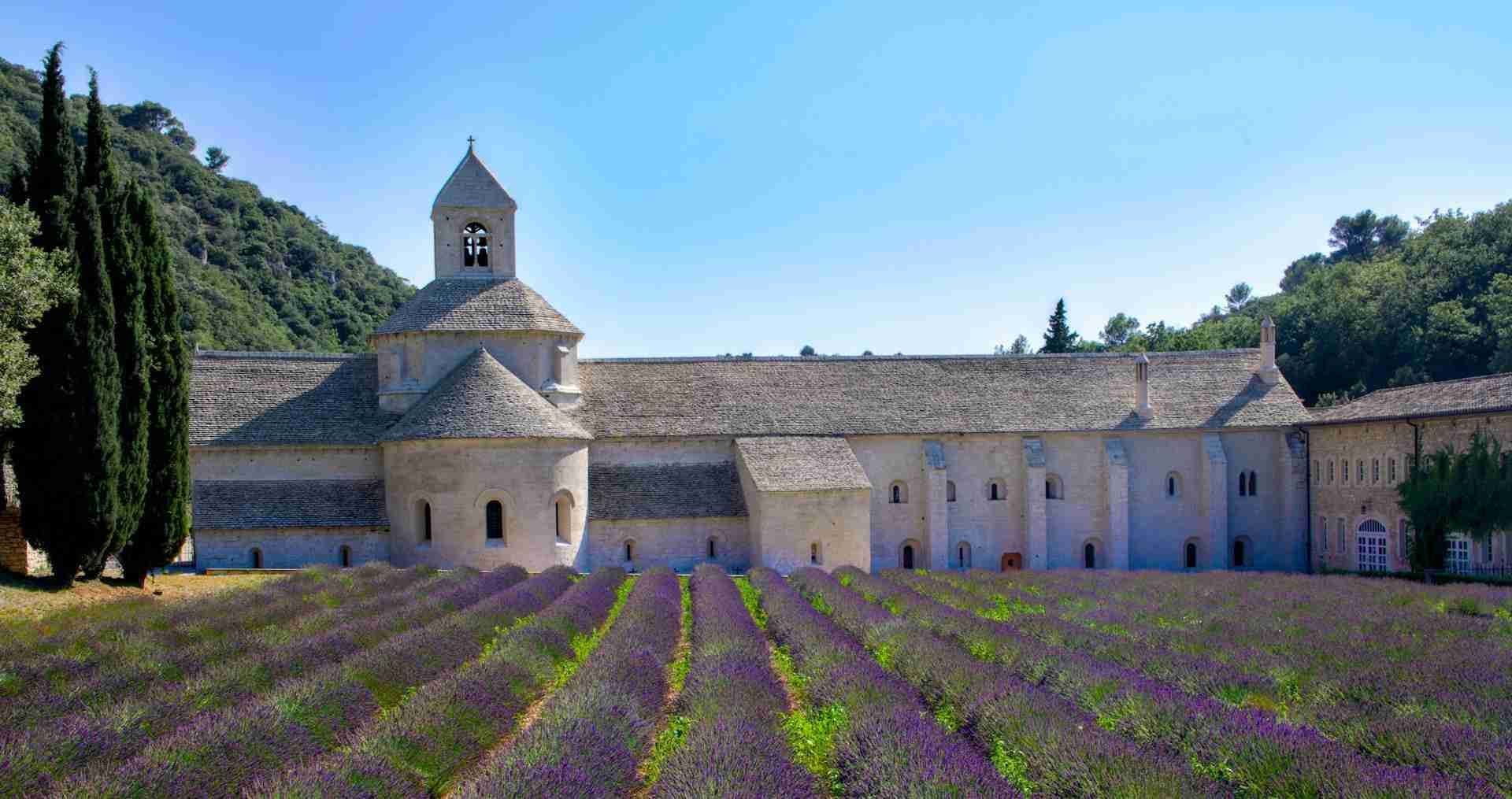
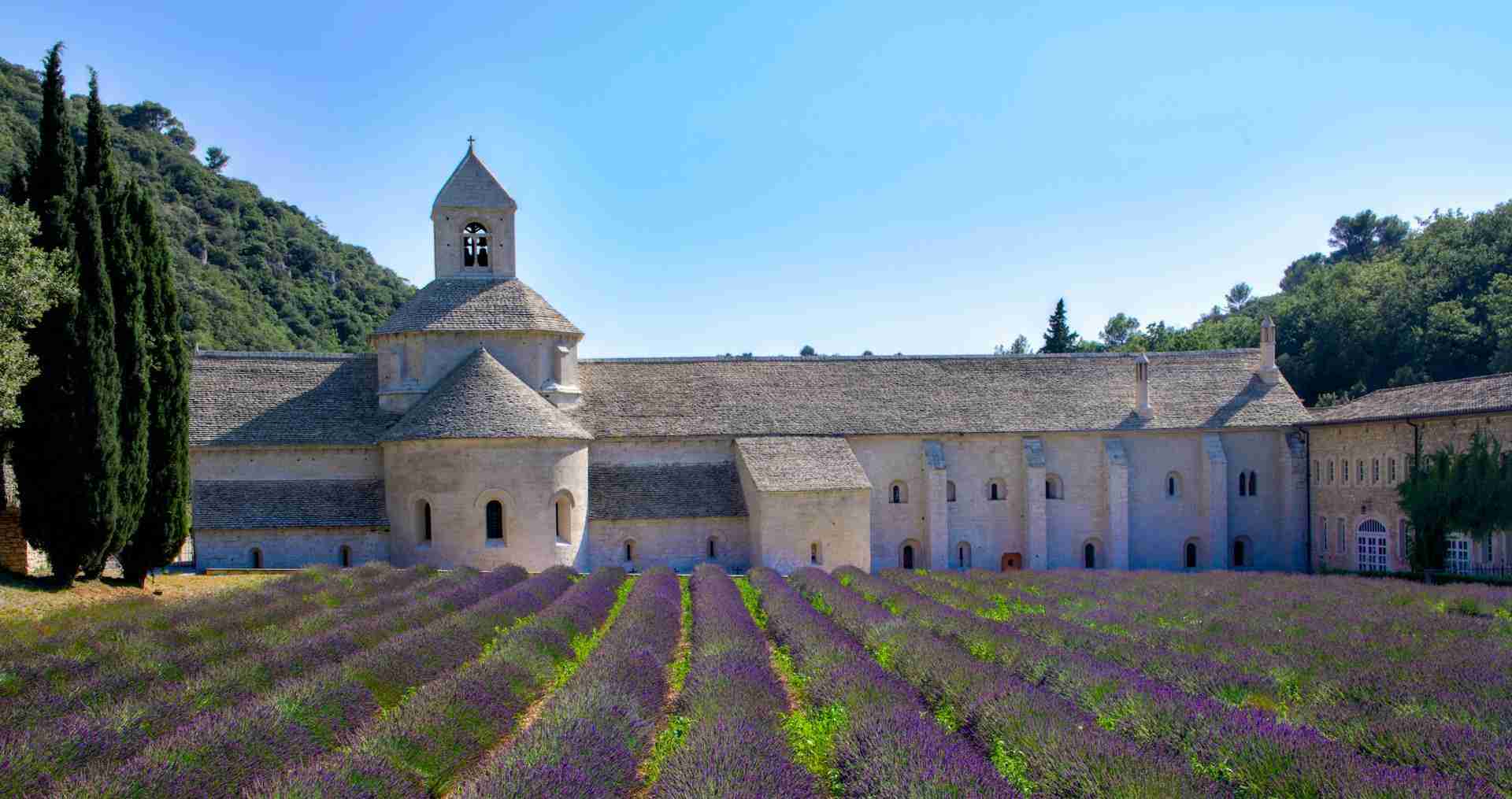
Tucked in a narrow valley near Gordes in Provence, France, the Abbaye Notre-Dame de Sénanque is one of the most visually striking and peaceful monastic sites in Europe. Famous for the vivid rows of lavender that stretch toward its Romanesque façade each summer, the abbey is a masterclass in symmetry, texture, and light. Its limestone walls, medieval proportions, and scenic isolation offer a wealth of photographic subjects, from sweeping landscapes to contemplative detail studies.
Best Photography Opportunities
• Lavender Rows Framing the Abbey
The signature view of Sénanque comes in early summer, when neat rows of lavender stretch up toward the abbey's façade. Use a low angle with a wide lens (16–35mm) to emphasize the linear symmetry and draw the eye into the frame. Golden hour or early morning provides the most flattering directional light, highlighting the purples without washing out detail. Return during twilight for dreamy, desaturated tones and a softer sense of calm. Focus stacking can also be useful if you want both foreground flowers and distant architecture in perfect clarity. For extra drama, look for insects hovering in the blooms or mist clinging to the flowers at dawn, and use a fast shutter to freeze subtle action in the scene. Composing with a person walking through the field can introduce scale and storytelling, anchoring the human presence within this cultivated landscape. A ladder or small step stool can elevate your shooting angle, offering more dynamic and layered compositions across the rows.
• Abbey Façade and Stone Texture
The Romanesque stone façade, simple and unadorned, offers great opportunities for architectural study. Use a 50mm or 85mm lens to frame details of windows, arches, and shadows cast by nearby trees or walls. Side lighting helps bring out the natural patina of the stone. Try converting shots to monochrome to accentuate texture and form, or capture contrast between sunlit stone and shaded interiors through doorways. You can also incorporate foreground elements like lavender stems or framing branches to create visual layers and enhance depth, particularly during golden hour when the limestone reflects rich amber hues. Don't overlook the way changing weather can alter surface textures—wet stone after a rain adds reflective highlights that emphasize sculptural elements. Including a wide aperture shot to blur the background can also lend intimacy and focus to more abstract architectural compositions. At dusk, look for the interplay of warm and cool tones as shadows lengthen across the ancient stone.
• Interior Cloister and Arches
Though photography inside the abbey is limited and subject to restrictions, the cloister—when accessible—presents excellent opportunities for capturing light filtering through arches and across flagstone paths. A fast prime lens and high ISO setting can help in low light, while a careful tripod setup (if allowed) offers stability for long exposures. The repeating arches are perfect for vanishing point compositions, and black-and-white processing enhances the contemplative atmosphere. Watch for fleeting light shafts or moments when a monk walks through frame—these glimpses of life in motion can give your architectural image a deeply human anchor. Consider using HDR techniques to handle contrast extremes, especially when the light shifts quickly between sunlit corridors and deep shade. Look also for reflections in the stone floor, particularly just after rain, to create subtle mirrored compositions. Try isolating a single archway and capturing the fall of light at different times of day for a sequence that reflects the rhythm of the monastic day.
• Surrounding Hills and Framed Vistas
Climb the adjacent hillside paths for an elevated view that places the abbey in its broader landscape. These perspectives are perfect for early morning mist or backlighting at sunset. Use a midrange zoom (24–105mm) to compose either wide contextual shots or tighter frames where cypress trees, lavender, and stone buildings create layered visuals. Drones are not permitted here, so find natural elevation for similar effects. The texture of terraced hills, winding footpaths, and rhythmic tree lines adds visual storytelling, making these vantages ideal for a more documentary or cinematic style of photography. Consider returning during different seasons to see how fog, foliage, or the color of the fields changes the tone of your compositions. If possible, shoot during golden hour from the high trail northeast of the abbey to silhouette the dome against glowing lavender rows. Panoramas taken from this angle also help convey the scale of the valley and the abbey's harmony within it.
• Details: Doors, Symbols, and Shadows
Step back from the iconic angles and look for quieter moments: worn thresholds, iron hinges, carved crosses, or angled sunlight falling across wooden doors. These details tell the human story of the abbey and invite creative exploration with a macro or short telephoto lens. Early morning light offers long shadows that create depth and texture even in otherwise simple scenes. Look for contrasts between organic and manmade elements—leaves on stone, moss in crevices, or lavender brushing against aged walls. These shots often lend themselves well to diptychs or sequences, adding narrative and rhythm to your portfolio. Try isolating single architectural features—such as a weathered column base or sunlit carving—and pairing them with environmental textures like surrounding flora or gravel paths to build visual tension and intimacy. Close-up shots of inscriptions, chipped stone, or the interplay of light on uneven masonry can also add a tactile, almost sculptural dimension to your set. Try shooting at different times throughout the day to catch shifting shadows that transform ordinary surfaces into dynamic compositions.
Best Time to Visit
The most famous window for photographing the abbey is late June through mid-July, when the lavender fields are in full bloom. During this time, early mornings offer a serene, pastel-hued atmosphere with dew still clinging to the lavender, and soft eastern light bathing the entire landscape. Plan to arrive before sunrise to secure your vantage point and take advantage of the changing light as it illuminates both the flowers and the abbey's stonework. Evenings are equally rewarding, casting golden tones across the façade and creating silhouetted lavender rows against dramatic Provencal skies.
Outside the lavender season, spring provides fresh green growth, blooming wildflowers, and a gentle breeze that animates the landscape. Early spring is ideal for capturing clean architectural lines without distraction, while late spring brings rich textures and bird activity that enhances environmental compositions. Autumn offers a quieter setting with golden and ochre tones in the surrounding foliage and less foot traffic, ideal for those seeking solitude in their shots. Winter, while stark, introduces moody atmospheres—fog, bare trees, and wet stone add a contemplative feel that's perfect for minimalistic or black-and-white imagery.
Avoid midday in summer, as crowds and harsh overhead light flatten detail and disrupt the sense of serenity. If you want to photograph the cloister or interior spaces, check visiting hours carefully, as photography is often restricted during services or guided tours. The site rewards repeat visits across seasons to fully capture the evolving interplay of structure, light, and nature.
How to Get There
The abbey is located approximately 5 kilometers from Gordes in the Provence-Alpes-Côte d'Azur region. If you're driving, a small parking lot is situated above the abbey, with a short walking path that leads down through trees to the site. There is no fee to photograph the exterior grounds, though interior access and guided tours may involve an entrance fee.
For those arriving by public transport, reach Gordes via bus from Avignon, and then either walk or cycle to the abbey. The final approach to Sénanque is narrow and winding, so drive cautiously and avoid peak traffic hours during the summer.
Recommended Gear for Photographing Sénanque
A wide-angle lens (16–35mm) is essential for capturing the expansive lavender rows leading to the abbey and for tight spaces around architectural features. This lens allows you to exaggerate perspective and emphasize symmetry—ideal for the iconic façade shots. For mid-range and detail shots, a 24–70mm or 24–105mm zoom provides excellent flexibility when switching between landscape and close-up work. A fast 50mm or 85mm prime lens is excellent for isolating texture, capturing portraits, or working in lower light, particularly within shaded courtyards and interior zones.
A sturdy tripod is crucial for long exposures at dawn, dusk, or inside the cloister. Use one with adjustable legs to work around uneven terrain or in low-angle compositions of lavender and foreground detail. Circular polarizers are highly useful in Provence's bright sun, helping to deepen blue skies and reduce glare on stone surfaces. A graduated ND filter is recommended to handle contrast between sky and shaded abbey walls, while a full ND can help with creative slow-shutter work such as capturing the motion of wind through lavender.
Pack a lens blower, cloths, and rain cover to protect your gear from dust, pollen, and occasional summer showers. A remote shutter release or intervalometer will allow you to shoot discreetly and avoid camera shake during longer exposures. Wear muted clothing to avoid reflections in windows or drawing attention when working near other visitors. Lastly, consider bringing a compact stool if you plan on spending long periods framing shots among the lavender rows—it can help with stability and comfort during long sessions.
Nearby Photography Locations
: Perched on a hilltop nearby, Gordes offers iconic stone architecture, narrow alleys, and panoramic views over the Luberon. The best light arrives late in the day when the setting sun warms the stone walls and outlines the contours of the village.
: A collection of dry-stone huts in a preserved hamlet just west of Gordes. These ancient structures are excellent for texture photography, earthy detail shots, and black-and-white studies.
: About 30 minutes from Sénanque, Roussillon's red and orange cliffs offer a stark contrast to the cool tones of the abbey. The vibrant landscape provides opportunities for colorful wide-angle work and natural abstract compositions.
: Drive south through the Luberon valley to find gentle vineyard scenes with rows of grapevines, rustic buildings, and distant hills. Autumn is especially rewarding when leaves turn gold and harvest scenes unfold.
: A smaller, lesser-known monastery set into the cliffs near Ménerbes, this quiet site is ideal for photographers looking to avoid crowds while capturing Romanesque details in a more intimate setting.
Comments
Loading comments…