
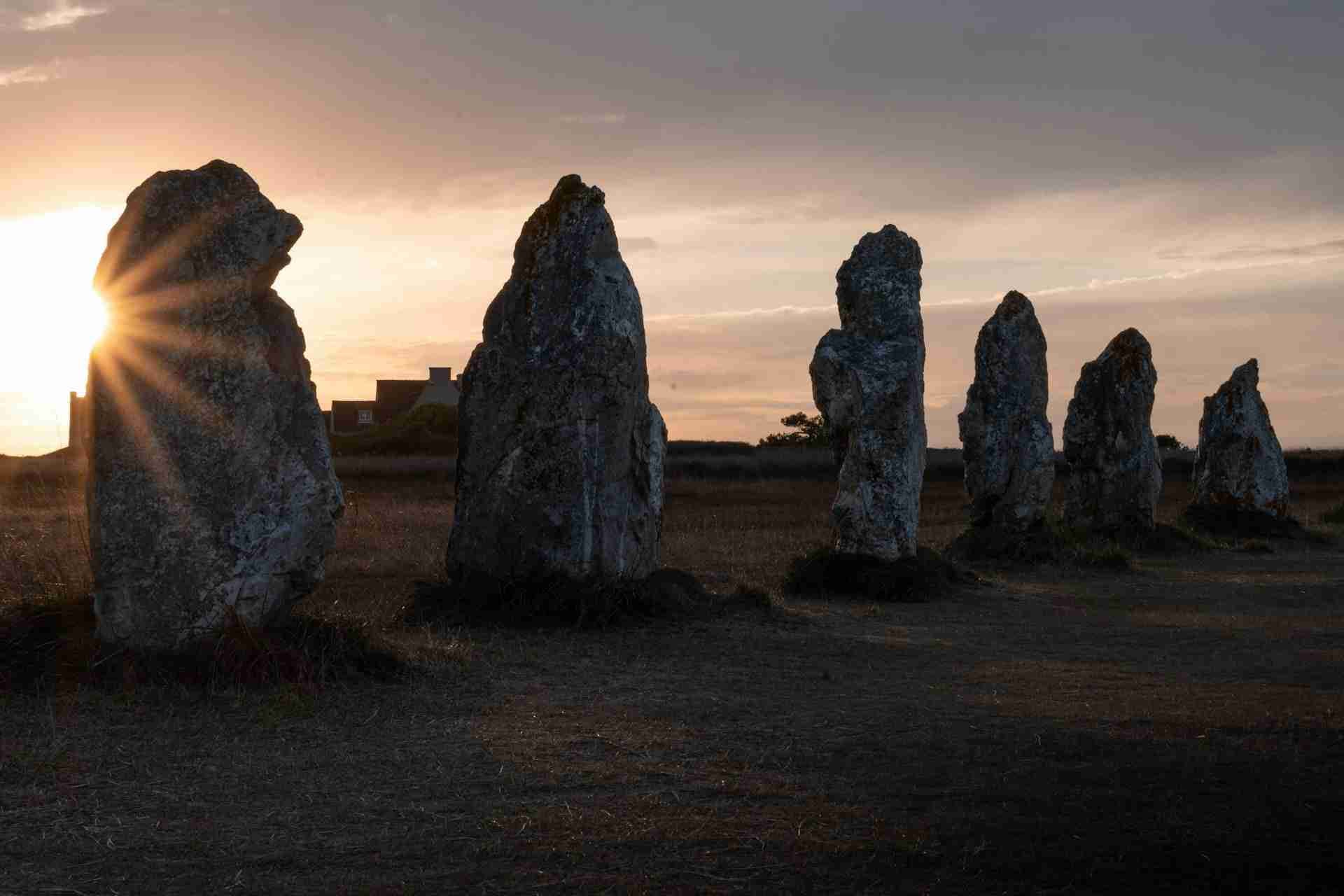
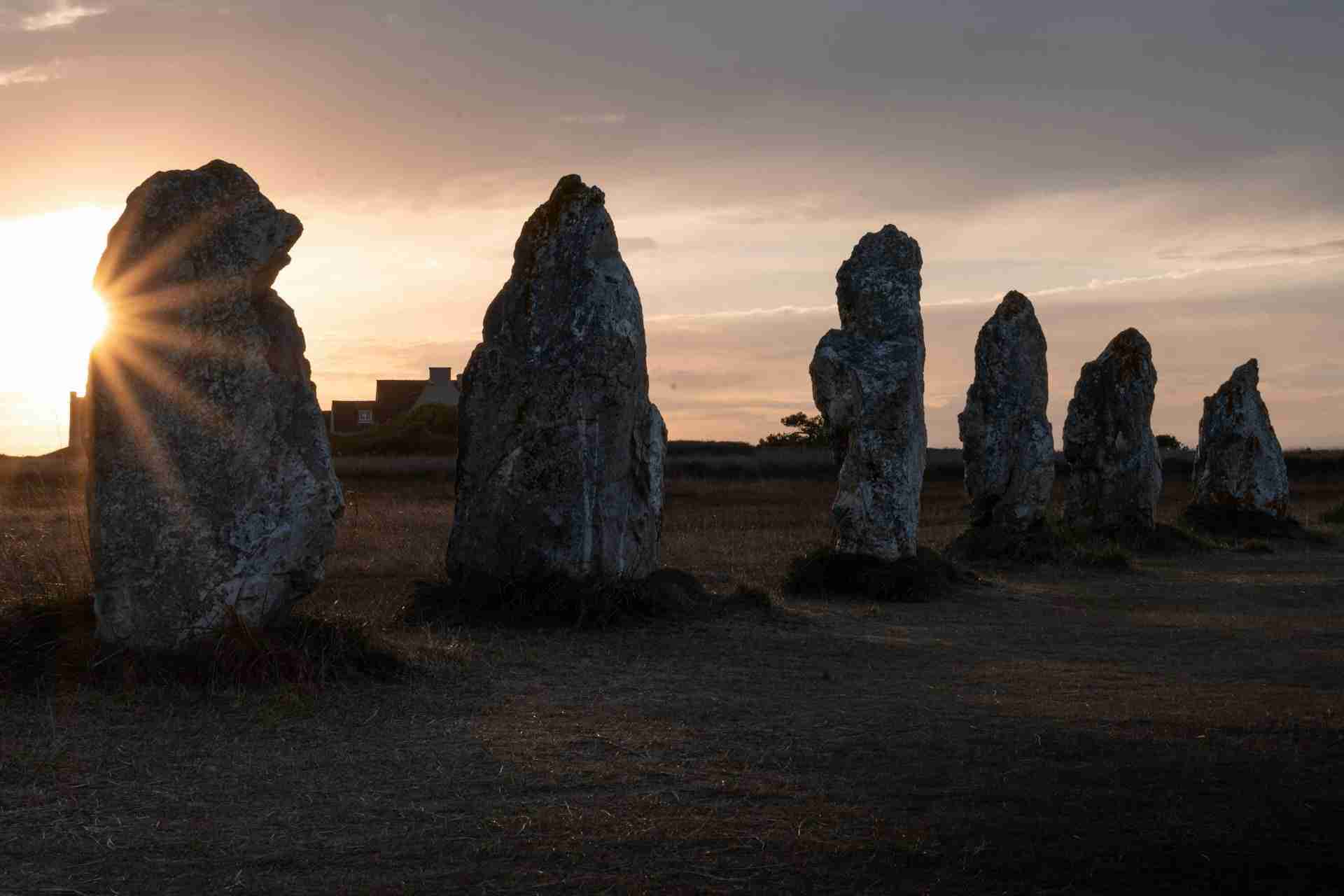
Set on the windswept western tip of Brittany in the seaside town of Camaret-sur-Mer, the Alignements de Lagatjar present a mysterious and understated photographic subject. This lesser-known Neolithic site, just steps from the rugged cliffs of the Crozon Peninsula, features rows of ancient standing stones arranged in parallel alignments across an open field. Unlike the more polished or crowded megalithic sites in France, Lagatjar is raw, open, and quiet, offering photographers the chance to work closely with texture, light, and atmosphere. The contrast between the upright stones, the coastal grasses, and the ever-changing Breton sky makes this site a compelling location for visual storytelling and creative compositions.
Best Photography Opportunities
Side-Lit Stone Rows at Sunrise
The eastern-facing alignment of the stones makes this site particularly effective to shoot during early morning hours, when sunlight cuts low across the field and casts long shadows. The tall grasses around the stones catch the light as well, adding depth and a warm glow that makes the textures of the granite pop. A wide-angle lens will let you capture the alignment's depth and structure, while isolating individual stones can create intimate portraits of the weathered surfaces. Shooting from a lower angle can help emphasize the monumentality of the stones despite their relatively modest size. As the sun rises, the changing light brings out different angles and moods in the same row, so it's worth moving through the site as the light shifts.
Overcast Minimalism and Monochrome Studies
When grey skies roll in, the Alignements de Lagatjar take on a different character. The site becomes a study in tonal contrast and quiet geometry. These conditions are ideal for black and white photography, where the stone's texture and shape can take precedence over color. Composing single stones against a blank sky or grouping them into geometric shapes brings out a minimalist quality that suits a more contemplative shooting style. A telephoto lens can compress distance and accentuate the rhythm of the alignments. Working in this kind of soft light also allows for more control over exposure and detail.
Detail Shots of Lichen, Moss, and Carving Marks
Up close, each menhir tells a different story. Some are flecked with lichen or carved by time and weather, offering endless material for texture-heavy macro work or tight framing with a standard lens. These detail shots work best in diffuse light, when shadows are gentle and highlights don't blow out the subtle color variations in the granite. Use a shallow depth of field to isolate surface patterns, or stack focus for greater clarity in static subjects. These intimate images are especially effective as part of a wider photo series that mixes landscape context with personal, tactile perspectives.
Incorporating the Ocean and Coastal Backdrop
One of the unique advantages of Lagatjar is its proximity to the sea. From certain angles, especially along the western edge of the site, the Atlantic horizon becomes a part of the frame. This setting allows photographers to juxtapose ancient stones with the ever-moving sea, adding both spatial contrast and a sense of time passing. Long lenses can help compress the landscape so that the ocean sits close behind the stones, while a wider composition can pull in the sweep of the coastal environment. Use a polarizer to control reflections or deepen the sky depending on cloud cover.
Golden Hour with Shadows and Sky Color
As the sun lowers toward the sea, the stone alignments become bathed in warm light, and their long shadows stretch across the field. This is an excellent time to experiment with silhouette-style compositions or layered foregrounds, especially when there are clouds to catch the last light of day. If you're lucky enough to get high cirrus clouds or light fog, these can create diffused color palettes that add a softness to the otherwise sharp geometry of the scene. Golden hour here lasts long enough in summer to move through different positions and explore both wide environmental shots and detail-oriented frames.
Best Time to Visit
Spring through autumn is the most productive time for photographing the Alignements de Lagatjar, with April through June offering particularly lush ground cover and a high chance of morning mist or soft skies. In summer, the dry grasses turn golden, adding warmth and contrast to the grey stones. Autumn brings deeper, moodier skies and often more dramatic coastal weather, which is ideal for photographers interested in visual tension or heavier atmospheric conditions. Winter is quieter and wilder, with fewer visitors and starker lighting, but also less predictable weather and fewer hours of usable light.
Morning is generally the best time to shoot, especially if you're aiming for side-lit alignments or soft fog. Midday light can be harsh, especially on clear days, but is still workable for close-ups or if you're shooting with filters. Late afternoon and golden hour are excellent for shooting westward toward the ocean, and for using the low light to draw out contrast in the stones and landscape. Wind is a constant factor on the Crozon Peninsula, so be prepared to work in breezy conditions that can influence shutter speed, especially for grass movement in long exposures.
How to Get There
The Alignements de Lagatjar are located on the outskirts of Camaret-sur-Mer, a small port town at the western edge of the Crozon Peninsula in Brittany, France. If you're driving from Brest, take the D791 and D887 toward Crozon, then follow signs to Camaret-sur-Mer. Once in town, continue west toward the Pointe de Pen-Hir. The site sits just off the main road (Route du Toulinguet) and is clearly marked by signage. There is free roadside parking adjacent to the site, and access is open year-round without any entry fee.
The stone rows are located on a flat, grassy field, just a few minutes' walk from the parking area. The ground can be uneven or muddy in wet weather, so waterproof boots are helpful. There are no facilities at the site itself, but restaurants, accommodations, and shops are available in the town center just a five-minute drive away. This location is well suited to short visits or extended sessions depending on light and conditions.
Recommended Photography Gear
A wide-angle lens is essential for capturing the scope of the alignments, particularly one in the 16–35mm range on full frame. A mid-range zoom like a 24–70mm will offer flexibility for both context and close framing. Telephoto lenses between 70–200mm or more are useful for compressing the alignments or framing stones against the coastal backdrop. For detail work, a macro or 50mm prime with close focusing capability will help isolate textures and carvings.
A tripod is strongly recommended, especially for low-light conditions or long exposures near sunrise and sunset. Neutral density filters are helpful for managing bright skies or for smoothing grass movement in longer exposures. A circular polarizer can reduce glare from wet stones or deepen sky tones depending on the angle. Weather protection is necessary, as wind and sudden rain are common on the peninsula. Bring extra batteries and lens cloths, as salt spray and humidity can affect performance, especially near the sea.
Nearby Photography Locations
Just a short drive from Lagatjar, this rocky promontory plunges dramatically into the Atlantic, offering steep cliffs and panoramic views of the surrounding coastline. The sea stacks known as Les Tas de Pois are a particularly striking subject, especially in golden hour or during rough surf. This location lends itself well to long exposures, layered compositions, and elevated views.
This 17th-century military tower sits right along the harbor and is a UNESCO World Heritage site. Its unique circular structure and defensive moat provide architectural contrast to the natural landscapes nearby. Reflections in the harbor water and the golden stone of the tower make for beautiful images in late afternoon light.
Tucked against the rocks in Camaret's port, this weathered chapel stands beside rows of decaying fishing boats, offering a rich juxtaposition of history, faith, and maritime life. The boats, now skeletal and rusting, are a playground for texture-focused photographers, especially in soft, even light.
South of Camaret-sur-Mer, Cap de la Chèvre offers sweeping views of the coastline and forested trails that lead to wild, empty beaches. The headland is ideal for sunset photography and drone work, with the chance to frame cliffs, sea, and sky in a single, balanced composition.
This inland high point provides a panoramic view over the entire Crozon Peninsula and is ideal for sunrise photography or misty morning landscapes. The rolling countryside below contrasts beautifully with the rocky coastlines, giving photographers a chance to vary their subject matter within a short drive.
Though less famous than other megalithic sites in France, the Alignements de Lagatjar reward photographers who appreciate subtlety, rhythm, and open light. Its quiet setting and proximity to dramatic coastal locations make it an ideal stop on a photo tour of Brittany's western edge. Whether you're chasing the texture of ancient stone, the movement of the wind through grass, or the horizon beyond, Lagatjar offers a space to slow down, look closely, and experiment.
Comments
Loading comments…