
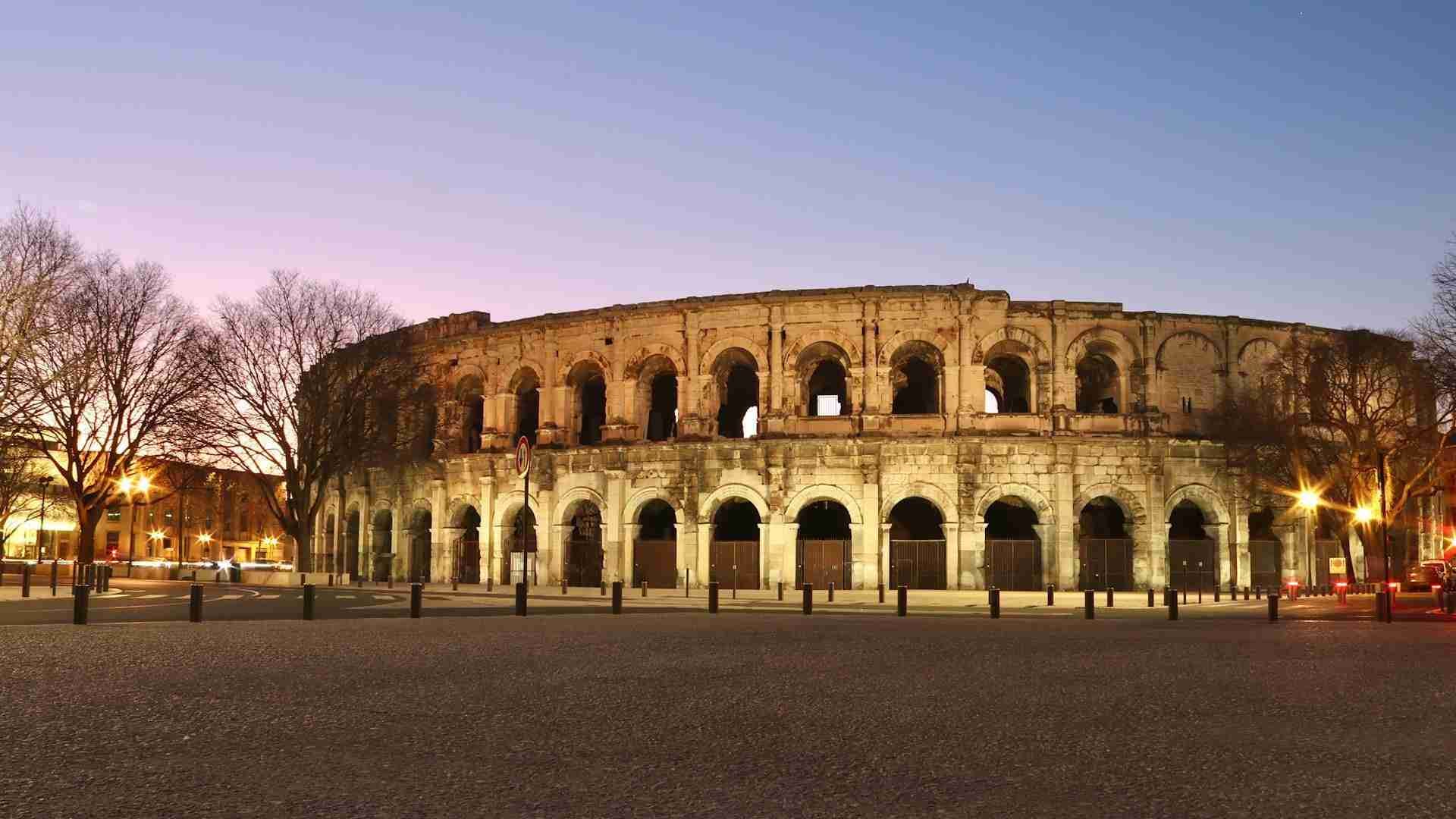
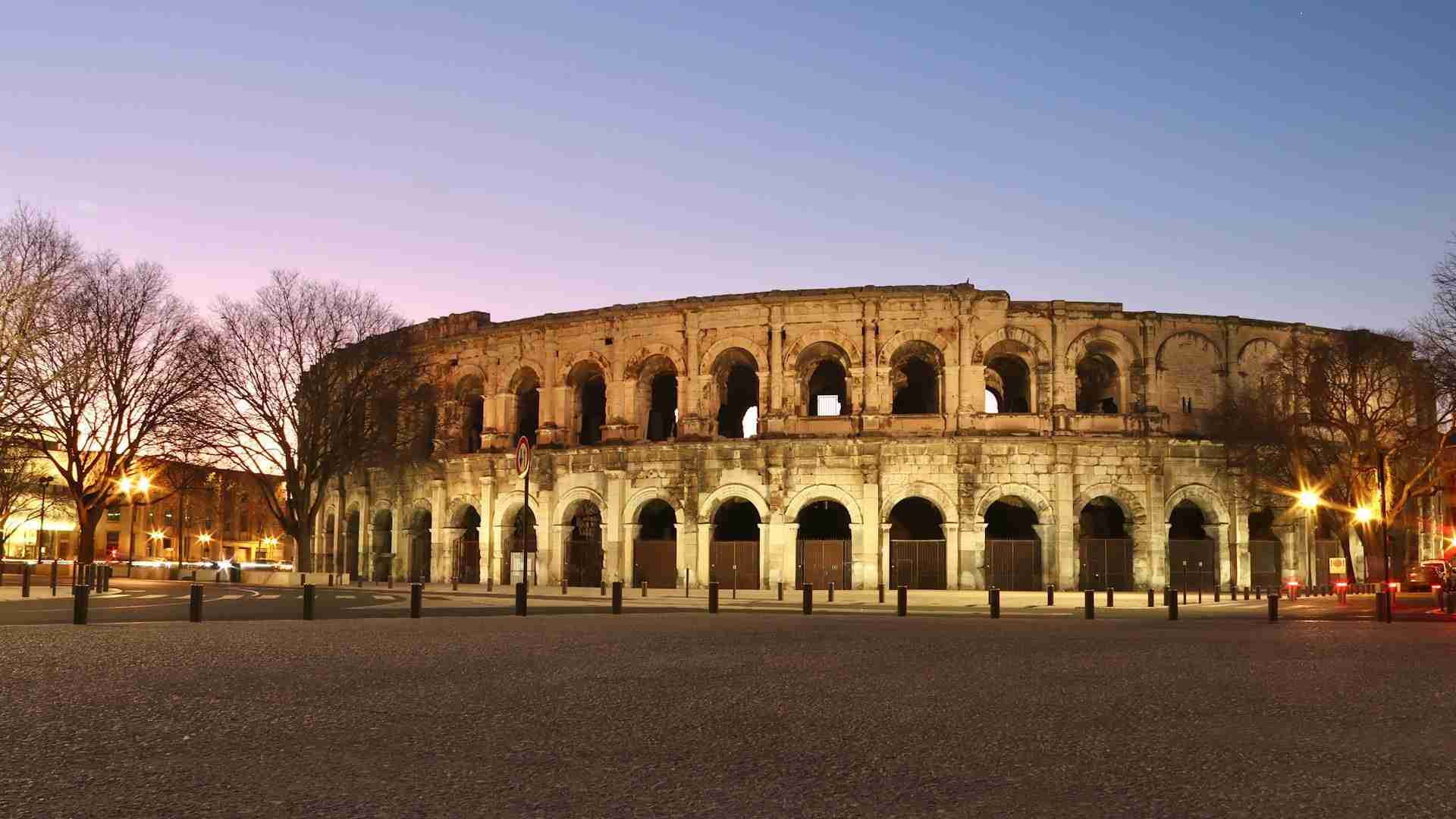
The Arènes de Nîmes is a remarkably well-preserved Roman amphitheater that has stood for nearly two thousand years in the heart of southern France. Built around the end of the first century CE, it was originally used for gladiatorial contests and public events, and today it remains an active venue for concerts and festivals. Its towering stone arches, intricate interior passageways, and commanding oval form offer photographers the chance to explore both grand, sweeping views and intimate architectural details. Light interacts beautifully with the amphitheater throughout the day, moving from soft illumination on its eastern arches in the morning to warm golden tones on its western side in the evening. The structure's scale and symmetry make it an engaging subject for photographers who enjoy working with perspective, texture, and historical context.
Best Photography Opportunities
• Full Exterior from the Square
: Photographing the entire oval from the open square allows you to show the scale of the amphitheater in context with the surrounding city. Position yourself far enough back to keep the curve of the walls intact while still filling the frame. Early morning light highlights the eastern side with soft, even tones, while late afternoon brings a golden warmth to the western arches. A wide-angle lens can capture the whole structure, but careful positioning avoids distortion that can stretch the oval into unnatural proportions. Waiting for moments when the square is quiet can produce clean, unobstructed images, while including people can offer scale that helps convey just how massive the amphitheater really is.
• Arches and Repeating Patterns
: The amphitheater's two stacked levels of arches create a rhythm that works beautifully in both color and black and white photography. Shooting along the curve accentuates the repetition, leading the eye around the frame and giving a strong sense of depth. Mid-range zoom lenses work well here, allowing you to adjust framing without losing perspective control. Late afternoon or early morning light casts angled shadows within each arch, adding texture and a sense of dimensionality to the stone. Overcast days also work well for this subject, as the even light brings out fine surface details without the distraction of harsh highlights.
• Interior Arena from the Stands
: From the upper seating tiers, you can see the full oval of the arena floor and the perfectly symmetrical rings of stone seating. This elevated vantage point conveys the amphitheater's scale and symmetry in a way that ground-level shots cannot. A wide-angle lens will include the entire space, while a telephoto can pick out specific seating sections or structural details. Midday light fills the arena evenly, but mornings and late afternoons create more pronounced shadows that give the seating tiers a sculptural quality. For variety, try including some of the surrounding city skyline in the frame to place the arena within its urban setting.
• Underground Passages and Gateways
: Beneath the seating, a network of narrow corridors and arched entryways reveals the amphitheater's practical design. These stone passages offer strong leading lines, especially when photographed from one end looking toward a bright opening. The contrast between the dim interior and the sunlit exit can create dramatic, high-contrast images. A tripod will help in the low light, though you can also embrace higher ISOs for a more atmospheric feel. Small details such as worn steps, chisel marks, and patches of moss add visual interest and help tell the story of centuries of use.
• Details of Stone and Carving
: The Arènes de Nîmes rewards close inspection, with weathered surfaces, carved capitals, and subtle patterns in its stone blocks. Using a telephoto or macro lens, you can isolate decorative elements or abstract textures for a completely different perspective on the site. Side lighting in the morning or late afternoon brings out relief and texture in the carvings. Overcast light works well for pure detail work, ensuring no deep shadows hide the finer elements. These kinds of shots make excellent companions to your wider architectural images, rounding out your coverage of the site.
Best Time to Visit
The Arènes de Nîmes changes character throughout the year, giving photographers a wide range of creative possibilities. Spring brings mild weather and soft light that lingers into the day, making it ideal for long sessions both inside and out. The surrounding streets often feature seasonal flowers and outdoor seating, which can be included in wider compositions. Summer offers bright skies and long golden hours, but the midday heat and heavier crowds mean early morning or late afternoon are the most comfortable and productive times to shoot.
Autumn is perhaps the most balanced season, with warm-toned light, thinner crowds, and more dramatic sun angles that create strong shadows in the arches. Winter offers a quieter atmosphere and a low sun path that keeps light raking across the facade for longer, revealing more texture in the stone. Early morning is best for photographing the eastern side of the amphitheater in soft light, while late afternoon brings out rich, warm tones on the western arches. Midday is ideal for evenly lighting the arena floor and seating from above. Blue hour adds a calm, even glow to the structure, and at night, the amphitheater's floodlighting transforms it into a dramatic subject against the dark sky. Overcast days are excellent for close-up work, ensuring even exposure on detailed carvings and surface textures.
How to Get There
The Arènes de Nîmes sits in the center of Nîmes and is easily reached on foot from other city landmarks. The train station is about a 10-minute walk, with frequent service from Montpellier, Avignon, and Marseille. Drivers will find several parking garages within walking distance, although spaces can fill quickly during peak tourist periods and event days.
Entry requires a ticket, which includes access to both the arena floor and upper seating areas. Tripods are permitted when crowds are light but may be restricted during busy times or events. The exterior can be photographed freely from the public streets and square at any time of day. Since there are multiple good vantage points around the structure, you may want to walk the full perimeter before choosing your shooting position.
Recommended Photography Gear
A wide-angle lens between 16 and 35 millimeters is essential for capturing the full oval form from close range, both inside and outside. A 24 to 70 millimeter zoom offers flexibility for framing sections of the arches or capturing the arena floor without switching lenses frequently. For architectural details, patterns in the arches, or close-up stonework, a 70 to 200 millimeter telephoto lens provides the reach to isolate subjects without losing sharpness.
A sturdy tripod is important for blue hour and night photography, as well as for low-light shooting in the underground corridors. A monopod or compact travel tripod may be more convenient during busier hours. A polarizing filter can deepen the blue of the sky, manage glare on bright stone surfaces, and help maintain detail in clouds. Bringing extra batteries is essential if you plan to shoot both day and night, and a lens cloth will help protect against dust on breezy days. Comfortable, non-slip shoes are highly recommended for climbing the uneven stone steps and moving through the interior passages safely.
If you are aiming for high-quality close-up images of carvings or inscriptions, a macro lens can capture the smallest details with clarity. Photographers planning time-lapse sequences of shifting light across the amphitheater will benefit from carrying multiple memory cards to handle the extra data.
Nearby Photography Locations
• Maison Carrée
: Just a short walk away, this Roman temple is one of the most complete of its kind and offers beautiful symmetry with its Corinthian columns and triangular pediment. Its light-colored stone reflects sunlight in a way that complements your shots of the amphitheater.
: A large landscaped park blending classical sculptures, fountains, and the Temple of Diana ruins. Elevated pathways here provide sweeping views of Nîmes, making it an excellent location for wide city shots.
: This Roman tower sits on a hill overlooking the city and offers panoramic views, especially striking at sunset. The stone structure itself is also worth photographing, particularly in the warm evening light.
A striking modern art museum facing the Maison Carrée, offering an interesting juxtaposition of glass and steel with ancient Roman architecture. Its reflective surfaces can be used creatively to frame or distort nearby landmarks.
: This pedestrian street is lined with cafes, shops, and colorful buildings, making it ideal for street photography. The area offers lively scenes during the day and warm, ambient light in the evening.
The Arènes de Nîmes is a rare example of a Roman amphitheater that still feels alive in its urban setting. By exploring it in different light, from multiple vantage points, and with a variety of focal lengths, you can create a set of images that convey both its ancient origins and its continuing role in the life of the city.
Comments
Loading comments…