
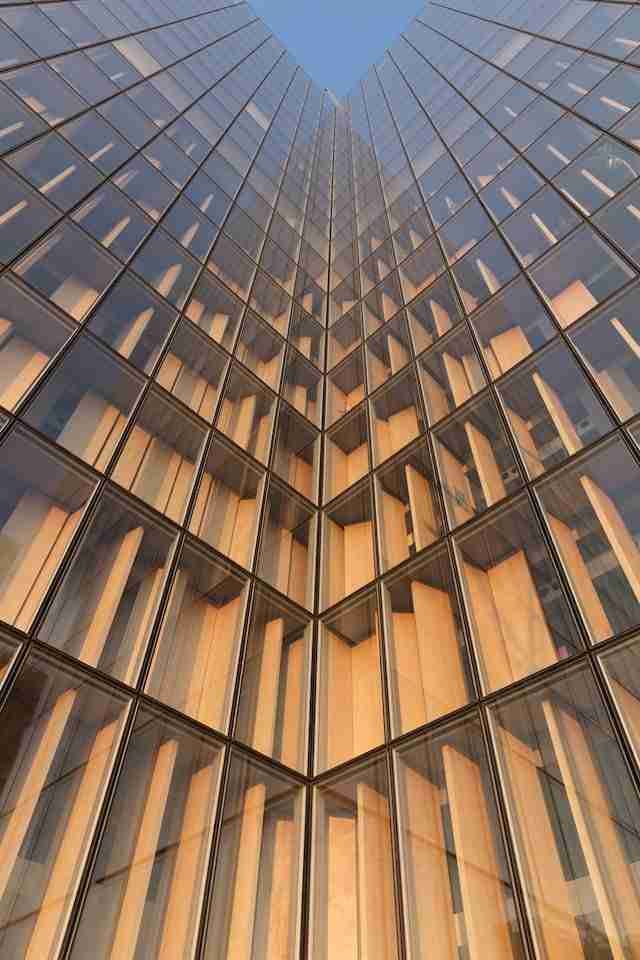
Rising from the banks of the Seine in the city's 13th arrondissement, the Bibliothèque François-Mitterrand—also known as the BnF—is a bold architectural statement of late-20th-century modernism. Designed by architect Dominique Perrault and inaugurated in 1996, the library is composed of four angular glass towers shaped like open books, surrounding a sunken forest courtyard. With its clean lines, reflective surfaces, and monumental scale, the BnF is a visual playground for photographers interested in contemporary architecture, minimalist compositions, and urban abstraction. As light shifts across the glass façades and angular walkways, the site transforms from stark geometry to atmospheric canvas—especially during sunrise, sunset, and blue hour.
Best Photography Opportunities
• Glass Towers and Architectural Symmetry
: The four corner towers—Tour des Temps, Tour des Lois, Tour des Nombres, and Tour des Lettres—offer strong vertical elements that can be composed in wide-angle symmetry or compressed with a telephoto lens for abstract, high-contrast geometry. Shooting upward from ground level emphasizes scale, while reflections of the sky in the mirrored façades create ephemeral patterns. As light conditions change throughout the day, the towers act like giant reflectors, sometimes absorbing clouds and sky colors into their surface like paintings in motion.
• Wooden Walkways and Vanishing Lines
: The elevated esplanade between the towers features long, plank-style wooden walkways that create natural leading lines into the frame. These walkways work beautifully in wide compositions, especially when empty, and offer dramatic perspective for long exposures or minimal human elements. The rhythmic texture of the wood and metal, combined with low guardrails and open space, gives you the feeling of floating above the city, and it's an ideal setting for cinematic portraiture or conceptual fine art imagery.
• Interior Atrium and Reading Rooms
: While access is limited, certain interior areas of the library are open to the public and present opportunities for controlled, high-contrast interior photography. The interplay of light and shadow through slatted walls and glass partitions creates compelling compositions for those who enjoy architectural detail. The reading rooms offer striking symmetry and repetition, with rows of study lamps and minimalist furniture beneath tall windows—perfect for subtle, ambient compositions or mood-rich storytelling.
• Sunken Garden Views
: The central courtyard features a planted forest visible from various points along the esplanade. This unusual architectural feature offers a green counterpoint to the steel and glass surroundings. Framing the garden with the tower façades in the background creates a conceptual tension between nature and urban structure—especially in spring and autumn when the foliage adds color. Early morning light enhances the contrast between the organic forms of the trees and the geometric rigidity of the towers, making for highly textured wide shots or environmental portraits.
• Blue Hour and Nighttime Photography
: After dark, the library takes on a luminous quality. The towers glow from within, and the walkways reflect ambient lighting for soft, futuristic compositions. Blue hour offers balance between artificial light and natural ambient sky tones. Long exposures at this time can blur pedestrians into ghostly streaks, adding motion and mood to the setting. Reflections from nearby pools or the glass itself also come to life after sunset, creating mirrored symmetry and surreal visual effects that are unique to this time of day.
Best Time to Visit
Golden hour and blue hour offer the richest photographic opportunities at the Bibliothèque François-Mitterrand. Morning light strikes the eastern façades and creates sharp contrast across the towers, emphasizing their towering presence and revealing subtle tones in the glass and steel. As the sun rises, the light reflects off the Seine and begins to bounce into the lower levels of the esplanade, creating golden pockets of warmth amidst the colder architecture. In the evening, the western façades take on a soft glow as the sun sets, and the reflective panels pick up the shifting colors of the sky—especially striking on partly cloudy days.
Blue hour—roughly 20 to 45 minutes after sunset—brings out the glowing interior lights from within the towers and softens the sky into rich blues and purples, ideal for moody, futuristic compositions. The artificial lighting along the wooden walkways adds leading lines and foreground interest, particularly in long-exposure work where passing figures become ghostly traces of urban life.
Overcast days are also excellent for shooting, especially if you're working with the library's minimalist and geometric qualities. Cloud cover diffuses the light, allowing you to capture clean architectural lines without harsh shadows or blown highlights—ideal for monochrome or subdued color palettes.
In summer, mornings offer cooler conditions and fewer visitors, giving you unobstructed views and better control over compositions. During winter, the light remains low and directional for longer periods, allowing for more drawn-out golden hours and colder visual tones that suit the starkness of the architecture. For crowd-free shots and calm light, plan to arrive early on weekdays before the library opens or in the late evening after closing hours, when the structure becomes quiet and contemplative.
How to Get There
The Bibliothèque François-Mitterrand is located at Quai François Mauriac in Paris's 13th arrondissement, along the left bank of the Seine. It is easily accessible via public transportation:
• Metro
: Line 14 to Bibliothèque François-Mitterrand station.
• RER C
: Bibliothèque François-Mitterrand station.
• Bus
: Several routes service the surrounding area, including 62, 64, and 89.
Once at the site, access to the public esplanade and exterior walkways is open and free at all times. The surrounding pedestrian areas, bridges, and quays provide additional elevated or lateral viewpoints. For interior access, visitors may enter the reading rooms or exhibition halls during open hours (photo policies vary). Tripods are permitted outdoors but should be used respectfully and without blocking public paths.
Exploring the Surrounding Area
The neighborhood around the BnF offers complementary modernist and post-industrial visuals. Across the river via Passerelle Simone-de-Beauvoir, the Parc de Bercy and Cour Saint-Émilion provide tree-lined paths and reimagined warehouse architecture—ideal for lifestyle, street, or environmental portrait work. The bridge itself is another subject, with sinuous lines and a clean aesthetic that contrasts with the bulk of the library.
The Seine riverbanks near the library offer moody waterfront compositions, especially at dusk, while floating bookshops and moored barges provide intimate urban vignettes. For elevated views of the BnF, walk south along Avenue de France or explore nearby rooftops (some cafés and coworking spaces offer terrace access with views of the towers).
Nearby Photography Locations
: A pedestrian-only footbridge with elegant curves and a glass deck, offering unique leading lines and excellent sunset views over the Seine. Its design is sleek and futuristic, and when photographed from below or from the riverbank, it adds a sculptural element to any modernist portfolio. It also connects the BnF to the Parc de Bercy, making it a natural visual transition between architectural and park scenes.
: A short walk across the river, this landscaped park includes water features, vineyard terraces, and remnants of old Parisian wine warehouses—perfect for soft nature photography in an urban context. The diversity of scenes within the park—from formal gardens to quiet ponds and modern art installations—makes it a strong complement to the hard-edged geometry of the BnF.
: An industrial-modern tech campus housed in a former railway hall, full of exposed concrete, metal, and minimalist design—great for architectural and editorial-style work. It's a hidden gem for those seeking clean lines, sharp contrasts, and scenes that speak to Paris's evolving identity as a tech and design capital.
: A bridge with beautiful repetition of arches and dual road/Metro traffic—ideal for motion blur shots of trains and cars during twilight. The juxtaposition of historic stonework with the modern Metro line above provides a layered urban narrative and works particularly well in black-and-white.
: A converted warehouse turned artist squat covered in colorful graffiti and murals—great for street and documentary photography just a few blocks from the BnF. The juxtaposition between this raw, expressive art space and the polished modernism of the library makes for an intriguing visual and thematic contrast, especially if you're building a story-driven photo series.
The Bibliothèque François-Mitterrand is one of the few places in Paris where the future and the present overlap so cleanly in glass and form. Whether you're chasing symmetry, working with light and shadow, or simply walking its elevated paths at dusk, the BnF rewards careful composition and creative patience. It's a location where urban clarity meets abstract potential—offering photographers the chance to strip away the city's ornate layers and focus instead on line, shape, and the poetry of space.
Comments
Loading comments…