
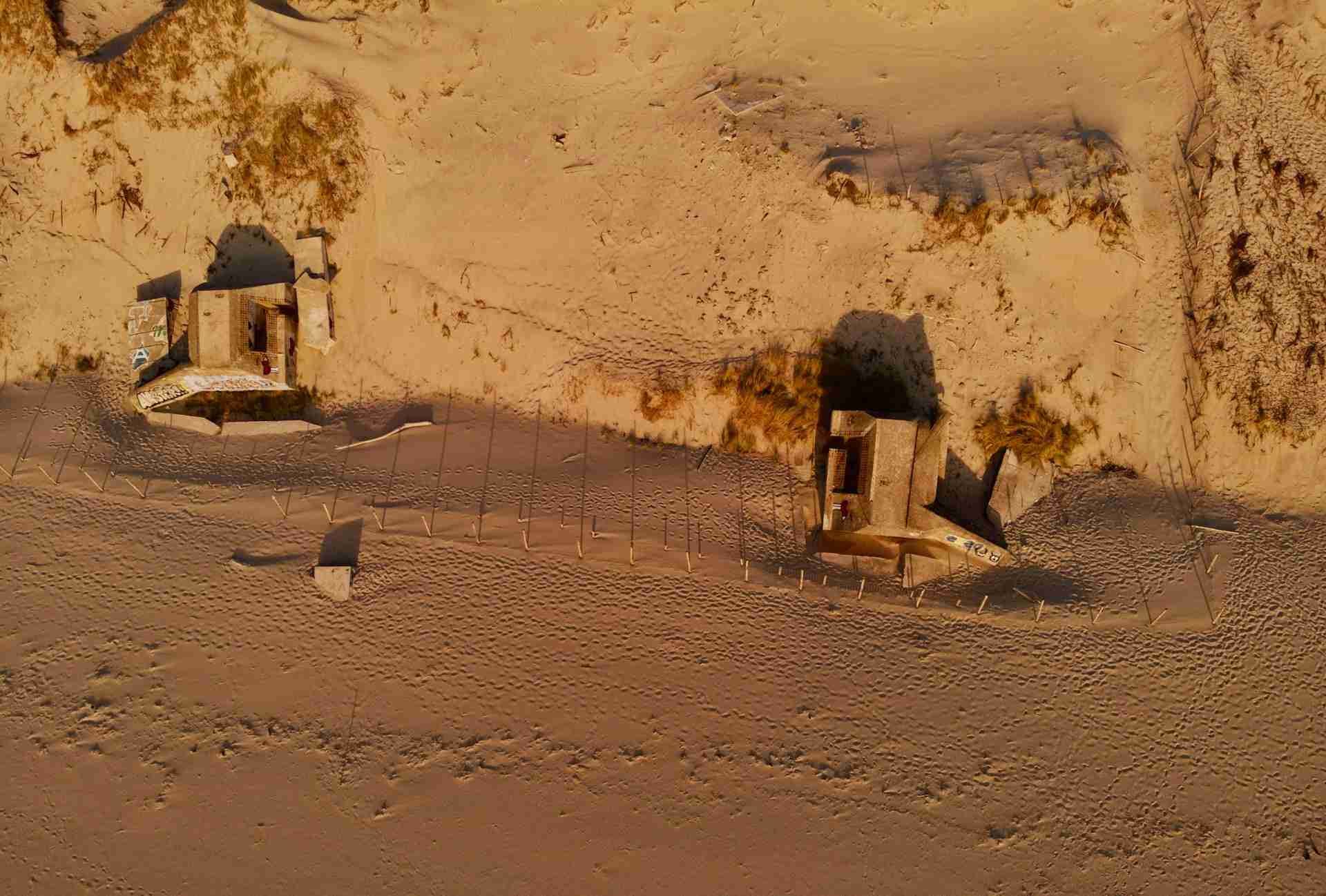
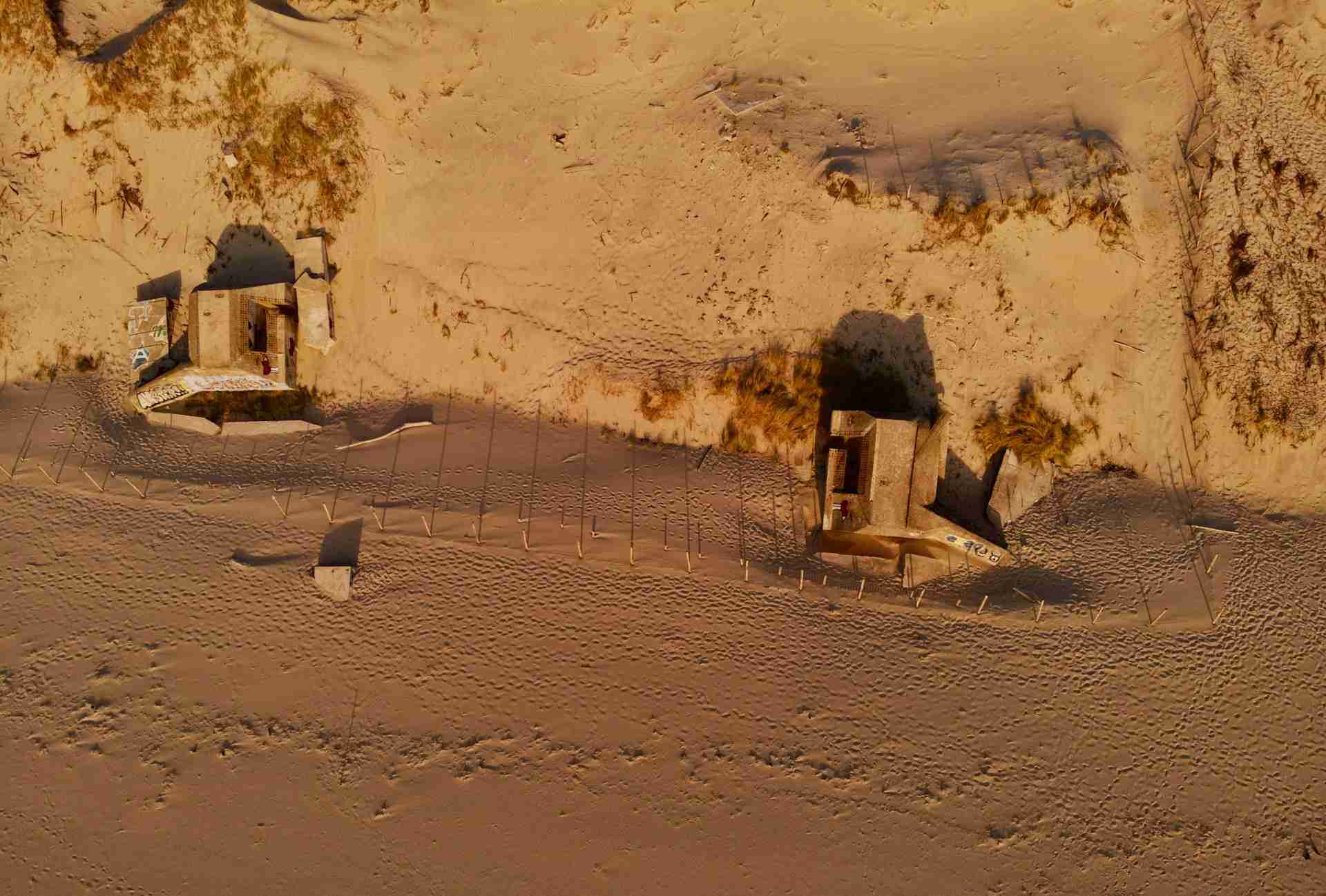
Along a raw stretch of the French Atlantic coast, the Blockhaus of Lacanau Océan Nord sits embedded in sand. These World War II era bunkers were once intended to guard the shoreline but are now half consumed by nature, leaning at odd angles and painted over with layers of graffiti. The scene is dramatic and unpredictable. The light is often harsh or stormy, the sand constantly reshaped by wind, and the sea. For photographers, this location offers a rare combination of history and natural chaos that can be shaped into striking visual narratives with the right timing and tools.
Best Photography Opportunities
• Low Tide
When the tide drops, the bunkers are fully exposed and often surrounded by thin pools of water that create perfect reflections. These moments offer some of the most visually striking compositions at the site, especially when combined with soft morning or evening light. The contrast between the concrete structures and the delicate reflections gives the scene a surreal quality that's hard to replicate anywhere else. You'll get the best results when the wind is calm and the surface of the sand is undisturbed. Shooting low to the ground with a wide angle lens can help emphasize the symmetry between the structure and its mirror image.
• Long Exposure Scenes
The beach here is made for long exposure work. The nonstop movement of the waves, mixed with fast moving clouds, sets up the perfect contrast with the still, hulking forms of the bunkers. With a strong ND filter and a stable tripod, you can stretch your shutter speed to soften the ocean into a smooth gradient and blur the sky into streaks of motion. This technique works especially well during overcast days when the light is even, or during golden hour when tones start to warm up. Just be ready to keep your tripod steady in soft sand, and bring extra weight if needed to avoid camera shake.
• Detail Shots and Textures
These bunkers are full of character up close. The concrete is cracked and weathered, with exposed rebar, graffiti in all stages of wear, and patches of moss or salt-stained discoloration. These details offer plenty of options for abstract compositions or tight framing that tells a different story than the wide views. A macro or telephoto lens is ideal for pulling out these textures, especially during the golden hours when shadows deepen and highlight surface flaws. Overcast light is also helpful here since it removes harsh contrast and allows the fine details to come through more clearly.
• Drone Views from Above
Flying a drone above the Blockhaus reveals the layout of the beach in a way that's impossible to see from the ground. The shapes of the bunkers become more graphic from overhead, especially when the tide is low and the sand patterns stretch out around them. You can experiment with height and angle to see how the geometry of the scene changes depending on your altitude. Shooting during the early morning or late afternoon helps bring out texture in the sand thanks to longer shadows. Just keep an eye on the wind, which can pick up quickly here and make drone control more difficult.
• Sunset Silhouettes
Because the beach faces west, sunsets here are often bold and colorful, making them a prime time to shoot silhouettes of the bunkers. As the sun dips behind the horizon, the blocky forms stand out sharply against the sky, while the wet sand picks up reflections of the light. Some of the best tones actually happen just after the sun disappears, when the light softens and the color palette becomes more pastel. Composing with a wide angle lets you take in both the structures and the sweeping sky without crowding the frame. A tripod is key at this time of day, especially if you want to slow down your shutter and capture more ambient light as it fades.
Best Time to Visit
The best time to shoot here is from late fall through early spring. The beach is quieter, the light is softer, and storms often reshape the sand in ways that make the scene feel brand new. During winter, you'll often find better low angle light throughout the day and fewer people getting in your frame. Spring brings more clear mornings and some early haze, which can add something special to wide shots. If you're here in summer, plan to shoot very early or late to avoid the crowds. Midday is tough unless you're going for harsh light and shadow contrast.
The most important thing to plan around is the tide. Low tide is when you'll get full access to the bunkers and the best reflections. High tide can completely block access or force you into tight, awkward shooting spots. Always check the tide tables before you go, and give yourself enough time to get set up before the water drops or rises. Also keep an eye on the wind. This area gets gusty, which can shake tripods and limit drone flights.
How to Get There
Lacanau is about an hour's drive from Bordeaux. Once you're in Lacanau Océan, head to the northern end of town by following Avenue du Nord. There's a small parking area near the beach access points, and from there it's a short walk through the dunes to the bunker site. The sand can be deep, especially near the dunes, so plan for a bit of a workout if you're hauling gear.
There's no fee to visit or shoot at the Blockhaus, and you won't need a permit for tripods or handheld shooting. Drones are allowed, but you'll need to follow French drone laws, including staying clear of people and flying below 120 meters. There are no bathrooms or services directly on this part of the beach, so bring everything you need with you, including water and sun protection.
Recommended Photography Gear
Start with a wide angle lens. You'll need it for getting the whole bunker into frame, especially when you're up close or working with reflections. A 24 to 70 millimeter zoom or something similar will give you flexibility for mid range scenes and tighter framing. A telephoto zoom or macro lens is great for pulling out texture and detail, especially if you want to isolate the rough surfaces or patterns in the graffiti.
A sturdy tripod is a must for long exposures, and you may want to bring something to stabilize the legs on soft sand. A good set of neutral density filters is worth packing too, especially a 6 stop or 10 stop for smoothing out water and sky. A polarizer can help cut glare on wet surfaces. If you're flying a drone, pick something compact but reliable in wind, and carry a few spare batteries since wind resistance drains power fast.
The beach conditions can be rough on gear. Salt spray, windblown sand, and sudden weather shifts are all common here. Bring microfiber cloths, a rain cover or trash bag for your camera, and backup batteries in case the cold drains your gear faster than expected. If you're staying out past sunset, a headlamp or flashlight will come in handy for the walk back.
Nearby Photography Locations
A short drive inland, this calm freshwater lake gives you a chance to switch things up. The light here is completely different from the beach, with soft reflections and a quiet feel, especially early in the morning. You can shoot fog lifting off the water or use longer lenses to frame small docks and scattered boats. It's a great place to catch your breath after a windy beach session and get some variety in your portfolio.
Just up the coast, Carcans is another wide open beach, but it feels a bit more remote and relaxed. The dunes here are bigger and better defined, making for good leading lines and shadow play in low light. You'll get fewer people in the frame too, especially in the shoulder seasons. It's a solid spot for sunset or black and white work if you like cleaner, less cluttered scenes.
South of Lacanau, Le Porge has a more natural feel. The pine forest opens up right onto the beach, and the transition between the two can give you some unique shooting opportunities. The beach tends to collect driftwood and other debris, which works well in foregrounds. It's also a good spot when the weather's changing fast, since the light can get really dramatic with passing clouds.
This area has a completely different vibe, with oyster farms, piers, and quiet little harbor villages. On the bay side, the water is calmer and more reflective, especially in the afternoon. On the ocean side, you've still got open beach to work with. If you want variety in one stop, this is a solid place to spend a day.
An hour and a half to the south, this massive sand dune gives you views over the ocean and forest that feel totally different from Lacanau. Sunrise is the best time to shoot here, when shadows stretch across the dune and the light picks up all the subtle textures in the sand. You'll need to climb a bit, but the payoff is worth it. It's one of the few places where you can shoot beach, forest, and sky all in one frame.
Lacanau's Blockhaus might not look like much at first, but it's one of those places that reveals more the longer you spend with it. The mix of concrete, ocean, and shifting sand gives you tons of creative options, especially if you return at different times of day or in different weather. It's not just a one and done location. If you like working in places that feel a little raw and unpredictable, this one is worth the effort.
Comments
Loading comments…