
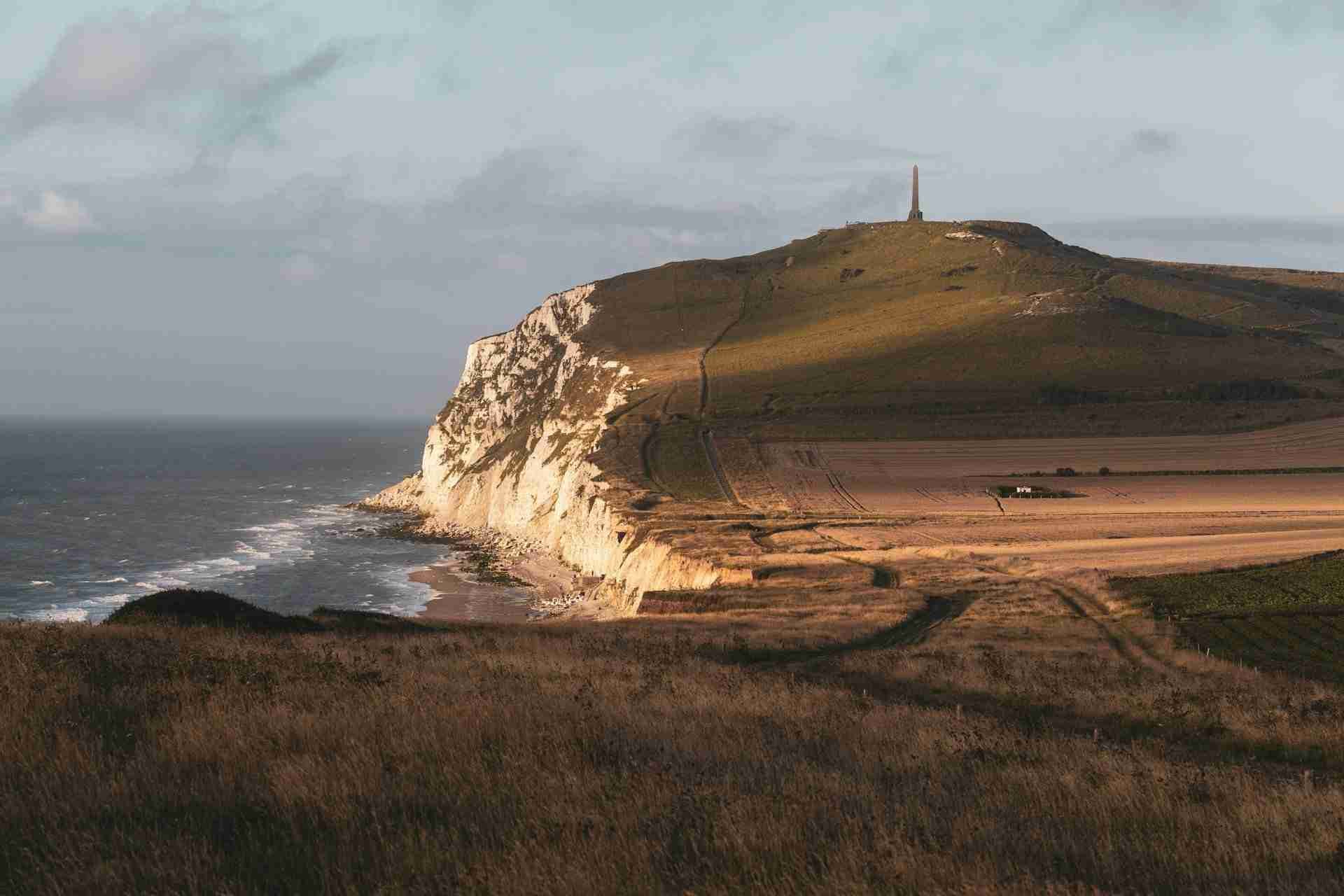
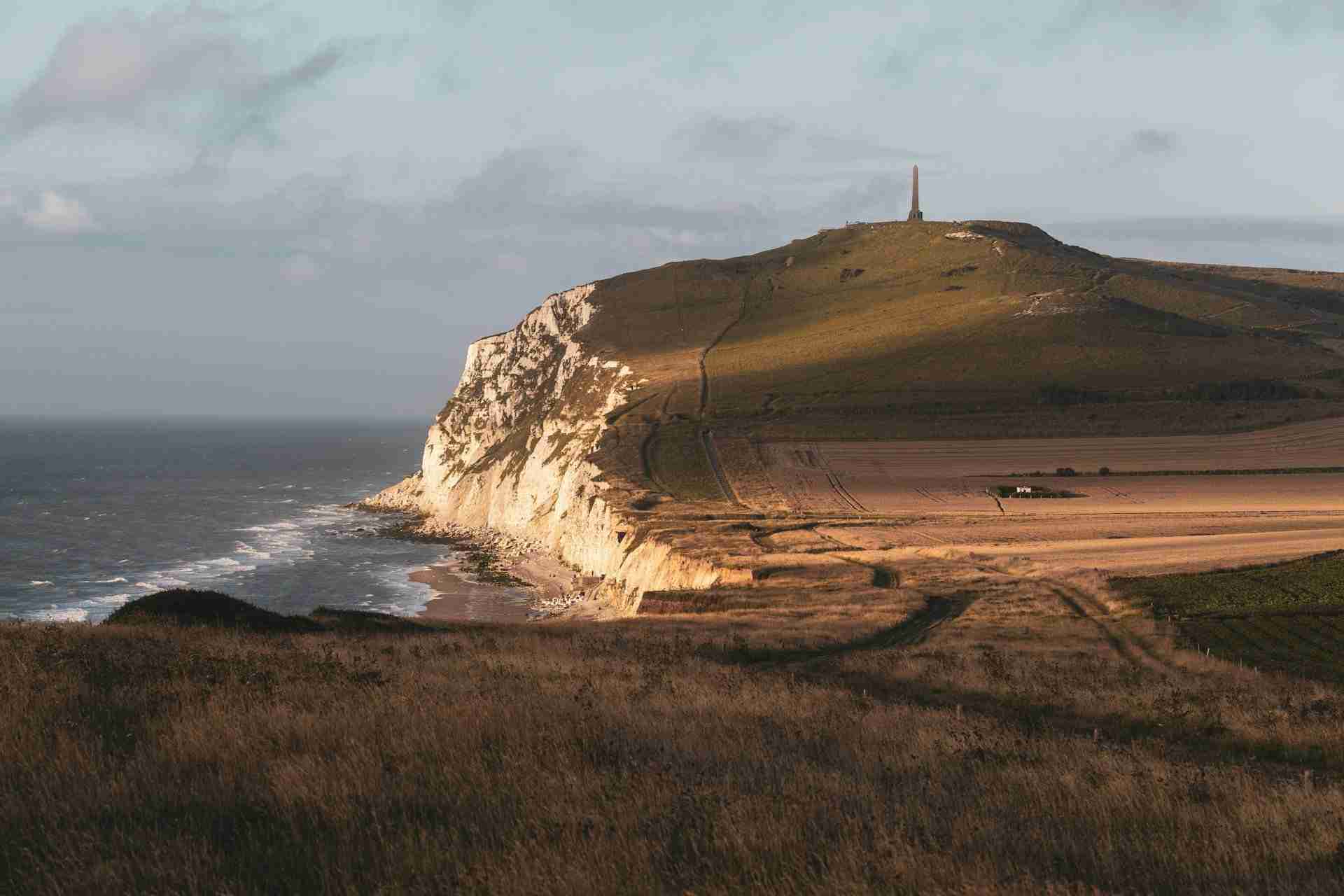
Rising more than 130 meters above the English Channel, Cap Blanc-Nez is one of northern France's most iconic coastal landmarks. Located near the village of Escalles along the Côte d'Opale, this striking white chalk cliff offers panoramic views over the sea, dramatic weather, and a windswept landscape that's rich in both natural texture and historical depth. As part of the Grand Site des Deux-Caps, Cap Blanc-Nez is not just a scenic viewpoint—it's a dynamic subject that rewards both wide-angle landscape work and intimate studies of light, land, and sky. On a clear day, the white cliffs of Dover are visible across the water, linking the location to a shared coastal heritage that feels both immediate and expansive.
Best Photography Opportunities
• Cliff Edge Panoramas and Coastal Trails
: The upper path that follows the edge of the cliff offers sweeping views of the Channel, the adjacent Cap Gris-Nez, and the patchwork farmland of inland Escalles. Shooting from just behind the cliff edge with a wide-angle lens allows you to capture both the drop and the layers of terrain, especially during golden hour when the light cuts across the landscape in long, sculptural strokes. The curve of the coastline helps lead the viewer's eye into the distance.
• Minimalist Seascapes and Atmospheric Horizons
: Facing northwest, Cap Blanc-Nez is perfectly positioned for capturing subtle gradients of light across sea and sky. On misty or overcast days, the horizon softens into abstract color fields that work beautifully in minimal compositions. Using a long lens to compress the water and sky flattens the scene into tonal harmony, while a wider shot can showcase the vertical drama of the cliffs themselves.
• Chalk Faces and Textural Close-Ups
: The cliffs themselves are composed of soft, white chalk streaked with bands of flint—ideal for detail shots that highlight texture and geological history. Shooting close-ups of eroded edges, grassy overhangs, or wind-carved fissures offers a more abstract approach. These frames are particularly effective in sidelight, which casts sharp shadows across the undulating rock.
• Sunsets and Silhouettes
: With its high elevation and open western view, Cap Blanc-Nez is a superb location for sunset photography. Silhouettes of hikers, distant Channel ferries, or windblown grasses against the glowing horizon add life to the frame. During summer, the sky often explodes in orange, lavender, and soft peach, with the cliffs catching the last light and glowing faintly above the shadowed beach below.
• World War I and II Memorials
: Atop the cliff sits the Dover Patrol Monument, a tall obelisk commemorating Anglo-French naval cooperation during WWI. Framing it against the sea, clouds, or setting sun adds narrative depth to an already powerful landscape. The surrounding terrain also holds bunkers and other WWII-era remains that provide contrast between natural beauty and military history.
Best Time to Visit
Cap Blanc-Nez is most photogenic during golden hour and into blue hour, especially on clear or partly cloudy days when the light has enough softness to wrap around the cliff faces and roll through the coastal grass. Late afternoon light is ideal for side-lit compositions that reveal the cliff's texture, while early morning light coming from inland gives more even, diffused tones across the sea-facing slope.
On overcast days, the site transforms into a high-contrast, elemental landscape that suits black-and-white work or low-saturation color palettes. Fog and low cloud often sweep over the cliffs in spring and autumn, creating atmospheric opportunities for mood-driven imagery. In winter, the sun stays low on the horizon most of the day, allowing for long shadow work and intense tonal contrast.
Clear evenings provide the chance to capture lights from English coastlines across the Channel, adding a surreal touch to wide, long-exposure shots. For wildlife photography, mornings offer calm winds and better chances of spotting sea birds in flight.
How to Get There
Cap Blanc-Nez is located near the village of Escalles in the Pas-de-Calais region, about 20 minutes from Calais by car. From the A16 motorway, take exit 40 for Bonningues-lès-Calais and follow signs to Cap Blanc-Nez and Escalles. The main parking area is located just below the monument, with trails leading up to the cliff paths.
There are well-maintained footpaths for photographers to explore both the upper ridgelines and the lower beach area, which is accessible at low tide. The terrain is open and exposed to wind, so dress appropriately and carry weather protection for gear. Drones are permitted with respect to national park and aviation regulations—be cautious near the cliff edge and avoid disturbing birdlife.
Exploring the Surrounding Area
Cap Blanc-Nez is part of a larger network of coastal trails, offering opportunities for half-day or full-day explorations on foot. The trail southward toward Cap Gris-Nez includes open meadows, rolling dunes, and sweeping sea views that shift in color and mood as the weather changes. Inland, the agricultural fields of Escalles form a geometric patchwork that pairs beautifully with aerial compositions or long-lens landscapes.
The beach below the cliff is accessible via side paths and offers dramatic views looking back up at the towering escarpment—particularly effective during low tide when rock pools and wave textures add foreground complexity. Just inland, the quiet village of Escalles offers stone farmhouses, narrow roads, and peaceful pastoral scenes ideal for quiet rural documentation.
Nearby Photography Locations
: Located a short drive south, this lower headland offers sweeping sea views, WWII bunkers, and opportunities to photograph ferries passing close to shore. Ideal for pairing with Cap Blanc-Nez for a full coastal day.
• Wissant Beach
: A wide sandy beach popular with kite surfers and walkers, Wissant offers dynamic water-and-sky compositions and long leading lines—especially at low tide when wet sand reflects the sky.
: A lesser-known beach cove tucked just below Cap Blanc-Nez, great for quiet shoreline photography and shooting the cliff face from below.
: A short inland climb from Cap Blanc-Nez, this hill offers elevated 360-degree views of the coast, countryside, and Channel—excellent for sunrise and late golden hour landscapes.
: Just a bit farther south, this historic port town offers urban and harbor photography, while the modern sea life center Nausicaá provides interesting architectural contrasts and marine life if you're including people-focused or editorial work in your trip.
Cap Blanc-Nez is a location of elemental strength and subtle poetry—where chalk cliffs rise into restless skies, and sea and land seem constantly in motion. Whether you're after clean minimalist compositions, historic storytelling, or sweeping natural drama, this stretch of the Côte d'Opale invites both reflection and creative ambition. It's a place where the horizon always feels just within reach, and the light changes faster than the shutter.
Comments
Loading comments…