
![Salt Meets Stone: Photographing the Jetties of Cap d’Agde At the edge of France’s Mediterranean coast, where the sea collides […]](https://storage.googleapis.com/pixeo-blog.firebasestorage.app/article-images/wp-import/featured-134117.jpg)
At the edge of France's Mediterranean coast, where the sea collides with a line of rugged stone and concrete, the Cap d'Agde Jetties stretch like anchors into the surf. These twin barriers mark the entrance to a bustling harbor, but they also offer something quieter for those who pay attention: symmetry, motion, and the raw interaction between built structures and natural forces. Whether it is the light of sunrise catching the crests of small waves, or the echo of footsteps on wet stones, this place has a rhythm that speaks to seascape photographers. The jetties offer clean lines and bold shapes, perfect for long exposures and strong leading lines that pull the viewer toward the horizon. With both manmade and natural elements working together, this location rewards patient photographers who are willing to work with the tide and wait for the right light.
Best Photography Opportunities
• Sunrise on the Northern Jetty
The northern jetty offers a clear line of sight facing the open sea, making it ideal for sunrise shoots. As the sun rises directly over the water, it casts warm light across the surface of the jetty's stones, which are textured and weather-worn from years of salt and wind. This is a great time to work with a wide-angle lens to capture the leading lines that guide the viewer's eye straight into the horizon. When the sky lights up in oranges and reds, even subtle shifts in the cloud cover can dramatically change the mood of the shot. For those who enjoy minimalist compositions, isolating a section of the jetty against a glowing sky provides plenty of creative potential.
• South Jetty and the Harbor Lighthouse
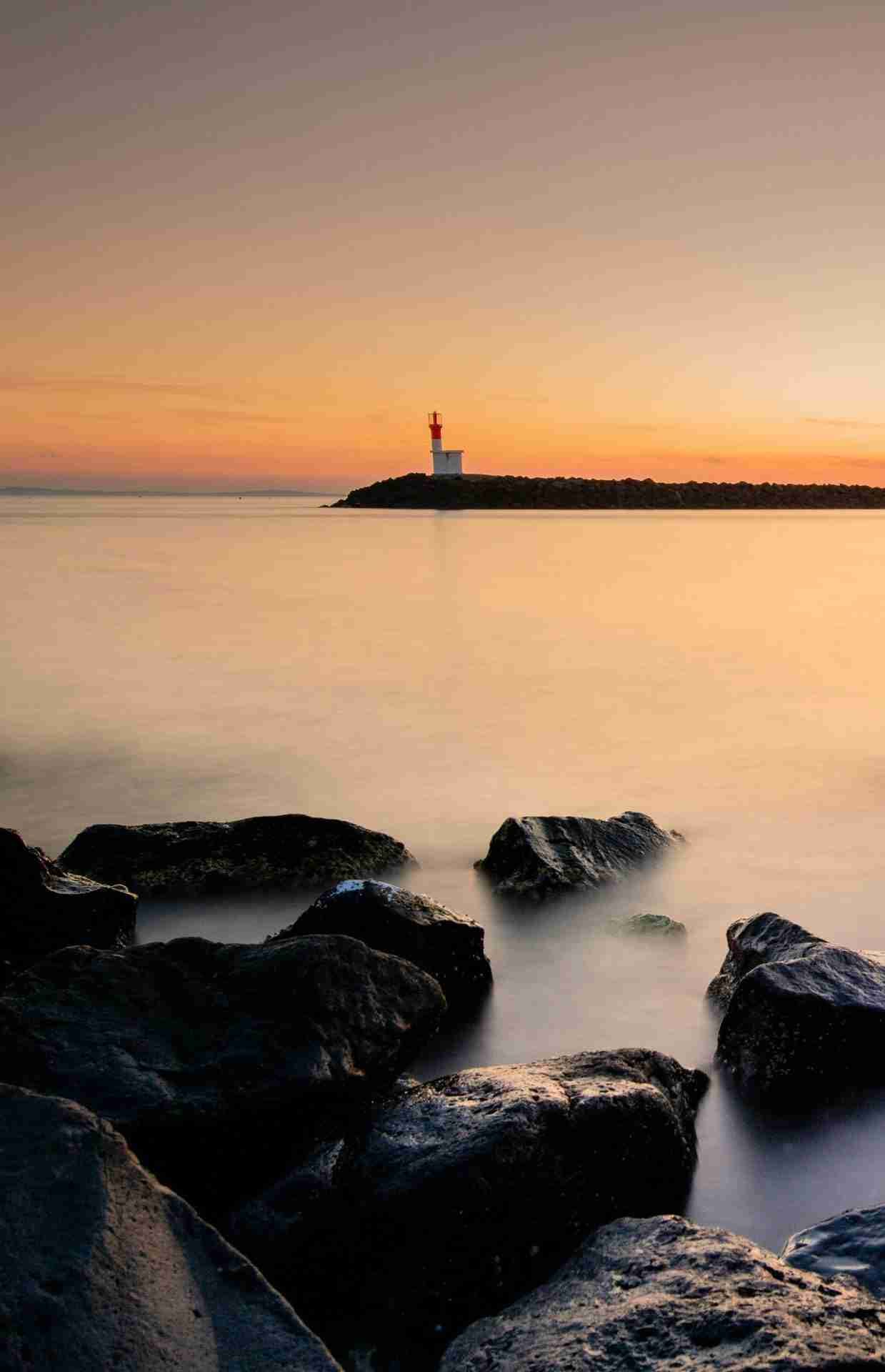
On the southern side, the jetty leads to a small white lighthouse that makes a perfect subject for framing and symmetry. This location is especially strong during golden hour and sunset, when the light softens and adds dimension to both the sea and the concrete structures. A telephoto lens can help compress the scene, highlighting the lighthouse against the changing colors of the sky. You can also experiment with reflections in tidal pools that form along the edge of the jetty. The walk out to the lighthouse is relatively flat, allowing for extended tripod setups without much hassle, and it is often less crowded in the evenings.
• Long Exposure Seascapes with ND Filters
The constant movement of the water makes Cap d'Agde's jetties perfect for long exposure photography. Using a neutral density filter and a sturdy tripod, you can blur the motion of the waves to create a soft, cloud-like surface that contrasts beautifully with the hard geometry of the rocks. Even in midday when the light is strong, a 10-stop ND filter can extend exposures long enough to simplify the scene and eliminate distractions. This technique works well from both jetties, and each side offers different angles depending on the direction of the light. It is a good idea to scout your spot in advance and wait for the right cloud movement to add interest to the sky.
• Storm Watching and Moody Seascapes
When a storm is moving in or the wind picks up, the jetties take on a completely different character. Waves crash hard against the rocks, and dark clouds build over the horizon. These conditions are excellent for creating dramatic images with a moodier tone. A fast shutter speed can freeze the power of the water as it breaks over the stones, or you can slow things down for a blur effect while keeping the structure sharp. Just be sure to bring rain protection for your gear, as spray and mist are constant companions on days like this.
• Night Photography and Light Trails from the Port
Cap d'Agde does not shut down after sunset, and the jetties remain accessible into the night. You can use long exposures to capture light trails from boats entering or exiting the harbor, especially on weekends when maritime traffic is more active. The lighthouse and marina lights also create interesting reflections on the water's surface. Bring a fast lens for low-light shooting and experiment with starbursts around the light sources. The relative darkness of the sea combined with the ambient glow from town makes it possible to balance artificial and natural light in creative ways.
Best Time to Visit
Cap d'Agde is photogenic in all seasons, but timing your visit well can make the difference between ordinary and truly rewarding shots. In spring, the light is clean and crisp, with skies that often shift between soft morning color and dramatic afternoon contrast. This is an excellent season for long exposure photography and sunrise shoots, as the lower sun angle gives longer windows of golden light. Spring also tends to be quieter, making it easier to set up without distractions or foot traffic.
Summer introduces longer daylight hours and more predictable light, especially for golden hour work. However, this is also peak tourist season, and both jetties can become crowded during the day. To avoid overexposed highlights and harsh shadows, it is best to shoot early in the morning or after sunset when the harbor lights reflect across the water and the temperature is more manageable. The sea tends to be calmer in the summer, which makes it easier to shoot reflections or achieve mirror-like surfaces in long exposures.
Autumn offers perhaps the most versatile conditions. The water remains warm, the skies are more active, and the jetty stones take on deeper textures after the long dry season. Wind can kick up more frequently, which adds motion to both water and cloudscapes. Late afternoon light in October and November is especially good for capturing warm tones on the south jetty and lighthouse.
Winter is for the dedicated. The wind can be intense, and access might be more limited depending on sea conditions, but this is when the jetties become truly dramatic. The waves grow stronger, and low sun angles throughout the day mean more shooting time in favorable light. Cold fronts often bring layered cloud cover and fast-moving storms, which offer exceptional contrast and detail for those shooting black-and-white or higher contrast scenes.
How to Get There
Cap d'Agde is located along France's southern coast and is easily reached by road from nearby cities such as Béziers, Montpellier, or Narbonne. The closest major airport is Béziers Cap d'Agde Airport, just 15 minutes by car. If you are arriving by train, the Agde station connects to major lines and is only a short taxi or bus ride from the port area. Once you reach the town, follow signs toward the Port de Plaisance or Plage Richelieu.
Parking is available near the marina with several lots offering access within a ten-minute walk to either jetty. The south jetty begins at the harbor's edge and features a more structured walkway that leads out to the lighthouse. This route is paved and suitable for tripods or rolling camera bags. The north jetty begins closer to the beach near the base of La Clape and features rougher terrain with more uneven stone, better suited for those with sturdy footwear and lighter setups.
Both jetties are free to access and open year-round, though lighting is limited in the early morning and after dark. There are no entrance fees or required permits. It is best to arrive early for sunrise or stay after sunset for twilight shots, and always plan ahead if you intend to photograph in changing weather conditions or during storm seasons.
Recommended Photography Gear
Photographing at Cap d'Agde's jetties requires a kit that can adapt to shifting light, wind, and water conditions. A full-frame DSLR or mirrorless camera with strong dynamic range will help retain detail in both sky and sea, especially during sunrise and sunset. Wide-angle lenses in the 16 to 35mm range are excellent for capturing the full scope of the jetties and the expansive Mediterranean horizon. A 70 to 200mm lens is also recommended for compressing distance, isolating boats near the lighthouse, or capturing offshore elements like Fort de Brescou.
A solid tripod is absolutely essential. The wind coming off the sea can be strong even on calm days, so choose a model with a hook for adding weight or a low center of gravity to minimize shake during long exposures. A complete set of neutral density filters, including 3-stop, 6-stop, and 10-stop, will allow you to work creatively throughout different times of day. Graduated ND filters are also helpful when dealing with bright skies and darker sea foregrounds, particularly during golden hour.
A weather-sealed camera body and lenses are advisable, but even then, a rain sleeve or plastic cover is worth carrying in case of unexpected sea spray or changing conditions. Lens wipes, microfiber cloths, and a blower are essential for keeping your gear clean between shots. A remote shutter release or intervalometer will help with precise long exposure timing, and if you are shooting at night, do not forget a headlamp with a red light mode to preserve your night vision while adjusting settings.
Rubber-soled waterproof footwear will make navigating the jetties safer and more comfortable, especially if you plan to walk out onto the rocks or shoot from lower angles near the waterline. Depending on the season, layers are important, as early mornings and evenings can be much colder than mid-day temperatures suggest. A small towel, spare batteries, and extra memory cards round out a kit that will let you stay out longer and shoot with confidence no matter the conditions.
Nearby Photography Locations
Just south of the jetties, this black sand beach is framed by volcanic cliffs that create a natural amphitheater around the water. The contrast between the dark rocks and the often turquoise sea makes for bold color combinations. You can shoot from above for sweeping views, or descend to the beach for close-up textures and low-angle compositions. Sunset is especially good here, when the sky reflects in the wet sand.
This small island fortress sits offshore and can be photographed from multiple points along the coast. It adds a strong architectural subject to wide seascapes and works well with telephoto compression from the jetties or marina. During golden hour, the light catches the old stone walls in a warm glow, and long exposures can blur the water around it for a moody result.
A dormant volcano behind Cap d'Agde, Mont Saint-Loup offers elevated views of the entire coastline. From its summit, you can photograph both sunrise over the sea and sunset toward the inland lakes. The surrounding terrain is lined with pine and low shrubs, and during the golden hour, the light across the slopes adds texture and depth.
Located just north of Cap d'Agde, this vast lagoon is known for its oyster beds and calm water, which makes it ideal for reflection shots. Wooden docks, fishing huts, and quiet shores create a peaceful setting for early morning or twilight photography. It is especially rewarding on still days when the water acts like a mirror.
• Old Town Agde and the Hérault River
This historic riverside town offers narrow streets, basalt stone buildings, and views along the Hérault River that change with the light. The cathedral and old bridges reflect beautifully in the river during calm weather, and street photography opportunities abound in the quiet back lanes. It is a worthwhile detour for adding variety to a coastal-focused shoot.
Cap d'Agde's jetties are not just structures built to protect the harbor. They are platforms for light, lines, and endless change. With strong compositions, shifting weather, and a coastline that offers more than first meets the eye, this location delivers far more than a quick stop. It is a place to return to with purpose, where patience and preparation can turn stone and sea into something lasting.
Comments
Loading comments…