
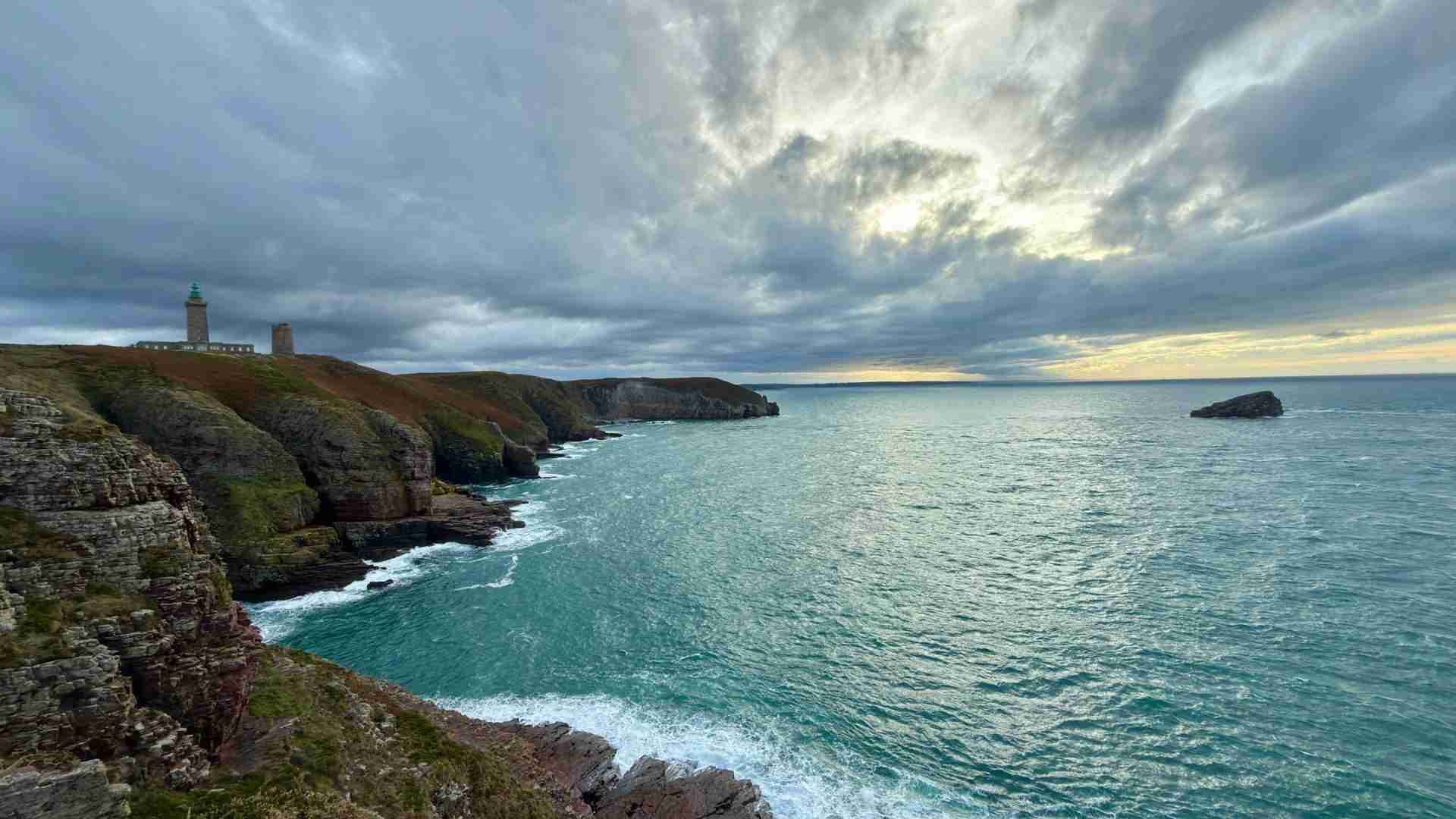
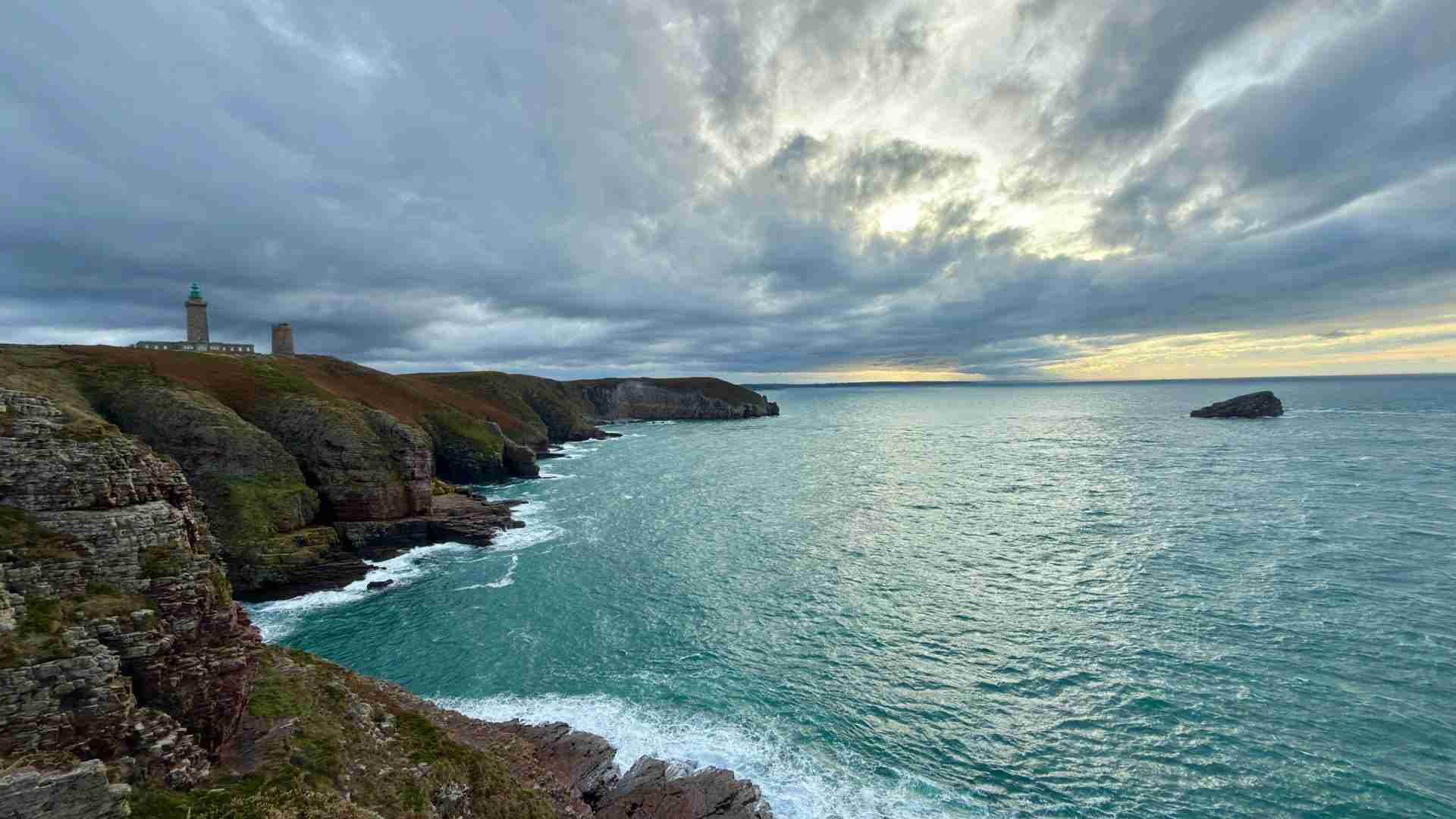
Cap Fréhel stretches out into the English Channel with steep cliffs, wide skies, and the historic lighthouse known as Phare du Cap Fréhel standing guard near its edge. Located in the Côtes-d'Armor region of Brittany, France, this wild headland is shaped by wind, salt, and shifting weather, offering photographers powerful compositions of sea and sky in constant motion. The cliffs rise dramatically from the Atlantic, covered in heath and coastal vegetation that changes color with the seasons. The lighthouse itself, built of sandstone and standing over thirty meters tall, serves as both subject and reference point in this exposed and elemental landscape. Whether shooting wide views of crashing waves or tight studies of light passing over the stone tower, Cap Fréhel invites patient, weather aware photography in a setting that feels both remote and expansive.
Best Photography Opportunities
• Clifftop Viewpoints
From the trail that runs along the clifftop west of the lighthouse, you get a clean angle with the structure framed by the open sea and low, rolling vegetation in the foreground. This view is strongest in early morning when light comes in at a low angle from the east and shapes the tower with soft contrast. Use a wide lens to include textured elements like stone outcrops or flowering heather, and look for birds circling overhead to add life to the frame. On windy days, clouds move quickly and create shifting shadows across the ground, adding variety to a static composition. This angle works well in all seasons but especially in spring when the land is more colorful.
• Ocean Views
Standing east of the lighthouse and shooting back toward the cliffs allows you to include both the headland and the tower set against the sea. This is a good afternoon location, as side light sculpts the coastline and brings out color in the stone. A midrange or telephoto lens lets you compress the lighthouse and cliff together, highlighting the height and shape of the drop-off. If waves are strong, you can time your shutter to catch white spray rising against the dark rocks. These frames show the full character of Cap Fréhel, where structure and wildness meet along a sharp edge.
• Wide Landscape Shots
As the path curves northward, it opens into a broad space with room to shoot wide environmental scenes where the lighthouse becomes a small but important part of the frame. Use this space to work with depth, layering flowers, paths, and sky into a frame that shows scale without needing dramatic conditions. Sunrise sessions here often feature low light across the plants and faint mist over the sea. A tripod and slow shutter help smooth the movement in the grass or balance brightness when clouds scatter the light unevenly. This is a place to work slowly and let the scene build on its own terms.
• Cap Fréhel Lighthouse Detail Work
The lighthouse itself, with its textured sandstone, arched windows, and ridged tower design, holds many subjects for close composition. On overcast days, its surface becomes more even and easier to expose for small studies. Focus on elements like the stairway, window frames, or the large lantern housing at the top. Use a short telephoto lens to isolate patterns in the stone or the interaction between the building and the sky. These images often pair well with wider landscape work, giving the full set of photographs more range and variation.
• Storm Light and Changing Weather over the Sea
Cap Fréhel is known for its rapid weather changes, and working with the light during shifting skies can lead to dramatic results. Watch the sea from the northern cliffs as squalls pass or light breaks through dark clouds. A polarizer helps control brightness and reflection on the water, and a longer lens lets you frame the tower against distant cloud formations. These conditions can happen year-round but are most frequent in late autumn and early spring. Be prepared to shoot quickly and move position often as the wind and visibility change.
Best Time to Visit
Cap Fréhel is open throughout the year, but each season brings a different mood and visual character. Spring is perhaps the most colorful time to visit, with wildflowers blooming across the cliffs and soft light from the low sun helping to shape both land and sea. Mornings tend to be calm and clear, while afternoons bring stronger wind and more dramatic skies. Summer offers longer daylight hours and more consistent weather, though the light can become harsh by midday and the area sees more foot traffic.
Autumn brings stronger waves and changeable light, ideal for those looking to photograph movement and atmosphere. Low clouds, fast moving skies, and golden side light from lower sun angles give the cliffs and lighthouse more depth. Winter can be stormy and cold, but these conditions often produce the most dramatic images, with isolated bursts of light, rough seas, and wind driven cloud. Blue hour sessions are productive year round, as the lighthouse lights activate automatically and can be photographed as a strong focal point in a dimming sky.
For all seasons, sunrise and sunset offer the best light for both the structure and the surrounding cliffs. Sunrise favors the eastern sea facing views, while sunset benefits compositions that look back inland or toward the soft light falling across the land. Always check weather forecasts, as fog and storms can roll in quickly and affect visibility and safety along the cliffside trails.
How to Get There
Cap Fréhel is located in the commune of Plévenon in Brittany, France. The nearest major town is Saint-Malo, about an hour's drive to the east. From Saint-Malo or Dinan, follow the D34 and then the D786 toward Plévenon. Signage is clear once you approach the peninsula. There is a designated parking area near the lighthouse, which provides easy walking access to the main viewpoints and trails. Parking is free during most of the year, but a small access fee may be charged during the high summer months or for lighthouse entry.
From the parking lot, it is a short and mostly flat walk to the lighthouse itself and to the various trails that follow the edge of the cliffs. These paths are well maintained but exposed, so be prepared for wind and weather even on clear days. Tripods and full camera bags are manageable here, as the distances are short and the terrain is not difficult. Sunrise sessions may require arriving in darkness, so a headlamp is useful for setting up before light arrives. Public transportation options are limited, so driving is the most practical option for most visitors.
Recommended Photography Gear
A varied but lightweight kit will serve you well at Cap Fréhel, where both sweeping views and tight architectural shots are possible within the same session. A wide angle lens in the 14 to 30 millimeter range is essential for capturing the scale of the cliffs and the full structure of the lighthouse in the same frame. This lens is especially effective when working with foreground textures like grasses or flowers to lead into the scene.
A 24 to 70 millimeter lens gives you flexibility for both general landscape framing and contextual detail shots. It is especially useful when shooting from the paths or positioning the lighthouse with a changing sky behind it. A 70 to 200 millimeter lens or similar telephoto range allows you to work from a distance and compress scenes, especially when clouds form layers over the sea or when isolating the lighthouse from surrounding cliffs.
A tripod is recommended for early morning and blue hour photography, as well as for long exposure work to smooth water or capture cloud movement. Graduated neutral density filters help control exposure when the sky is bright but the cliffs remain in shade. A circular polarizer is useful when the sun is high, to reduce glare from wet surfaces or enhance the color of the ocean. Be sure to pack weather protection for your gear and a cloth for cleaning glass, as wind-driven salt spray is common near the cliffs. Footwear should be sturdy, especially if you plan to explore beyond the main viewpoints or walk the coastal trails.
Nearby Photography Locations
, located just south of Cap Fréhel, is a stone castle perched on a rocky promontory above the sea. It offers excellent compositions from nearby cliffs or across the narrow strait, especially at sunrise when light hits the stone walls directly and reveals the shape of the headland.
, a quiet beach near the base of the cliffs, gives a low perspective on the rock formations and waves. At low tide, reflections and tide pools form natural foreground elements that work well with wide compositions during golden hour.
, a small fishing port to the east, offers colorful boats, layered docks, and early morning light that reflects off the water and buildings. This location pairs well with a visit to Cap Fréhel and provides strong human-scale contrast to the raw landscape.
, farther west near Cancale, is another dramatic headland with layered cliffs and a clear view out to sea. It is especially effective at sunset when clouds gather along the horizon and the low light highlights the contours of the coastline.
, a nearby beach resort area, offers broad sandy views and soft pastel color at sunrise. The dunes and shoreline are ideal for simple compositions and minimal scenes, especially when fog or haze rolls in from the water.
Cap Fréhel and the Phare du Cap Fréhel offer more than just a coastal viewpoint. They provide an open-air studio where light, structure, and sea are constantly shifting. The cliffs hold space, the tower holds focus, and the conditions never quite repeat themselves. It is a location that invites return visits, not for repetition, but to discover how light can shape the same scene in an entirely new way.
Comments
Loading comments…