
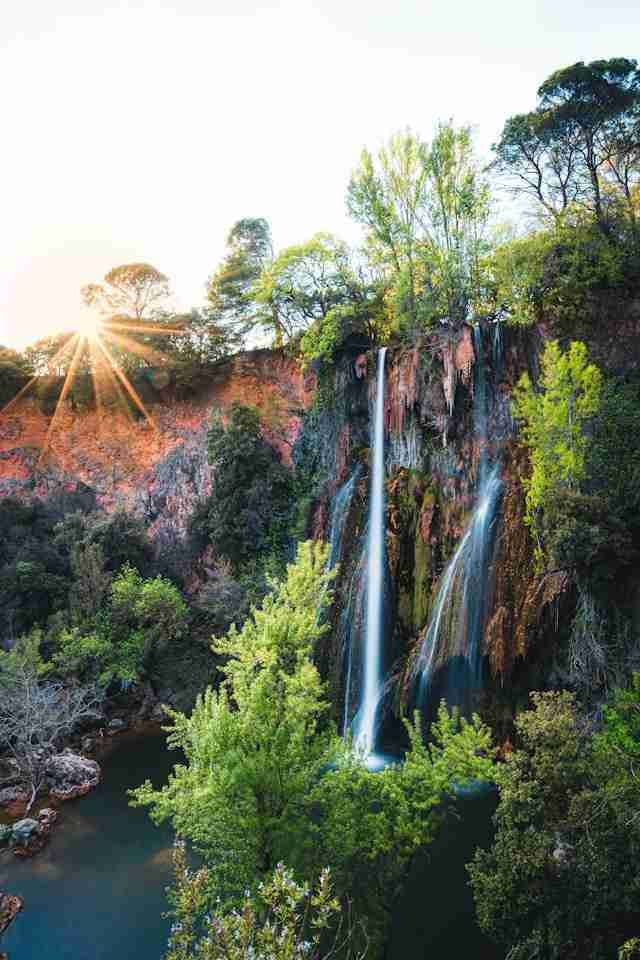
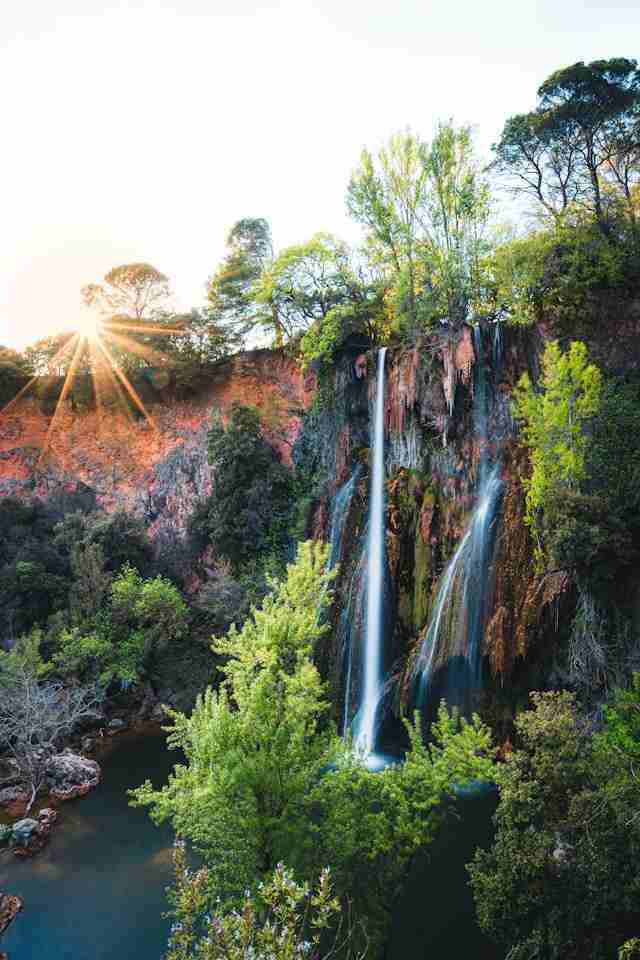
Tucked into a dense patch of forest near the village of Sillans-la-Cascade in Provence, Cascade de Sillans offers one of southern France's most photographable waterfalls. A tall, ribboning drop of turquoise water descends from the limestone cliffs into a vibrant pool, framed on all sides by rock, vine, and deep green foliage. The surrounding vegetation is lush but not chaotic, giving photographers the chance to work cleanly with leading lines, soft water motion, and diffused natural light. Though swimming is prohibited to protect the landscape, a well-maintained path leads to a designated overlook with an ideal composition angle. This spot is best for slow, deliberate shooting where light, exposure, and framing can be fine-tuned for a calm and layered final image.
Best Photography Opportunities
• Main Overlook of the Full Waterfall and Pool
From the official viewing platform, the waterfall is visible in its entirety, framed naturally by trees and cliff faces. The height of the cascade allows you to work with vertical compositions that follow the water from drop to pool, or wider frames that take in the full scene with context. A tripod and a neutral density filter are essential here, as long exposures smooth the flow and deepen color in both water and shadow. Early morning or late afternoon light creates the best balance between brightness and shadow detail. Avoid midday visits, when sunlight strikes the falls too directly and flattens texture.
• Framing with Vegetation in the Foreground
The trail and platform are surrounded by climbing vines, small branches, and large leaves that can be used creatively to frame the falls. Shooting through the foliage with a wide aperture adds depth and softness to the frame while drawing the eye into the main subject. This technique works best with a standard or short telephoto lens and is ideal for cloudy or overcast conditions, which reduce glare and harsh contrast. These compositions emphasize the feeling of discovery and seclusion within the forest.
• Detail Studies of the Cliff and Water Texture
Though the entire waterfall is often the primary subject, isolating sections of the limestone face or a portion of the water flow can yield strong secondary frames. Look for spots where moss clings to the rock, or where the water creates repeating lines or soft motion across narrow ledges. A 70–200mm lens allows you to zoom in from the overlook without losing sharpness. These shots are best under flat light, when subtle tone and shape become more visible without distraction from direct sun or specular highlights.
• Water Motion and Pool Color under Soft Light
On still days, the plunge pool beneath the falls takes on a strong turquoise hue, especially in the absence of wind or cloud shadow. Use a polarizing filter to cut reflection and bring out the color and clarity of the water. A long exposure, even just a second or two, adds softness to the water while maintaining texture in the ripples and surface details. The best color appears in the morning, particularly after recent rain, which refreshes the flow and filters debris from the surrounding trees.
• Trailside Compositions along the Walk to the Overlook
While the overlook is the main draw, the trail leading to it offers strong woodland compositions, including root systems, rock walls, and shaded creek beds. These scenes are ideal for environmental frames that introduce the surrounding terrain. Use a wide-angle lens to exaggerate foreground detail, and watch for side light cutting through tree trunks or catching on leaves. These shots are often overlooked but help complete a location set that includes more than just the falls themselves.
Best Time to Visit
Cascade de Sillans is best photographed between April and October, when the forest is in full growth and the water volume remains consistent. Spring brings fresh foliage, active flow from snowmelt, and filtered light through new leaves that softens the overall scene. Summer brings the brightest color to the pool, though crowds increase during midday. Early morning is ideal for avoiding both tourists and harsh sun, while late afternoon light sometimes filters through the canopy in rich gold tones.
Autumn offers a slight shift in color and texture, though flow may be reduced in dry years. Light remains low enough to work throughout the day, especially on overcast mornings. Winter is quiet and accessible, but the surrounding vegetation thins out and the falls may lose some of their visual presence if water levels drop. Regardless of season, avoid visiting between 11am and 3pm when the sun reaches directly into the gorge, creating uneven light and deep shadow contrast. The waterfall faces northeast, so early visits benefit from indirect light and even exposure across the scene.
How to Get There
Cascade de Sillans is located near the village of Sillans-la-Cascade in the Var department of southern France. From Draguignan or Brignoles, it's a short drive through countryside roads that pass through vineyards and small Provencal towns. Once in Sillans, follow signs for "Cascade" to reach the designated parking area at the edge of the village. From there, a marked walking path leads to the official viewing platform, a distance of about 800 meters along a maintained dirt trail.
There is no fee to access the overlook, though a small parking charge may apply in peak season. The final portion of the trail includes a slight incline and some stone steps but is manageable with gear and a tripod. Swimming or descending to the base of the falls is prohibited to protect the fragile environment. Security patrols and signage enforce this, so all photography should be done from the overlook or trail. The area is open year-round, but sunrise and sunset access may require a flashlight and early arrival for ideal positioning. Drone use is not permitted in the protected zone surrounding the falls.
Recommended Photography Gear
To work effectively at Cascade de Sillans, bring a stable but portable kit suited for long exposures, fine detail, and layered forest composition. A wide-angle lens between 16 and 35 millimeters is essential for capturing the entire falls from the platform, especially in vertical orientation. A 24 to 70 millimeter zoom allows for tighter framing of water features, cliff faces, and foreground elements. A short telephoto lens is useful for pulling detail from the rock face or isolating water flow patterns within the larger scene.
A sturdy tripod is critical for long exposure work, especially on the narrow platform where footing may be uneven. A 6-stop or 10-stop neutral density filter allows for soft water motion even in bright conditions. A circular polarizer helps manage glare on wet leaves and brings out color in the pool. A lens cloth or blower is helpful to remove mist or forest dust. Waterproof shoes or boots are useful for the walk in damp seasons. A small daypack with room for a tripod strap and weather cover will keep your gear secure during the short hike.
Nearby Photography Locations
Often called Europe's Grand Canyon, this dramatic limestone gorge offers high cliffs, turquoise river water, and endless opportunities for wide landscape compositions. Several road-accessible overlooks provide strong vantage points for early morning or golden hour light. A drone is particularly effective here if used from legal takeoff points.
This nearby hill town offers traditional Provencal architecture, narrow stone streets, and colorful market scenes. Best shot in soft morning light before the streets fill, the village provides strong subjects for both architectural and detail work.
• Château d'Entrecasteaux
A short drive west, this historic castle and its surrounding gardens are photogenic in both broad and intimate frames. Spring and summer bring lush growth around the stone walls and manicured paths. It's ideal for formal structure shots and shadow-play compositions.
Located at the mouth of the Verdon Gorge, this large artificial lake features clear water, small inlets, and distant mountains. Early morning calm allows for mirrored reflections, and a wide-angle lens captures the full spread of the landscape. Cloudy or stormy weather adds texture to the otherwise minimal shoreline.
Known for its network of natural springs and fountains, Barjols offers a slower pace and excellent detail compositions. Flowing water, old stone basins, and quiet courtyards provide contrast to the natural drama of Cascade de Sillans. These subjects work best under soft or filtered light.
Cascade de Sillans is the kind of location where careful timing and simplicity lead to strong results. The scene doesn't require heavy editing or dramatic interpretation. It holds together because of its shape, light, and natural balance. For landscape photographers who prefer to work with texture, quiet motion, and patient framing, this forest waterfall remains one of the most satisfying subjects in Provence.
Comments
Loading comments…