
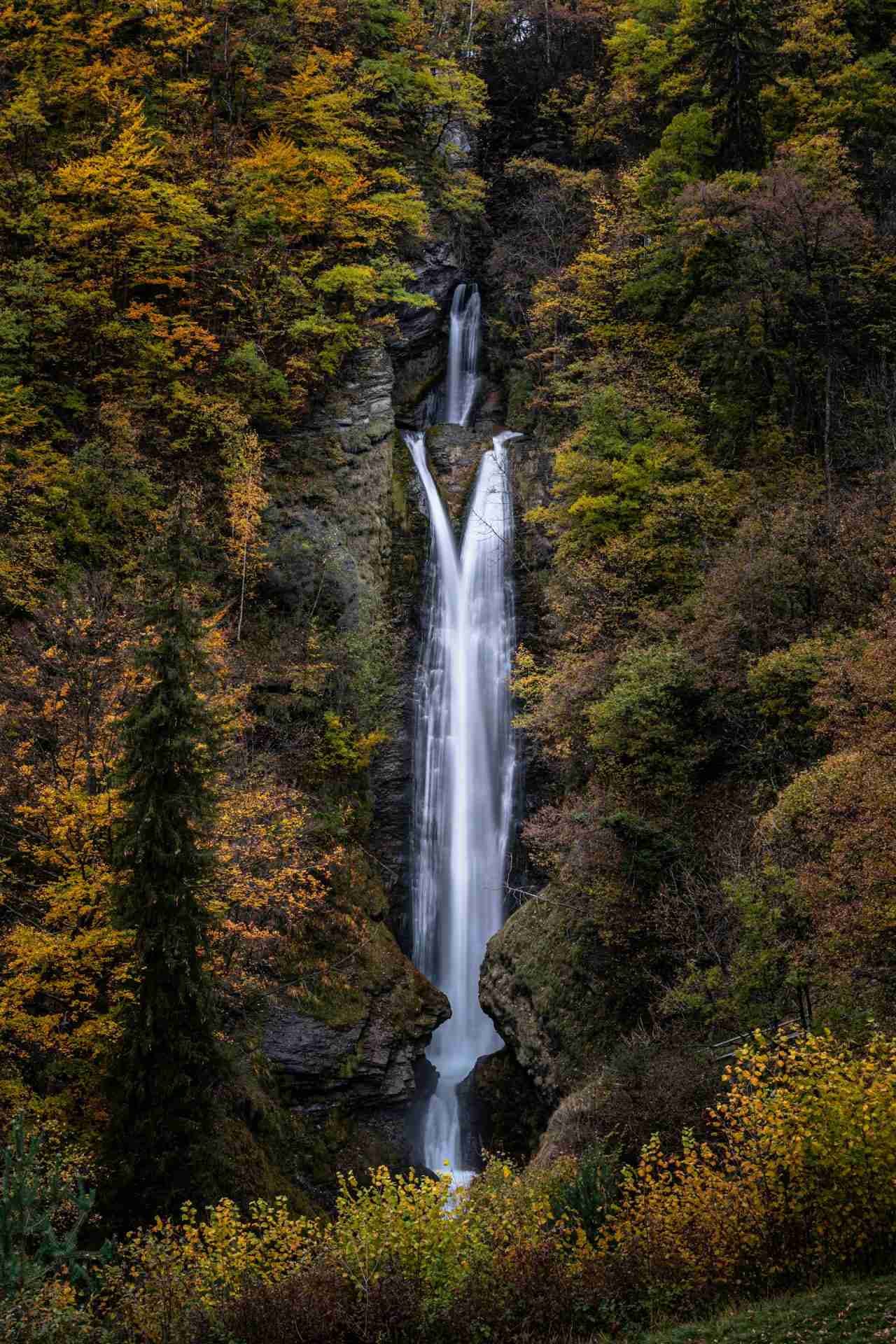
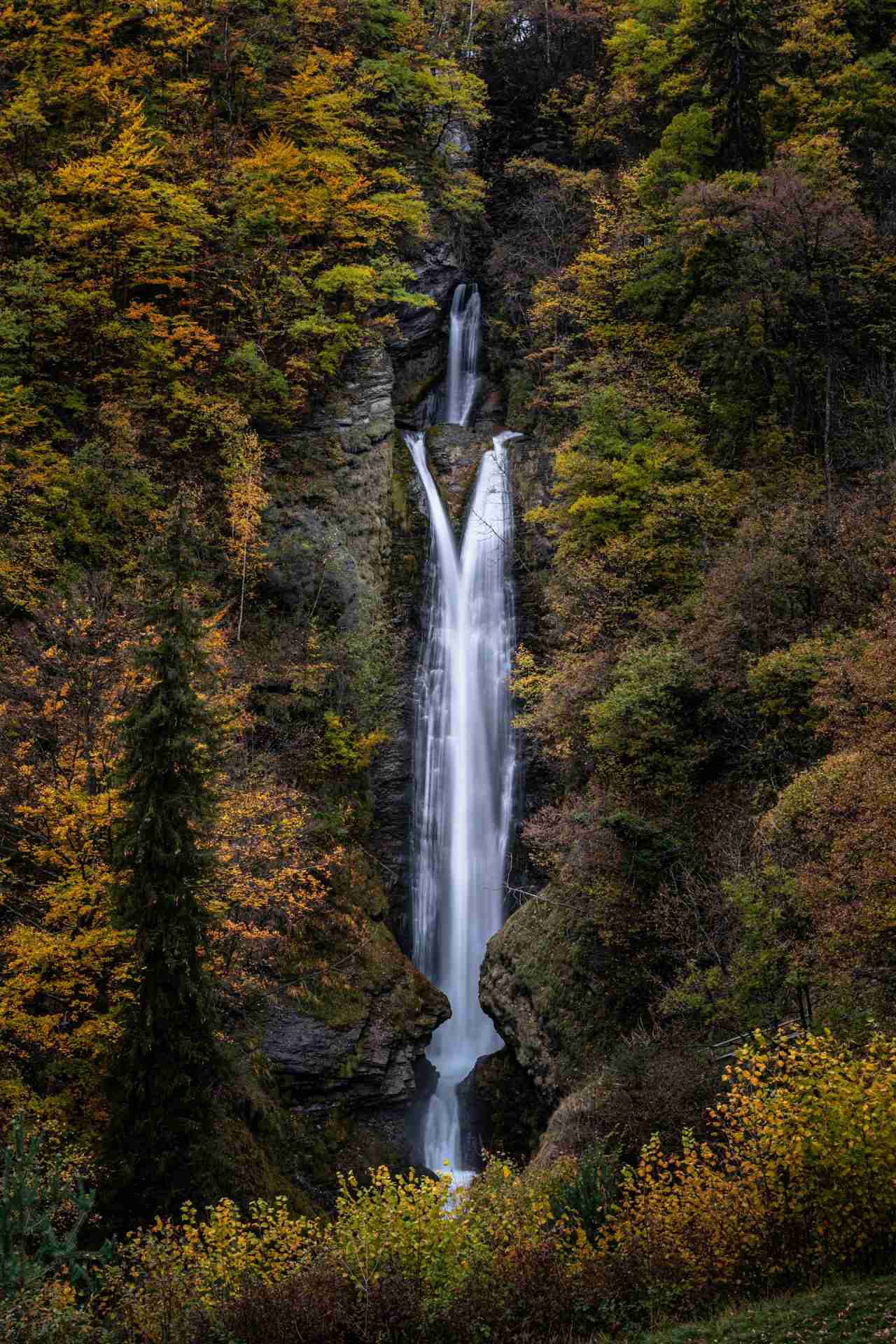
Cascade du Cœur is a striking waterfall tucked into the forested slopes above Passy in the French Alps. Fed by mountain runoff, the cascade plunges down a steep rock face in a narrow but powerful stream before continuing into the valley below. Its name, meaning Heart Waterfall, reflects the shape the falling water can resemble under certain flow conditions. Unlike larger, heavily visited alpine waterfalls, this one feels relatively quiet and integrated into the landscape. The surrounding terrain is rugged but accessible, offering layered views that combine cliff, forest, and distant valley. For photographers, the appeal lies in texture, movement, and the contrast between white water and dark stone.
Best Photography Opportunities
• Full Height From the Main Viewpoint
The most compelling images come from positioning yourself where the entire waterfall is visible from top to base. This angle emphasizes the vertical drop and reveals how the water interacts with the rock face as it descends. A moderate focal length keeps proportions natural while allowing the surrounding forest to frame the cascade. Paying attention to water flow is important, as heavier runoff after rain increases volume and impact. Even light works well here, preserving detail in both highlights and shadowed rock.
• Lower Section Detail With Long Exposure
Moving closer to the base allows for tighter compositions focused on the lower portion of the falls. Using a tripod and slower shutter speeds softens the water and enhances the sense of movement. Careful framing prevents clutter from nearby vegetation. This perspective isolates texture in wet rock and flowing streams, creating more intimate images. Overcast conditions help maintain balanced exposure across bright water and darker stone.
• Foreground Rock Framing
Including rocks or fallen branches in the foreground adds depth and visual layering. A slightly lower shooting angle strengthens the transition from foreground texture to the waterfall beyond. Adjusting your position even slightly changes how the cascade aligns within the frame. These compositions feel more immersive than straightforward documentary shots. They reward careful placement rather than wide sweeping views.
• Seasonal Changes With Snow or Autumn Color
In autumn, surrounding foliage introduces warm tones that contrast with the white water. During colder months, snow or frost can frame the cascade, simplifying the scene and emphasizing graphic contrast. Each season changes how the waterfall sits within its environment. Overcast skies often enhance these seasonal colors without harsh shadow. This location benefits from revisits at different times of year.
• Distant Valley Context View
From certain positions along the slope, the waterfall can be framed with glimpses of the Arve Valley below. This perspective shows how the cascade fits into the broader alpine setting. Including a small portion of sky or distant peaks strengthens the environmental narrative. A slightly longer focal length helps compress layers into a cohesive composition. These views provide context beyond the immediate rock face.
Best Time to Visit
Overcast conditions are often the most forgiving for photographing Cascade du Cœur. The waterfall sits against dark rock and shaded vegetation, so bright midday sun can create harsh highlights and deep shadow. Cloud cover softens contrast and helps maintain detail in the water's surface. Early morning is also a strong option, particularly if you want quieter conditions and minimal disturbance from passing vehicles or visitors.
Spring and early summer typically offer stronger water flow due to snowmelt and seasonal rain. After heavy rainfall, the cascade becomes more powerful and visually dramatic, though footing may be slick. Autumn provides added color in the surrounding trees, which can strengthen environmental compositions. Winter can introduce frost or light snow on the slope, creating graphic contrast, but conditions may be damp or icy near the viewing area. Checking recent weather patterns before visiting will give you a better idea of how full the cascade will appear.
How to Get There
Cascade du Cœur is located above Passy near Route des Soudans and is reached primarily by car rather than a long hike. You can drive up through the residential area toward the signed waterfall access and park in small roadside spaces nearby. From there, a short footpath leads to the viewing area. The walk is brief, but the ground can be uneven and damp, especially after rain, so stable footwear is still important.
There is no entrance fee to access the waterfall from the public path. Because the cascade sits close to private homes and local roads, be mindful of parking regulations and respectful of the surrounding neighborhood. The convenience of access makes this an easy stop while exploring the Passy area, but it is still worth taking the time to explore slight variations in angle and position.
Recommended Photography Gear
A standard zoom lens covers most compositional needs here, allowing you to shift between full height views and tighter sections of the cascade. A short telephoto can help isolate specific parts of the falling water or compress the forested slope behind it. A tripod is highly recommended if you want to experiment with longer exposures.
A polarizer is useful for reducing glare on wet rock and enhancing green tones in the surrounding vegetation. Neutral density filters can help achieve slower shutter speeds if light levels are higher. Because access is short and simple, you do not need an extensive kit, but weather protection for your camera is wise due to mist and spray. Keep your setup streamlined so you can adjust position easily along the small viewing area.
Nearby Photography Locations
• Lac Vert
This small alpine lake is known for its calm reflections of surrounding forest and mountain peaks. It offers a completely different mood from the vertical energy of the waterfall, making it a strong complementary stop.
The plateau provides open meadows and wider views across the Arve Valley. It expands your compositions beyond forest and rock into broader landscape scenes.
• Chamonix
A short drive away, Chamonix places you beneath the Mont Blanc massif. It introduces dramatic high alpine terrain that contrasts with the more contained scale of Cascade du Cœur.
Accessible by cable car, this peak offers expansive glacier and mountain views. It provides a high altitude perspective to balance valley level subjects.
This nearby village offers forest trails and mountain viewpoints with varied elevation. It adds additional landscape variety within the same region.
Cascade du Cœur may be easy to reach, but it benefits from careful observation and thoughtful framing. By working deliberately with light, flow conditions, and the surrounding forest, you can create images that feel intentional and grounded rather than simply documenting a roadside waterfall.
Comments
Loading comments…