
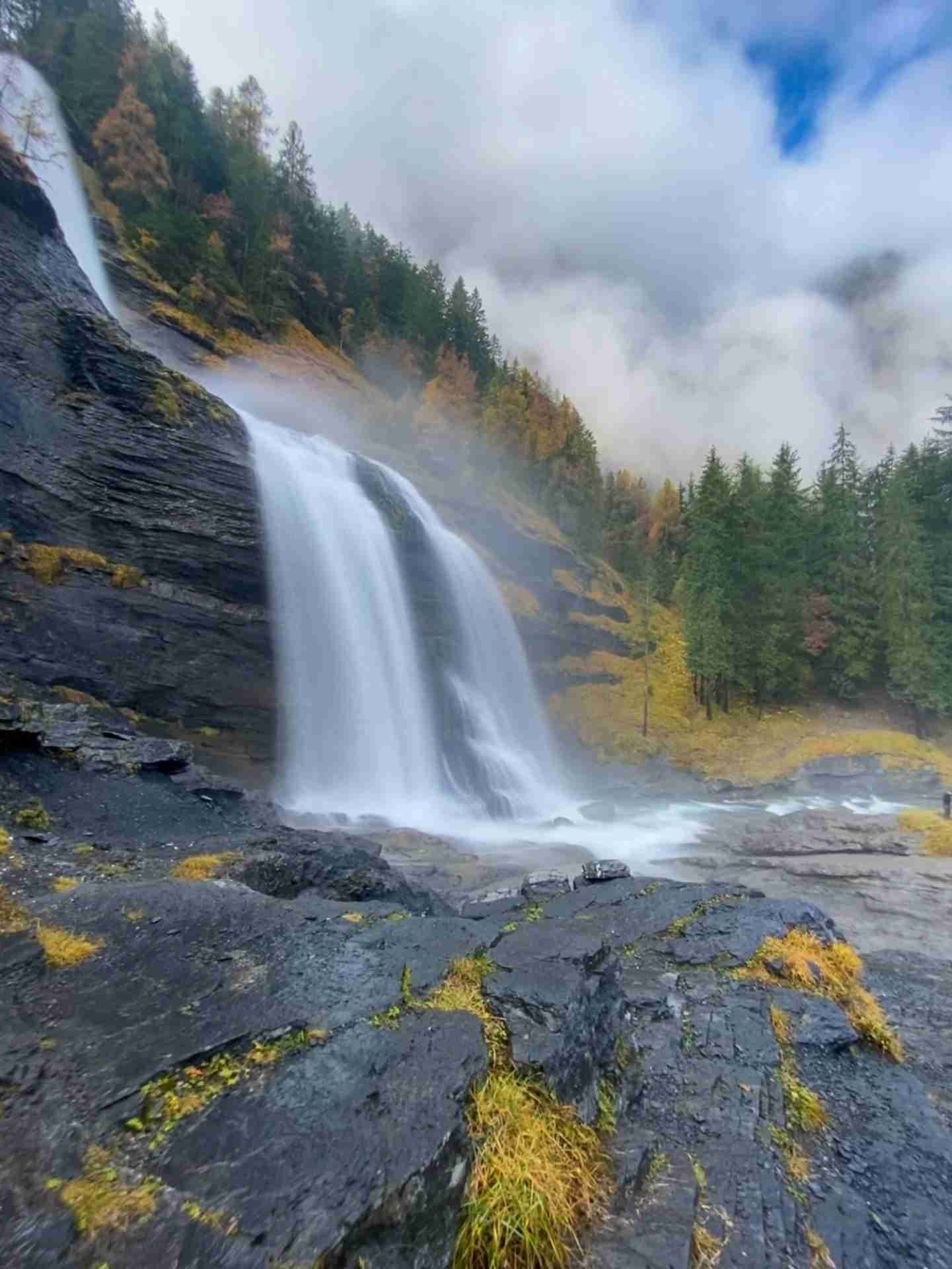
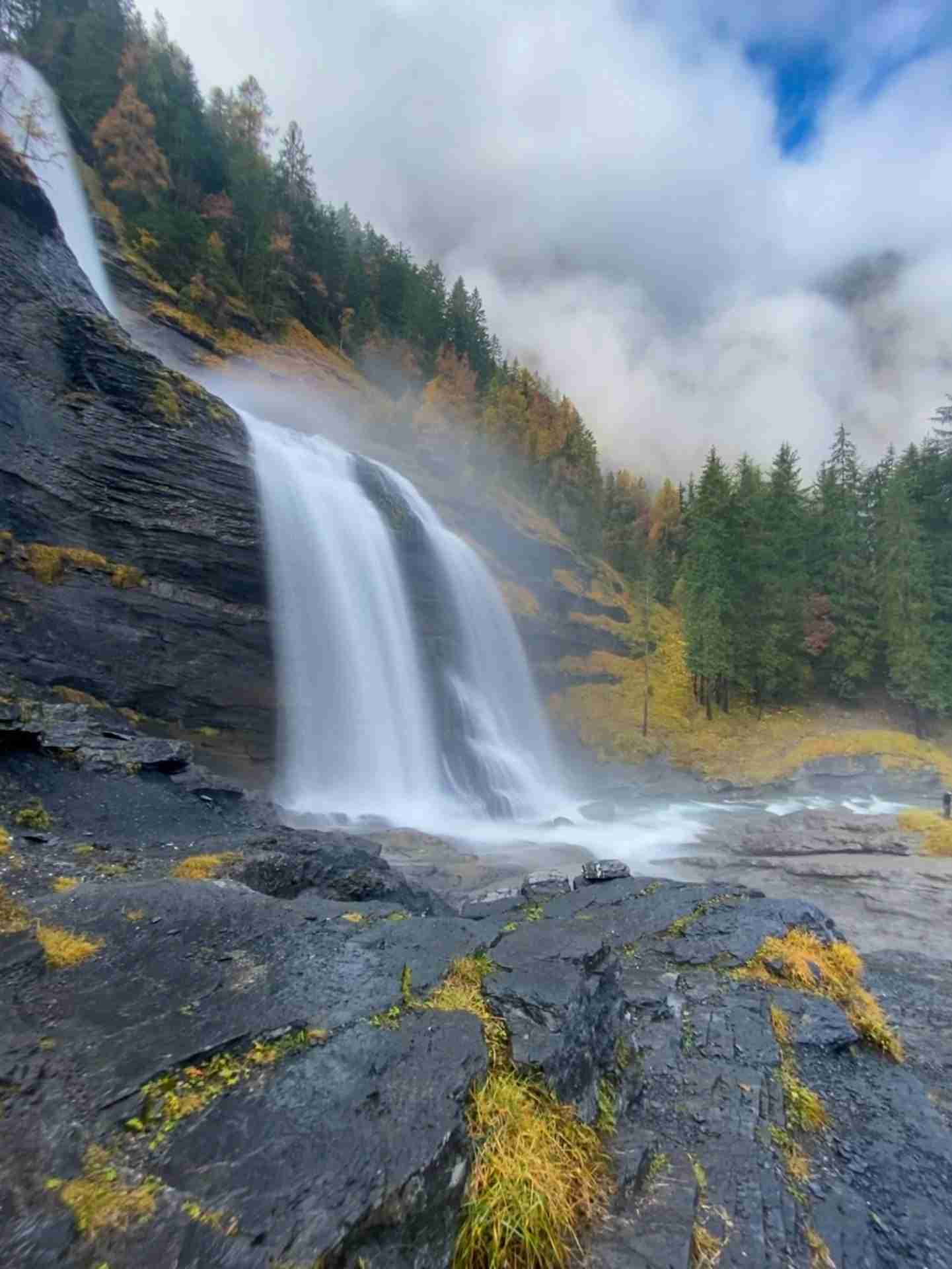
Tucked deep within the Giffre Valley near the alpine village of Sixt-Fer-à-Cheval in Haute-Savoie, Cascade du Rouget is one of the most iconic waterfalls in the French Alps. Often referred to as La Reine des Alpes (The Queen of the Alps), this two-tiered cascade plunges more than 80 meters down a sheer rock face, framed by dense forest and rugged cliffs. With easy access and a dramatic natural setting, the waterfall offers endless photographic potential—from long-exposure motion studies to atmospheric landscapes with moody alpine light. Its accessibility combined with its scale makes it a must-visit location for landscape photographers traveling through the Auvergne-Rhône-Alpes region.
Best Photography Opportunities
• Full Waterfall View from the Base
: The main viewing area near the foot of the falls provides a powerful frontal composition. From this vantage point, you can capture both tiers of the cascade framed by forest and rock, especially effective in early morning when the mist rises from the basin. Use a wide-angle lens and long exposure to soften the water into silky ribbons, emphasizing the contrast between motion and stone. Adjust your angle slightly to include foreground rocks or wildflowers for added depth and scale.
• Close-Up Textures and Water Flow
: Closer to the base of the falls, the water churns over boulders and carves rivulets into mossy stones—ideal for more intimate compositions. A mid-range zoom lens lets you isolate sections of the cascade or focus on the intersection of rushing water and textured rock. Overcast light or soft golden hour tones help preserve highlights while enhancing the tonal detail in the water and surrounding vegetation.
• Moody Forest Backdrop and Rising Mist
: Early in the day or after rain, mist often gathers in the dense spruce and beech forest that surrounds the cascade. This fog can add depth and a mystical quality to your frame, especially when backlit. Shooting with a longer lens from the trail above or at a distance allows you to compress the layers of forest and waterfall for a more painterly, atmospheric result.
• Viewpoint from Above the Upper Fall
: A short trail climbs above the waterfall, offering a downward perspective of the cascade and the valley beyond. This angle shows the water's descent from a new perspective and works particularly well during autumn when the forest below turns to gold. Consider including a figure for scale or framing the shot with overhanging branches to create a natural vignette.
• Seasonal Ice and Winter Flow
: In winter, Cascade du Rouget transforms into an icy cathedral. Portions of the waterfall freeze, forming sculptural icicles, while flow continues through narrowed channels—perfect for abstract or monochrome photography. Use a tripod and slower shutter speeds to contrast motion and frozen form. Be cautious of icy paths and slippery rock surfaces, but if safe, this is one of the most dramatic seasonal versions of the falls to capture.
Best Time to Visit
Cascade du Rouget is beautiful year-round, but each season offers a distinct photographic mood. Late spring and early summer bring peak flow from snowmelt, creating thunderous water and lush green surroundings. This is ideal for capturing the full power of the falls and for wide, dynamic compositions filled with movement.
Autumn is equally stunning, as the forest blazes with color and misty conditions increase. The combination of golden leaves, dark wet stone, and soft light makes for evocative landscape work. Early mornings are particularly rewarding, offering low sun angles and fewer visitors.
Winter brings a different kind of beauty, with frozen cascades and icy textures—ideal for moody, high-contrast images, though access can be weather-dependent. Cloudy days help maintain balanced exposure between water and snow, while overcast light makes textures stand out.
For long-exposure photography, arrive in the early morning or late afternoon when the sun is lower in the sky and shadows lengthen across the valley. Neutral density filters and a sturdy tripod are essential, especially if you're working with shutter speeds of one second or more.
How to Get There
Cascade du Rouget is located about 6 kilometers southeast of the village of Sixt-Fer-à-Cheval, in the Haute-Savoie region of France. From the village, follow Route de Salvagny along the Giffre River, then turn onto Route du Fer-à-Cheval, which leads to a dedicated car park below the falls. The drive takes around 10–15 minutes from the village center.
In summer, the road is usually open all the way to the parking area, and from there it's just a short 2-minute walk to the main viewpoint. During winter or early spring, however, the final stretch may be closed to vehicles due to snow or ice, requiring a longer hike from the lower road.
There are no entrance fees, and the path is well-marked and suitable for most fitness levels. Sturdy shoes are recommended, especially if you plan to explore around the rocks or climb the trail to the upper section. Public toilets and a picnic area are available near the parking lot, but services are minimal—plan ahead if you need supplies or snacks.
Exploring the Surrounding Area
The area surrounding Cascade du Rouget offers several additional alpine scenes for photographers willing to explore. The Giffre Valley is laced with hiking trails, forest paths, and smaller waterfalls, many of which are accessible from the nearby Cirque du Fer-à-Cheval nature reserve. Just a few kilometers farther, you'll find sweeping mountain views, glacial streams, and towering cliffs that rise vertically from the valley floor—excellent subjects for wide-angle landscape work or drone photography.
The nearby village of Sixt-Fer-à-Cheval is also highly photogenic, with traditional Savoyard chalets, stone bridges, and a peaceful riverside setting. Foggy mornings often add mood to the valley floor, and the stone church and surrounding alpine barns make for charming subjects in both color and monochrome.
Nearby Photography Locations
: A massive glacial amphitheater surrounded by cliffs and seasonal waterfalls. It's one of the most iconic landscapes in the French Alps, ideal for panoramic compositions and moody weather scenes.
: Located upstream from Cascade du Rouget, these twin waterfalls are accessible via a forest trail and offer quieter, equally dramatic compositions framed by steep gorge walls.
: A serene alpine lake accessible by trail from the nearby ski areas. The still water reflects the surrounding peaks, making it a favorite for mirror-like compositions and sunrise or sunset sessions.
: A high-altitude plateau with views of Mont Blanc, alpine flora, and broad mountain meadows. Perfect for wide landscapes with cloud drama and layered horizon lines.
• Samoëns and the Col de Joux Plane
: West of Sixt, these high roads and mountain passes offer sweeping overlooks, winding paths, and dramatic alpine lighting—especially in the hours just after sunrise or before dusk.
Cascade du Rouget is more than just a waterfall—it's a place where time, water, and stone meet in perfect harmony. For photographers seeking a subject that combines accessible drama with alpine serenity, few locations in the French Alps offer such variety in such a compact, inspiring setting. Whether bathed in mist or frozen in silence, the Queen of the Alps never disappoints.
Comments
Loading comments…