
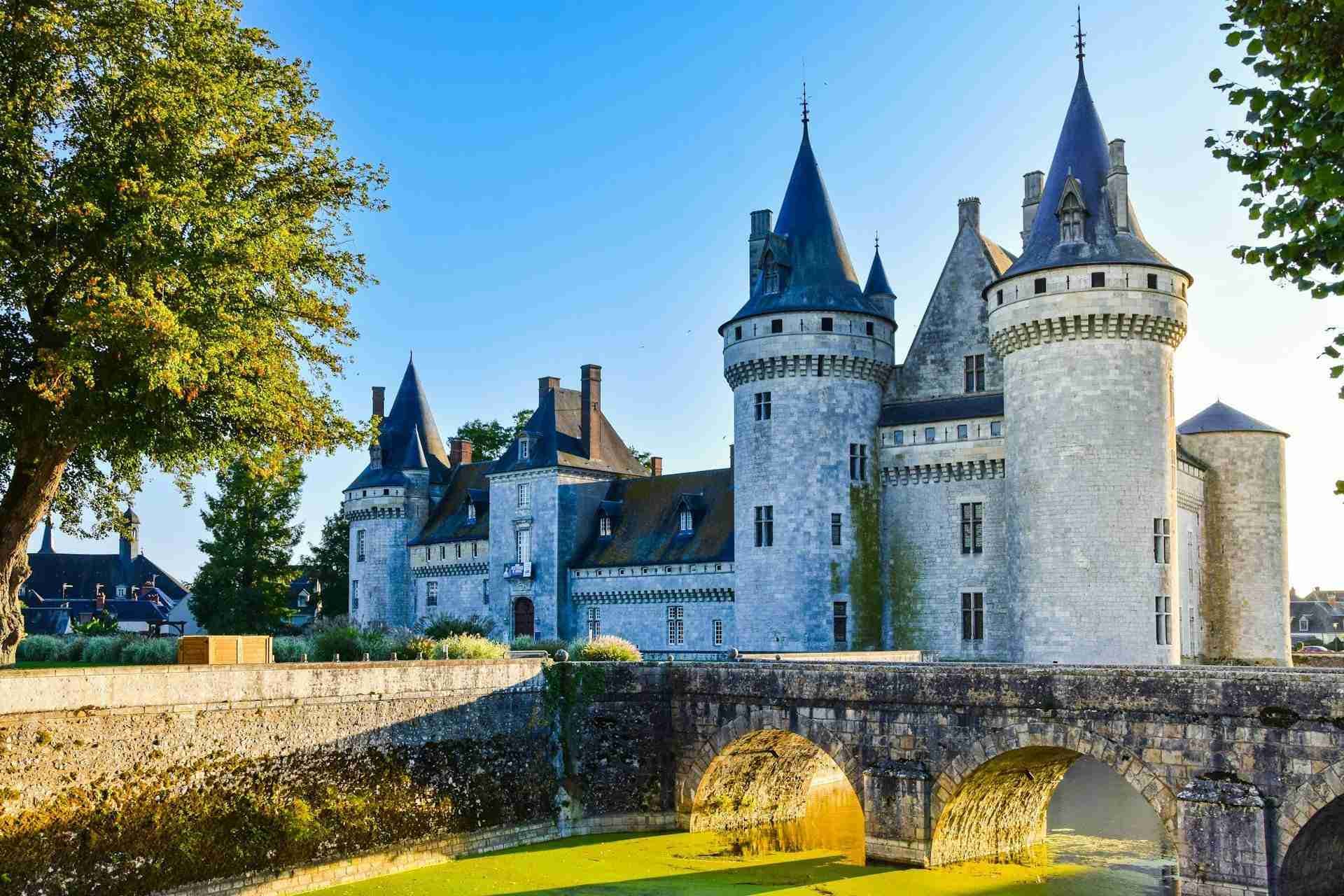
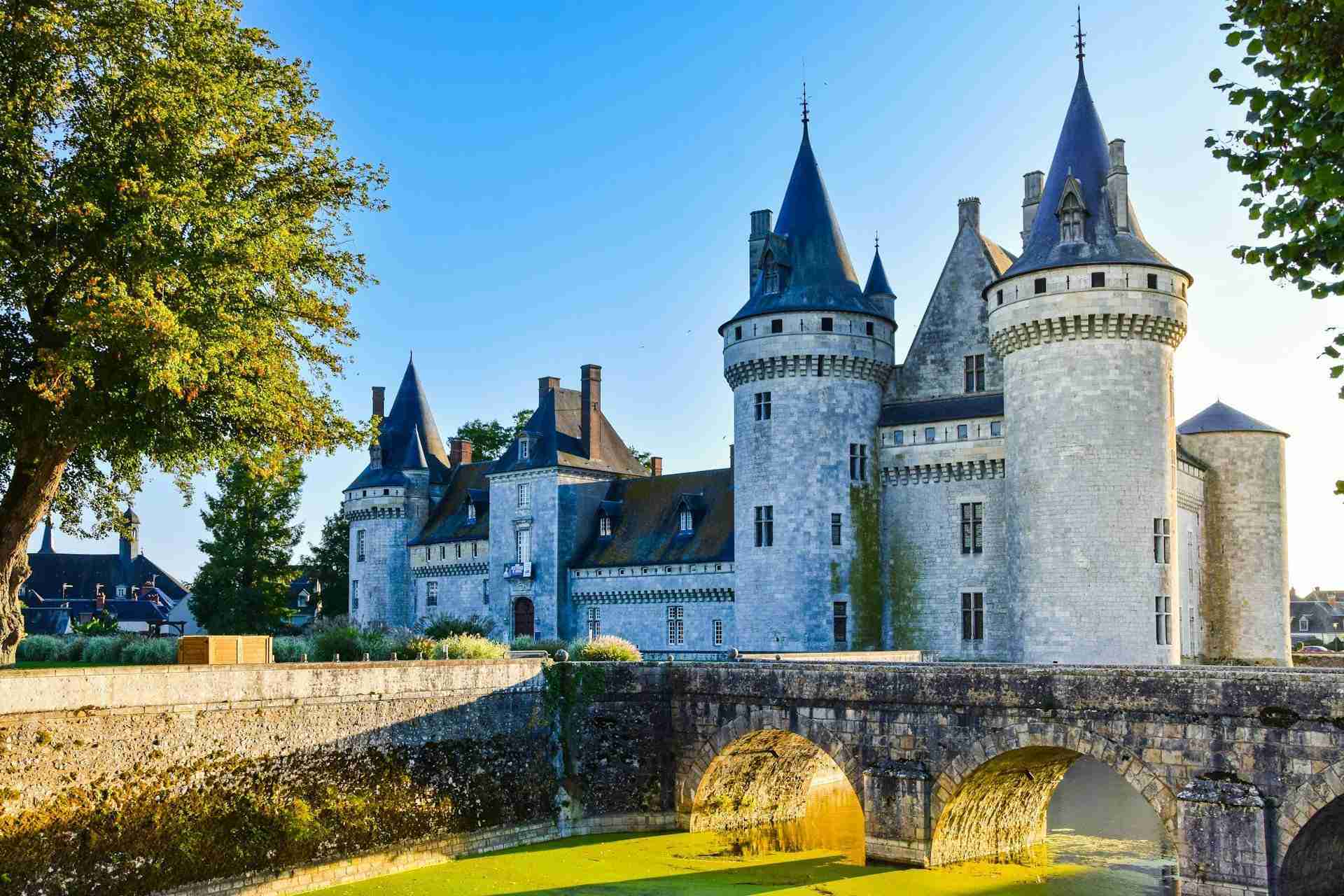
Rising from the waters of the River Loire like a vision from a medieval manuscript, the Château de Sully-sur-Loire is one of France's most photogenic moated castles. Located at the eastern gateway to the Loire Valley, this imposing fortress blends feudal military architecture with Renaissance elegance, offering a wealth of visual material for photographers interested in symmetry, reflection, and architectural evolution. Its round towers, stone bridge, and calm moat create strong compositional elements at any time of day, while the surrounding parkland and riverside walks provide opportunities for context-rich environmental shots. Whether photographing its stern medieval silhouette or softening the scene with golden-hour light, Sully-sur-Loire invites a deliberate, contemplative approach to castle photography.
Best Photography Opportunities
• Moat Reflections from the Outer Park
One of the most iconic perspectives is from the public park just outside the castle, where the full château is mirrored in the still waters of its moat. Early morning or sunset yields the best reflections, with low light enhancing the contrast between the stone towers and the tranquil water surface. A wide-angle lens allows you to include willow trees or grasses in the foreground to frame the composition, while a telephoto lens compresses the towers and emphasizes symmetry. Long exposures with ND filters can smooth ripples and intensify color saturation.
• Elevated Side Views from the Stone Bridge
Crossing the bridge toward the main entrance gives photographers a slightly elevated perspective of the château's southern façade, where defensive elements such as arrow slits and rounded turrets come into clear view. Side lighting near sunset casts shadows that accentuate the curvature of the towers and textures in the stonework. Shoot wide to include the bridge's lines as a leading element, or crop tight for strong geometric symmetry and window alignment.
• Interior Courtyard and Spiral Tower Details
Inside the castle walls, the central courtyard reveals the transition from fortress to residence, with Renaissance windows, arcades, and carved stone details. Look for the helical staircases and subtle decorative elements that soften the austere exterior. These interior angles benefit from diffuse midday light that filters gently through the open courtyard. A standard zoom (24–70mm) is ideal here, allowing flexibility in tight spaces. Tripods are not permitted inside, so use fast lenses and higher ISO settings to maintain clarity in lower light.
• Evening Blue Hour and Illumination Shots
After dusk, the château is gently lit, and the moat takes on a deep, inky color that enhances the castle's reflected outline. From the park side or bridge, use a tripod and long exposure to capture the subtle play of artificial light on the turrets and towers. Include some ambient foreground elements—a tree limb, a path, or stone wall—to frame the composition and give scale. Blue hour is brief but especially dramatic at Sully, where the symmetry and calm setting allow for cinematic night scenes.
• Parkland and Loire Riverbank Perspectives
Beyond the immediate moat, photographers can step back and incorporate the surrounding park and Loire River into wide compositions. The castle can be seen from grassy knolls and walking trails that create layered views with the river, trees, and sky. These more environmental images work well in all seasons: fresh green in spring, golden tones in autumn, and snow-laced minimalism in winter. Use a polarizer to cut glare on the water and enhance the separation between clouds and the château's pale stone.
Best Time to Visit
The château offers strong photographic potential throughout the year, but spring and autumn are particularly favorable. In spring, flowering trees along the moat and park provide color contrast and soft backgrounds, while fresh green reflections enhance the mirrored views. In autumn, golden leaves on the water and warm afternoon light add richness to the stone textures.
For light, the best times are sunrise—especially for calm water reflections—and sunset, when warm side light brushes the façades and softens the silhouette. Blue hour in the evening, when castle lights switch on, is brief but highly rewarding. Midday light can be harsh but is useful for courtyard and interior work, where shadows are minimal.
Try to avoid peak tourist hours (midday and early afternoon, especially in summer), when foot traffic may limit access to clean shots. Early mornings often provide quiet solitude and optimal lighting without interruptions.
How to Get There
The Château de Sully-sur-Loire is located in the Loiret department in north-central France. It sits at the eastern end of the Loire Valley and is easily accessible by car from Orléans (approximately 45 minutes) or Paris (about 2 hours).
From the town of Sully-sur-Loire, the castle is within easy walking distance of public parking areas. The grounds are open daily, with access to the park and perimeter views free of charge. Entry to the interior is ticketed and includes guided or self-paced tours of the living quarters, towers, and chapel.
The outer parkland, moat perimeter, and bridge remain accessible outside of operating hours, making early morning and evening photography possible even if the interior is closed.
Recommended Gear and Shooting Tips
Bring a wide-angle lens (16–35mm) for full-castle compositions and reflections, especially when shooting from the park or moat edge. A standard zoom (24–70mm) is perfect for interior details, architectural features, and balanced façade compositions. A telephoto (70–200mm) allows you to isolate architectural elements such as turret tops, window rows, or detail shots of sculptural stonework.
Use a sturdy tripod for blue hour, golden hour, or long exposure reflection work. An ND filter will help extend exposure time during the day, especially to flatten water for mirrored shots. A polarizer can deepen sky color and reduce glare, particularly useful when working around water or bright limestone.
Shoot in RAW for maximum post-processing control, especially when handling high-contrast lighting. Use exposure bracketing when photographing into the light or from shadowed areas near the moat walls.
Keep an eye on wind conditions—reflection shots are best in still air, and early mornings are typically the calmest. When photographing the interior courtyard, be prepared to adjust white balance manually to manage the color cast from stone and ambient light.
Nearby Photography Locations
• Orléans Cathedral (Cathédrale Sainte-Croix)
Less than an hour away, this Gothic cathedral dominates the skyline of Orléans and offers rich detail, interior grandeur, and dramatic lighting—perfect for architectural photography in varying weather.
An elegant Romanesque abbey along the Loire River, offering cloisters, stone carvings, and peaceful riverside surroundings for contemplative wide shots and interior compositions.
• Loire River at Saint-Père-sur-Loire
Just across the water from Sully, this stretch of the river features gravel banks, reflective pools, and a natural viewpoint back toward the château. Great for sunset and wildlife photography.
Located to the north, this Renaissance château features formal gardens, water features, and a unique perfume museum. Ideal for a quieter architectural shoot in a well-preserved setting.
One of the largest state-owned forests in France, offering woodland photography, atmospheric trails, and macro opportunities in spring and autumn. Perfect for combining with a château-based itinerary.
The Château de Sully-sur-Loire is both a historical stronghold and a poetic reflection—literally and visually. Its position at the crossroads of medieval France and the Renaissance makes it a versatile and rewarding subject for photographers seeking clean lines, golden light, and timeless symmetry. Whether you're after moody dawn reflections or sunlit towers wrapped in stone, Sully-sur-Loire delivers grandeur without crowds and beauty without excess.
Comments
Loading comments…