
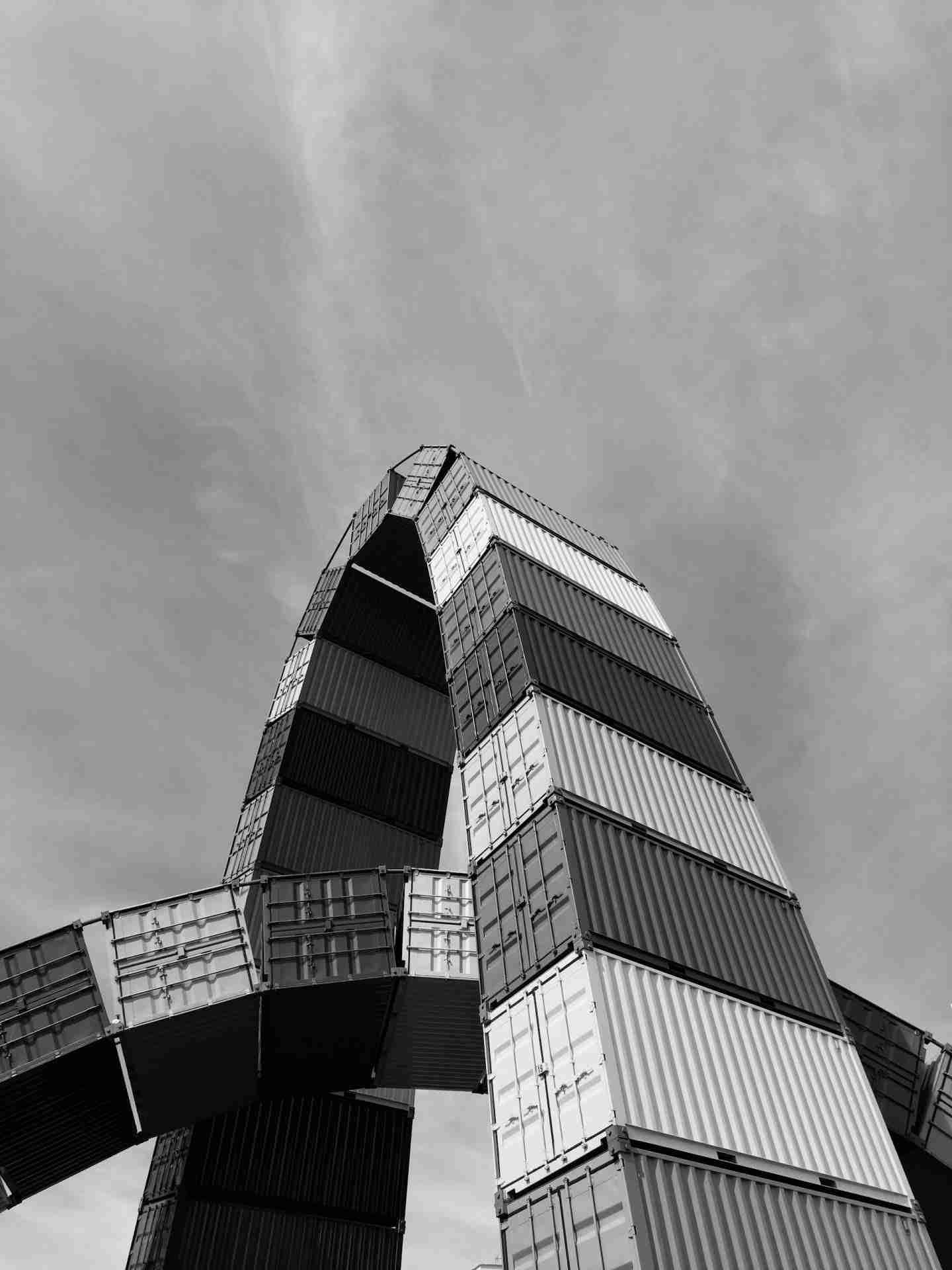
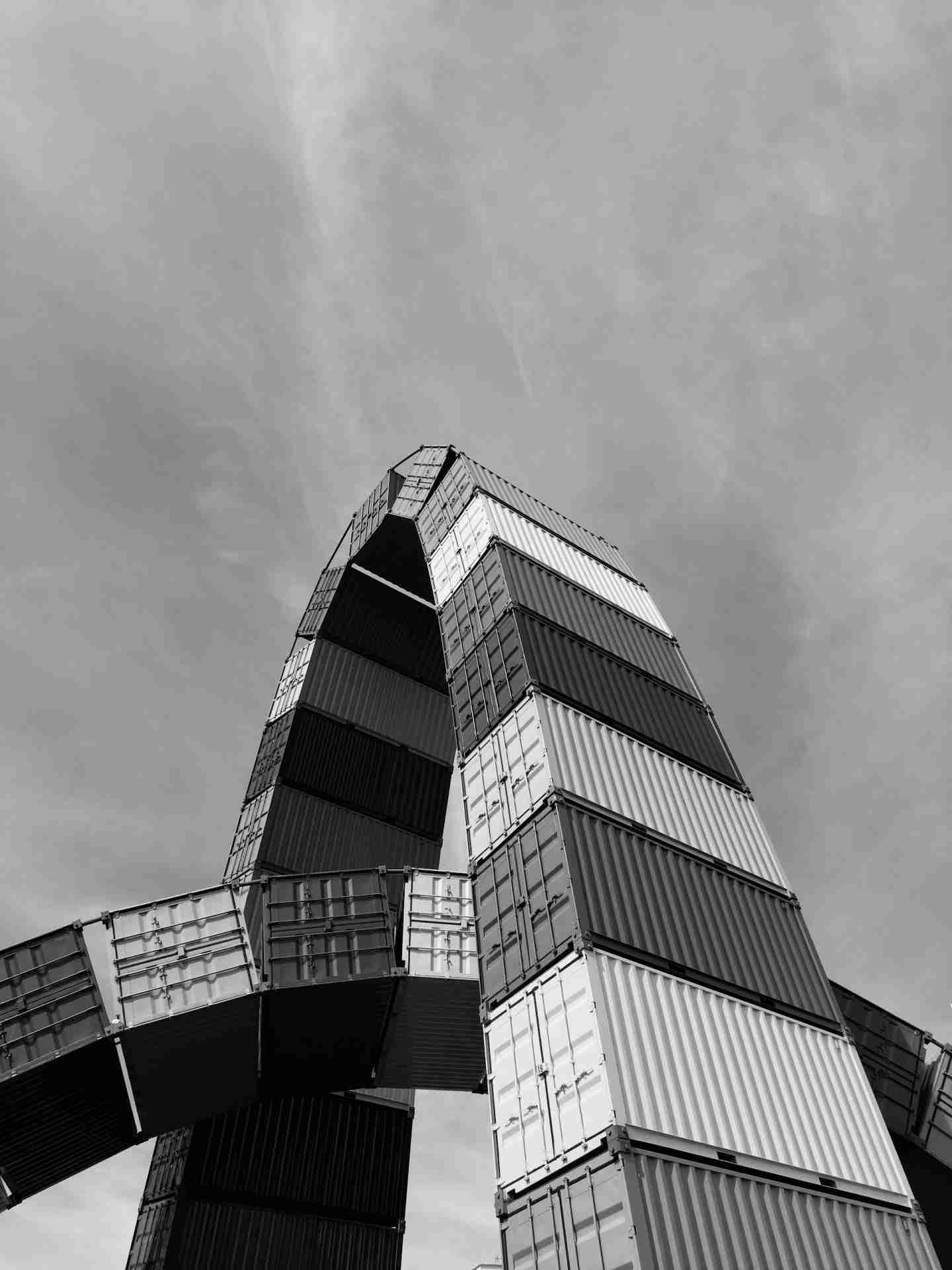
Rising boldly along the quayside of Le Havre's industrial waterfront, Catène de Containers is a monumental celebration of urban form and engineered balance. Created by French artist Vincent Ganivet in 2017 to commemorate the 500th anniversary of the city, this dual-arched sculpture uses 38 stacked shipping containers to create two interlocking catenary curves—an homage to Gaudí's favored natural shape and a direct reference to Le Havre's long-standing maritime identity. Painted in a vivid spectrum of color, these containers float seemingly effortlessly above the port promenade, combining mass and elegance, weight and levity. For photographers, this location offers a convergence of geometry, color theory, urban narrative, and expansive compositional potential—both on the ground and from above.
Best Photography Opportunities
• Symmetrical Arches from the Waterfront Approach
: The full visual impact of the sculpture is most powerful when approached head-on from the wide pedestrian esplanade along the Quai de Southampton. From this vantage, the interlacing arches are framed perfectly against the horizon and sky, with the repeating pattern of the colored containers leading the eye upward. A wide-angle lens (16–35mm) allows you to exaggerate the curvature, while a centered, low viewpoint enhances the symmetry. Overcast skies provide clean contrast for the saturated hues of the containers, while golden hour light adds warmth and softness to the steel textures.
• Color Blocks and Abstract Details
: The containers themselves, painted in solid reds, yellows, greens, blues, and oranges, create powerful color field compositions when photographed in isolation. Tight telephoto crops (100–200mm) allow you to build abstract images focused entirely on color, surface, and line. Shooting at an angle reveals the 3D layering of the containers, giving your frames a sculptural quality. Early morning or late afternoon side light will throw soft shadows across the containers' ribbed metal, enhancing depth and creating subtle tonal gradients within each color band.
• Drone Perspectives and Urban Geometry
: From above, the dual arches become architectural diagrams—loops of color against the linear grid of the surrounding port. Drone photography allows you to contrast the organic curve of the sculpture with the orthogonal geometry of the shipping cranes, ferry terminals, and train lines nearby. Fly during the early morning when the city is quieter and shadows are long, which adds visual texture to the concrete and container surfaces. Be sure to capture compositions that integrate the sculpture with the Seine estuary beyond, using the water's edge as a natural boundary within your frame.
• Nighttime Illuminations and Long Exposures
: After dark, the installation is lit from below by floodlights that cast deep shadows and heighten the sculpture's three-dimensional form. Long exposure photography during blue hour creates a luminous glow on the metal surfaces while softening the surrounding sky and ambient light. Use a sturdy tripod and experiment with white balance to shift between the natural cool tones of the evening and the warm artificial light washing over the arches. A slightly underexposed frame can intensify the colors, giving the scene a moody, cinematic feel.
• Human Scale and Interaction
: The wide public square beneath the arches sees steady but gentle pedestrian movement throughout the day. Including solitary figures or passing cyclists in your frame adds scale and narrative tension to the image, emphasizing the monumentality of the sculpture. A 35mm or 50mm prime lens works well for capturing these interactions without significant distortion. For stronger compositions, frame the arches as a backdrop and wait for subjects to pass through the negative space.
Best Time to Visit
Catène de Containers can be photographed year-round, but light and atmospheric conditions have a significant impact on the resulting imagery. The most visually dynamic seasons are spring and autumn, when the low-angle light casts elongated shadows and the city's weather is at its most changeable—ideal for catching misty mornings, filtered light, and dramatic skies over the Seine estuary.
Mornings are particularly rewarding, especially between April and October. The eastern light strikes the sculpture's inner curve, bringing out texture and illuminating the colors without harsh glare. Afternoons provide the most foot traffic and interaction shots, but lighting is strongest when slightly diffused—overcast skies help maintain color fidelity and minimize unwanted contrast.
Blue hour and post-sunset periods are excellent for long exposure work, especially in winter when the lighting design around the base of the structure becomes more prominent. The surrounding architecture and street lamps create secondary highlights and reflections that enrich compositions. Summer midday hours, while bright and colorful, can produce harsh overhead light that flattens the containers' texture—plan for either side of noon for the best tonal range.
How to Get There
Catène de Containers is located on the Quai de Southampton in central Le Havre, directly beside the waterfront and within walking distance of the city's central landmarks. From the main train station, it's a 15-minute walk west through the rebuilt post-war city core, past Place de l'Hôtel de Ville and along the wide, open boulevards toward the waterfront.
If arriving by car, Le Havre is easily accessed via the A131 motorway. Public parking is available along the waterfront near the Esplanade de la Plage, though spaces may be limited on weekends and during events. For those traveling by foot or bicycle, the promenade and surrounding pedestrian areas provide unobstructed access to all sides of the sculpture.
There is no entrance fee or restricted access—Catène de Containers is permanently installed in a public square and can be approached freely at any time of day or night. The surrounding area is flat and accessible, with ample space for tripods, long lenses, or drone launches, though drone use must comply with French aviation regulations and should avoid flights during high pedestrian traffic or maritime activity.
Recommended Gear and Shooting Tips
To fully explore the photographic potential of Catène de Containers, versatility is key. A wide-angle lens (16–35mm) will allow for full-structure framing and dramatic low-angle shots, particularly when positioned close to the base of the sculpture. A mid-range zoom (24–70mm) offers flexibility for both human-scale storytelling and broader environmental compositions.
A telephoto lens (70–200mm or 100–400mm) is essential for abstract studies, color isolations, and tighter framing of junctions and details within the arches. A drone, when used safely and within regulations, opens up powerful perspectives that reveal the sculpture's relationship to the surrounding urban geometry—especially in early morning or golden hour conditions.
A tripod is necessary for low-light and blue hour work, and a remote shutter release or 2-second timer will reduce vibration during long exposures. ND filters (6- or 10-stop) are useful if you want to blur movement in the sky or smooth pedestrian flow beneath the structure during daytime. A polarizer helps deepen color and reduce reflections when shooting under direct sunlight.
Bring a lens cloth and protective cover for sudden changes in weather, which are common along the Normandy coast. Because the sculpture is accessible from multiple sides, take time to walk around and study the changing light before committing to a composition. The color, form, and rhythm of this work reveal themselves most fully to those who return at different times and under different skies.
Nearby Photography Locations
: Designed by Auguste Perret, this towering concrete church is one of post-war Europe's great architectural achievements. The tall spire and geometric stained glass windows provide excellent interior light patterns, particularly midday when the sun filters through the colored panes and casts shifting hues across the stone.
: This flowing, white-concrete complex by Brazilian architect Oscar Niemeyer offers a radical contrast to the colorful grid of Catène de Containers. Its curving, minimalist form is best photographed in soft light or at twilight, when its interior lights create glowing pools behind the glass walls.
• Port of Le Havre Industrial Zone
: Just northeast of the sculpture, the working port offers views of stacked shipping containers, cranes, and active docks. This area is best captured with a long lens or drone, using leading lines and high-contrast lighting to emphasize scale and industrial rhythm.
: Just west of the sculpture, the beach offers expansive views of the Channel and wide, open skies—ideal for sunset seascapes and minimalist compositions. In winter, the beach huts and moody light add atmosphere, while summer evenings bring people and color to the shoreline.
: A short walk east along the harbor, MuMa offers both architectural and interior photographic subjects. Its modern glass-and-steel design reflects the waterfront surroundings, while the interior houses artwork by Monet, Dufy, and other masters of light—perfect inspiration before or after a shoot.
Catène de Containers isn't just a sculpture—it's a photographic dialogue between color and form, balance and gravity, city and sea. Whether you're standing beneath its arches or hovering above them at dawn, this monument invites your lens to explore movement, symmetry, and the unexpected elegance of industrial material reimagined as public art.
Comments
Loading comments…