
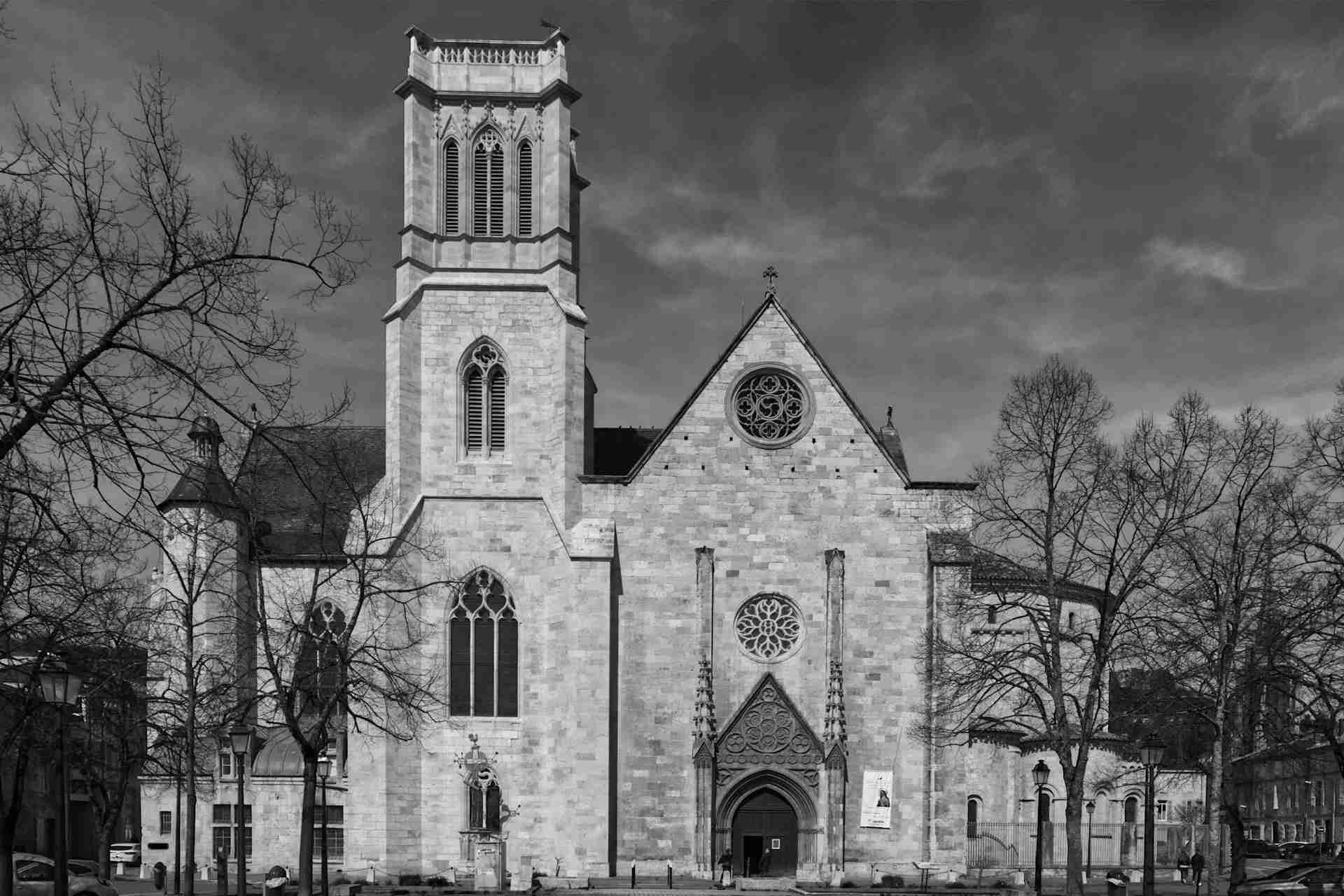
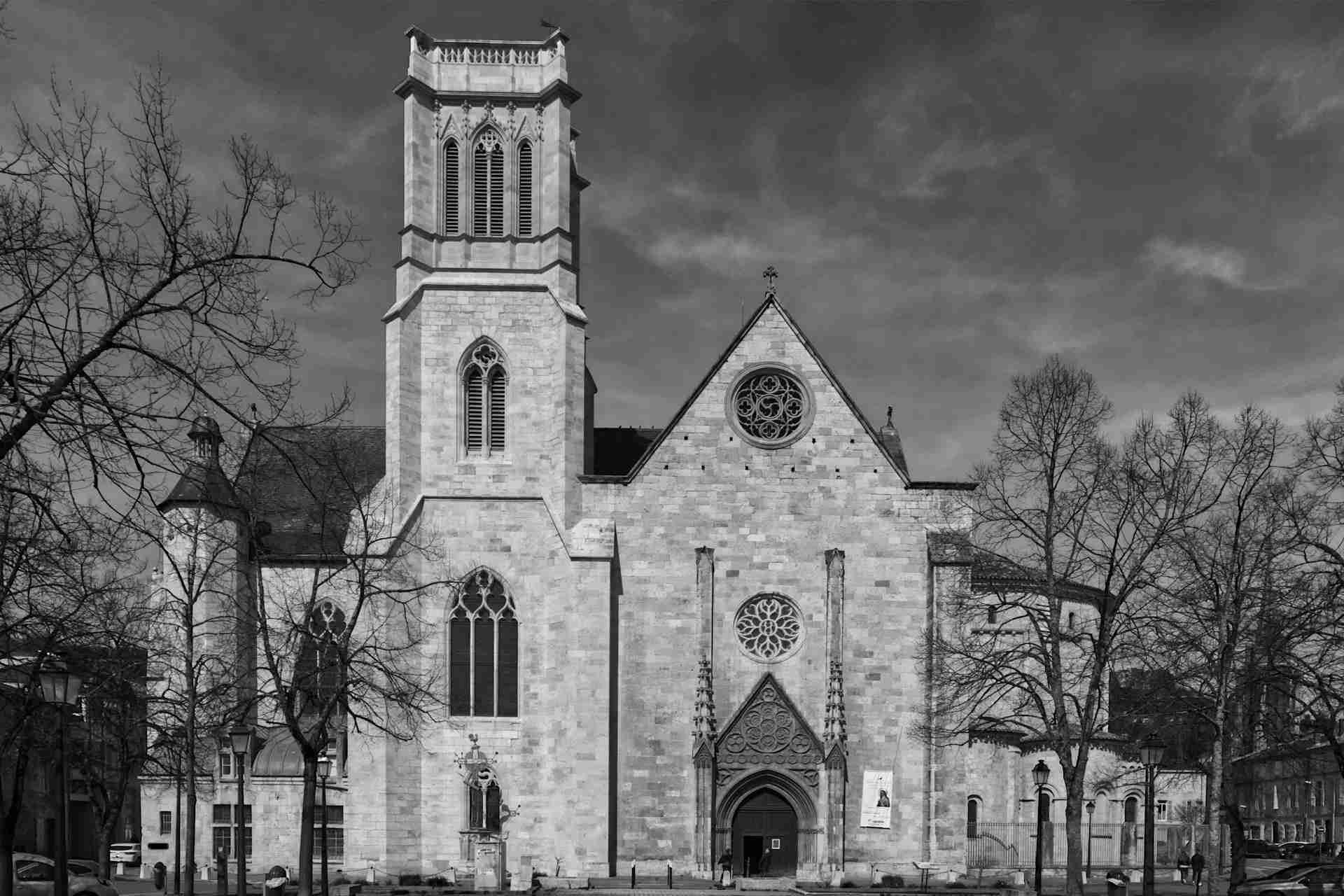
Tucked into the historic core of Agen, a city in the Lot-et-Garonne region of southwestern France, the Cathédrale Saint-Caprais d'Agen is a richly textured blend of Romanesque foundation, Gothic elevation, and 19th-century artistic restoration. Built on the site of an earlier martyrium, the cathedral bears the layered history of centuries of spiritual, artistic, and architectural evolution. Though less known than France's grand cathedrals in Chartres or Reims, Saint-Caprais is a visual treasure, particularly for photographers drawn to atmospheric interiors, sacred fresco cycles, and the quiet interplay of light and structure. From its Romanesque apse to the later Gothic nave and its dramatic vaulted ceiling covered in biblical scenes, this cathedral is a masterclass in photographic storytelling through space, shadow, and sacred detail.
Best Photography Opportunities
• Interior Frescoes and Ceiling Vaults
: One of the most distinctive visual features of Saint-Caprais is its extensive 19th-century fresco cycle, painted in a neo-Byzantine style across the entire vault and upper walls. These rich, jewel-toned murals depict scenes from the Old and New Testaments in panoramic sequence, framed by intricate geometric borders. To do them justice, a wide-angle lens with excellent low-light performance is essential. Use a tripod or image stabilization when possible to maintain sharpness without relying on flash, which is typically prohibited. Shoot upward from the nave to emphasize the vertical thrust of the Gothic arches and the immersive effect of the ceiling paintings. Symmetrical compositions from the center aisle draw the eye naturally toward the sanctuary, while oblique angles from the side aisles allow for more dynamic, layered storytelling of space and iconography.
• Romanesque Apse and Ambulatory Details
: At the eastern end of the cathedral, the older Romanesque structure reveals heavy stone columns, rounded arches, and a quieter, more sculptural architectural language. This area is ideal for photographers looking to isolate structural elements or work with strong light and shadow contrasts. Soft morning light filtering through stained glass windows enhances the patina of aged stone and the carved capitals atop the columns. Use a medium focal length (35–85mm) to focus on capitals, column clusters, and transitional arches. This part of the cathedral also tends to be quieter, allowing for long exposures or multi-frame bracketing to manage high dynamic range without interruption.
• Stained Glass Windows and Ambient Light Play
: While the windows at Saint-Caprais are not as expansive as those in some of France's larger cathedrals, they are beautifully colored and serve as potent light sources during morning and late afternoon. Use side-lighting from the nave's southern wall to capture colored light washing over pews or stone walls, and photograph reflected hues on the tiled floor or wooden furnishings for abstract color studies. Telephoto compression helps isolate individual stained glass scenes, while wide shots of the light beams cutting through incense or dust particles can create a deeply atmospheric effect.
• Exterior Facade and Tower Composition
: The west-facing facade of the cathedral, facing Place du Maréchal Foch, is understated but photographically rewarding. The bell tower, rebuilt in the 19th century, rises cleanly above the nave and is best photographed in the early morning or late afternoon when light rakes across its stone surfaces, casting soft shadows into the carved recesses. Include the plaza and surrounding historic architecture to provide context and scale. When crowds are minimal, use the square's patterned paving stones or lampposts as foreground elements to lead the viewer into the frame. A tilt-shift lens is especially useful here to maintain vertical lines without distortion when shooting upward from street level.
• Doors, Chapels, and Sacred Ornamentation
: Throughout the cathedral, side chapels, wooden confessionals, and carved entry doors provide opportunities for more intimate compositions. Look for candles casting warm pools of light, worn hymnals resting on benches, or the intricate detailing of liturgical furniture. These small moments tell the human story of the cathedral and work well in both color and monochrome treatments. A fast prime lens (e.g., 50mm f/1.8 or 35mm f/1.4) allows for shallow depth of field that isolates these objects beautifully from their surroundings, while retaining a sense of sacred quiet.
Best Time to Visit
For optimal lighting and a tranquil shooting environment, visit Cathédrale Saint-Caprais in the early morning when the light enters softly from the east and south and the interior is largely empty. This timing provides the best opportunity to work without interruption and to capture subtle light transitions as they evolve across the stone and frescoes. Late afternoon light offers stronger side lighting through the stained glass, which adds drama and saturation to ambient compositions.
Spring and autumn are the most rewarding seasons for photography, offering gentle sunlight, fewer tourists, and pleasant temperatures that allow for slow, considered exploration. Winter offers a quieter atmosphere and often beautifully filtered light on overcast days, ideal for detail studies and moodier imagery. Summer, while visually stunning due to stronger daylight, may present challenges due to increased foot traffic and harsher midday light. For photographers interested in blue hour or nighttime exterior compositions, the plaza outside remains accessible and softly lit after dark, providing elegant low-light shots of the facade and bell tower.
How to Get There
Cathédrale Saint-Caprais is located in Place du Maréchal Foch, at the heart of Agen's old quarter. The city is well connected via regional trains from Toulouse, Bordeaux, and other parts of Nouvelle-Aquitaine. For those driving, Agen sits just off the A62 motorway, and multiple paid parking lots are available within walking distance of the cathedral.
Once in the town center, the cathedral is easily accessible on foot and clearly signposted. Its immediate surroundings are pedestrian-friendly, and the plaza provides excellent vantage points for exterior photography. Entrance to the cathedral is free, and photography is permitted, although tripods and flash use are generally discouraged without prior arrangement. Visitors are expected to respect quiet hours, particularly during religious services. Interior access is usually available during regular hours throughout the week, but checking in advance during holidays or special events is advisable.
Recommended Photography Gear
Given the cathedral's rich interior detail and varied light conditions, a full-frame camera with strong low-light performance will give you the most flexibility. A wide-angle lens (16–35mm) is crucial for capturing ceiling frescoes, nave views, and full interior spaces, while a standard zoom (24–70mm) allows for both architectural context and tighter compositions of altars, chapels, or window details. For specific elements like carved capitals, decorative reliefs, or the bell tower's topmost elements, a 70–200mm telephoto lens provides excellent reach and subject isolation.
A fast prime lens with a wide aperture (e.g., 35mm f/1.4 or 50mm f/1.8) is especially useful for capturing low-light interior scenes with a natural depth of field. Since tripods are not always permitted, a camera with excellent image stabilization or the ability to shoot handheld at low shutter speeds will help ensure sharp results. Bring a microfiber cloth for cleaning lenses after extended indoor shooting, and consider a portable reflector or LED panel if you're working on detailed compositions with permission.
For outdoor work, a circular polarizer will help reduce glare from stone surfaces and enhance sky contrast. During blue hour or evening exterior sessions, a lightweight tripod becomes essential for longer exposures. A remote shutter release or two-second timer ensures stability during those slower shutter speeds, particularly if photographing in dim streetlight or reflective wet pavement conditions.
Nearby Photography Locations
: Just steps from the cathedral, this museum complex occupies several Renaissance-era buildings and features picturesque inner courtyards and staircases. These spaces offer opportunities for photographing historic textures, shadows, and architectural patterns in natural light.
• Pont-Canal d'Agen
: This unique aqueduct bridge carries the Canal de Garonne over the Garonne River. It's an excellent location for symmetry-focused compositions, long exposures of water traffic, or dusk shots with the city lights reflecting off the water.
• Place des Laitiers and Rue Beauville
: These narrow streets in Agen's historic center are full of aged timbered buildings, pastel facades, and street-level vignettes perfect for environmental portraiture or urban detail work.
: A short walk from the cathedral, this Gothic church with a simpler design and peaceful interior provides a quieter space for spiritual architectural photography, especially during golden hour.
• Canal Greenway and Lock Stations
: The tree-lined Canal de Garonne is dotted with historic lock houses and footbridges that offer peaceful, rural compositions just outside the town center. Bring a bike or walk along the towpath for an afternoon of photographic exploration.
Cathédrale Saint-Caprais is a unique blend of sacred art and layered architecture invites photographers not just to capture images, but to interpret light, silence, and the subtle dialogue of centuries within its walls.
Comments
Loading comments…