
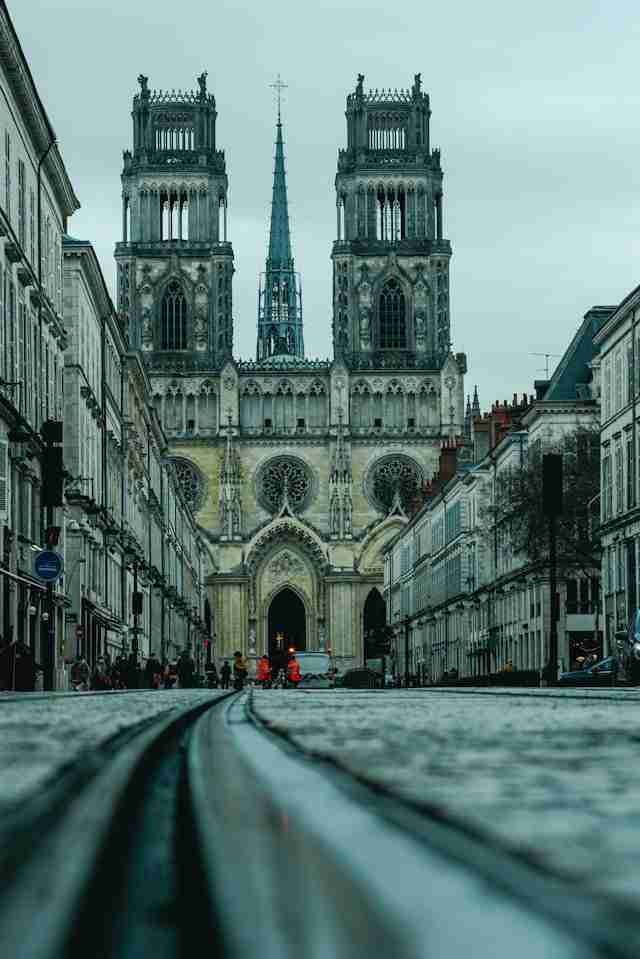
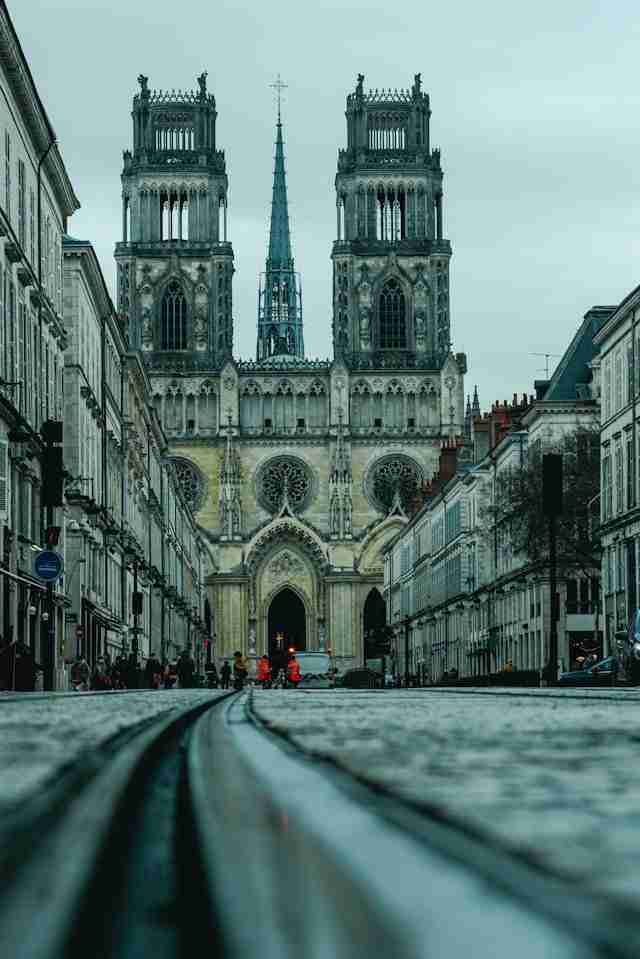
Standing at the spiritual and architectural heart of Orléans, the Cathédrale Sainte-Croix is a towering symbol of French Gothic ambition and historical endurance. With roots tracing back to the 13th century and a façade rebuilt after the Wars of Religion, this cathedral offers photographers a masterclass in vertical composition, sculptural detail, and luminous interior design. Dedicated to the Holy Cross and famously tied to Joan of Arc—who prayed here during the Siege of Orléans—the structure commands the city with its dual towers, deeply recessed portals, and intricate rose windows. Whether shooting its symmetry from Rue Jeanne d'Arc or exploring its soaring interior vaults, the cathedral invites a reverent, considered approach to one of France's most enduring ecclesiastical landmarks.
Best Photography Opportunities
• Frontal Façade from Rue Jeanne d'Arc
The best vantage for capturing the cathedral's full Gothic symmetry is from the southern stretch of Rue Jeanne d'Arc. This grand, linear boulevard funnels the eye directly to the cathedral's twin towers, creating a powerful compositional axis. Shoot during the golden hour when warm light strikes the façade, illuminating the stone carvings and deep-set arches. A tilt-shift or wide-angle lens helps preserve vertical lines without distortion. Including street elements like tram lines or period architecture adds modern contrast to the cathedral's historical weight.
• West Portal and Sculptural Detail
The west entrance features deeply recessed Gothic portals flanked by statuary and high-relief tympana. Get close with a standard zoom or short telephoto to capture the expressive figures, especially the scenes depicting Joan of Arc. Overcast light softens the stone and reduces harsh shadows, ideal for capturing fine detail. Early morning light adds subtle raking highlights across the sculpture, bringing depth to faces, folds, and architectural flourishes.
• Interior Vaulting and Nave Symmetry
Inside, the cathedral reveals its full scale—ribbed vaults that soar skyward, massive stone pillars, and a nave lined with pointed arches. For symmetrical shots, shoot directly down the central aisle with a wide-angle lens, taking care to center the frame on the choir. Late morning light often streams through the clerestory windows, creating shafts of color and softly lit pews. A tripod can be useful for longer exposures, but confirm any restrictions with staff, as flash and commercial gear are typically prohibited.
• Stained Glass and Rose Windows
The cathedral's stained glass windows are a highlight, particularly the rose window above the main entrance and the colorful chapels surrounding the apse. Use a medium zoom lens to frame specific panels and motifs, and expose for the highlights to preserve color saturation and glass texture. Early afternoon light is best for illuminating the southern windows, while morning favors the northern aisle. A polarizer can occasionally help balance reflections, though subtle adjustments in post-processing often yield the best results.
• Joan of Arc Chapel and Side Altars
A side chapel near the choir is dedicated to Joan of Arc, featuring iconography, statues, and votive candles. This space provides excellent opportunities for detail and atmosphere shots—especially with shallow depth of field. Capture the warm glow of candlelight against stone walls or frame Joan's statue in profile, with flickering light suggesting timeless devotion. The surrounding chapels also feature smaller altars, frescos, and architectural elements worth isolating for detail-rich compositions.
Best Time to Visit
Cathédrale Sainte-Croix is photogenic year-round, though the quality and angle of light vary by season and time of day. The façade receives optimal lighting in the late afternoon during spring and autumn, when the sun is low and warm. Sunrise can also be dramatic if clouds reflect pink and orange hues above the towers.
Interior photography is best between mid-morning and early afternoon when light penetrates the clerestory and stained glass. Winter offers fewer crowds and moody atmospheres, particularly on grey days when the nave's shadows deepen, making for strong contrast in monochrome compositions.
Weekdays are quieter, especially early in the morning or near closing. Try to avoid major services or tourist peak hours if you want to work uninterrupted.
How to Get There
Cathédrale Sainte-Croix is centrally located in Orléans, just a short walk from the Loire River and the Place du Martroi. If arriving by train, it's a 10–15 minute walk from the Gare d'Orléans. The city's tram lines run directly down Rue Jeanne d'Arc, with stops a few minutes from the cathedral's entrance.
Street parking is limited, but nearby underground garages are available, particularly at Place du Martroi or Hôtel Groslot. The cathedral is open daily with free admission, though certain areas may be closed off during religious services or events. Interior photography is permitted for personal use, but avoid flash and check signage for any restrictions.
Recommended Gear and Shooting Tips
A wide-angle lens (16–35mm) is essential for full nave, exterior façade, and interior vault compositions. A standard zoom (24–70mm) allows for flexibility across architectural and detail work. A short telephoto (70–200mm) helps isolate sculptures, glass panels, or architectural elements from a distance.
Tripods are best used discreetly and only when allowed. A fast prime lens (35mm or 50mm f/1.4–f/2.8) is invaluable for handheld low-light work in chapels or altars. Shoot in RAW to manage mixed lighting and high dynamic range inside the nave. Use exposure bracketing if necessary to preserve both highlight and shadow detail.
Plan your visit for the best directional light—west-facing façades benefit from golden hour, while interiors favor mid-morning for stained glass clarity. For vertical compositions, watch for converging lines and keep the camera level or correct distortion in post-processing.
Nearby Photography Locations
A grand plaza just west of the cathedral, home to the iconic equestrian statue of Joan of Arc and flanked by cafés and 19th-century facades. Excellent for blue hour and street photography with the cathedral spire in the distance.
This historic street runs through the old quarter and features half-timbered buildings, medieval storefronts, and textured cobblestone paths—perfect for architectural abstracts and candid street scenes.
• Loire River Walks and Pont George V
South of the cathedral, the river offers sunrise reflections, long exposures of bridge traffic, and expansive views over Orléans. Shoot wide for riverbank symmetry or isolate stone textures and moored boats for detail-rich frames.
Adjacent to the cathedral, this Renaissance-era mansion and its formal garden provide tranquil foregrounds for framing the towers from the east. Great for combining architecture with floral and seasonal interest.
• Maison de Jeanne d'Arc
This museum and memorial site just steps from the cathedral offers another layer of visual storytelling and photographic history. Capture its period architecture in morning light or use tight compositions to focus on its medieval character.
This museum and memorial site just steps from the cathedral offers another layer of visual storytelling and photographic history. Capture its period architecture in morning light or use tight compositions to focus on its medieval character.
Cathédrale Sainte-Croix d'Orléans is a structure that commands attention and rewards patience. For photographers drawn to architectural complexity, historical symbolism, and the timeless interplay of light and stone, this cathedral offers a complete palette—from the soaring to the sacred, the monumental to the minute. Whether you're composing from afar on Rue Jeanne d'Arc or lost in a quiet chapel alcove, the cathedral remains a space where history and visual power resonate in every frame.
Comments
Loading comments…