
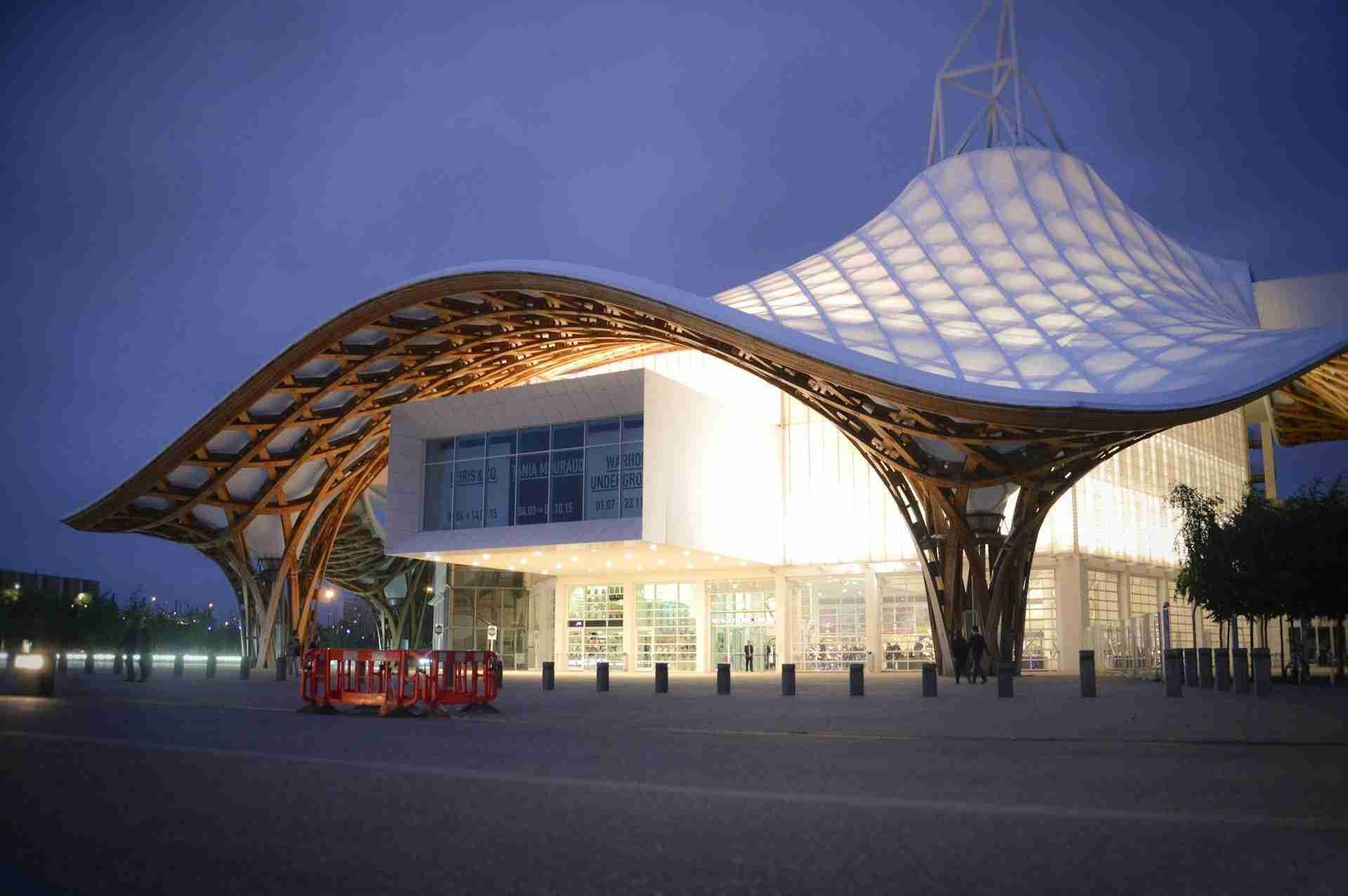
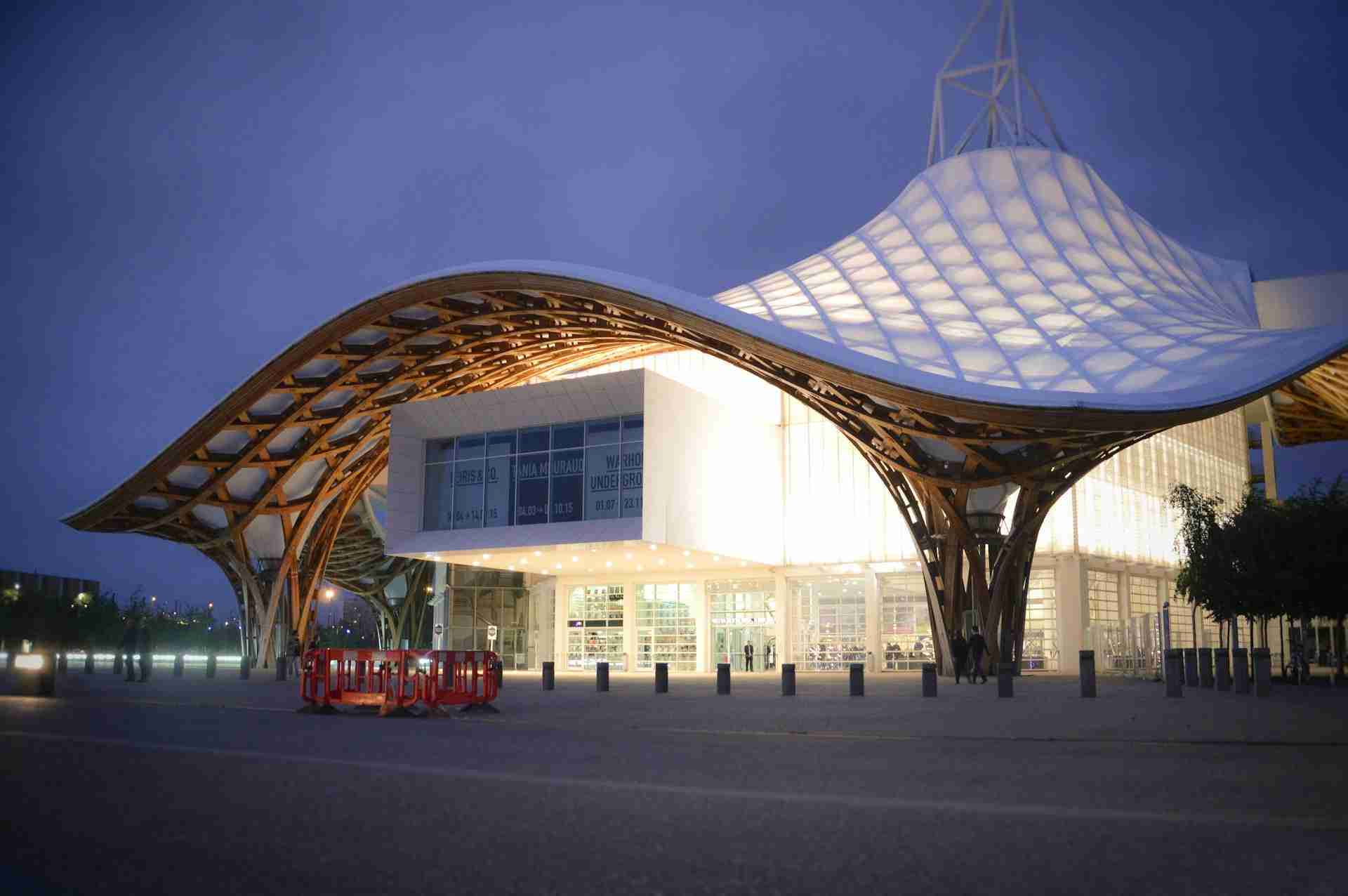
Rising like a sculptural wave over the cultural heart of Metz, the Centre Pompidou-Metz is a modern architectural landmark designed for visual exploration. This regional branch of the Centre Pompidou in Paris is as photogenic outside as it is inside, defined by its curving white roof inspired by a Chinese bamboo hat and framed by a latticed wooden canopy that supports its undulating form. Situated in the Quartier de l'Amphithéâtre, just a short walk from Metz's main train station, the structure is surrounded by open space and reflective surfaces, making it ideal for architectural photographers seeking strong lines, clean contrast, and ever-changing light. The combination of wood, glass, steel, and open sky makes the building an inviting subject for both geometric minimalism and layered compositions.
Best Photography Opportunities
• Roofline and Canopy Geometry
The sweeping white membrane roof, supported by a hexagonal timber structure, offers one of the most distinctive architectural forms in modern France. From the ground level, wide-angle lenses exaggerate the height and curve of the canopy, especially when framed from the plaza below. Side angles allow photographers to capture how the wooden lattice intersects with the metal and glass, creating natural repeating patterns and tension points. In soft morning or golden hour light, shadows stretch through the canopy structure, casting clean diagonal lines on the ground and building walls. Overcast days are also effective, helping the white roof pop against a gray sky and emphasizing form over color.
• Reflections and Forecourt Composition
The open plaza in front of the Centre Pompidou-Metz often gathers water after rain, forming shallow puddles that act as natural mirrors. These reflections are ideal for low-angle compositions that double the impact of the structure's flowing roofline. The glass facade reflects sky, surrounding architecture, and street activity, offering opportunities to play with layers of transparency and surface. Reflections are strongest in the early morning or late afternoon when light angles are lower and more directional. Including human figures in the frame can also help ground the scale of the architecture and add motion to static compositions.
• Interior Staircase and Structural Lines
Inside the Centre Pompidou-Metz, light floods through angled windows and open galleries, interacting with minimalist staircases, railings, and white walls. The clean, open interior spaces are perfect for those interested in form-driven composition. The central staircase in particular lends itself to graphic, almost abstract compositions when shot from above or below. These images benefit from mid-range focal lengths that compress lines without too much distortion. The lighting inside shifts subtly throughout the day, and cloudy weather actually enhances interior photography by avoiding harsh highlights and overexposure.
• Details in Texture and Material
Though modern in scale, the building's use of wood in the canopy structure gives it a tactile quality that rewards close inspection. A telephoto or macro lens can isolate portions of the interlocking timber joints, emphasizing the craftsmanship behind the sweeping design. The way light plays across the materials—glossy metal, matte wood, translucent panels—creates natural tonal gradients ideal for tight compositions. These shots are best done in soft light or shade to reduce glare and reveal the natural contrast between materials.
• Night Photography and Illuminated Forms
As the sun sets, the Centre Pompidou-Metz transforms under artificial lighting. Spotlights placed around the perimeter accentuate the curves of the roof and the lattice beneath, creating high contrast forms against the dark sky. The interior glows through the glass facade, giving the structure a warm internal radiance that contrasts with the cool tones of the plaza. Blue hour is ideal for balancing these interior and exterior tones. A tripod is necessary for long exposures, which smooth out any movement from people while preserving clarity in the architecture and light trails from passing cars.
Best Time to Visit
The Centre Pompidou-Metz is a rewarding subject year-round, but each season offers its own distinct mood. Spring and autumn are ideal for soft, angled light and mild weather, which makes the large open plaza more comfortable for extended outdoor shoots. Summer brings longer golden hours and more dramatic evening skies, but midday light can be harsh due to the reflective white roof. Winter offers clear light and strong shadows, especially on sunny days when the structure stands out crisply against bare trees and open sky.
Time of day plays a major role in how this site photographs. Early morning light strikes the eastern side of the building, illuminating the roof and canopy at an oblique angle that enhances structure. Late afternoon and golden hour produce longer shadows under the canopy and highlight the natural grain of the wood. Twilight and night photography sessions are excellent here due to the building's subtle external lighting and glowing interior. The site remains active well into the evening and is generally accessible at all times, though interior photography depends on museum opening hours and current exhibits.
How to Get There
The Centre Pompidou-Metz is located just northeast of the Metz-Ville train station, within a five-minute walk. Metz is well-connected by high-speed train, with direct service from Paris, Luxembourg, and Strasbourg. The museum sits in the Quartier de l'Amphithéâtre and is surrounded by pedestrian walkways, making access easy for photographers traveling with gear.
For those arriving by car, public parking is available at nearby lots including Parking République and Parking Pompidou. Signage around the area is clear and pedestrian routes are well maintained. Entry to the plaza and exterior shooting areas is free and accessible at any time, but interior access is subject to museum opening hours and security guidelines. Tripods are not allowed inside without prior permission, so it's best to check ahead if you plan to photograph exhibitions or internal spaces.
Recommended Photography Gear
A wide-angle lens between 16 and 35 millimeters is essential for capturing the roof's full span from ground level or the corners of the forecourt. A mid-range zoom like a 24 to 70 millimeter lens is useful for tighter compositions, especially when isolating structural curves or shooting reflections. For architectural details, a short telephoto lens in the 70 to 200 millimeter range allows for flattening of angles and compression of repeating patterns in the wood lattice or staircases.
A lightweight tripod is critical for night photography and long exposures in low light. Use a remote shutter or timer to reduce camera shake, especially when framing reflections or interior scenes. A circular polarizer helps manage glare on glass and can deepen sky tones in exterior shots. Bring a microfiber cloth to manage lens flare or dust on rainy days, as the area around the building is open and subject to wind. A weather-sealed bag is useful during winter or transitional seasons when rain may be sudden.
Nearby Photography Locations
Just steps away from the museum, Metz's main train station is an architectural masterpiece in its own right, with carved sandstone facades and vaulted interiors. Early morning or twilight sessions here capture the warm tones of the building's stone under changing light.
• Amphithéâtre District Public Spaces
The surrounding district includes modern landscaping, fountains, and open sculpture spaces that complement the museum's geometry. These locations are excellent for minimal, wide-angle compositions and urban abstracts.
A short walk east, this urban park features curving pathways, seasonal plantings, and open green spaces with views back toward the museum. Ideal for nature-infused compositions or framing the building from a distance.
Metz's old town includes Gothic churches, medieval alleyways, and sandstone townhouses that offer a complete contrast to the Pompidou's futuristic form. Ideal for architectural and street photography in changing light.
Further into the city center, this grand Gothic cathedral houses some of the tallest stained glass windows in Europe. The shift from contemporary design to towering medieval stonework makes for a rich day of visual exploration.
The Centre Pompidou-Metz offers a compelling visual study in shape, light, and modern material. Whether framed in the curves of its rooftop or in the reflections of its open plaza, it rewards patient observation and thoughtful composition. For photographers seeking precision, abstraction, or architectural narrative, this building is a subject that continually redefines itself with every shift in light.
Comments
Loading comments…