
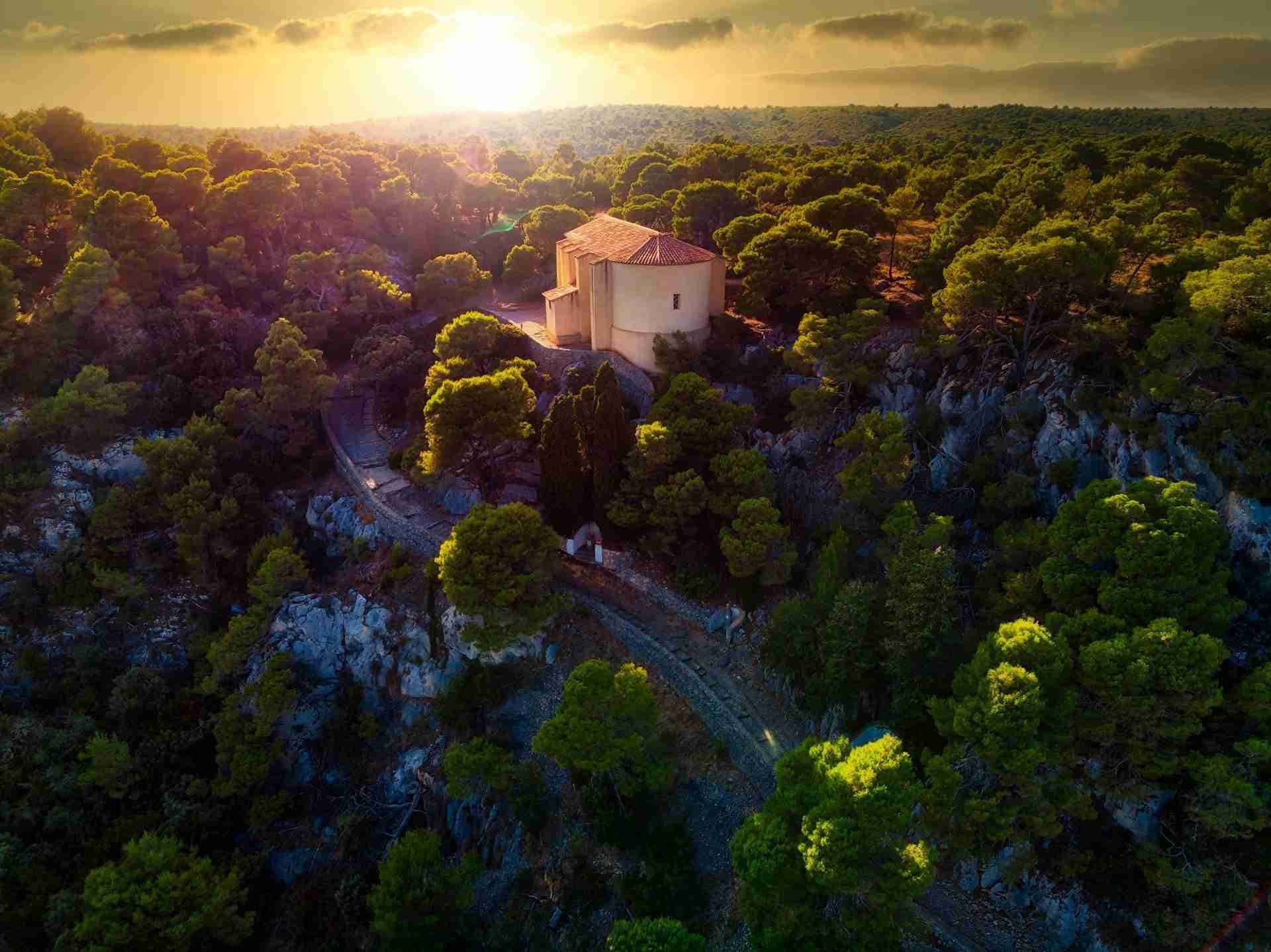
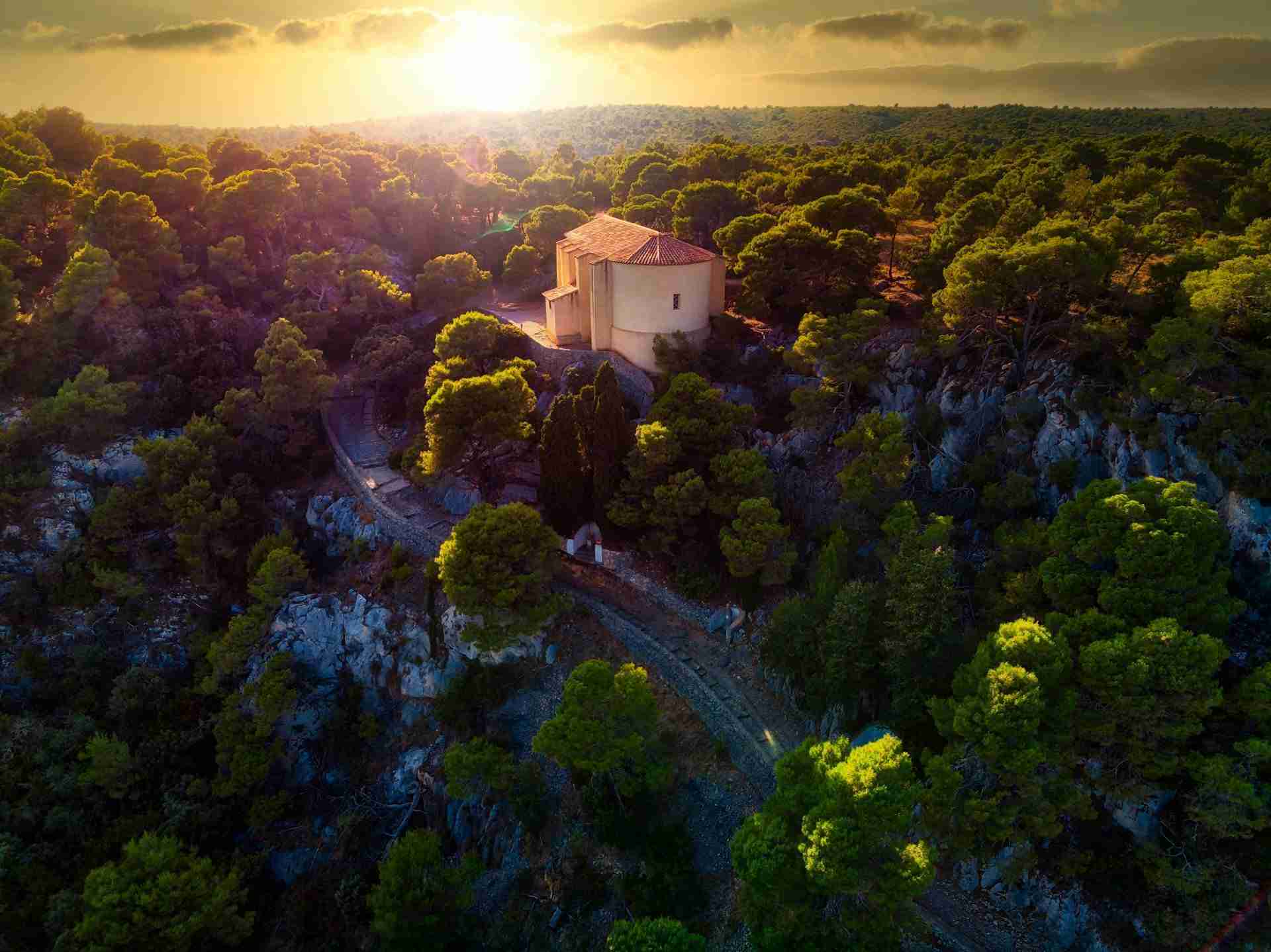
Perched above the Mediterranean coastline in the Massif de la Clape near Gruissan, the Chapelle Notre-Dame-des-Auzils is a serene and evocative site for photographers drawn to heritage, atmosphere, and expansive views. This 11th-century chapel, once a beacon for sailors and fishermen, sits at the end of a winding pilgrimage path marked with maritime memorials and shaded by ancient pines. With its whitewashed walls, weathered stonework, and panoramic overlook of the Aude coastline, the chapel offers a visually rich blend of spiritual history and rugged natural beauty—ideal for landscape, architectural, and documentary photography.
Best Photography Opportunities
• Path of the Sailors (Chemin des Naufragés)
– The approach to the chapel is lined with a series of maritime memorials and tombs, each unique in shape and weathering. Capturing the path from low angles emphasizes depth and rhythm, while dappled light through the trees creates mood and visual layering. This walk is as photogenic as the chapel itself, especially in early morning when long shadows stretch across the path.
• Wide-Angle Exterior of the Chapel
– The modest, white-plastered chapel stands beautifully against the backdrop of sky and stone. Using a wide-angle lens from a slightly lower elevation helps exaggerate its form and places it cleanly within the surrounding cliffs and coastal scrub. Shooting during golden hour enhances the warm tone of the stone and the dramatic fall of light on the facade.
• Panoramic Views Over Gruissan and the Mediterranean
– Just beyond the chapel, the hilltop offers open views down to Gruissan, the coastline, and the shimmering waters of the Étang de Bages-Sigean. A telephoto lens compresses the distant salt pans, vineyards, and tiled rooftops into layers of color and texture, while a wide lens captures the full sweep of land meeting sea.
• Interior Details and Devotional Offerings
– The chapel's interior is small but filled with maritime offerings, votive plaques, and paintings dedicated to those lost at sea. Photographers interested in documentary work will find rich material in these personal tributes. Soft, ambient light from small windows makes this a contemplative and rewarding space for low-light handheld photography.
• Storm Light and Coastal Atmosphere
– The exposed position of the chapel makes it particularly photogenic in shifting weather. When storm clouds roll in from the Mediterranean, the contrast between light and sky enhances the spiritual solitude of the site. These conditions are ideal for dramatic compositions with a cinematic feel.
Best Time to Visit
The chapel and its surrounding trail are best photographed from spring through autumn, when access is easy and the landscape is most vibrant. Spring (March to May) brings blooming wildflowers and fresh greens that soften the rocky terrain, while autumn (September to November) provides warm light and lower sun angles that enhance texture and shadow.
Golden hour—particularly in the late afternoon—is ideal for capturing both the chapel and the coastline in warm, directional light. Early morning offers solitude and atmospheric mist over the plains, while sunset often paints the Mediterranean in pastel tones.
Overcast days are excellent for shooting the Chemin des Naufragés, where the even light brings out the detail in weathered memorials and pine-bark textures. Summer midday light is harsh but can be used effectively with strong shadows and high contrast compositions.
How to Get There
Chapelle Notre-Dame-des-Auzils is located in the Clape massif, just a short drive southeast of Gruissan in southern France's Aude department. From Gruissan, follow signs for "Notre-Dame-des-Auzils" via Route Bleue or Chemin de l'Auzils. Parking is available at the base of the hill near the forest entrance.
From the parking area, the walk to the chapel takes approximately 20–30 minutes via a steep but scenic forest trail that follows the Chemin des Naufragés. The trail is well-marked and paved in sections but involves elevation gain, so sturdy shoes are recommended.
There is no entrance fee to access the trail or chapel. As this is a spiritual site, respectful behavior and quiet photography are appreciated, particularly when visitors are present for reflection.
Exploring the Chapel and the Surrounding Area
Beyond the chapel itself, the hilltop landscape offers varied opportunities for landscape and detail photography. The wind-swept vegetation—low shrubs, twisted pines, and limestone outcrops—creates strong compositions when paired with dramatic skies or coastal views. Exploring the perimeter of the site provides different perspectives on the chapel and reveals natural frames through trees and rocks.
The descent offers reverse views over the landscape, perfect for golden hour backlighting or silhouette photography. Local birds, including gulls and kestrels, often soar above the cliffs, adding movement and scale to wide shots.
The trail also includes interpretive signs and historic elements that make for compelling context shots in a documentary series. Each step along the way reveals new visual textures—from stone crosses to rusted plaques and moss-covered ledges—that reflect the cultural and emotional depth of this historic pilgrimage route.
Nearby Photography Locations
– The old village of Gruissan, with its circular street layout and medieval watchtower, offers strong aerial and street-level compositions. Climb to the top of Tour Barberousse for 360° views over the salt pans and terracotta rooftops.
– This expansive lagoon system just north of Gruissan is ideal for wide landscape photography, with reflective water, reed beds, and birdlife. Sunsets over the étang are particularly colorful, with still waters mirroring the sky.
– These working salt flats offer graphic compositions of pink-hued basins, white salt mounds, and wooden walkways. Best visited during golden hour or with a drone to emphasize patterns and abstract shapes.
– Numerous hiking paths throughout the Clape hills provide access to vineyards, limestone cliffs, and ocean viewpoints. Ideal for more immersive landscape work and documenting the natural diversity of the region.
– Gruissan's famous beach lined with raised wooden houses is a unique coastal subject. The retro beach cabins and long wooden boardwalks lend themselves to minimalist compositions and nostalgic storytelling.
Chapelle Notre-Dame-des-Auzils is more than a scenic overlook—it's a sacred waypoint, a place of memory, and a natural stage for light and shadow. For photographers who appreciate the intersection of culture, history, and landscape, this hillside sanctuary above the sea offers silence, story, and visual poetry in every direction.
Comments
Loading comments…