
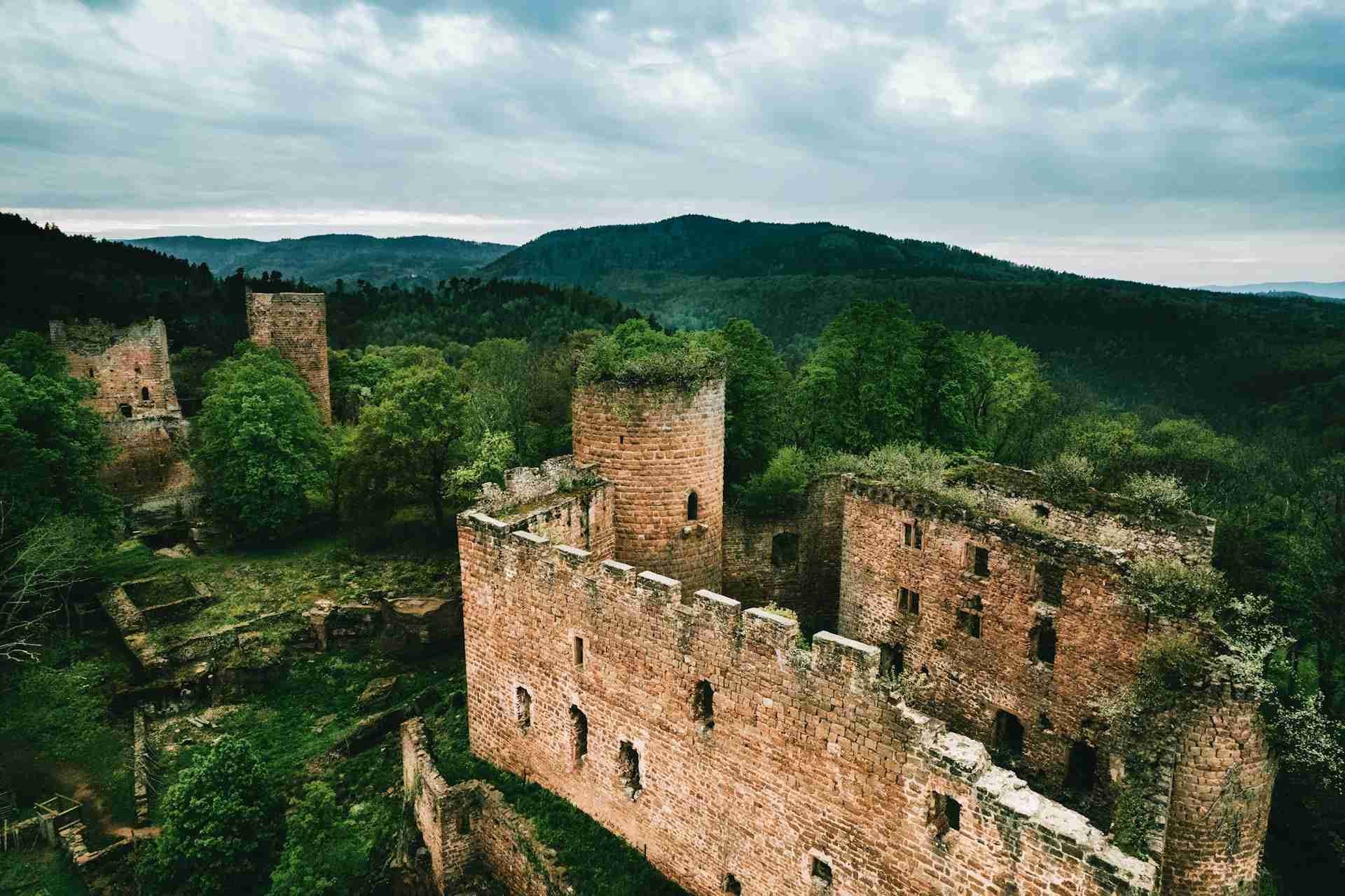
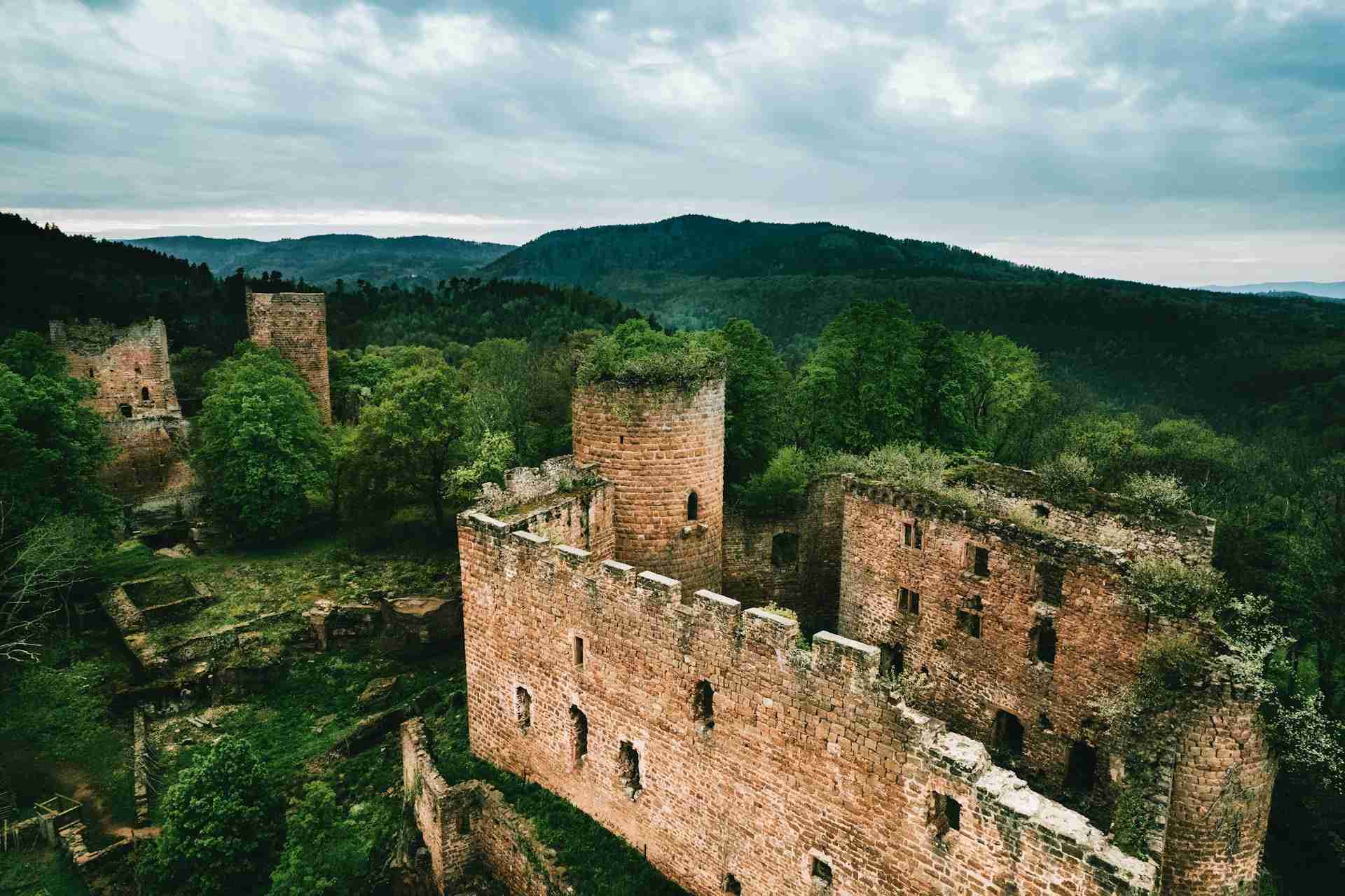
Tucked into the forested slopes above the village of Ottrott in France's Alsace region, Château de Rathsamhausen is a partially ruined medieval castle that speaks in texture, scale, and solitude. Built in the 13th century and later expanded, the castle is one of several historic fortifications scattered across Mont Sainte-Odile's lower slopes. With its weathered sandstone walls, narrow towers, and archways overtaken by vines and moss, Rathsamhausen is both an architectural subject and a landscape element. Photographers who hike into its wooded setting will find compelling light, layered stonework, and natural framing that changes with the season. It's a quiet site, often empty, offering the kind of slow, observational photography that rewards those willing to explore from multiple angles and elevations.
Best Photography Opportunities
• Approach Through the Forest Trail
The narrow path leading up to the castle from the forest below sets the tone for the location's quiet intensity. As you climb toward the structure, glimpses of stone walls appear between tree trunks, allowing for layered compositions that emphasize the transition from natural to built environment. Shooting in early morning or late afternoon lets light filter sideways through the trees, creating dappled patterns across the trail and castle walls. A 35mm or 50mm lens works well here for maintaining the perspective without flattening the depth between trees and stone. These moments before arrival are ideal for establishing shots that hint at the castle's presence rather than immediately revealing it.
• North Tower and Partial Archway
The northern side of the ruin contains one of its most intact vertical elements: a narrow tower adjacent to a partially collapsed archway. From this angle, you can capture the vertical rise of the structure with sky above, framed by brambles or bare branches depending on the season. Mid-morning light helps define the shadowed interiors while still offering enough brightness to catch detail in the stone. Use a wide lens and position yourself low to emphasize height and texture. If clouds pass quickly, bracket exposures to capture subtle differences in sky tone and wall detail without overexposing highlights.
• Interior Ruins and Light Through Openings
Inside the castle's fragmented chambers, light streams through open archways and broken windows, creating contrast between illuminated patches and the dark stone interiors. These scenes lend themselves to moody compositions that highlight form, decay, and time. A tripod allows you to work at low ISO and expose for deep shadow without losing detail in the light shafts. Focus on how the light interacts with the stone floor, fallen masonry, or creeping moss on the inner walls. These moments are best captured during overcast days or early evening, when soft light enhances the tonal range and gives the ruins a quiet depth.
• Castle Wall from Below With Tree Canopy
By descending slightly along the outer footpath to the southeast, you can frame the main exterior wall rising above the treetops. This composition benefits from a wide-angle lens and a strong foreground, such as exposed roots or fern-covered ground, to emphasize the elevation of the castle. Shooting upward during golden hour creates side light that brings out the rough stone texture while casting long shadows through the forest canopy. When leaves are on the trees, you'll capture a filtered green glow around the walls; in winter, bare branches create stark lines that mirror the fractured stone.
• Detail Work: Carvings, Moss, and Broken Form
The ruins reward close-up and abstract work as well. Carved stone, ironwork fragments, and the uneven patterns of lichen or ivy on sandstone provide subtle photographic material. Use a fast prime lens to isolate these textures with shallow depth of field, or go in tight with a macro lens to capture erosion patterns and color variations. These shots are best under diffused light or shade, when shadow isn't too harsh and you can focus purely on texture. Including sections of ruin in the background helps provide context and scale, especially when shooting door lintels or fragmentary inscriptions.
Best Time to Visit
Château de Rathsamhausen offers different moods depending on the season, with spring and autumn being the most photographically productive. In spring, the forest below is rich with fresh greens, and wildflowers often dot the trail edges, giving soft color contrast to the grey and reddish stone. Morning light filters gently through the new foliage, providing dappled shadow and well-balanced exposures across both the forest and the structure. During these months, the trail is firm but not dusty, and the vegetation has not yet overgrown the lower ruins.
Autumn provides deeper contrast and a warm palette that enhances the weathered stonework. From late September through October, golden leaves carpet the ground and create strong visual layers. This is the best time for wide shots that include forest context or for backlit compositions with sun filtering through the trees and catching on remaining branches and upper walls. Afternoon sessions offer the longest sidelight and the richest shadow play inside the ruins.
Summer brings lush growth and a tighter visual corridor, with some views partially obscured by thick vegetation. The light tends to be stronger and more contrasty during midday, but early morning and late day still offer clean, usable light. Winter transforms the scene entirely, exposing more of the structure and simplifying color into muted greys and browns. Light snow can enhance form and line without overwhelming the texture. Slippery trail conditions may limit access in snow or rain, but the payoff is solitude and clarity in composition.
How to Get There
Château de Rathsamhausen is located just outside the village of Ottrott in the Bas-Rhin department of northeastern France, within the Vosges mountain foothills. The nearest major city is Strasbourg, about a 45-minute drive to the northeast. From Ottrott, the castle is accessible via well-marked forest hiking trails that also lead to neighboring ruins such as Château de Lutzelbourg and Château du Birkenfels.
The most direct route begins near the village center or from the parking area on the D426, just above the town. From there, follow marked hiking signs through the forest; the walk takes about 25 minutes at a moderate incline. The trail is maintained but rocky in parts, so hiking boots are recommended. There are no entry fees or gates—the castle ruins are freely accessible year-round. There are no facilities at the site itself, so be sure to bring water and check the weather forecast before heading out.
If you plan to shoot at sunrise or sunset, a headlamp and familiarity with the trail are essential. The terrain can be slick after rain, and while the ruins are generally stable, caution is needed when exploring inner rooms and uneven footing around the stone.
Recommended Photography Gear
A well-rounded setup suited for low-light, textured environments will serve best at Rathsamhausen. A wide-angle lens in the 16–35mm range allows for full views of walls, towers, and interior spaces, especially when working from tight quarters. A standard 24–70mm zoom gives flexibility to move between wide and detail shots without changing lenses frequently in damp or dusty conditions. A fast prime, such as a 35mm f/1.4 or 50mm f/1.8, is helpful for capturing low-light interiors and shallow depth-of-field compositions around stonework or small subjects.
A tripod is important for working in shaded interior ruins or during blue hour, especially when trying to preserve dynamic range without increasing ISO. A remote shutter or camera timer can help reduce motion blur. For long exposure work with clouds or moving foliage, a 3- or 6-stop neutral density filter adds creative flexibility. A circular polarizer can deepen contrast and help separate tree reflections from stone when shooting through filtered light.
Because the site is remote and often damp, use a weather-resistant backpack, and pack a lens cloth or two for dealing with moisture buildup or fine mist from the forest. Extra batteries are a must, especially if you're working in the cold or bracketing exposures. Grippy footwear and lightweight gloves are useful for climbing or balancing your setup on uneven stone. A rain cover for your camera is a good precaution, even in clear weather, as sudden showers are common in the Vosges foothills.
Nearby Photography Locations
Just a short walk from Rathsamhausen, this neighboring ruin offers higher elevation and broader views over the forested hills. Its towers are slightly more intact and catch beautiful sidelight in the morning. The contrast between the two sites makes them excellent to pair in a single outing.
A short drive south, this historic mountaintop monastery offers expansive views over Alsace and intricate architectural details. The terraces and chapels are best photographed during early morning when light spills in from the east and highlights the stonework against the valley backdrop.
Also accessible from the same trail network, this smaller but well-preserved ruin provides strong lines and layered forest context. Ideal for overcast days, the structure reads well even in diffused light, with good opportunities for leading line compositions from the surrounding trail.
• Barr and Mittelbergheim Vineyards
Descending back toward the plains, the villages of Barr and Mittelbergheim are known for their terraced vineyards and half-timbered houses. The golden light of late afternoon brings out the geometry of the vineyard rows, and the view from the slopes provides good elevation over the surrounding landscape.
• Andlau and Château d'Andlau
Further west along the ridge, the village of Andlau and its medieval château offer another blend of forest and stone. The site is well-positioned for sunrise and includes a taller keep that provides a vertical counterpoint to the horizontal ruins at Rathsamhausen.
Château de Rathsamhausen is a location for photographers who enjoy finding stillness in ruins and working closely with light, form, and time. Its blend of partial architecture, forest setting, and subdued solitude makes it not just a subject, but a space for visual patience and creative attention. Whether you're shooting morning mist, stone texture, or layered compositions through the trees, the experience is as rewarding as the images it yields.
Comments
Loading comments…