
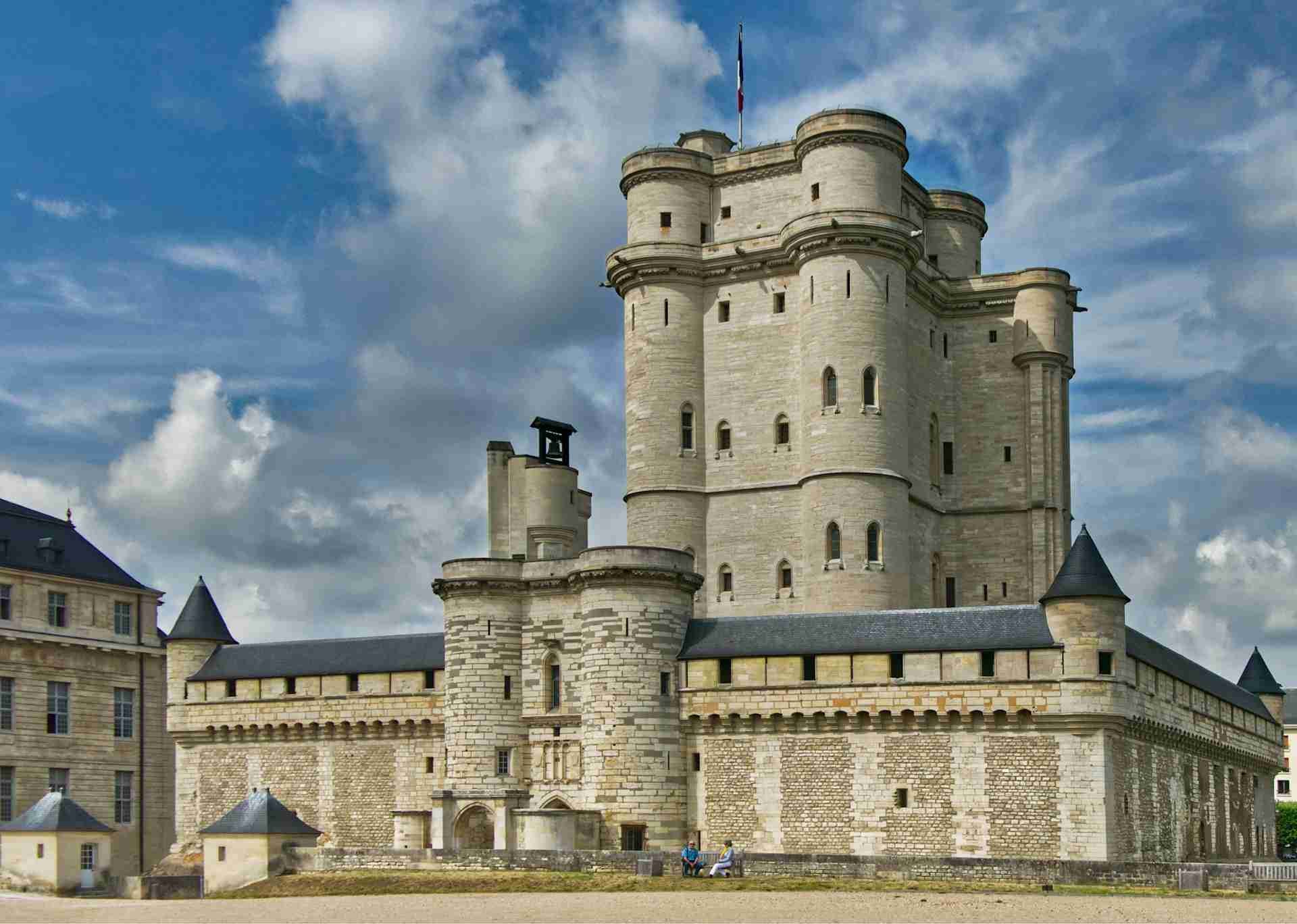
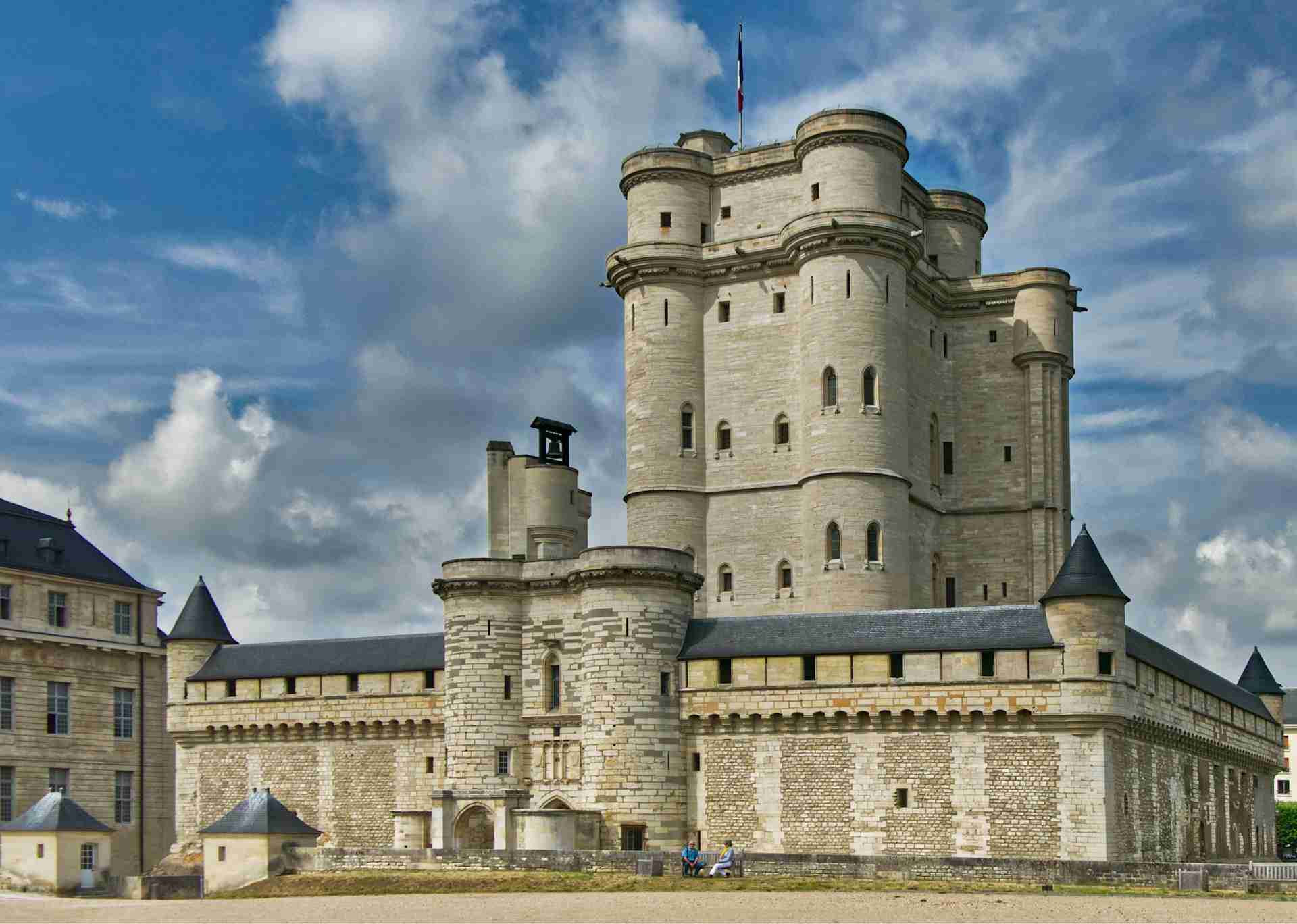
Château de Vincennes sits just outside the Paris city limits and stands as one of the best preserved medieval fortresses in France. With its tall limestone keep, surrounding moat, and fortified walls, it offers photographers a rare chance to work with medieval architecture in a location that is both accessible and uncrowded compared to central Paris landmarks. Originally a royal hunting lodge turned fortress and later a royal residence, the château is layered with history and structure. Its clean lines, symmetrical forms, and weathered stone make it an ideal subject for architectural compositions, while the wide open grounds allow for experimentation with scale, shadow, and movement. For photographers looking to capture something historic without the crowds of the city center, this location offers a surprisingly quiet but visually strong experience.
Best Photography Opportunities
• Keep and Courtyard Symmetry
The central keep, one of the tallest fortified towers in Europe, is the visual anchor of the château. Shooting from the main entrance into the inner courtyard gives you a strong central composition with the tower rising above the open space. The keep's vertical lines and pale stone stand out especially well in side light, when shadows emphasize the textures in the masonry. Use a standard lens to keep proportions balanced, or step back with a wide angle to include the framing of the outer walls. Early morning or late afternoon light helps bring warmth to the otherwise cool stone and adds subtle contrast across the structure.
• Moat and Exterior Wall Lines
Circling the château's perimeter gives you access to some of its most graphic compositions. The dry moat, deep and steep walled, creates a sense of scale and separation that adds dimension to your shots. Shooting from the outer edge looking across or down into the moat allows you to use shadow, geometry, and depth in creative ways. A wide lens works well here, especially if you want to exaggerate the drop and pull in the lines of the fortification. On cloudy days, the soft light brings out more even tone across the stone, while on sunny days, the contrast between light and shade can be used to dramatic effect.
• Chapelle Royale Interior and Windows
Inside the grounds sits a Gothic style chapel with soaring ceilings and stained glass windows. It's smaller than most cathedral spaces but offers strong vertical compositions, clean symmetry, and beautiful natural light through the tall windows. Tripods may not be allowed inside, but with a fast lens and high ISO, you can work with the available light to capture the structure without flash. Look for quiet moments when the interior is less crowded to shoot centered frames down the nave or close up details of the stone carvings. The soft window light is ideal for black and white photography as well.
• Reflections and Framing in the Outer Grounds
Just beyond the main walls, grassy lawns and tree lined paths provide clean sight lines back toward the château. On still mornings after rain, you may find puddles or wet surfaces that reflect parts of the towers and ramparts, especially near the north side. These areas also offer framing opportunities using branches, hedges, or old gates. This is a good space to step back and capture the fortress within its wider environment, especially when working with longer lenses to compress distance between the outer path and the central structures.
• Texture Studies in Stone and Wood
The château's age is evident in its material surfaces. Worn stone steps, weathered wooden doors, and rusted fixtures all provide close up material for photographers interested in detail work. Bring a macro or short telephoto lens to isolate these elements. These shots work well in flat light or shade, where the textures become the subject. These kinds of studies also help build a broader narrative of the space, especially when mixed with wider architectural frames.
Best Time to Visit
The Château de Vincennes is photogenic year round, though the experience and light shift with the seasons. Spring brings green growth to the surrounding grounds, which contrasts well with the pale stone. Summer often means clearer skies and strong light, which works well for shadows and crisp architectural definition, but midday can flatten the scene. Autumn adds muted color to the trees that line the outer walkways and grounds. Winter light tends to be soft and low, especially in the morning, which is ideal for capturing subtle textures and directional light on the limestone.
The best time of day for photography is early morning, just after the site opens, or later in the afternoon when the sun starts to fall behind the surrounding buildings and trees. These periods bring warm light and fewer visitors. Cloudy days work well for interior shooting or texture studies, while blue sky days let you frame the towers cleanly against a bold background.
How to Get There
Château de Vincennes is located just east of Paris in the town of Vincennes, and easily accessible via public transport or by car. If you are arriving by car, public parking is available in nearby lots or along local streets. Access to the chateau, keep, chapel, and interior exhibitions requires a ticket that can be bought online or onsite. Tripods are generally allowed in the outdoor areas but may be restricted indoors or during guided tours. It's best to check with the site staff before setting up. Restrooms and a small gift shop are available on site, and there are several cafés just outside the main entrance.
Recommended Photography Gear
A standard zoom lens between 24 and 70 millimeters will cover most compositions, from full facades to interior architectural details. A wide angle lens is helpful for courtyard scenes, tower framing, or shooting in tight areas along the moat or interior corridors. A short telephoto, such as an 85 or 135 millimeter, is useful for compressing walls, isolating windows, or capturing small sculptural elements at a distance.
If you plan to shoot long exposures or bracketed images, a lightweight tripod is helpful for exterior work. A polarizer can deepen the sky and reduce glare on stone, especially after rain. A lens cloth is useful in damp conditions, as the stone can hold moisture in cooler weather. You will not need hiking gear or weatherproof equipment, but comfortable shoes are recommended, as the grounds are large and the cobbled paths can be uneven.
Nearby Photography Locations
Directly adjacent to the château, this large public park includes lakes, footbridges, and wooded trails. It's perfect for nature photography or shooting quiet scenes with soft light through the trees, especially in early morning fog.
Located within the Bois de Vincennes, this landscaped garden includes modern sculptures, seasonal flowers, and curated paths. It's especially good in spring and summer when color is strongest, and offers a contrasting style to the medieval stonework of the château.
The nearby town has a mix of early 20th century buildings, traditional cafés, and smaller historic sites. It's a good place for street photography or to grab layered architectural shots with people and modern elements in the frame.
A bit farther west toward the 12th arrondissement, this elevated linear park follows an old railway line and provides a mix of greenery, bridges, and views down into the city streets. It's ideal for slower-paced city photography and transitions well into twilight sessions.
Easily reached by Métro, this historic cemetery offers atmospheric paths, stone statues, and dense shadow-play among the tombs and trees. It provides a much different tone from the château but works well as a companion subject for black and white or moody compositions.
Château de Vincennes is a strong destination for photographers who want historical architecture without leaving the city. Its open layout, bold vertical forms, and surrounding grounds give you space to shoot without the pressure of crowds or tight urban noise. Whether you are building a study of medieval design or just want to work with light on limestone, it's a location that delivers well-balanced, thoughtful compositions at your own pace.
Comments
Loading comments…