
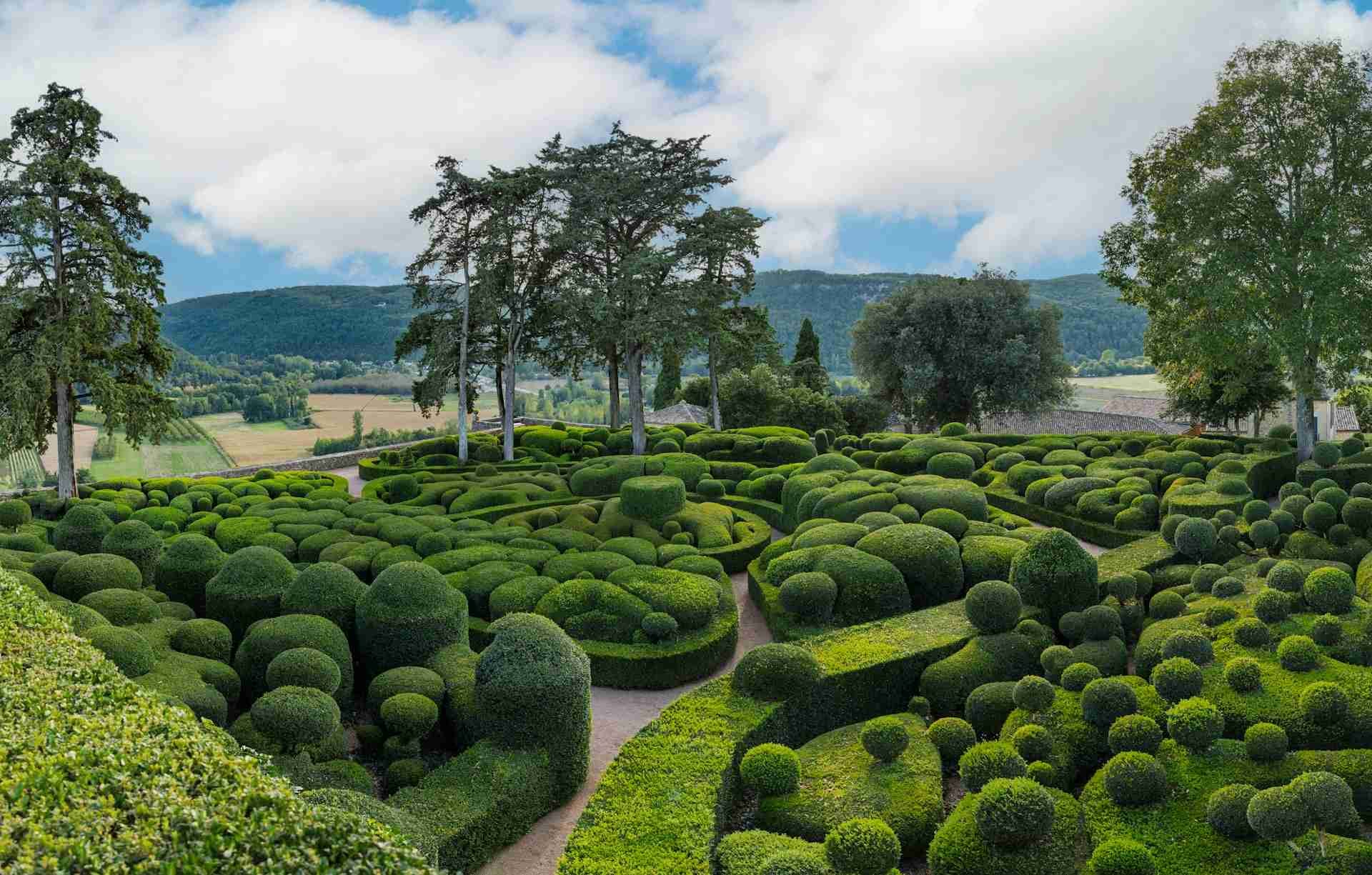
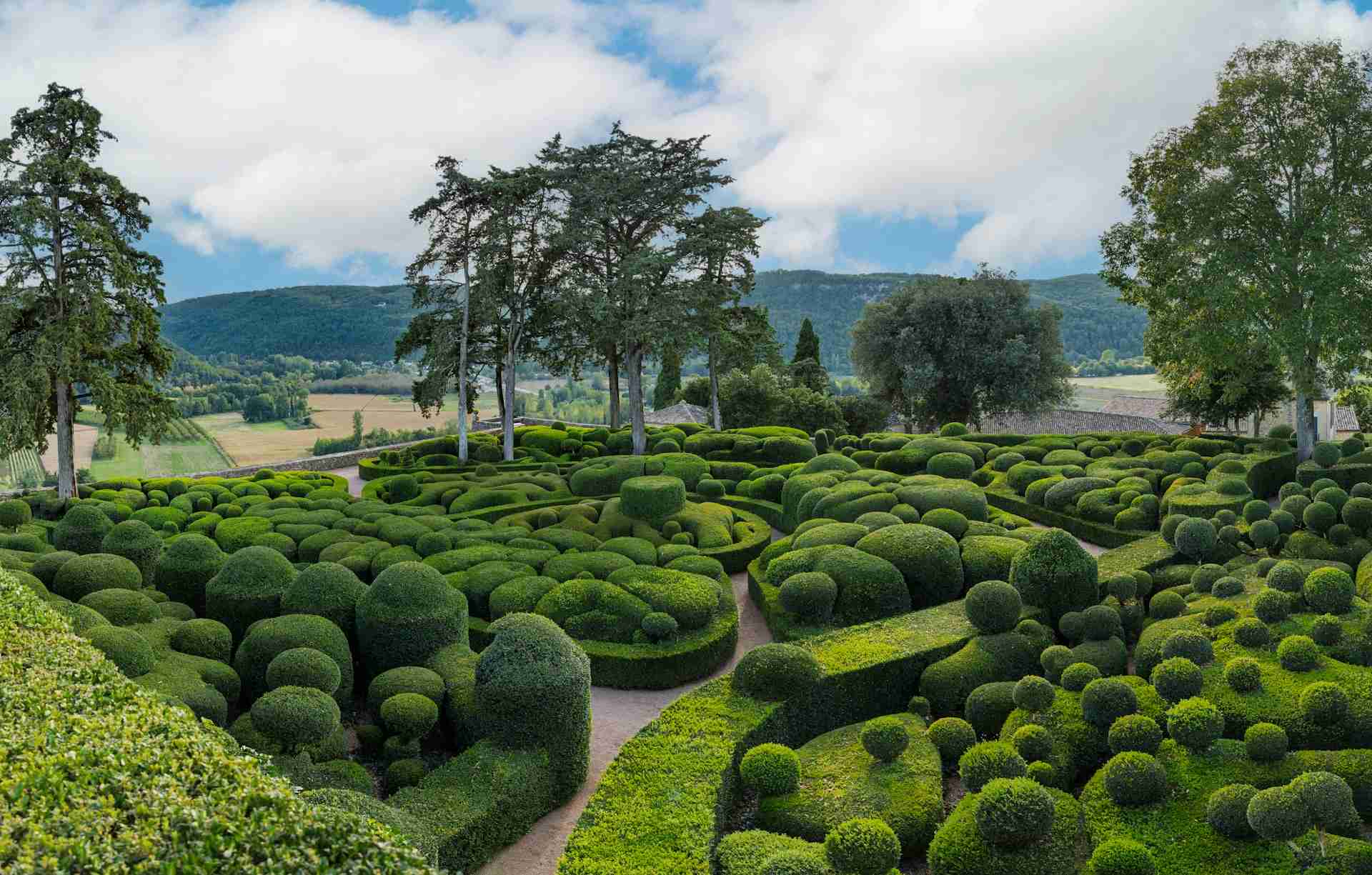
Perched high above the Dordogne River in Vézac, France, the Château de Marqueyssac and its surrounding gardens offer photographers an elegant blend of symmetry, texture, and sweeping landscape. The 19th century Château is modest in scale, but it anchors an extensive series of carefully clipped boxwood hedges, winding stone paths, and shaded promenades known as Les Jardins de Marqueyssac. From several cliffside terraces, you can look out over the surrounding valley and medieval villages, while closer to the Château, the interplay of light and form in the hedges creates rhythmic compositions throughout the day. This location combines architectural detail, cultivated landscape, and vast natural scenery in a way that feels both designed and deeply connected to place.
Best Photography Opportunities
• Boxwood Maze and Garden Geometry
The most iconic feature of the gardens is the sweeping sea of hand trimmed boxwood that rolls across the hillside in undulating patterns. Shoot in soft morning or late afternoon light to catch shadow along the curves and highlight the precision of the hedging. A wide to mid-range lens lets you frame the greenery with the Château in the background or isolate repeating shapes for more abstract compositions. These scenes change in tone depending on the season, with fresh spring green deepening into a richer hue in summer.
• Clifftop Views over the Valley
From several viewpoints throughout the property, you can photograph the river as it curves through the valley far below. Small villages, farm plots, and the surrounding hills provide layered depth, especially when viewed in the direction of La Roque-Gageac or Castelnaud-la-Chapelle. Use a lens in the 35 to 70mm range to compress the landscape gently and emphasize the vertical drop between garden and valley. Early morning light is softest here, though golden hour casts a warm glow across the treetops and water.
• Château Exterior with Garden Foreground
The light colored stone and slate roof of the Château contrast beautifully with the deep green of the surrounding gardens. Frame the building with low boxwood in the foreground to add structure to your composition, or position yourself near the curve of a pathway for natural leading lines. These scenes are especially effective in warm sidelight, which brings out the texture of the stone and creates depth between the elements.
• Shadow and Light Along the Pathways
The garden's gravel paths wind beneath tall cypress trees and between hedged walls. During clear days, light filters through the foliage and casts crisp, angular shadows across the stone and leaves. Use a standard or short telephoto lens to isolate sections where light and form interact cleanly. These images work well in both color and black and white, especially when texture is emphasized over context.
• Detail Studies of Carved Stone, Gates, and Ornamentation
Throughout the gardens are small decorative elements: wrought iron railings, carved balustrades, and ornate benches that provide quiet contrast to the greenery. Close up compositions with a 50mm or macro lens can highlight wear, patina, and interplay with surrounding vegetation. These subjects are best captured on cloudy days or in diffuse light, which softens contrast and preserves subtle color variation.
Best Time to Visit
Spring and early summer offer the freshest greens in the boxwood and most consistent weather. These months also bring more depth to the distant views, as haze tends to be minimal in the early part of the day. Autumn is another strong season, with warm tones creeping into the valley and golden light enhancing the texture of both stone and leaf. The gardens open during daylight hours, so timing your visit for the morning or late afternoon will give you the most workable light. Midday sun tends to flatten the hedges and wash out distant landscape shots. Overcast days are particularly helpful for photographing shaded paths and small detail studies.
How to Get There
The Château and Jardins de Marqueyssac are located near Vézac in the Dordogne region of southwestern France. The site is best accessed by car, with a dedicated parking area available at the entrance. The gardens operate on a ticketed entry system, with seasonal hours that vary depending on time of year. Once inside, paths are well maintained and clearly marked, though some routes include gentle climbs or uneven stone steps. Most major photographic viewpoints are within a short walking distance from the entrance, but the full loop trail takes longer and includes access to the panoramic lookout on the far end of the gardens. There are no specific restrictions on photography for personal use, but tripods may be limited during peak hours or events.
Recommended Photography Gear
Bring a wide angle lens to capture the full spread of the gardens and a mid-range zoom for the more compressed views over the valley. A 50mm prime or short telephoto lens is ideal for framing details in shadow or capturing the textures of stone and wood. A polarizing filter helps manage reflections on trimmed hedges and deepens sky color when shooting wide. A tripod is helpful for early or late light, but be prepared to work handheld during busier times. Comfortable walking shoes and a lightweight camera bag will help manage gear as you move across the grounds. Extra batteries are recommended, especially if you plan to spend several hours exploring the trails and overlooks.
Nearby Photography Locations
This fortified medieval castle stands across the valley and is visible from Marqueyssac. Visiting it in person offers strong architectural compositions and elevated views back toward the gardens. Best photographed in the warm light of late afternoon.
Nestled between cliff and river, this village features ochre-toned buildings and narrow stone lanes that photograph beautifully in the morning or late afternoon. Reflections from the river add a secondary layer to many compositions.
Another hilltop fortress village, Beynac offers commanding views over the Dordogne and cobbled paths that twist through historic homes. The light here is particularly strong at sunset when the western hills reflect gold across the valley.
• Domme
A bastide town built on a high ridge, Domme provides wide vistas in every direction and a series of stone gates, plazas, and ramparts that create strong shadow-play and formal symmetry. Ideal for shooting during golden hour.
Separate from the fortress itself, these small surrounding gardens offer intimate compositions of fruit trees, gravel paths, and wooden structures. They're best visited in spring or autumn when natural color adds to the built environment.
Comments
Loading comments…