
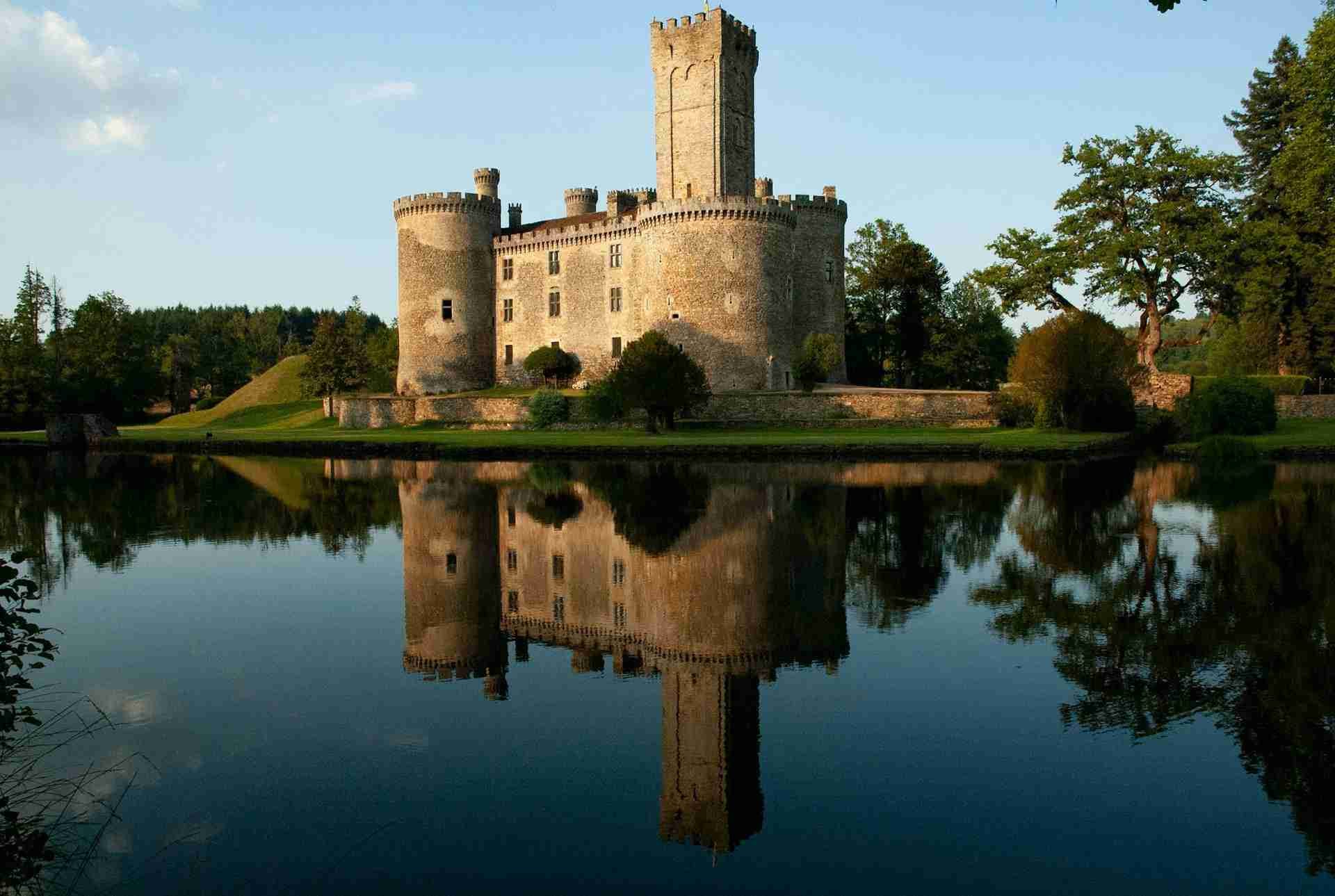
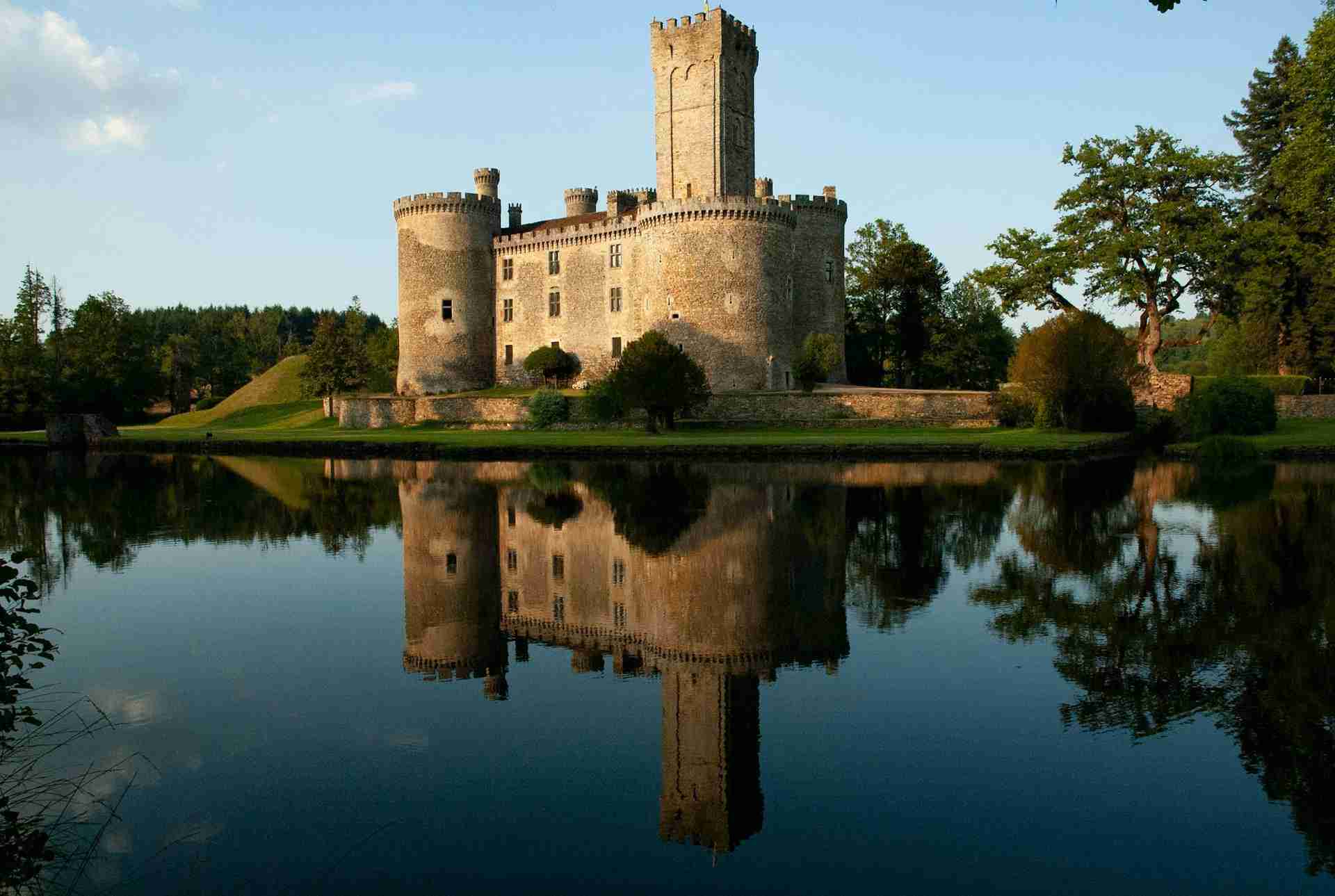
Set amid the green hills of the Haute-Vienne in Nouvelle-Aquitaine, the Château Fort de Montbrun is one of France's most striking medieval castles. Its origins date back to the 12th century, and today the château stands in remarkably strong condition, surrounded by water and framed by forests and rolling countryside. With its tall keep, round towers, and a moat that reflects the stone walls, Montbrun offers photographers the chance to work with both architectural grandeur and tranquil natural settings. Whether captured in soft dawn light or silhouetted at sunset, the castle and its surrounding landscape provide a wealth of compositional opportunities that balance power and serenity.
Best Photography Opportunities
• Moat Reflections from the South Bank
One of the most rewarding vantage points is across the water south of the château, where the calm moat acts as a natural mirror. Early morning is ideal, when the surface is still and mist sometimes lingers above the water. A wide-angle lens allows you to include both the castle and its reflection in the same frame, while foreground reeds or branches add depth. Golden hour softens the stone's warm tones and enhances the symmetry of the reflection. These shots often work best with a tripod to ensure precise alignment of the mirrored composition.
• The Keep and Towers from the Courtyard
Inside the outer walls, the tall keep rises dramatically above the surrounding towers. From the courtyard, you can frame the keep against the sky, using the smaller towers and walls as leading elements. A standard zoom lens works well here, giving you flexibility between wider architectural overviews and tighter shots of arrow slits, windows, or battlements. Afternoon light enhances the vertical textures of the stone, while overcast days reduce glare and help bring out subtle detail. Angling slightly upward exaggerates the sense of scale and strength.
• Details of Masonry and Fortifications
The castle walls are filled with centuries of weathering, ivy growth, and architectural detail that reward close study. A macro or telephoto lens is ideal for capturing textures such as chisel marks, carved stones, and moss-covered surfaces. Doorways, arrow loops, and windows can be framed in isolation to create abstract studies of form. These images are especially effective in diffused light, which minimizes harsh shadows and allows the stonework's texture to show clearly. Incorporating shadows from crenellations adds drama and context to these tighter compositions.
• Wide Countryside Views with the Castle
The surrounding countryside offers elevated positions from which to shoot the château in its broader setting. Rolling fields, scattered trees, and small ponds provide strong foregrounds. These vantage points are best explored in late afternoon or early evening, when low light highlights the shape of the landscape and creates long shadows across the hills. A telephoto lens helps compress distance, pulling the castle into relation with the surrounding landscape. Early autumn is particularly effective here, when tree color contrasts with the neutral grey of the stone walls.
• Night and Blue Hour Photography
The château is atmospheric at night, with the moat and towers silhouetted against the fading light. Blue hour is especially rewarding, as the cool sky contrasts with the warm tones of the stone. A tripod and long exposure are necessary to maintain clarity, especially if you wish to smooth ripples in the water or capture reflections of the sky. Including tree branches or silhouettes in the frame enhances the mood and adds framing elements. On clear nights, the rural location makes star photography possible, with the castle serving as a dramatic foreground subject.
Best Time to Visit
Château Fort de Montbrun is photogenic in every season. Spring brings fresh greenery and blossoms that frame the castle and add softness to the stone. Summer provides lush foliage and long shooting hours, though midday light can be harsh. Autumn is perhaps the most rewarding season, when the surrounding woodland shifts into deep oranges and golds that contrast beautifully with the neutral tones of the château. Winter strips the trees bare, exposing the structure more starkly, and occasional frost or snow adds subtle highlights to both stone and landscape.
For light, early morning and late afternoon are the best times. Morning often brings mist or calm reflections in the moat, while late afternoon and golden hour emphasize the warm tones of the castle walls. Blue hour transitions highlight the château's silhouette against the sky, and clear nights allow for starlit compositions. Overcast days are well suited to detail work, especially when photographing textures or interior courtyard spaces.
How to Get There
Château Fort de Montbrun is located near the village of Dournazac in Haute-Vienne, Nouvelle-Aquitaine. By car, it can be reached from Limoges in about an hour via the N21, or from Angoulême in just over an hour. The castle sits slightly outside the village, with small parking areas nearby that are within walking distance of the entrance.
Access to the grounds and interior varies depending on ownership and seasonal conditions, so it is advisable to check in advance whether the château is open for visits. Photography around the exterior is possible at all times from public paths, including excellent viewpoints across the moat. Comfortable footwear is recommended, as paths around the castle can be uneven or muddy after rain.
Recommended Photography Gear
A wide-angle lens is essential for capturing the full castle and its reflections in the moat. A standard zoom lens provides flexibility for courtyard and interior shots, while a telephoto lens is useful for compressing the castle into the broader landscape or isolating towers against the sky. A macro lens is ideal for close studies of stone textures, ivy, or smaller architectural details.
A tripod is highly recommended for dawn, dusk, and long-exposure photography around the moat. A circular polarizer is useful for controlling reflections on the water and enhancing sky contrast. A neutral density filter allows for long exposures that smooth water surfaces or capture cloud movement above the castle. Weather protection for gear is advisable, particularly in winter or on damp mornings when mist and dew are common.
Nearby Photography Locations
A short drive west, this Renaissance château now houses a contemporary art museum. Its riverside position and formal courtyard provide a different architectural style to contrast with Montbrun's medieval fortifications.
Famous as the place where Richard the Lionheart died, this partly ruined fortress offers strong historical context and excellent opportunities for moody compositions of crumbling towers.
Surrounding the château, this regional park is filled with woodland, rivers, and rolling farmland. It is ideal for combining landscape photography with cultural visits to villages and churches.
The preserved ruins of this World War II martyr village provide a very different kind of photographic subject. Empty streets, burnt-out vehicles, and ruined houses create a powerful documentary setting.
Classed as one of the most beautiful villages in France, this riverside settlement features stone bridges, traditional houses, and a Romanesque church that complement Montbrun's medieval atmosphere.
Château Fort de Montbrun is a location where reflection, scale, and texture come together. Whether you're capturing the symmetry of its moat, studying the weathered stone close-up, or situating it within the surrounding countryside, the château offers strong visual possibilities in every season. It is a place that rewards patience and attention to light, with each visit revealing a new perspective on its enduring medieval presence.
Comments
Loading comments…