
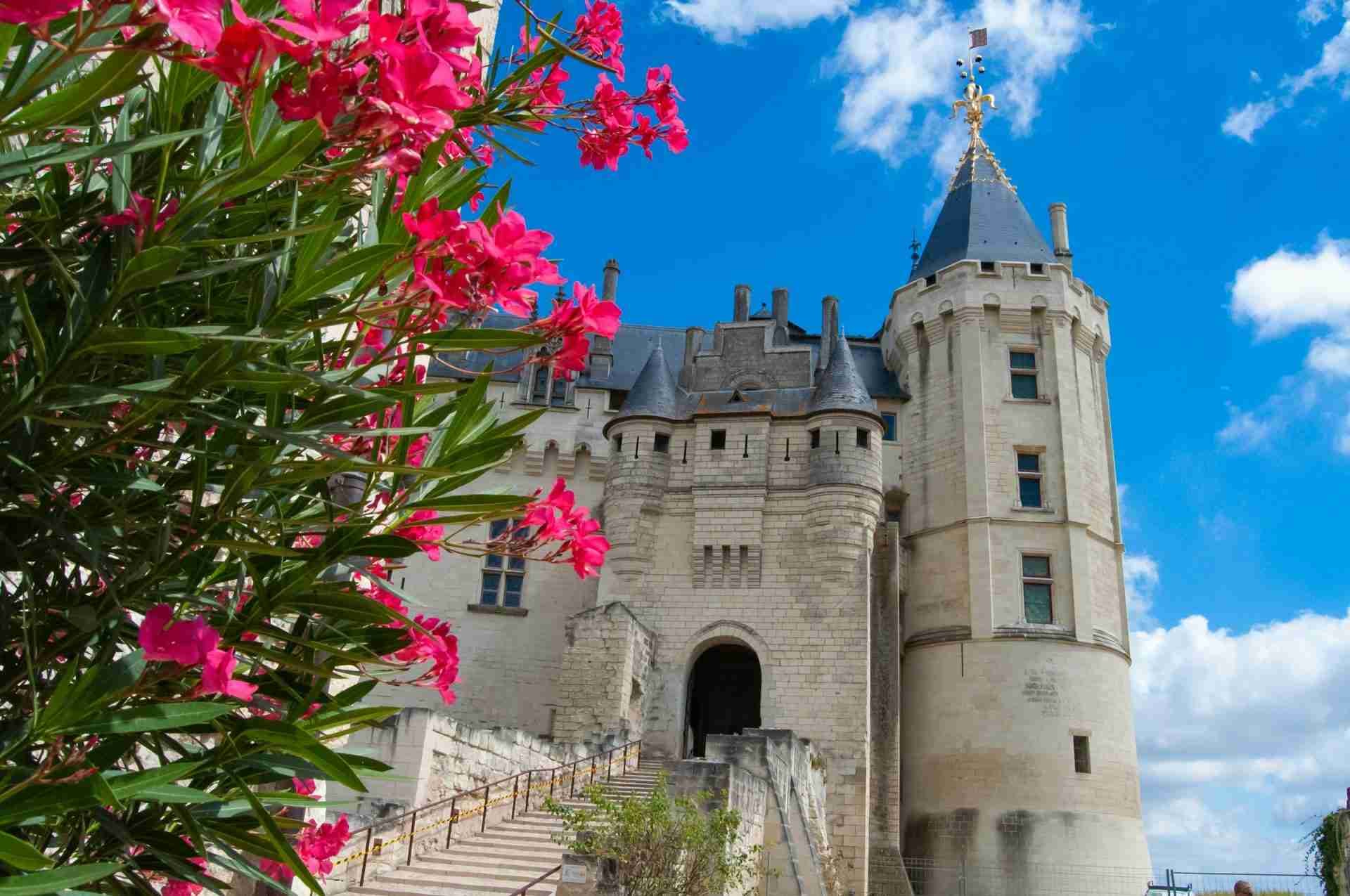
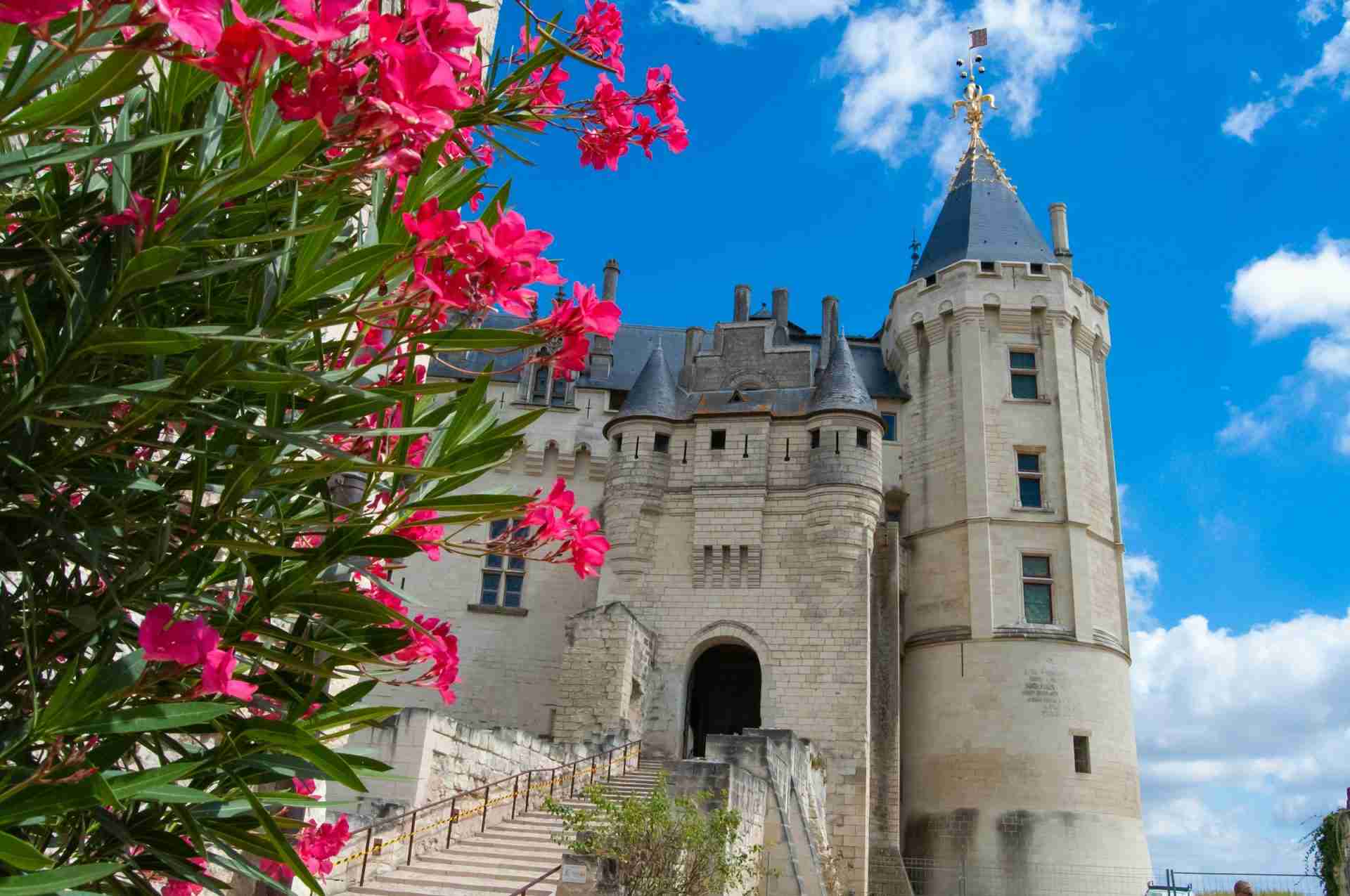
Château de Saumur rises above the Loire River on a hill that dominates the town of Saumur. Its pale stone towers and pointed turrets form a clear and balanced silhouette that is visible from far beyond the riverbanks. Originally built as a fortress in the 10th century and later adapted into a residence for the Dukes of Anjou, the structure combines defensive mass with refined architectural detail. The castle's position gives it natural prominence, sitting above rooftops and vineyard covered slopes. For photographers, the appeal lies in elevation, symmetry, and the way the building interacts with the open sky and flowing river below. It is a location that offers both grand landscape views and tighter architectural studies within a short walking radius.
Best Photography Opportunities
• Classic Loire River View With Castle Above Town
From across the Loire, the castle can be framed rising above the clustered rooftops of Saumur. This layered composition places the river in the foreground, the town in the middle, and the château clearly defined against the sky. Small adjustments along the riverbank change how the towers align and how much of the town is included. Calm water adds subtle reflections that strengthen the lower portion of the frame. These views are particularly effective when light grazes the stone façade and reveals texture in the turrets and walls.
• Elevated Views From the Opposite Bank
Climbing slightly higher on the far side of the river allows for a broader perspective that includes vineyards and surrounding landscape. From this vantage point, the castle feels integrated into the Loire Valley rather than isolated above the town. A moderate telephoto lens can compress the scene and bring rooftops and towers closer together. Clear skies help the pale stone stand out, while light cloud cover can add depth without distraction. This angle emphasizes both architecture and setting.
• Detail Studies of Towers and Turrets
Closer framing highlights the pointed turrets, window shapes, and decorative stonework that distinguish the château's profile. Side light enhances relief and makes architectural details more pronounced. Overcast conditions are useful for controlling contrast and preserving fine detail. Isolating a single tower against open sky creates clean, graphic compositions. These tighter images complement wider landscape views.
• Terrace Views Over the Loire
From the castle's terraces, panoramic views stretch across the river and town below. This perspective flips the composition, placing the landscape as the primary subject with parts of the castle acting as framing elements. Including sections of stone railing or wall adds depth without overwhelming the scene. Late afternoon light can create gentle separation between rooftops and river. These views are ideal for capturing the broader geography of Saumur.
• Evening Light and Blue Hour Silhouettes
As the sun lowers, the château's pale stone takes on warmer tones and softens in contrast. From across the river, the towers stand clearly against the changing sky. During blue hour, artificial lighting begins to define the structure subtly against deeper tones. A tripod allows for careful exposure as light fades. This period often produces the most balanced and cohesive images of the castle and town together.
Best Time to Visit
Early morning and late afternoon are the most productive times to photograph Château de Saumur. Morning light can illuminate the façade while keeping the town below evenly lit. Late afternoon introduces warmer tones that enhance the pale stone and bring depth to architectural details. Midday light may flatten texture, particularly on clear days with strong sun. Overcast conditions are well suited for detail studies and even tonal balance. Blue hour is especially effective when the castle begins to glow gently above the darker rooftops. Seasonal changes influence surrounding foliage and vineyard color, with spring and autumn often adding subtle variation without obscuring views.
How to Get There
Château de Saumur is located above the town center and is easily reached on foot via clearly marked paths and roads. Saumur is accessible by train within the Loire Valley region, followed by a short walk uphill to the castle. The surrounding riverbanks and bridges provide multiple public vantage points without restricted access. There is an entrance fee to visit the interior and terraces, though exterior photography from public areas is free. Parking is available in designated town areas for those arriving by car. Allow time to move between river level viewpoints and elevated positions for varied compositions.
Recommended Photography Gear
A standard zoom lens is ideal for capturing both wide river views and tighter architectural details. A short telephoto lens helps compress rooftops and towers into layered compositions from across the Loire. A tripod is recommended for early morning and evening sessions, especially during blue hour. A polarizer can help manage glare on the river and deepen sky tones when conditions allow. Keeping vertical lines straight is important when photographing towers from below, so careful alignment is essential. Since the castle and river viewpoints are within walking distance, a manageable kit makes it easier to move between positions.
Nearby Photography Locations
A short drive from Saumur, this large abbey complex offers expansive stone architecture and cloisters. It provides a different scale and layout compared to the hilltop château.
Known for its equestrian heritage, this institution offers architectural and documentary photography opportunities. It introduces a cultural element beyond historic stone structures.
This riverside village features another château set directly along the Loire. It offers alternate castle compositions at water level.
Located nearby, this fortress style château provides a more enclosed and defensive appearance. It contrasts with the lighter silhouette of Saumur.
• Loire River Cycle Path
The riverside path offers extended views of the valley landscape and vineyard slopes. It is useful for wider environmental compositions beyond the town itself.
Comments
Loading comments…