
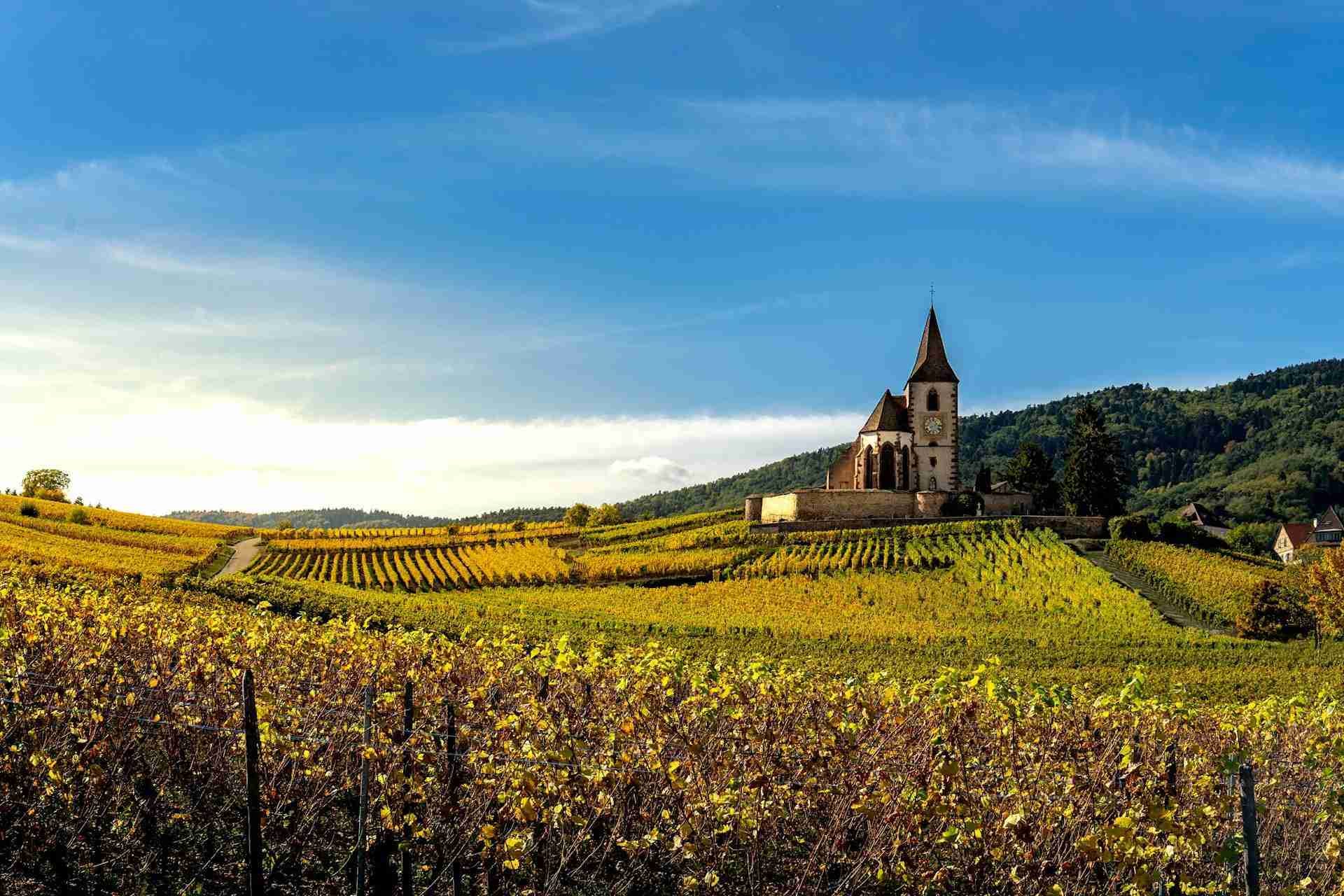
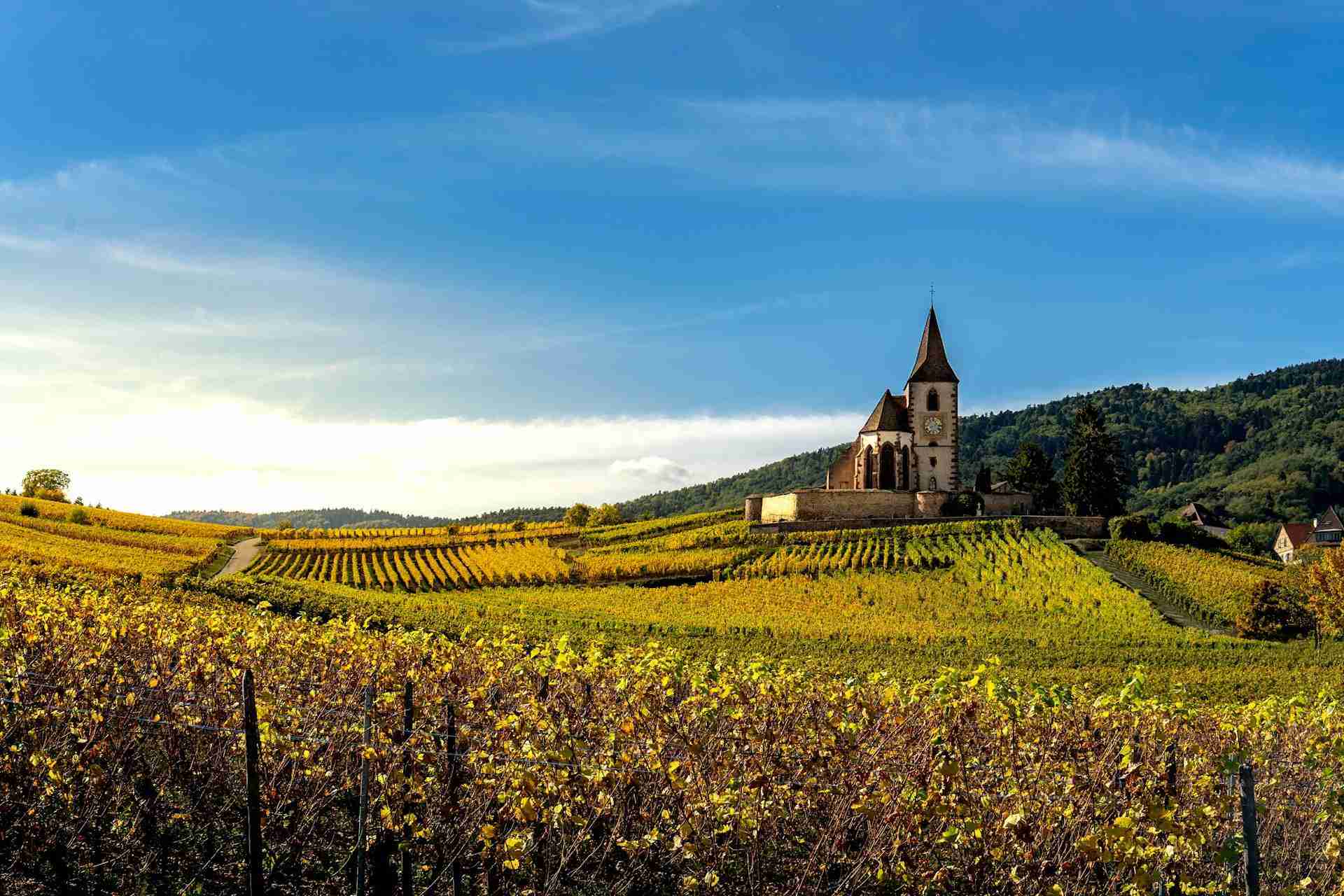
Set above the village of Hunawihr in the Alsace region of northeastern France, the Église mixte Saint-Jacques-le-Majeur rises gently from a hillside surrounded by vineyards. This small, fortified church is simple in structure, yet full of charm. With its pink sandstone walls, steep roof, and bell tower, the church feels at home in the landscape. It is framed on all sides by rows of vines, which follow the curves of the land and change color with the seasons. For photographers, this setting is both peaceful and rich with opportunity. It offers a rare mix of architectural detail, soft light, and open landscape, all within a short walk.
The church is called "mixte" because it has served both Catholic and Protestant congregations since the seventeenth century. That quiet history, along with the surrounding hills and vines, gives the scene a sense of stillness that invites slow, thoughtful work. Whether you are arriving before sunrise to catch mist over the rows, or waiting until the last evening light hits the stone, Saint-Jacques-le-Majeur is a place where each hour reveals something new. The view shifts gently with the time of day, and no two visits feel quite the same.
Best Photography Opportunities
• Wide View from the Sloping Vineyard Paths
The most popular view of the church is from the footpaths that wind through the vineyards to the south and east. From here, you can place the church above rows of vines that stretch downhill toward the village. These paths are easy to walk, and each turn offers a slightly different composition. In early morning, especially in spring or autumn, mist often rests just above the fields, creating soft layers behind the church. A wide-angle lens works well for capturing the full scene, but a mid-range zoom helps compress the layers of vines and bring the church forward in the frame.
• Close-Up Details of the Church Architecture
Once you're near the building, there are many opportunities to focus on the textures and shapes of the church itself. The pink and grey stone shows signs of age, with patches of moss and areas where the surface has worn over time. Arched windows, small carvings, and the wooden doors all offer good subjects for close-up work. Try shooting late in the day when the sun strikes the west side of the church and brings out the color and depth of the stone. A 35mm or 50mm lens works well for these tighter shots, especially when paired with soft side light.
• Framing the Church with Autumn Color
In late September through October, the surrounding vineyards turn gold, orange, and red. These colors create a vivid contrast with the pale stone of the church. From the lower paths, you can shoot uphill, using the colorful rows to guide the viewer's eye into the frame. Mid-morning and late afternoon both work well for this type of image, as the sun sits low enough to light the vines but not so low that the church falls into shadow. You can also frame the church with overhanging branches or vines in the foreground for a more layered look.
• Sunset Silhouette from the Western Ridge
If you walk or drive up the small hill to the west of the church, you can shoot back toward it with the setting sun behind. From this ridge, the church stands out clearly against the sky, and you can capture it as a silhouette if the light is strong. When clouds catch the last sunlight, the sky often fills with color, and the church becomes a clear shape at the center of the frame. A tripod and longer exposure may be helpful here, especially during blue hour when light fades quickly but still holds detail in the sky.
• Soft Fog and Mist in the Early Morning
On cool mornings, particularly in late spring or early autumn, fog sometimes settles in the low areas around the church. From nearby trails or the edge of the village, you can shoot into the mist with the steeple rising above it. This creates a quiet, dreamlike image with minimal color and strong shape. Fog is often gone by mid-morning, so aim to be in place before sunrise. A longer lens can help isolate the church against the haze, while a wider view will show the relationship between the church, the vines, and the valley.
• Detail Shots in Winter Light
Even in winter, the church is worth visiting. With the vines bare and the ground often dusted with frost or snow, the shapes become simpler and the scene takes on a cooler, more quiet feeling. The soft blue-grey light of winter mornings suits the color of the stone, and the lack of foliage helps emphasize the clean lines of the architecture. Focus on minimal compositions that use negative space, or tight details like stone textures and small windows. A neutral color palette works well during this time of year.
Best Time to Visit
For photography, the most rewarding times to visit are spring and autumn. In spring, the vineyards are full of new growth and the morning light is soft and even. Fog is more common during this season, especially after cooler nights, and the light tends to stay gentle well into the morning. April through early June brings fresh color, mild weather, and fewer visitors, making it easier to set up and shoot in peace.
Autumn is the most colorful season. From mid-September to late October, the vineyards change rapidly, with warm reds, yellows, and oranges filling the hills. The church stands out clearly against these tones, and the lower sun angle helps shape the land with longer shadows and richer color. Late afternoon is especially beautiful, as the sun drops behind the ridge and the sky glows behind the bell tower.
Summer can be productive as well, but the light becomes harsh by midday. If you shoot during summer, aim for golden hour in the morning or evening. Winter brings more subtle colors and fewer visitors, which can be ideal for quiet work. The stone appears cooler, the light is lower all day, and frost or snow adds texture and variation to the ground and vines.
How to Get There
The Église Saint-Jacques-le-Majeur is located just above the village of Hunawihr, which lies between Ribeauvillé and Riquewihr in the Alsace wine region. If you are driving, the village is easy to reach via the D1B road, which runs along the Route des Vins d'Alsace. There is parking near the entrance to the church and additional space along the roads leading up from the village center. From the parking area, it is a short, gentle walk up a paved path to the church itself.
The site is open year-round, and there is no entry fee to visit or photograph the outside. Access to the interior is more limited and depends on the time of day or whether services are being held. For photography, most of the best views are from outside, especially from the vineyard trails that circle the church on all sides. These trails are open to the public and easy to walk, though the ground can be muddy after rain or soft during early spring. Early visits are best done on foot, so bring a flashlight or headlamp if you are planning to arrive before sunrise.
The village itself is well-connected by car, and nearby towns like Colmar offer train access if you prefer to travel without a vehicle. Taxis and buses also run between the larger towns and the surrounding villages, but schedules are limited, so check ahead if you are planning a day trip.
Recommended Photography Gear
Bring a wide-angle lens to capture full views of the church above the vines. A 16–35mm or 24–70mm lens works well for most scenes, especially if you want to include vineyard rows or surrounding hills in your frame. A mid-range zoom is useful for tighter compositions or for working from the trails without needing to get too close.
If you plan to shoot detail shots of the architecture, a fast prime lens such as a 50mm or 85mm will let you isolate shapes, textures, and small features in soft light. A telephoto lens in the 70–200mm range is especially useful for shooting into fog or compressing layers of vines and hills behind the church.
A tripod is essential for early morning, late evening, or foggy conditions. Use a circular polarizer to cut glare and bring out color in the vines and sky. A neutral density filter may help for longer exposures in brighter light, especially if you want to blur moving clouds or capture a more even exposure during high contrast moments.
Wear waterproof shoes or boots if you're visiting during wet seasons. The vineyard paths can become slick or muddy. Bring a weatherproof bag for your gear and a microfiber cloth to keep your lens clean from mist or rain. Light gloves and a headlamp are helpful for early or late sessions.
Nearby Photography Locations
, a short drive to the south, is a colorful walled village with narrow cobblestone streets, painted timber buildings, and soft evening light. It is ideal for both architectural and street photography, especially early in the morning before shops open.
, just north of Hunawihr, offers access to castle ruins above the town, as well as charming squares, fountains, and side streets. The views from the hills above give you strong landscape options at sunrise or sunset.
, perched high on a nearby ridge, is one of the most dramatic castles in the region. From its upper walkways, you can shoot across the Vosges Mountains and into the plains of Alsace. The structure itself is also full of angles, shadows, and details.
• Colmar
, the region's largest town, combines canals, bridges, and half-timbered houses in a walkable old town. It offers good light reflections in the canals during early morning and evening hours.
, which runs through all these locations, is filled with open landscapes, roadside viewpoints, and small hilltop chapels. Between each village, you'll find opportunities to stop and shoot vineyard rows, lone trees, and winding lanes.
Photographing the Église Saint-Jacques-le-Majeur de Hunawihr is as much about the setting as it is about the structure. The church anchors the landscape, but it is the changing color of the vines, the softness of morning fog, and the way the sun hits the slope that make this place special. Whether you are spending an hour or a full day walking the trails, the church gives you a quiet subject and a peaceful backdrop that rewards patience, attention, and time.
Comments
Loading comments…